A peg display is one of the most practical retail formats for small, lightweight, and hanging products. It may look simple, but when it is used in the right place, it can solve several retail problems at once: product visibility, SKU separation, compact footprint, and faster shopper comparison.
For brands, retailers, and importers, the real value of a peg display is not just that it uses hooks. The real value is that it makes small products easier to see and easier to shop. In this guide, we explain what a peg display is, when it works best, and how buyers can decide whether it is the right structure for their next retail project.
The 30-Second Answer
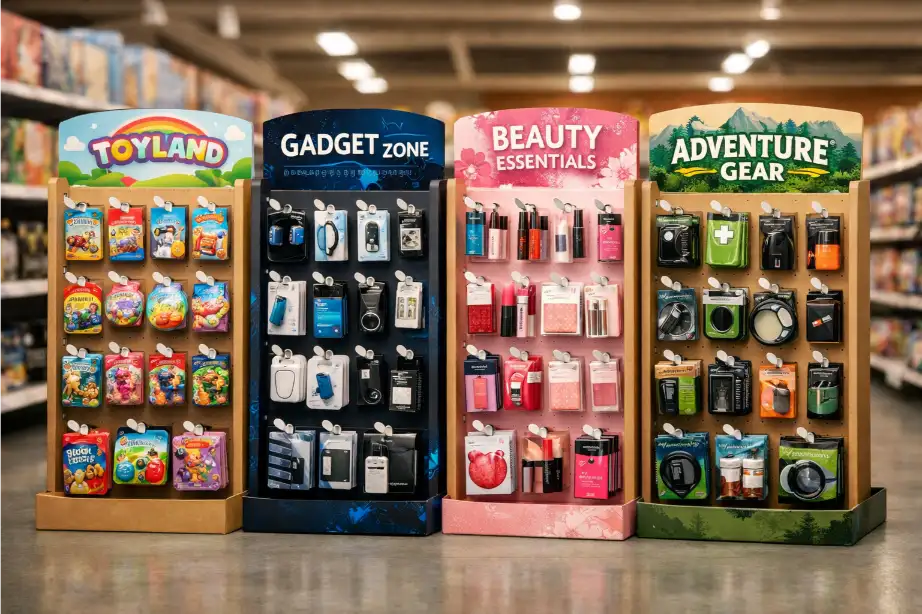
A peg display is a retail display that uses hooks or pegs to hold hanging products. It is usually best for small packaged items that shoppers need to compare quickly, such as accessories, charging cables, sachets, lightweight tools, cosmetics accessories, pet accessories, and promotional products.
If your product is lightweight, already packed for hanging, and needs clear SKU-by-SKU visibility, a peg display is often a strong choice.
What Makes a Peg Display Different From a Shelf Display?
The biggest difference is browsing behavior. Shelf displays are better when products should sit front-facing in rows or stacks. Peg displays are better when products should hang individually so shoppers can scan them one by one. That is why peg displays often work better for categories with many small variants.
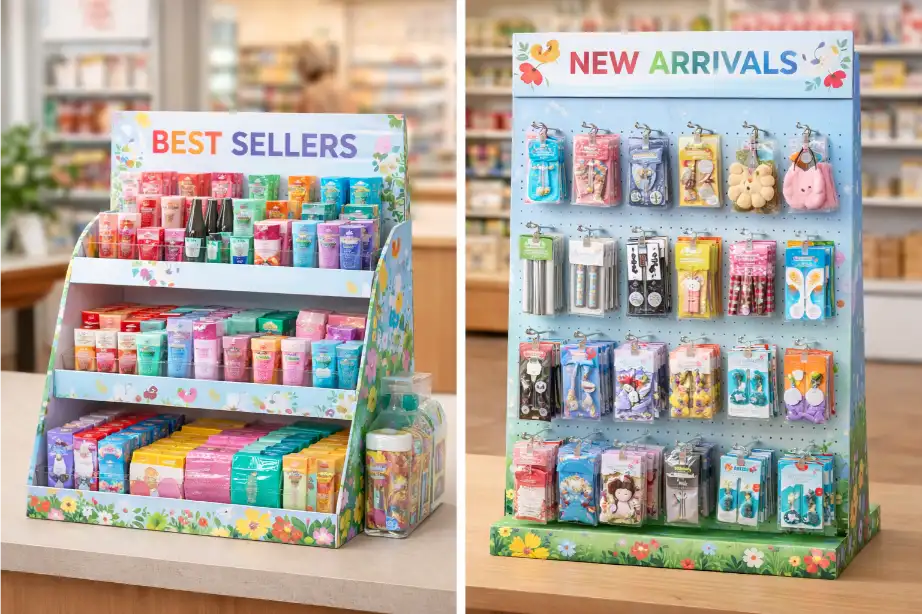
Shoppers do not need to dig through the display as much. They can usually compare size, connector type, color, flavor, or function more quickly when the products are hanging clearly.
When a Peg Display Is Usually the Right Choice
- the product is lightweight
- the product already uses a hanging pack, blister pack, or header card
- the shopper needs to compare items visually
- the retail space is compact
- you want strong SKU separation without using deep shelves
These are the situations where peg displays usually perform well. If the product is bulky, unstable, or better presented in neat rows, another display type may be better.
Peg Display Decision Table
| Product Situation | Is a Peg Display a Good Fit? | Main Reason | What Buyers Should Watch |
|---|---|---|---|
| Charging cables and adapters | Yes | Easy comparison by type and length | Hook spacing must be planned well |
| Accessories in blister packs | Yes | Hanging visibility is stronger than shelf stacking | Mixed pack sizes can look uneven |
| Small snacks or sachets | Sometimes | Works if the packs are designed to hang | Counter displays may convert faster near checkout |
| Boxed cosmetics | Usually no | Boxes usually present better on shelves | Use a counter display if fast pickup matters |
| Pet accessories | Yes | Leashes, toys, and accessories scan well on pegs | Weight balance still matters |
Where Peg Displays Work Best in Stores
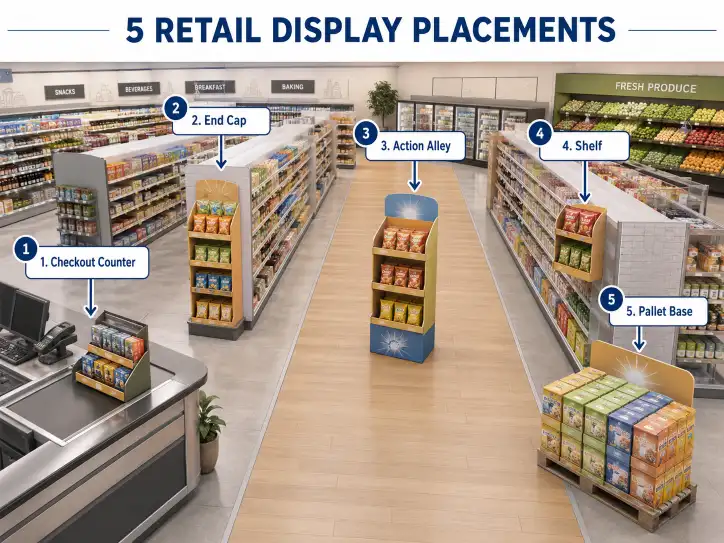
Peg displays usually work best in aisle environments, sidekick programs, wall-adjacent zones, and compact retail spaces where hanging presentation already feels natural to the shopper. They can also work inside mixed retail displays when hooks and shelves are combined in one unit.
They are usually not the first choice when the product should be bought as an impulse item right beside the register. In those cases, a counter display may perform better because it supports faster pickup.
What Products Usually Sell Better on a Peg Display?
Products that benefit from peg displays usually share one thing: the shopper needs quick visual comparison. This is common in electronics accessories, hanging personal care packs, accessories, hardware add-ons, lightweight pet products, and some convenience categories.
In these cases, the display helps the product line stay visible without using too much floor or shelf space. Instead of products overlapping each other on a shelf, each item gets clearer presentation.
What Can Go Wrong With Peg Displays?
Peg displays are simple, but they are not automatic. They can fail when buyers assume hooks alone will solve everything. The most common problems come from poor spacing, weak product grouping, inconsistent pack sizes, or too many SKUs crammed into one unit.
If the hooks are too close together, the products overlap and become hard to browse. If the assortment is too wide, the display starts to feel messy instead of organized. This is why peg displays still need planning, even if the structure looks easy.
If you are making assortment decisions right now, our article on how many SKUs one display should hold is a useful next read.
Peg Display vs Counter Display: What Is the Real Difference?
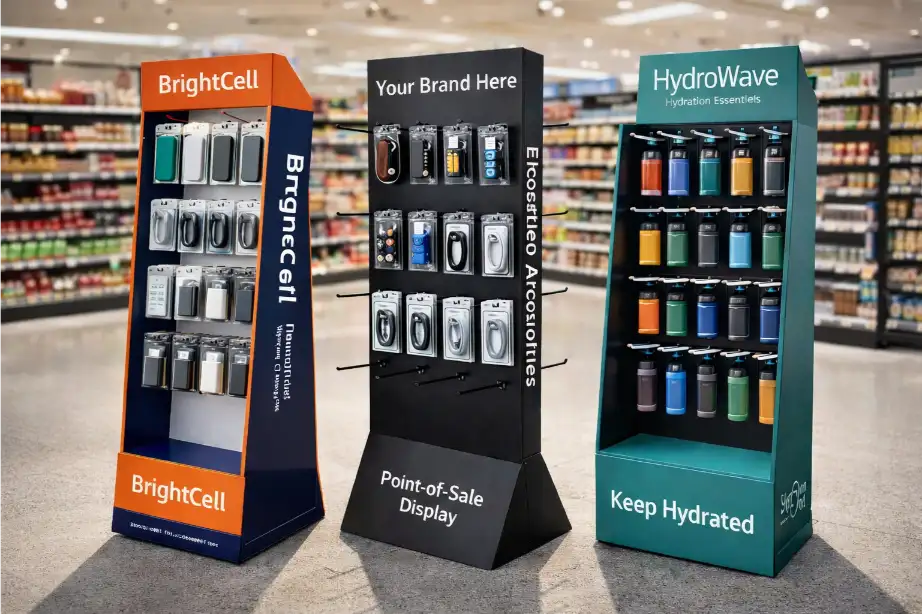
A counter display is usually better for boxed, stackable, or fast-pick products. A peg display is usually better for hanging products that need cleaner separation and comparison. Neither is better in every situation. The better format depends on the product pack style and how the shopper interacts with it.
If you want the full side-by-side view, our counter display vs peg display guide explains that decision in more detail.
Questions Buyers Should Ask Before Choosing a Peg Display
- Is the product already designed for hanging?
- Does the shopper need to compare variants quickly?
- Will the display be placed in an aisle, on a wall, or as a sidekick?
- How many SKUs need to appear at one time?
- Are the pack sizes consistent enough for clean presentation?
- Will store staff need to refill the hooks frequently?
These questions usually make the decision much clearer before sampling begins.
Useful External References
Corrugated retail formats work best when they improve product identification, shopper access, and store handling. Those same priorities are emphasized in FEFCO’s shelf-ready guidance, which is useful when thinking about hanging-product visibility and replenishment logic. See FEFCO Shelf Ready Packaging. For broader corrugated background and why it works well for transport and in-store graphics, the Fibre Box Association overview of corrugated is also useful.
Conclusion
So, what is a peg display and when should you use one? It is usually the right choice when products are lightweight, hanging-ready, and easier to shop through visual comparison. Peg displays are especially effective for categories like electronics accessories, small add-ons, pet accessories, and other compact retail products that need clear SKU separation.
If you want help deciding whether a peg display is the right structure for your product line, feel free to contact us.
FAQ
What is a peg display?
A peg display is a retail display that uses hooks or pegs to hold hanging products so shoppers can browse them individually.
What products work best on a peg display?
Lightweight products in hanging packs, such as cables, adapters, accessories, sachets, and some pet accessories, often work well on peg displays.
Are peg displays better than counter displays?
Not always. Peg displays are usually better for hanging comparison, while counter displays are usually better for boxed or impulse products.
Can a peg display hold many SKUs?
Yes, but only if hook spacing and visual organization are planned carefully.
Where should peg displays be placed in stores?
They often work best in aisles, sidekick positions, and other retail locations where hanging products are easy for shoppers to browse.
What is the biggest mistake with peg displays?
The biggest mistake is overcrowding the hooks, which makes the display look messy and harder to shop.