A floor display can win attention fast, but it can also start looking tired after the first wave of sales. That shift usually has little to do with the print and a lot to do with refill logic, product mix, and shelf behavior. A floor display stays strong when the layout is easy to understand, easy to refill, and easy to keep balanced after real store traffic.
From a cardboard display manufacturer’s perspective, this is one of the most common issues buyers miss during approval. They review the launch look, not the week-two look. This guide shows how to keep a floor display looking full and organized in store, and what B2B buyers should test before production starts.
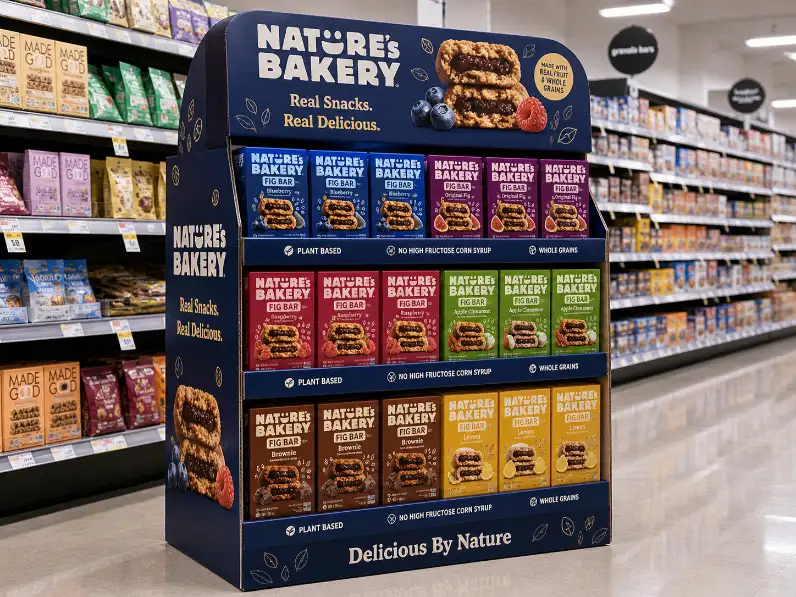
Start With the Real Problem, Not the Launch Photo
A launch-ready display is the easy version. Every shelf is stocked. Every facing is straight. Every header looks clean. Then the store opens. Some SKUs sell faster. Staff refill in a hurry. Shoppers move products across shelves. The display begins to lose rhythm.
That is the real test. A good retail display should still look active after partial sell-through, not only on day one. Buyers who plan for that stage usually get better results because they are designing for store reality instead of approval-room perfection.
If you want the wider structure context first, our cardboard display category and floor display page are the best internal starting points before you judge organization and refill performance in detail.
Rule 1: Keep the Product Mix Tight Enough to Hold a Visual Block
Many floor displays look messy because they try to do too much. Too many SKUs. Too many pack sizes. Too many price points. The buyer wants variety. The store ends up with confusion.
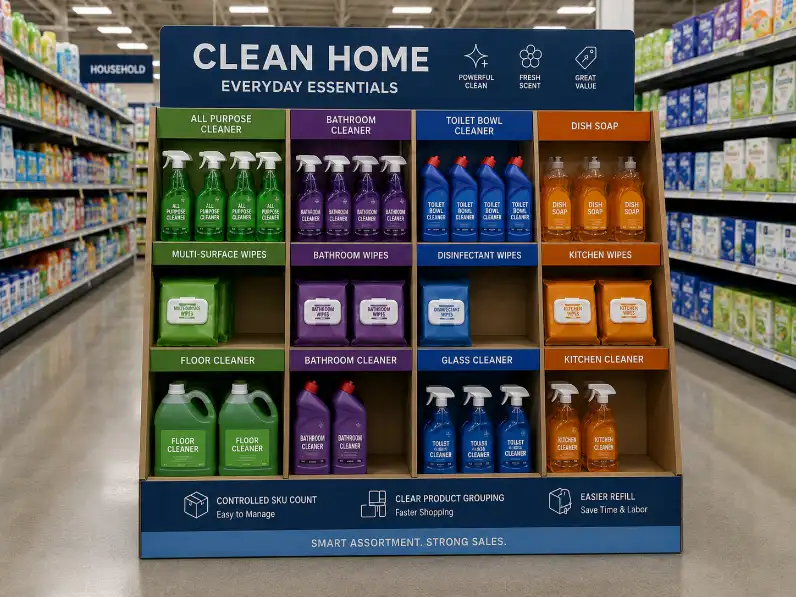
A floor display usually stays cleaner when the assortment is tighter than the brand first wants. That does not mean one SKU only. It means the display should support a clear visual block, not a scattered category wall. When the shopper can understand the offer in a few seconds, the unit sells better and stays easier to refill.
This is one reason promotional bundles, seasonal ranges, best-seller collections, and focused category sets often perform well on a floor display. They give the unit a stronger retail story and a simpler refill pattern. Store staff can rebuild that pattern faster because the logic is easy to read.
If you are still working through range planning, our SKU planning guide is the next internal page to review. A lot of “messy display” problems are assortment problems first.
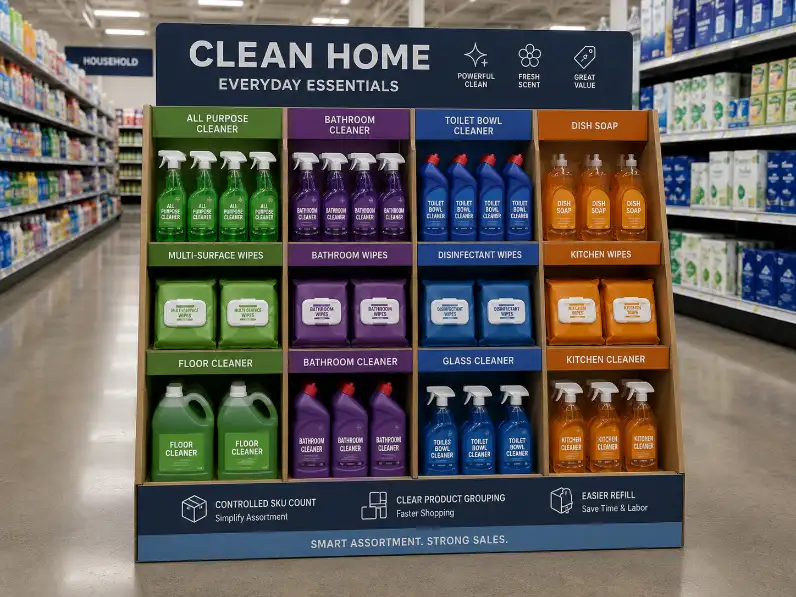
Rule 2: Group Products the Way Retail Staff Will Refill Them
Good grouping is not only for shoppers. It is for store staff too. A floor display should tell both groups what belongs where.
The easiest grouping systems are the ones you can explain in one sentence. One shelf for one flavor family. One row for one size. One block for one function. That kind of logic helps the display recover after sales because the staff member does not need to guess during refill.
In our experience, floor displays lose order fastest when similar-looking products have no obvious grouping rule. The display may still be full, but it no longer looks organized. That weakens the retail message and makes the whole unit feel less reliable.
The fix is not more graphics. It is simpler grouping. When product families stay together, the shelf pattern stays readable from a distance and easier to restore after restocking. That matters a lot in fast-moving stores.
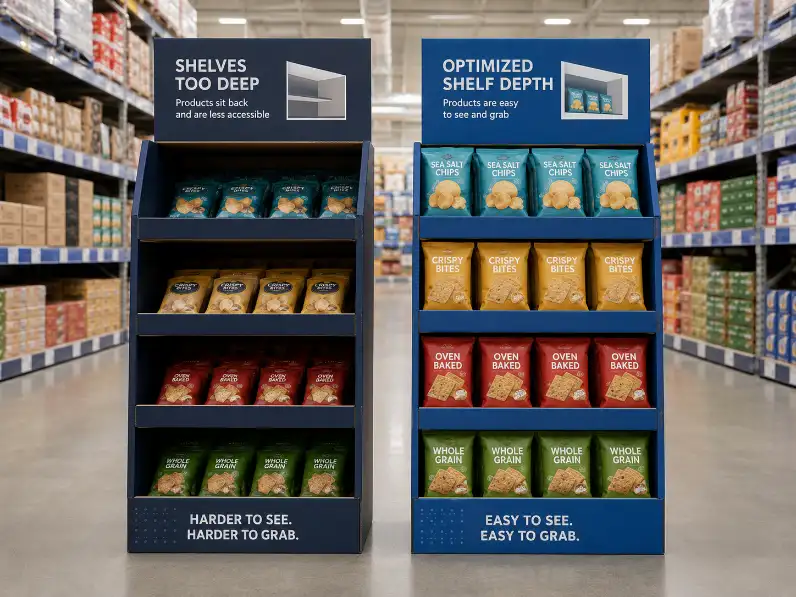
Rule 3: Shelf Depth Should Support Refill, Not Only Capacity
Deep shelves look efficient on paper. In real retail, they can slow everything down.
If the shelf is too deep, the back stock disappears from view and becomes harder to pull forward. If the shelf is too shallow, the front row may tip or look unstable after a few units are removed. The right shelf depth should match both the product pack and the hand movement needed to refill it fast.
This is where a better cardboard display supplier usually sounds different. A stronger supplier does not talk only about how many units fit on the shelf. The supplier also talks about how the shelf will behave after sell-through and during restocking. That is a better sign of retail understanding.
For product lines that carry more weight or longer shelf spans, our corrugated grades guide is worth reading before approval. Shelf behavior depends on both structure and board choice.
Rule 4: A Floor Display Should Still Look Balanced After Partial Sell-Through
A full display hides many design mistakes. A half-sold display reveals them fast.
Buyers should always test partial sell-through during the sample stage. Remove a third of the stock. Remove one fast-moving SKU. Step back. Then ask a harder question: does the display still look intentional, or does it already look broken?
The best floor display layouts keep enough visual balance after stock drops. The remaining products still form a clean block. The shopper still understands the product family. The unit still feels active. That is the point.
Some displays fail here because one shelf empties too quickly. Others fail because one SKU dominates the look once the slower sellers remain. That is not always a structure problem. Often it is a product-mix and layout problem working together.
From a supplier point of view, the right time to solve that issue is before production. Once the display is in store, the retailer is left carrying a weak recovery pattern that could have been tested during sample review.
Rule 5: Refill Speed Is Part of How the Display Sells
Many buyers treat refill as a store issue. It is a sales issue too.
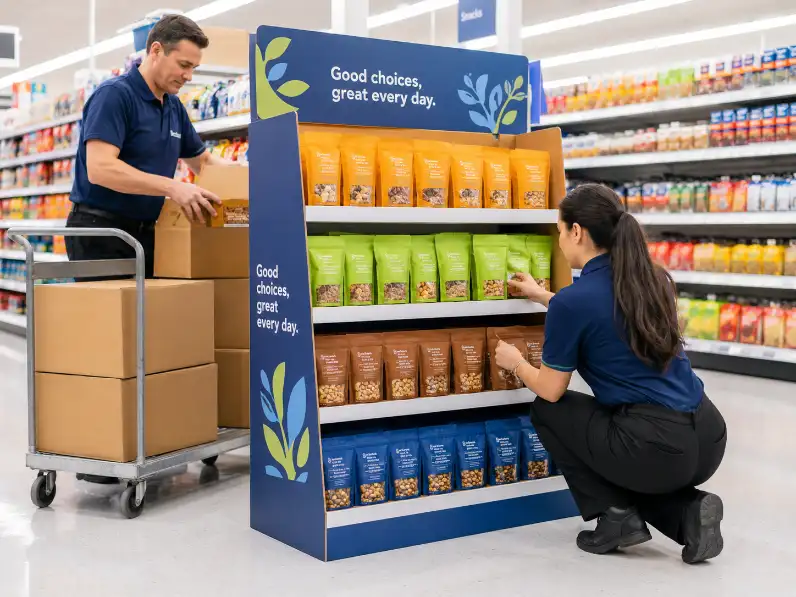
A display that is hard to refill stays untidy longer. Empty spots stay visible longer. Best sellers disappear from eye level longer. The product family looks weaker to the next shopper. That means the refill pattern directly affects sell-through.
This is why easy restocking should be part of the original design brief. The shelves should be easy to reach. The product rows should be easy to rebuild. The graphics should help staff recognize the intended layout quickly. The display should not need a long correction process every time a case is added.
If you want the broader execution framework, our easy refill guide and easy setup guide connect these same store-side issues across other display formats too.
Rule 6: Graphics Should Help the Display Recover, Not Only Look Good at Launch
Graphics do more than attract attention. They also help the display recover visually after uneven sales.
A floor display with clear category cues, clean shelf hierarchy, and a simple front message is easier to restore because the intended finished state is obvious. A display with crowded messages, too many graphic interruptions, or weak hierarchy can look chaotic once the stock begins to move.
This is especially important in larger floor units. The more product the display holds, the more the graphics need discipline. Busy graphics add noise. Strong graphics create order. The best designs help shoppers and store staff read the display fast from several steps away.
The same retail logic appears in broader corrugated guidance around easy identification, easy shopper access, and easy replenishment. See FEFCO Shelf Ready Packaging. For broader corrugated background and why it works well for retail graphics and transport, the Fibre Box Association overview of corrugated is also useful.
A Quick Floor Display Organization Table
| Store-Control Factor | What Keeps the Floor Display Organized | What Usually Creates Disorder |
|---|---|---|
| SKU count | Focused assortment with clear product roles | Too many similar SKUs in one unit |
| Grouping logic | Simple shelf-by-shelf organization | Mixed variants with weak refill pattern |
| Shelf depth | Fast reach and clean front-facing recovery | Deep shelves that hide stock or slow access |
| Partial sell-through behavior | Balanced look after some stock is gone | Large visual holes too early |
| Refill speed | Staff can restore the layout quickly | Too much manual sorting or correction |
| Graphics support | Clear cues that guide visual recovery | Busy design that adds clutter |
What Buyers Should Test Before Approval
Do not approve the display only when it is full and untouched. Test the harder version.
- Load the real products.
- Remove part of the stock.
- Refill the unit fast.
- Step back and check the visual block.
- Watch where the layout breaks first.
That test shows more than a polished sample photo. It tells you whether the floor display will still look strong after real store handling begins. Buyers who do this early usually avoid the most expensive execution mistakes later.
Conclusion
A floor display stays full and organized when the product mix is tight, the grouping rule is easy to follow, the shelf depth supports real hand movement, the layout survives partial sell-through, and the refill process feels simple for store staff. Build those checks into the sample stage, and the display will keep selling after launch instead of fading after the first few days. Then test the week-two look before you approve the day-one look.
For help reviewing a floor display concept, sample, or refill pattern, please contact us.
FAQ
Why do floor displays start looking messy so quickly?
They usually lose order because the SKU mix is too wide, the grouping is weak, or the refill pattern is harder than the store expected.
How can buyers keep a floor display looking full longer?
They should use a tighter product mix, test partial sell-through early, and make refill recovery easier for store staff.
Does shelf depth affect how organized a floor display looks?
Yes. Shelf depth changes how easily stock can be reached, pulled forward, and restored after sales.
Should buyers test a floor display after some stock is removed?
Yes. A display should still look balanced and sellable after partial sell-through, not only when fully loaded.
Can graphics help keep a floor display organized?
Yes. Clear graphics and strong category cues make the intended layout easier to restore during refill.
What is the biggest mistake in floor display approval?
Approving the launch look without testing how the display behaves during real store refill and uneven sales.