A peg display can help small products look clear, easy to compare, and easy to shop. But if the layout is not planned well, the same display can quickly look crowded, uneven, and difficult to refill. That is why visual organization matters just as much as structure.
For brands, retailers, and importers, the goal is not simply to hang products on hooks. The goal is to keep the peg display looking organized in real store conditions, even after shoppers remove items and staff refill the unit. In this guide, we explain how to keep a peg display organized in store and what buyers should check before production begins. If you want to review more structure options first, our cardboard display category and peg displays page are useful starting points.
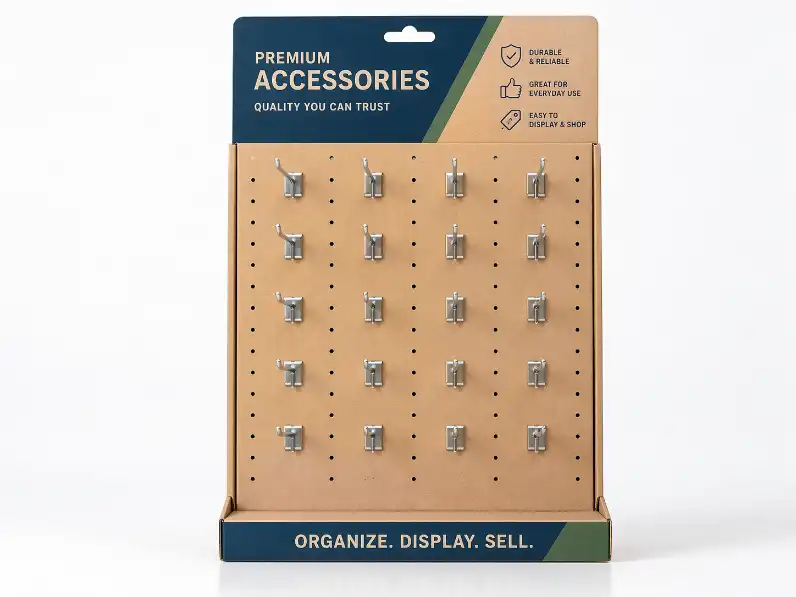
The Main Problem With Peg Displays
A peg display looks clean on launch day because every product is placed neatly for the first setup or store photo. The real problem appears later. Different SKUs start mixing, empty spaces appear unevenly, and some products begin to overlap or hang at awkward angles. Once that happens, the display loses clarity fast.
That means the real design question is not “Can this product hang?” It is “Can this product keep hanging neatly after real customer activity?”
Start With Matching Pack Sizes
One of the easiest ways to make a peg display look messy is to mix products with very different pack sizes on the same visual level. Small hanging packs beside much larger ones create uneven lines and make the display feel disorganized. If a mixed range is necessary, the products should be grouped by size or function rather than scattered across the full unit.
The cleaner the pack rhythm looks from a distance, the easier the display is to read.
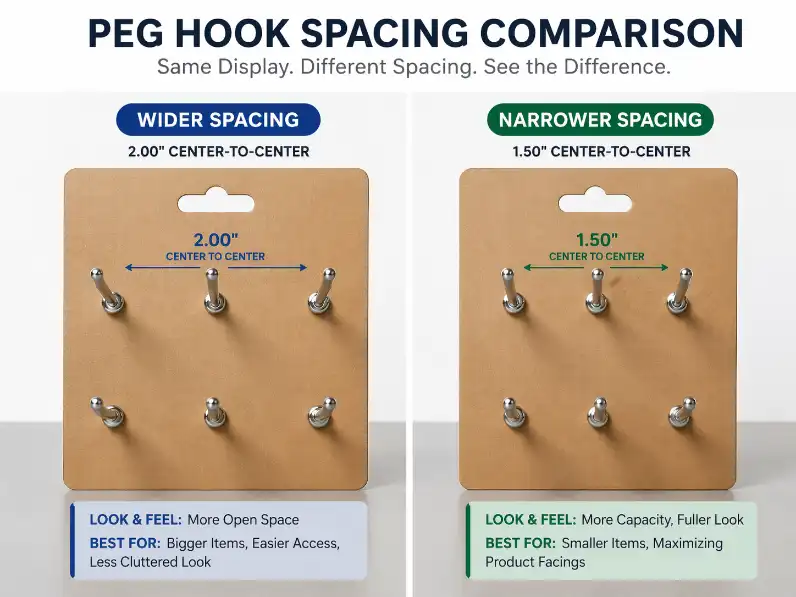
Hook Spacing Matters More Than Buyers Expect
If the hooks are too close together, the products overlap. If they are too far apart, capacity drops too quickly and the display can look underused. Good peg displays usually balance spacing so each pack stays visible while still making efficient use of the available area.
This is especially important for electronics accessories, sachets, pet accessories, and hardware add-ons, where multiple similar products need to remain clearly separated.
SKU Control Is the Fastest Way to Improve Visual Order
Many peg displays look messy because too many SKUs are forced into one small unit. More variety may seem useful at first, but too much assortment often weakens visibility and makes refill harder. A cleaner peg display usually performs better because shoppers can understand it faster.
If you are reviewing assortment logic now, our article on how many SKUs one cardboard display should hold is a useful next read.
Keep Product Families Together
Peg displays usually stay more organized when each hook row or hook column has a clear role. That could mean grouping by connector type, flavor, color family, pack size, or product function. The important thing is consistency. Once customers and store staff can understand the grouping logic quickly, the display becomes easier to maintain.
A display that has no obvious grouping rule tends to become messy after only a short time on the shop floor.
Peg Display Organization Table
| Visual Control Point | What Keeps the Display Organized | What Usually Creates Mess |
|---|---|---|
| Pack size | Group similar pack sizes together | Mix very small and very large packs randomly |
| Hook spacing | Leave enough space for each pack to face well | Hooks are too close and products overlap |
| SKU count | Keep the assortment focused | Too many SKUs in one small area |
| Refill logic | Use a clear layout that staff can restore quickly | No grouping rule after sell-through |
| Weight balance | Match product weight to hook and panel strength | Hooks sag or backer area looks uneven |
Refill Strategy Affects Appearance
A peg display is not only judged by the first setup. It is judged by how it looks after partial sell-through and refill. If staff cannot tell where each product should return, the display will lose order quickly. That is why refill logic should be part of the design stage, not left to store improvisation.
The best peg displays usually make it obvious where each product belongs. This reduces store effort and protects the front-facing presentation longer. If you are reviewing samples, our article on what a cardboard display sample should prove can help you judge this part more clearly.
Do Not Ignore Weight Balance
Even small products can create visual disorder if the weight is not distributed well. Hooks carrying heavier items may tilt, the back panel may feel uneven, or one section may start looking overloaded. Good peg display planning should account for real hanging weight, not just product dimensions.
If you are reviewing structure and board choice together, our corrugated grades guide can help you compare strength more clearly.
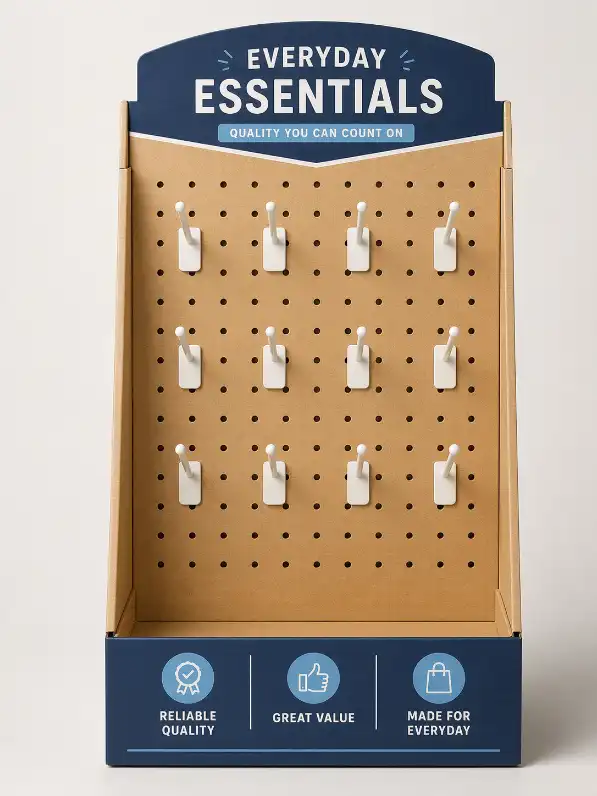
Why Clear Graphics Still Matter
Organization is not only about the products. It is also about the graphics around them. A peg display with crowded headers, too many messages, or weak category cues can feel messy even if the hooks are arranged well. Clean graphics support visual order by helping shoppers understand the product family quickly.
This is one reason peg displays work best when the design is disciplined. The hooks already create visual complexity. The graphics should make the display clearer, not busier.
Questions Buyers Should Ask Before Approving a Peg Display
- Are the pack sizes consistent enough for a neat hanging layout?
- Does the hook spacing keep each product visible?
- Is the SKU count realistic for the display size?
- Can staff understand the grouping logic quickly?
- Will the display still look organized after partial sell-through?
- Is the product weight balanced across the panel?
If the answer is weak on several of these points, the display may still function, but it will be much harder to keep looking clean in-store.
Useful External References
Retail-ready corrugated formats work best when they support easy identification, easy shelf placement, easy shopper access, and easy replenishment. For more on that retail logic, see the FEFCO Shelf Ready Packaging. For broader background on corrugated display value, branding, and transport efficiency, see the Fibre Box Association overview of corrugated.
Conclusion
How do you keep a peg display looking organized in store? In most cases, the answer comes down to consistent pack size, correct hook spacing, controlled SKU count, clear grouping, and refill logic that store staff can follow easily. A peg display looks strongest when the products, the layout, and the visual message all support the same simple structure.
For help developing a peg display that stays cleaner and easier to manage in store, please contact us.
FAQ
Why do peg displays often look messy after launch?
Because products sell through unevenly, store staff refill them differently, and too many SKUs or mixed pack sizes make the layout harder to maintain.
How much hook spacing does a peg display need?
It depends on the pack width and hanging style, but each product should remain visible without overlapping the next one too heavily.
Should a peg display hold many SKUs?
Only if the display is large enough and the grouping stays clear. In many cases, fewer SKUs create a cleaner and more effective result.
Do pack sizes affect peg display organization?
Yes. Mixing very different pack sizes often makes the display look uneven and harder to browse.
Why is refill logic important for peg displays?
Because a layout that is easy for staff to restore helps the display stay tidy after shoppers remove products.
Can graphics make a peg display look messy?
Yes. If the graphics are too crowded or unclear, the whole display can feel visually disorganized even when the hooks are arranged correctly.