
A cardboard display sample is not just a visual preview. It is the point where a buyer should decide whether the project is actually ready for production. Many display problems happen because the sample was treated as something to look at rather than something to prove performance.
A good cardboard display sample should answer practical questions. Does the product fit correctly? Is the structure strong enough? Can store staff assemble it easily? Does the artwork still work after folding? Will it survive shipping? These are the questions that matter before approval.
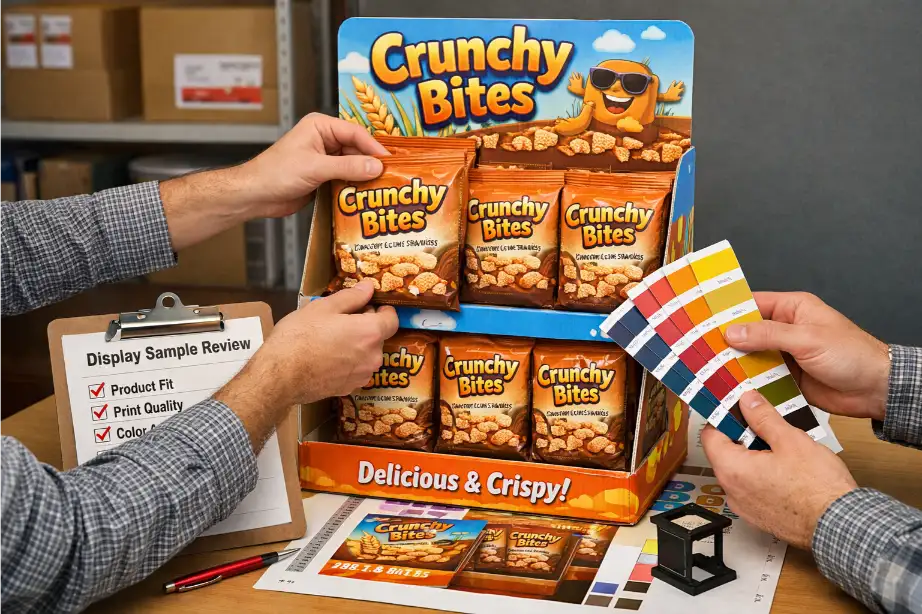
Approval Should Mean More Than “It Looks Fine”
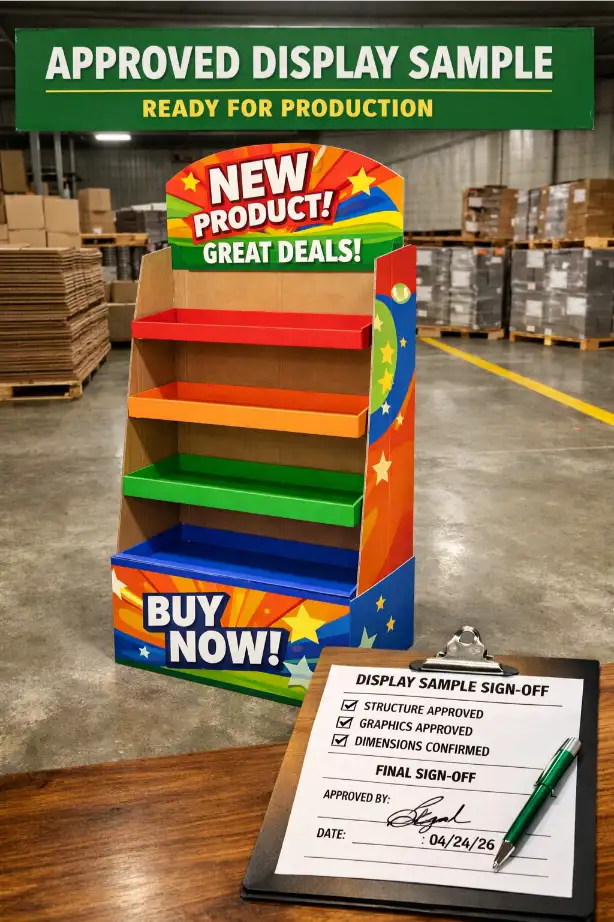
One of the most common buyer mistakes is approving a sample too early. A display may look acceptable in photos or on a meeting table, but that does not mean it is ready for production. Real approval should mean the sample has already proved the most important risks are under control.
In other words, approval should be based on evidence, not only on appearance.
A Good Sample Should Prove Product Fit
The first thing a sample should prove is simple: the real product must fit the display correctly. That includes shelf width, shelf depth, divider spacing, hook position, facing angle, and how the product looks once loaded. Products should not lean badly, hide the branding, or create wasted space.
For mixed-SKU displays, this check becomes even more important. The sample should show whether the products still look organized once several variants are placed together.
A Good Sample Should Prove Load Performance
A display sample should also prove that the structure can carry the intended retail load. This does not only apply to beverages or heavy products. Even lighter categories can fail if the shelf span is too wide, the support is too weak, or the product count is unrealistic.
Buyers should load the sample the way it will really be loaded in-store. A display that works with half the planned quantity has not actually passed the test.
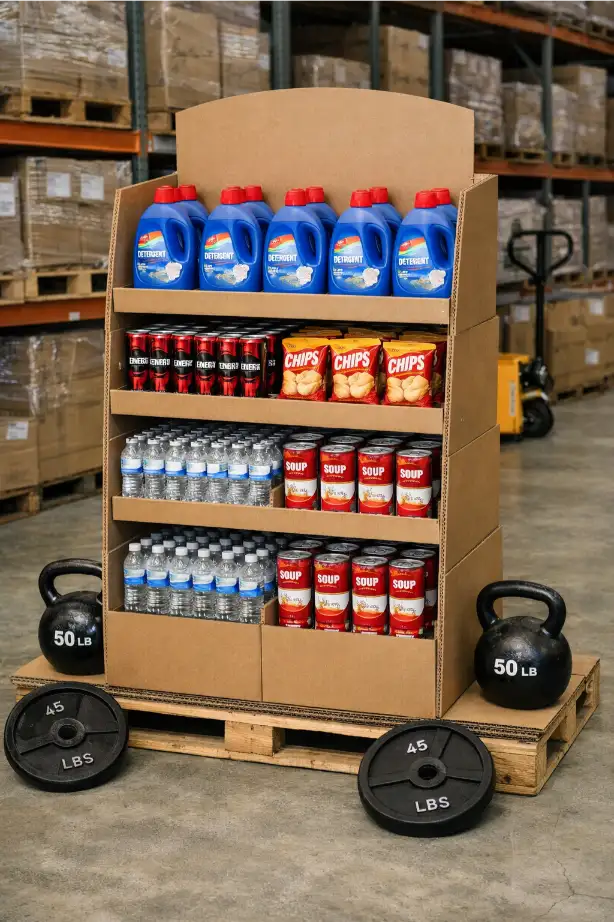
A Good Sample Should Prove Assembly Logic
If a display is difficult to assemble, retail execution becomes weaker immediately. A good sample should prove that the structure can be assembled clearly, consistently, and without frustration. Tabs should lock properly, folds should make sense, and the base should stand correctly once built.
The key question is not whether the designer can assemble it. The key question is whether regular store staff can assemble it correctly without confusion.
A Good Sample Should Prove Print Placement
Artwork should always be checked on the real structure, not only on a flat file. A sample should prove that logos, headlines, product messages, and graphics still read well after folding and assembly. Buyers should check whether any key message falls too close to a fold line, gets hidden by product loading, or loses impact from the main shopper angle.
If artwork quality is part of the project risk, our artwork guide and printing guide are useful next reads.
A Good Sample Should Prove Retail Usability
A display sample should also answer a more operational question: does it actually work in a store? That means buyers should think about refill speed, shopper access, product visibility, and whether the display stays neat after some units are removed. Some displays look fine when fully loaded but perform poorly once customers start shopping from them.
If the display becomes messy too quickly, the sample has already revealed a problem worth fixing before production.
A Good Sample Should Prove Shipping Readiness
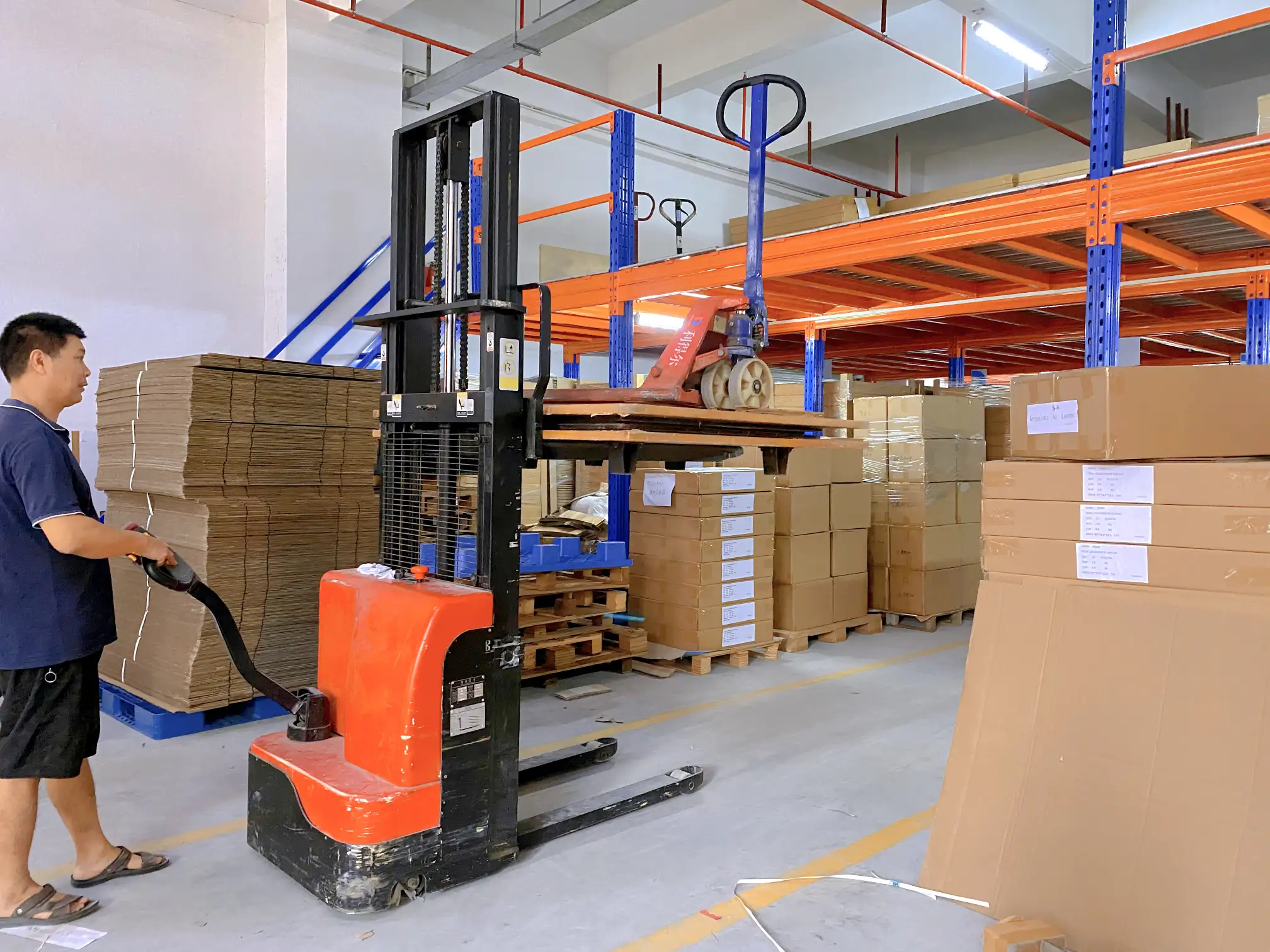
For export projects, a good sample should also prove that the display is practical for packing and transport. Flat-pack logic, carton count, part protection, and transport handling should all be reviewed before approval. If the display only works well when handled very carefully, that risk needs to be solved before production begins.
Our export packaging guide and flat-pack shipping guide can help you review this part in more detail.
What a Sample Should Not Be Used For
A sample should not be treated as a beauty contest. It is not mainly there to impress. It is there to reveal problems early enough that they can still be fixed cheaply. If the sample stage is used only to admire the design, buyers lose one of the most valuable control points in the whole project.
This is why good buyers often ask tougher questions at the sample stage than at the quoting stage.
Sample Proof Checklist
| What the Sample Should Prove | Why It Matters | Typical Failure Sign |
|---|---|---|
| Product fit | Confirms the structure matches the real product | Products lean, hide labels, or sit unevenly |
| Load strength | Confirms shelf and base stability | Shelves sag or the display tilts |
| Assembly logic | Reduces store setup errors | Tabs, locks, or folds are confusing |
| Print placement | Protects retail visibility and brand clarity | Logos or messages fall in bad positions |
| Retail usability | Improves refill and shopper interaction | Display gets messy too quickly |
| Shipping readiness | Reduces transport risk before mass production | Packing logic feels weak or impractical |
Questions Buyers Should Ask During Sample Review
- Does the sample hold the full intended quantity safely?
- Can store staff assemble it without special explanation?
- Are the most important graphics still visible after assembly?
- Does the display still look organized after some products are removed?
- Is the flat-pack or shipping plan realistic?
- Has every important SKU been checked in the real structure?
How This Connects to Cost and MOQ
A strong sample review often saves money later. It reduces the chance of expensive rework, weak retail execution, and shipping damage after production. Buyers sometimes try to save time by approving quickly, but that often creates larger cost problems later. If you are comparing budget and quantity logic at the same time, our cost guide and MOQ guide are useful support articles.
Useful External References
The “five easies” concept used in shelf-ready packaging focuses on identification, opening, shelf placement, shopper access, and disposal, which is useful when thinking about what a good display sample should prove before approval. See FEFCO Shelf Ready Packaging. For transit-related validation concepts, ISTA’s transport testing overview is a useful reference point: ISTA Test Procedures. For general corrugated background, see the Fibre Box Association.
Conclusion
A good cardboard display sample should prove far more than visual appeal. It should prove product fit, load stability, assembly ease, print placement, retail usability, and shipping readiness. Buyers who use the sample stage to test real performance usually avoid the biggest production mistakes later.
If you want help reviewing a display sample before final approval, feel free to contact us.
FAQ
What is the most important thing a display sample should prove?
It should prove that the real product fits, loads correctly, and can be displayed safely under actual retail conditions.
Should buyers test full product load on a sample?
Yes. A display sample should be loaded the way it will really be used in-store.
Is visual approval enough before production?
No. Visual approval is only one part of sample review. Assembly, fit, stability, and shipping logic matter too.
Why is assembly testing important at sample stage?
Because a display that is hard to assemble can create store-level execution problems after rollout.
Should buyers check shipping at the sample stage?
Yes, especially for export projects, because transport issues often appear before the display reaches the store.
Can a good sample reduce total project risk?
Yes. A strong sample review helps catch mistakes before they are repeated across mass production.

2 Responses