
In today’s competitive retail environment, product visibility matters as much as product quality. If shoppers do not notice your product quickly, they may never pick it up. That is why more brands are investing in paper display stands that combine strong visual impact, flexible structure, and cost efficiency.
From supermarkets and convenience stores to beauty counters and promotional events, custom cardboard displays have become one of the most practical tools for increasing in-store attention. Whether you need branded floor units, countertop solutions, or hook-style retail fixtures, the right display can help your products stand out while supporting your sales campaign.
What are paper display stands?
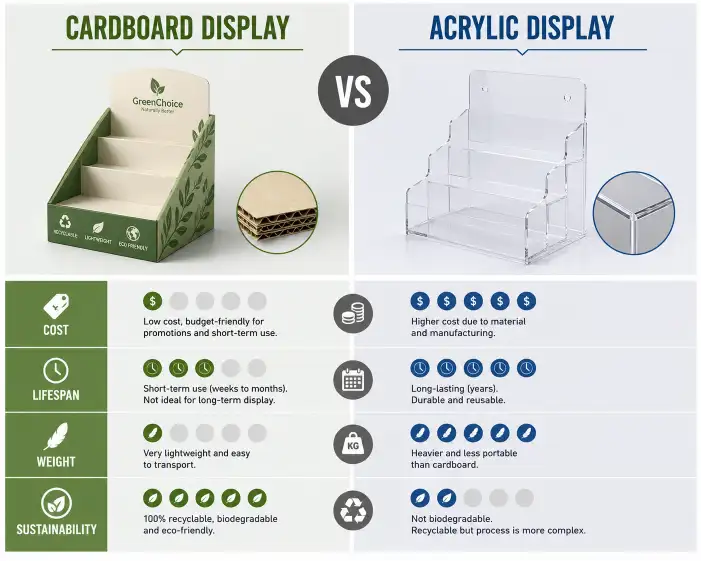
Paper display stands are retail merchandising structures made from printed paperboard or corrugated cardboard. They are commonly used to present products in stores, trade shows, pop-up events, and seasonal campaigns. Compared with permanent metal or plastic fixtures, paper displays are lighter, easier to customize, and more cost-effective for promotions.
Many buyers also refer to them as cardboard displays, POP displays, POS displays, or corrugated display stands. If you are exploring custom solutions, you can see more cardboard display solutions here.
Why do brands choose custom cardboard displays?
One of the biggest advantages of paper display stands is flexibility. A custom display can be designed around your exact product size, weight, branding, and retail channel. Instead of forcing your products into a standard rack, you build the display around the way your products are meant to be seen and purchased.
Brands also choose cardboard displays because they offer several business benefits:
1. Better shelf impact. Custom graphics, structure, and color help attract attention faster than standard shelving.
2. Lower cost for promotional campaigns. Compared with many permanent fixtures, paper displays are often a more efficient option for seasonal launches and short-term retail programs.
3. Easier shipping and assembly. Most cardboard displays are shipped flat, which helps reduce freight volume and storage space.
4. Strong branding opportunities. You can print product messages, logos, campaign slogans, and shopper instructions directly on the structure.
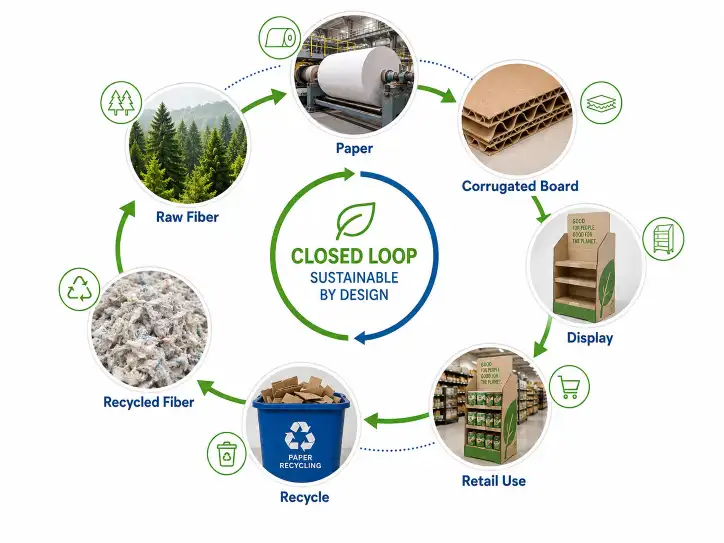
5. More sustainable image. For many brands, paper-based retail displays align better with eco-conscious packaging goals.
If your goal is to build a branded merchandising solution instead of using a generic fixture, take a look at these custom cardboard displays.
Common types of paper display stands
1. Floor displays
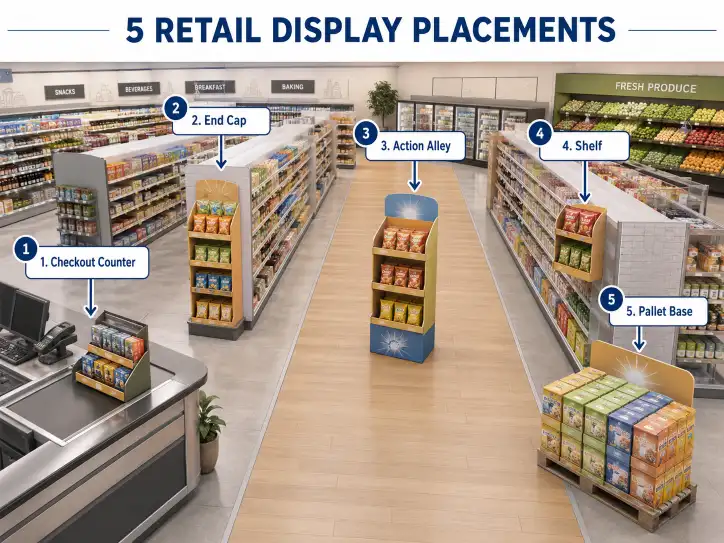
Floor displays are one of the most popular formats for retail promotions. They are ideal for high-traffic aisles, end caps, and promotional zones where visibility is critical. These displays can hold more stock and support larger graphics, making them a strong choice for snacks, beverages, cosmetics, toys, and household items.
You can explore examples of floor displays here.
2. Counter displays
Counter displays are designed for checkout areas, service desks, and compact retail spaces. They work especially well for smaller products, impulse purchases, travel-size items, accessories, and promotional bundles. Because they sit close to the shopper, they can be very effective for last-minute buying decisions.
See more counter display options here.
3. Pegboard displays
Pegboard paper displays are perfect for lightweight hanging products such as cables, tools, cosmetics accessories, stationery, small electronics, and promotional items. They keep products organized and visible while using vertical space efficiently.
If this style fits your category, view these pegboard display solutions.
4. Retail program displays
For chain stores and branded retail campaigns, displays often need to follow specific merchandising standards, sizing rules, and visual guidelines. In these cases, a more structured retail display program is important so the display not only looks attractive, but also works well in real store conditions.
You can review more retail display solutions here.
How to choose the right paper display stand
Choosing the right display is not only about appearance. A good retail display should match your product, your channel, and your campaign goal. Here are the main factors buyers should consider.
Product size and weight
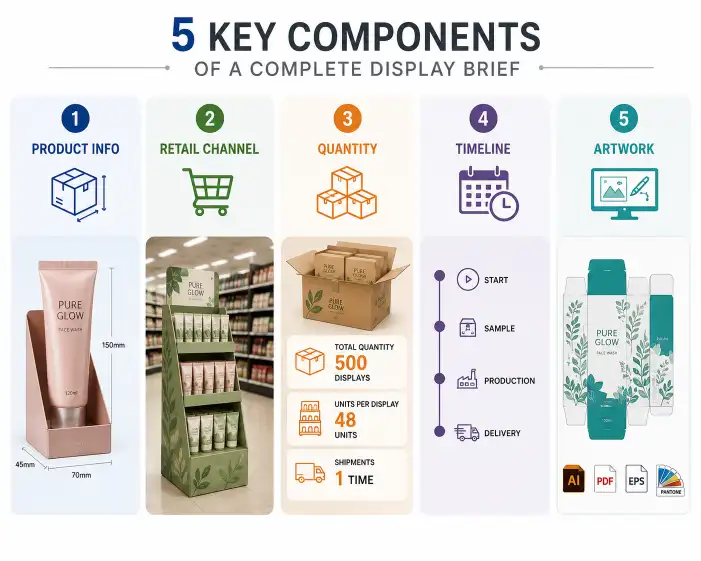
The structure must be designed for the actual load. Lightweight beauty products and snacks may work well in compact displays, while bottled drinks, boxed sets, or multi-layer promotions need stronger corrugated construction and reinforced shelves.
Store placement
Think about where the display will be used. A checkout counter requires a compact footprint. A supermarket aisle needs stronger visual impact. A trade show may require portability and quick assembly. The same product may need different display styles for different retail environments.
Display quantity and refill frequency
If your campaign moves a large volume of product, you need a display that can hold enough stock without looking messy or becoming difficult to restock. Larger floor units are often better for promotions with high turnover.
Brand presentation
The best display is not just functional. It should also reflect your brand identity. Printing, color consistency, logo placement, messaging hierarchy, and shelf communication all influence shopper response. A well-designed display can make even a simple product look more premium.
Logistics and assembly
For retail rollouts, shipping efficiency matters. Flat-packed displays help reduce freight costs, but the design also needs to be easy for store staff to assemble. A practical structure saves time in-store and reduces execution problems during launch.
Why custom paper displays often outperform standard fixtures
Standard fixtures may hold products, but they rarely tell a brand story. A custom paper display gives you control over shape, print, messaging, and shopper flow. That means your display does more than carry items—it actively supports product marketing.
For example, a custom display can highlight a new launch, explain product features, separate flavor variants, guide the shopper’s eye to your hero product, and create a more complete branded experience. This is especially important in crowded retail categories where many products compete for the same attention.
Before mass production, many buyers also want to test the structure, print quality, and assembly process. If that is important for your team, you can review the sampling process here.
Are paper display stands a good option for modern retail?
Yes—especially for brands that want speed, flexibility, and stronger visual merchandising without committing to heavy permanent fixtures. Paper display stands are widely used for product launches, seasonal promotions, club store programs, beauty campaigns, food and beverage merchandising, and promotional bundles.
When they are properly designed, they can combine attractive branding, structural strength, efficient shipping, and practical in-store performance. For many retail brands, that makes them one of the most effective tools for improving product presentation and driving more attention at the point of sale.
Conclusion
Paper display stands are no longer just simple temporary fixtures. They are now an important part of modern retail strategy. The right display can improve product visibility, support brand storytelling, simplify promotions, and help increase in-store sales.
If you are looking for a display that fits your product and retail channel, a custom solution is usually the best long-term choice. From floor displays and counter displays to pegboard displays and full retail display programs, the right structure can make a real difference in how shoppers see your brand.

12 Responses