A cardboard display inquiry does not need to be long, but it should give the factory enough information to judge structure, material, printing, packing, and cost direction. When the first message is clear, the supplier can respond with practical suggestions instead of asking the same basic questions again.
For B2B buyers, that saves time. It also helps the factory understand whether you need a PDQ display for a counter, a sidekick display for a supermarket aisle, a floor display for a product launch, or retail display packaging for a seasonal campaign.
Why Your First Cardboard Display Message Matters
A cardboard display is not a standard shelf pulled from stock. Even when the display shape looks simple, the final structure depends on product size, product weight, retail placement, printing method, assembly method, carton packing, and shipping protection.
One missing detail can change the quotation.
For example, a counter display holding light sachets may use a thinner board and a simple tray structure. A floor display holding bottled drinks needs stronger board, reinforced shelves, load-bearing checks, and safer packing. A peg hook display for hanging products needs attention to hook position, product spacing, backing strength, and balance.
That is why a practical first message helps both sides. You do not need a complete technical drawing at the beginning. You do need enough project information for the factory to see the direction.
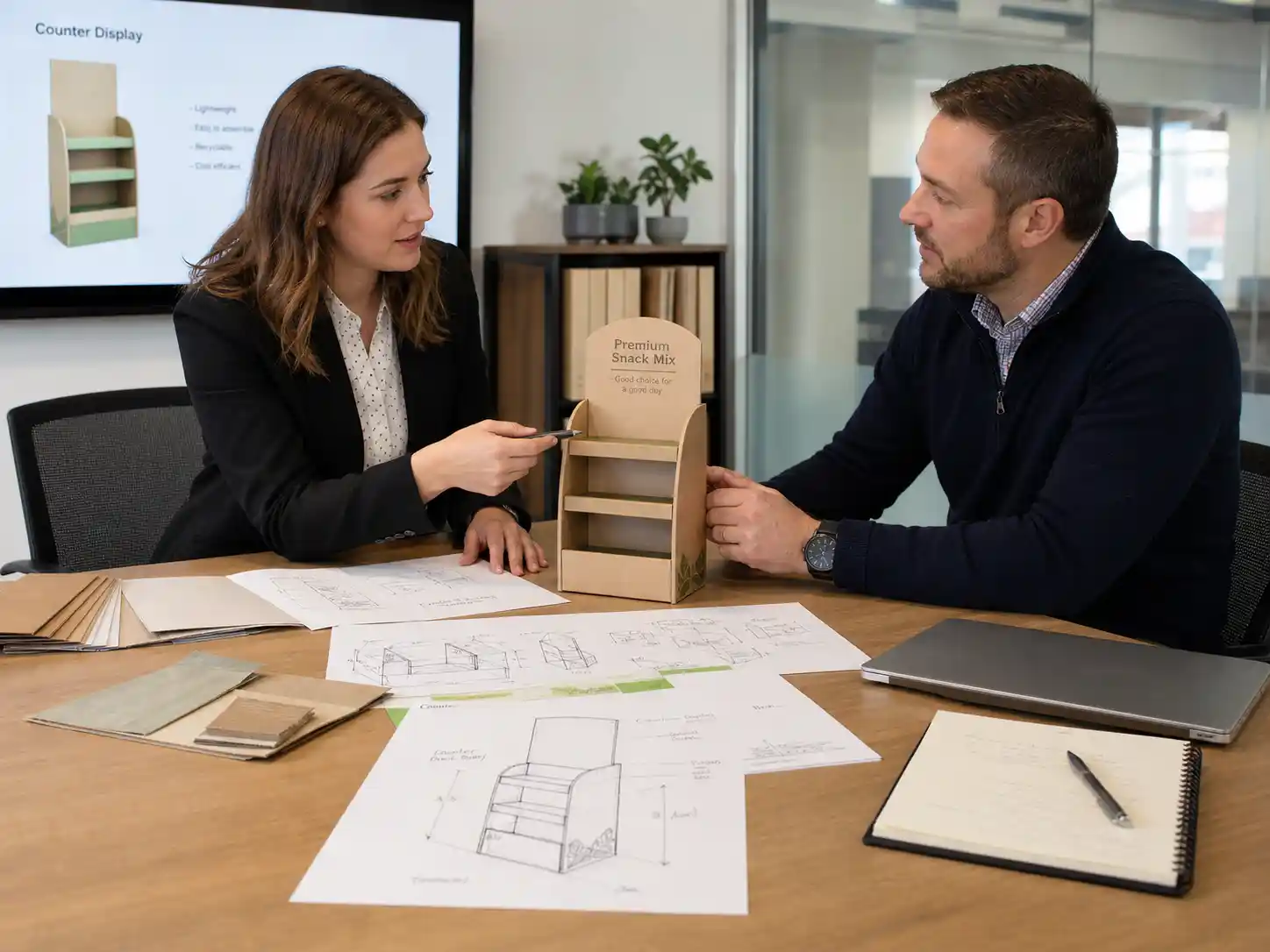
A manufacturer can then suggest structure options, material direction, sampling steps, printing preparation, and production timeline. If your project involves custom structure or retail rollout support, it is also useful to review custom cardboard display solutions before sending the inquiry.
1. Send the Product Details First
The product is the starting point for every display decision. A factory cannot design a stable cardboard display without knowing what the display will hold.
Send these details in your first message:
- Product name or category
- Product size
- Product weight
- Number of units per display
- Product packaging type
- Whether the product stands, hangs, stacks, or sits in trays
- Any fragile, heavy, liquid, or irregular shape concerns
Small differences matter. A boxed cosmetic product, pouch snack, canned drink, toy blister pack, and folded garment all need different display thinking. Product weight affects shelf strength. Product height affects spacing. Product packaging shape affects whether the display needs shelves, hooks, trays, dividers, or a dump bin structure.
Do not only say, “We need a cardboard display for our products.” That gives the factory no structure direction.
A stronger message would be:
“We need a floor cardboard display for 250 ml boxed skincare products. Each product is about 55 x 35 x 135 mm and weighs around 120 g. We want to display around 60 units per stand for retail stores.”
That message gives the supplier a starting point. It is short. It works.
2. Tell the Factory Where the Display Will Be Used
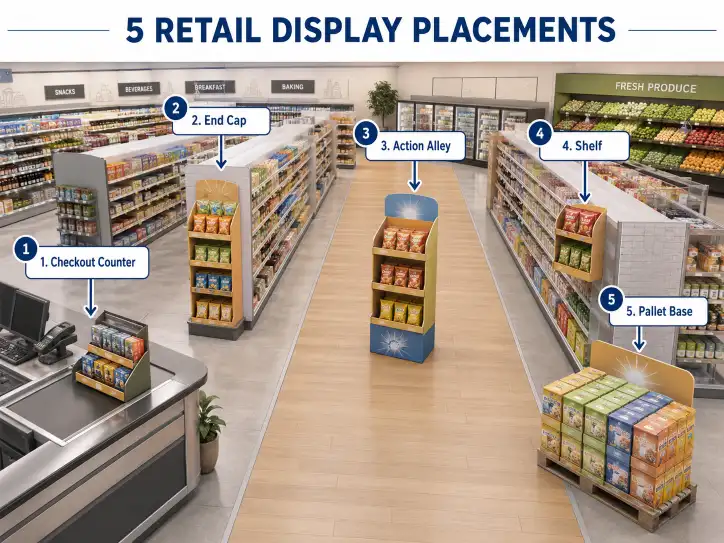
Retail placement changes the display structure. A display for a checkout counter is not built like a pallet display for club stores. A sidekick display hanging near an aisle end is not built like a freestanding floor display.
When contacting a factory, explain the retail channel and placement as clearly as possible.
Useful placement details include:
- Supermarket aisle
- Chain store shelf area
- Checkout counter
- Club store pallet zone
- Pharmacy counter
- Cosmetic retail area
- Convenience store floor space
- Exhibition or trade show booth
- Seasonal promotional area
This helps the factory judge display height, base strength, shelf depth, footprint, header size, and assembly method.
For example, a PDQ display usually needs compact size, quick loading, and easy placement on a shelf or counter. A floor display may need stronger side panels, internal support, and a wider base. A pallet display may need stronger load planning, pallet footprint control, and export packing protection.
Match Display Type to Retail Use
If you already know the display type, include it. If not, describe the retail situation and let the manufacturer suggest options.
Common B2B choices include:
| Buyer Situation | Suitable Display Direction | Key Factory Check |
|---|---|---|
| Small products near checkout | Counter display or PDQ display | Tray depth, front lip height, carton packing |
| Hanging packaged products | Peg hook display or sidekick display | Hook spacing, back panel strength, balance |
| Seasonal retail promotion | Floor display or dump bin display | Capacity, branding area, store setup |
| Heavy boxed products | Reinforced floor display | Shelf load, board grade, inner support |
| Club store promotion | Pallet display | Pallet size, stacking, shipping protection |
| Product education launch | Paper display stand with header | Graphic layout, message hierarchy, assembly |
A clear retail context helps the supplier avoid unsuitable structures and focus on workable designs.
Display size affects material cost, printing layout, packing carton size, shipping volume, and retail acceptance. If you have a target size, share it early.
You can send:
- Width
- Depth
- Height
- Shelf count
- Header height
- Base size
- Pallet size requirement
- Maximum store footprint
Some buyers already have retailer guidelines. For example, a chain store may limit floor display width or require a certain pallet footprint. If you have a retailer guide, send it to the factory.
No guide? Give an estimated direction.
For example:
“We want the display to be around 450 mm wide, 350 mm deep, and 1500 mm high. It should hold four shelves and include a top header.”
That allows the factory to check whether the size matches your product quantity and product weight. If the display becomes unstable, the factory can suggest a wider base, fewer shelves, stronger board, or different product layout.
Size also affects flat packing. A display that looks efficient in-store may become costly to ship if the structure does not fold well. A practical supplier will consider both retail setup and logistics, not only the front view.
4. Explain Quantity, Budget Direction, and Timeline
Quantity affects production method. A sample order, small campaign, and national retail rollout need different planning.
Send an estimated quantity even if the final number may change.
Useful quantity details include:
- Sample quantity
- Trial order quantity
- Bulk order quantity
- Number of store locations
- Reorder possibility
- Campaign launch date
- Required delivery date
A factory can then judge whether the project should focus on hand sample making, digital sample printing, offset printing, bulk die-cutting, or a more cost-controlled structure.
For a small test run, the factory may suggest a structure that avoids unnecessary tooling complexity. For a larger retail program, the factory can optimize board usage, printing layout, assembly speed, carton packing, and shipping efficiency.
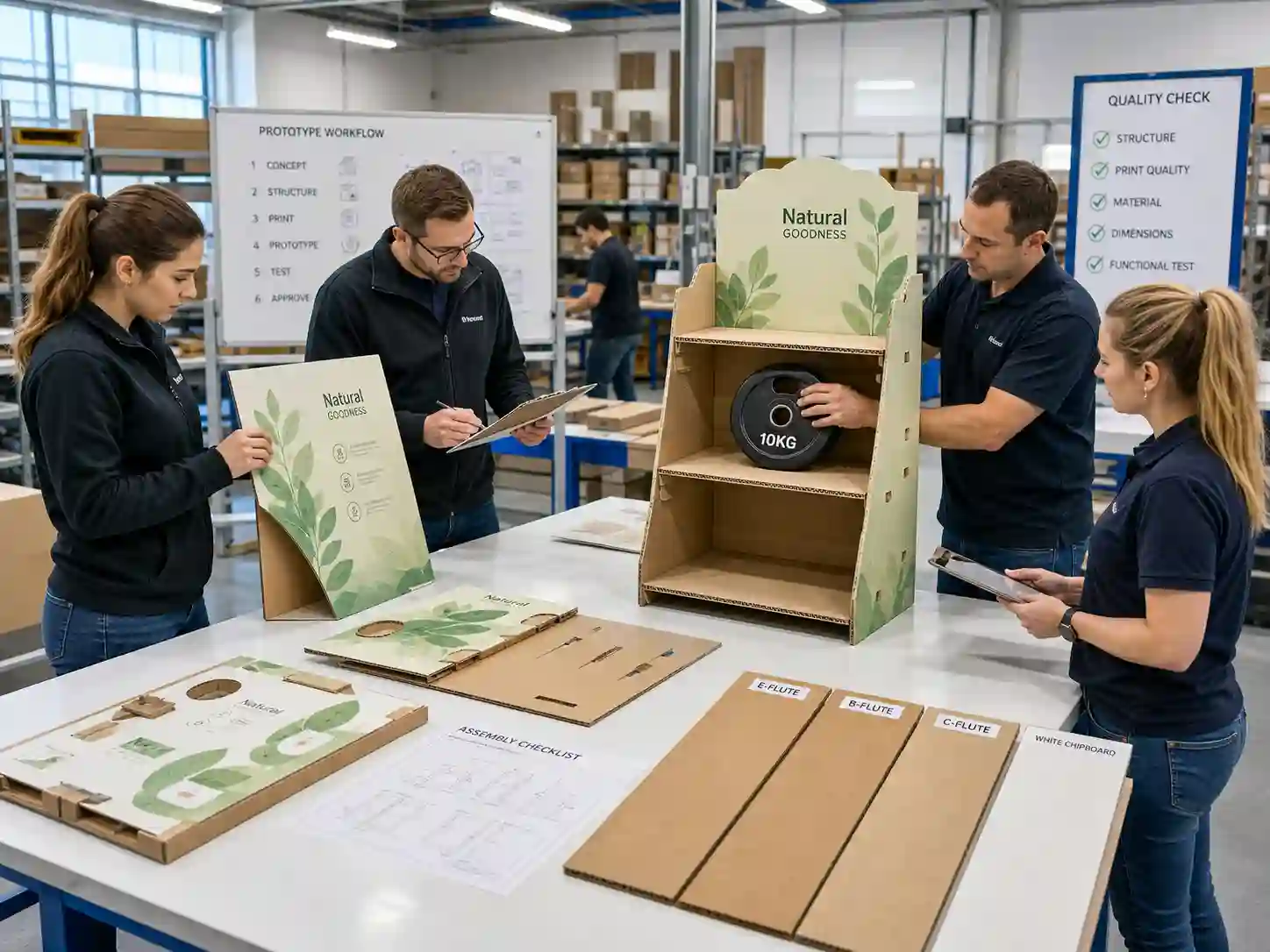
Timeline is also important. A custom cardboard display usually involves structure discussion, dieline preparation, artwork checking, sample production, sample approval, bulk printing, die cutting, gluing, packing, inspection, and shipment. If the launch date is fixed, share it in the first message.
Do not wait until the end to mention urgency.
A better message is:
“We need samples ready for buyer review in early May, and bulk delivery before the July promotion.”
That gives the factory a chance to plan backwards from your retail date.
5. Send Artwork Status and Branding Requirements
A cardboard display often works as a point-of-sale display, so printing is part of the selling function. The factory needs to know whether your artwork is ready or still under development.
Tell the supplier which stage you are in:
- Logo only
- Rough design concept
- Existing artwork from another display
- Print-ready artwork
- Retailer-approved artwork
- Need factory dieline first
- Need design support after structure confirmation
Artwork should match the structure. If the display has shelves, side panels, header, base, front lip, or product trays, each area needs a printable layout. The factory usually prepares a dieline after confirming the structure. Your designer can then place artwork on the dieline.
Also mention printing and finishing preferences when relevant:
- CMYK printing
- Pantone color requirement
- Matte or gloss lamination
- Spot UV
- Foil stamping
- Embossing or debossing
- FSC material request
- Retail compliance or certification needs
For paper sourcing, sustainability claims, or certification marks, buyers should follow the rules from official certification bodies such as FSC or related packaging compliance organizations. A factory can support material direction, but the buyer should confirm brand claims and retailer requirements.
For more education on retail paper displays and in-store selling support, you can also review paper display stands for retail.
6. Provide Packing, Assembly, and Shipping Requirements
A display that looks good in a photo still needs to survive packing, shipping, warehouse handling, and store setup. That is why packing and assembly requirements should be included early.
Tell the factory whether you prefer:
- Flat packed display
- Pre-assembled display
- Semi-assembled display
- Products packed separately
- Products loaded into display before shipping
- Individual carton packing
- Master carton packing
- Palletized export packing
- Assembly instruction sheet
- Retailer setup guide
Flat packing can reduce shipping volume, but store staff need clear assembly steps. Pre-assembled displays save setup time, but shipping cost and damage risk may increase. Product-loaded displays can speed up retail rollout, but they need stronger protection and careful carton testing.
There is no single answer. The right packing method depends on display size, product weight, labor cost, retail setup rules, and shipping route.
A practical manufacturer will check:
- Whether shelves may bend during use
- Whether hooks pull against the back panel
- Whether the base can support the full load
- Whether the display can stand safely after loading
- Whether the carton protects corners and printed surfaces
- Whether the display can be assembled without tools
- Whether the packed carton size is acceptable for shipping
These details often decide whether a project runs smoothly after production.
What a Strong First Inquiry Looks Like
Here is a practical format B2B buyers can copy and adapt.
Sample First Message
Hello,
We are looking for a custom cardboard display for a retail promotion. The product is a boxed skincare item, size 55 x 35 x 135 mm, weight around 120 g per unit. We would like each display to hold about 60 units.
The display will be used in chain store floor areas. Our preferred size is around 450 mm wide, 350 mm deep, and 1500 mm high, but we are open to your structure suggestions. We would like a header, four shelves, and strong branding on the side panels.
Our estimated order quantity is 500 pieces after sample approval. We need one sample first for buyer review. The promotion launch is planned for July, so we would like to understand sample time, bulk production time, packing method, and estimated cost direction.
Artwork is not final yet. Please provide a dieline after structure confirmation. We prefer matte lamination and export carton packing. Please let us know what other details you need.
This message is not long, but it gives the factory enough information to respond in a useful way.
Common Mistakes That Slow Down a Cardboard Display Quote
Many buyers lose time because the first message is too vague. The factory then has to ask several rounds of basic questions before giving any meaningful direction.
Avoid these common issues:
- Sending only a product photo without size or weight
- Asking for a price without quantity
- Requesting a display but not explaining retail placement
- Sending artwork before confirming the structure
- Ignoring packing and shipping method
- Not sharing timeline until late in the project
- Asking several factories for quotes using different information
A cardboard display quote is more accurate when every supplier receives the same project details. That also makes comparison easier.
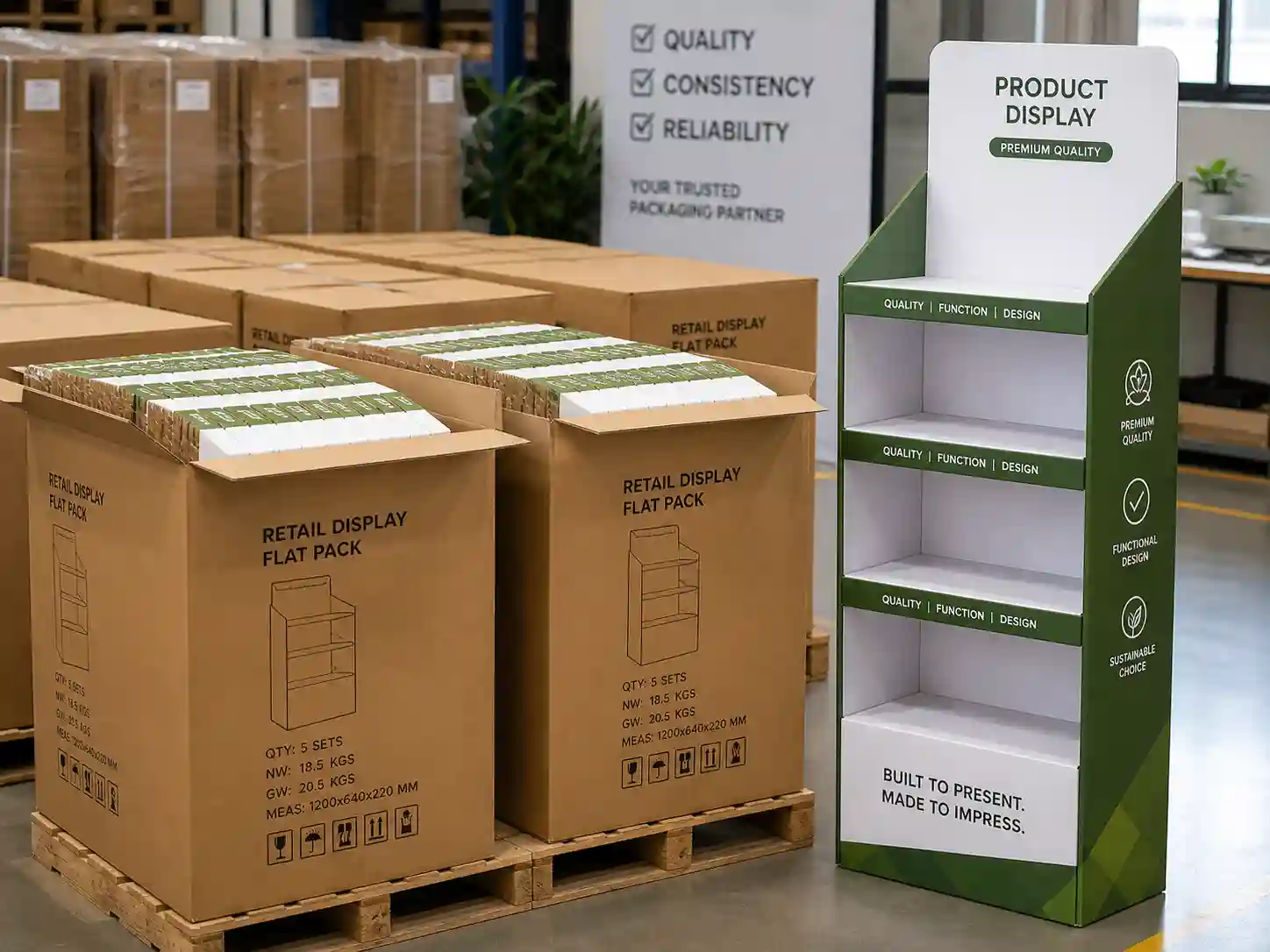
When comparing suppliers, do not look only at unit price. Ask what is included in the structure, board grade, printing method, sample process, packing method, and inspection steps. A lower price may remove internal support, reduce board strength, simplify finishing, or use weaker export packing.
That can create problems later.
Questions a Factory May Ask After Your First Message
Even with a strong first inquiry, the manufacturer may ask follow-up questions. That is normal. Custom display projects require structure checks before production.
A factory may ask:
- Can you send product samples for testing?
- Is the product weight confirmed?
- Will the display be loaded in the factory or in the store?
- Do you need a white sample or printed sample?
- Does the retailer have size or material rules?
- Is the artwork ready in AI, PDF, or editable format?
- Do you need FSC material or other documentation?
- Should the display be packed flat or assembled?
- What shipping method will be used?
These questions are not delays. They are part of risk control.
For example, load-bearing checks help prevent shelf bending. Insert or tray tests help confirm product fit. Export packing checks help reduce damage during long-distance shipment. Print proofing helps avoid color or layout errors before bulk production.
A supplier who asks practical questions may protect your project better than one who gives a fast price with no technical review.
Final Cardboard Display Inquiry Checklist
Before contacting a factory, prepare six items:
- Product size, weight, and packaging form
- Display type or retail placement
- Target display size and capacity
- Quantity, sample need, and timeline
- Artwork status and printing requirements
- Packing, assembly, and shipping method
You can send these details even if some are estimates. Mark them as estimates and ask the factory to suggest a better structure if needed.
A good cardboard display project starts with a clear message, not a long one. When your inquiry includes the right details, the manufacturer can move faster from discussion to structure proposal, sample, quotation, and production plan.
For buyers planning a new retail promotion, product launch, seasonal display, or chain store program, Leader Display project support can help review the project direction and suggest a practical cardboard display structure before sampling begins.