A cardboard display ranking list can help buyers shortlist suppliers, but it should never be the only reason to choose a factory. Many lists focus on website visibility, marketplace activity, or surface-level popularity, while a real retail display project depends on structure, material, printing, packing, and bulk production control. Buyers need to read reputation signals with a production mindset.
A strong supplier is not only the one shown near the top of a list. The stronger question is simple: can this supplier turn your product size, product weight, retail channel, artwork, quantity, and delivery plan into a display that works in store?

Why Cardboard Display Ranking Lists Can Be Misleading
A ranking list may show companies with strong search performance, marketplace reviews, or visible case images. That is useful. It gives buyers a starting point.
But a cardboard display project has many details that are not visible in a ranking table. A PDQ display for lightweight cosmetics, a counter display for small packaged snacks, and a pallet display for club stores have different load requirements, board grades, packing methods, and assembly logic.
Some ranking pages also mix different supplier types:
- Trading companies
- Printing factories
- Packaging suppliers
- Display specialists
- General sourcing agents
- Marketplace stores with limited production control
That matters.
A supplier may show many product photos but still outsource structure design, sampling, printing, or final packing. Another supplier may have fewer public reviews but stronger experience with shelf load testing, flat packing, export cartons, and retail setup instructions.
For B2B buyers, reputation should be checked against factory capability. A list can open the door. It cannot finish the evaluation.
What a Cardboard Display Ranking Should Tell You
A useful ranking should help you understand what kind of supplier you are looking at. It should not only say “top supplier” or “recommended manufacturer.”
For a cardboard display buyer, the useful signals include production depth, project experience, structure options, quality control process, export packing, and communication speed during sampling. These points have direct impact on cost, lead time, and store performance.
Look Beyond Popularity
Online visibility can show that a supplier invests in marketing. It does not prove that the supplier can manage a complex floor display, sidekick display, peg hook display, or pallet display program.
Ask what the ranking is based on:
- Search traffic
- Customer reviews
- Marketplace transactions
- Factory audits
- Export experience
- Display engineering capability
- Industry specialization
If the ranking does not explain its criteria, treat it as a reference, not a decision tool.
Check Whether the Supplier Specializes in Displays
A cardboard box factory and a cardboard display manufacturer may use similar materials, but the work is different. Display projects need more attention to standing strength, product access, front-facing layout, shelf stability, assembly time, and retail presentation.
For example, a dump bin display must hold loose products without collapsing at the side walls. A counter display must remain stable when customers remove products from the front row. A sidekick display must consider hanging points, side panel strength, and store fixture compatibility.
These details separate a display supplier from a general packaging vendor.
Reputation Signals That Matter for B2B Buyers
A good supplier reputation is built through repeatable project handling. Buyers should look for signs that the factory understands both production and retail use.
1. Clear Project Questions Before Quotation
A capable factory should not quote only from a simple product photo. It should ask for practical details:
- Product size and unit weight
- Number of products per display
- Target retail channel
- Display type or reference structure
- Printing artwork status
- Quantity range
- Packing method
- Delivery destination
- Expected launch date
These questions are not delays. They protect the buyer from a weak quotation.
A low quote without these details may change later when board thickness, insert design, carton size, or assembly method becomes clear.
2. Structure Advice Based on Retail Use
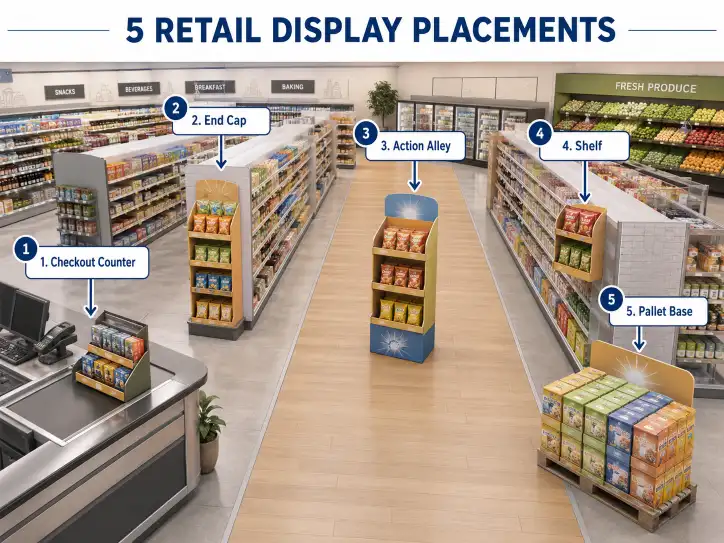
Good cardboard display suppliers do not push one structure for every product. They should explain why a PDQ display, counter display, floor display, peg hook display, or pallet display fits the project.
For small products, a counter display may help with checkout visibility. For hanging accessories, a peg hook display may create cleaner product access. For heavier retail programs, a floor display or pallet display may need stronger board, internal supports, or reinforced base panels.
The supplier’s advice should connect to product weight and store placement.
No guessing.
3. Sampling Process With Specific Checks
A sample is not only a nice-looking mockup. It should confirm structure, print position, product fit, assembly method, and packing plan.
During sampling, buyers should check:
- Whether the product fits each compartment
- Whether the display stands straight
- Whether shelves bend under product weight
- Whether graphics align across panels
- Whether colors match the artwork target
- Whether assembly steps are practical for store teams
- Whether the flat-packed display fits export cartons safely
For custom cardboard display solutions, sampling should connect design ideas with production limits before bulk manufacturing starts.
How to Compare Reputation With Factory Capability
A supplier can have good public reputation but still be weak for your project type. Use reputation as one layer, then compare capability through project evidence.
| Buying Factor | What Buyers Often See in Rankings | What Buyers Should Verify |
|---|---|---|
| Supplier popularity | Website ranking, marketplace exposure, review count | Relevant display project experience and repeat orders |
| Product photos | Finished display images | Whether the factory produced the structure, printing, and packing |
| Price level | Low quotation or wide price range | Board grade, display size, insert design, packing method, and QC scope |
| Custom ability | Claims of OEM or ODM support | Drawing, sampling, artwork checking, structure adjustment, and bulk control |
| Quality promise | General quality wording | Load-bearing checks, print inspection, assembly test, carton drop protection |
| Delivery promise | Fast lead time claim | Material preparation, sample approval date, production schedule, export packing |
| Sustainability message | Eco-friendly wording | FSC paper option, recyclable board discussion, supplier documentation |
This table helps buyers avoid a common mistake: choosing a supplier because the public profile looks strong while the project process remains unclear.

How to Read Reviews and Case Photos
Reviews can help, but they should be read carefully. Many reviews talk about communication, delivery, or product appearance. Those are useful, but display buyers need more detail.
Look for reviews or case content that mention:
- Retail launch support
- Bulk order consistency
- Structural strength
- Printing accuracy
- Packing protection
- Store assembly feedback
- Repeat projects
A case photo is more useful when it shows the display type, product loading method, shelf layout, base structure, and packing condition. A single front-view image may look clean, but it may not tell you whether the display passed load testing or arrived safely after shipping.
For buyers learning how different display types support retail selling, paper display stands for retail can provide a broader view of in-store display value.
Ask for Relevant Examples
Do not ask only for “your best display project.” Ask for examples close to your own product.
For cosmetics, ask for drawer-style, tray-style, or countertop display examples. For snacks or beverages, ask for floor displays, dump bins, or pallet displays with stronger load planning. For accessories, ask for peg hook displays or sidekick displays with hanging structure details.
Relevant examples save time.
They also help the supplier suggest a structure faster.
Production Details That Rankings Rarely Show
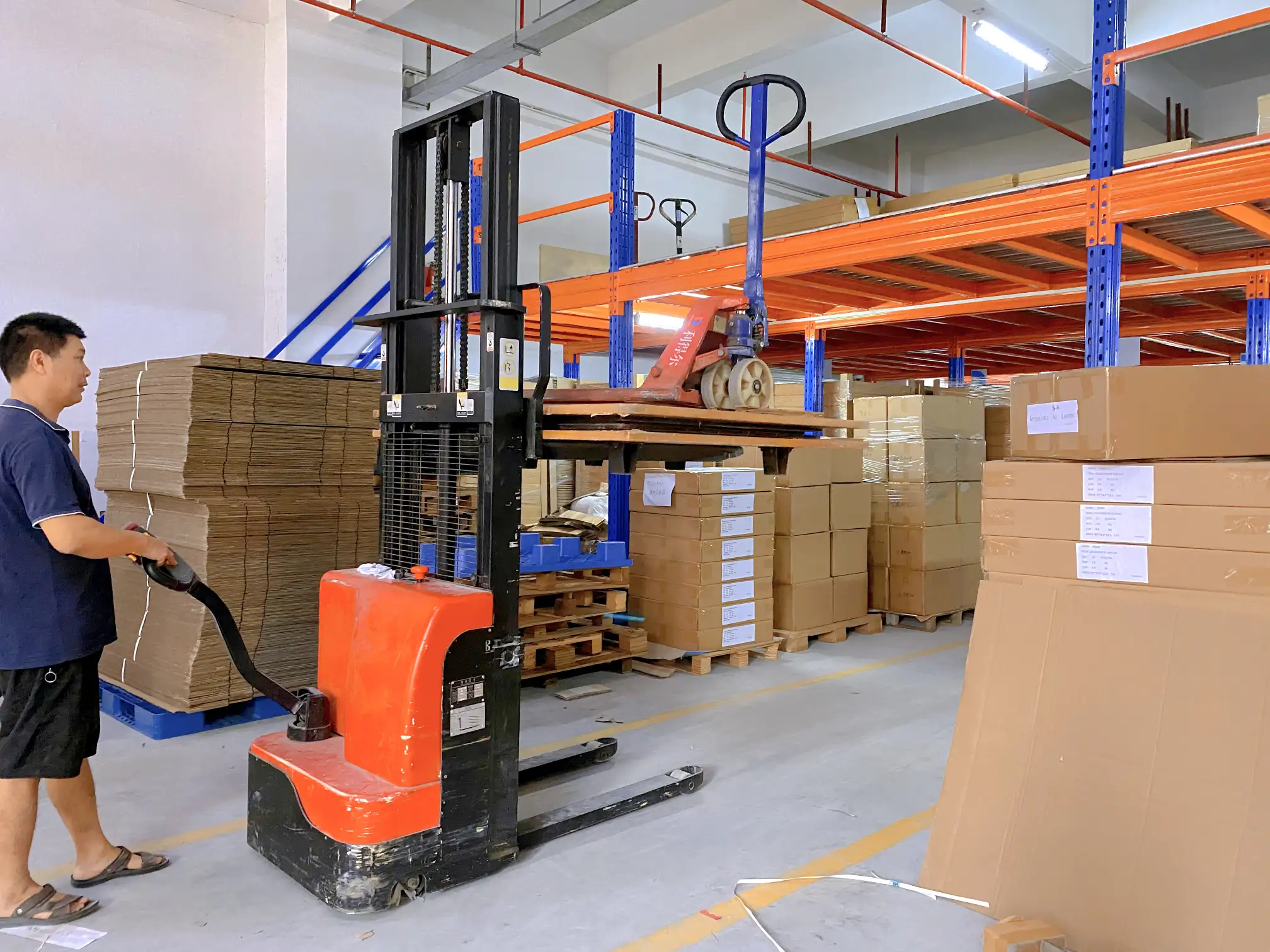
A ranking list usually cannot show what happens inside the factory. That is where many project risks appear.
Material Selection
Cardboard display material is not selected by appearance alone. The supplier needs to consider display size, product weight, shelf span, shipping route, humidity risk, and store handling.
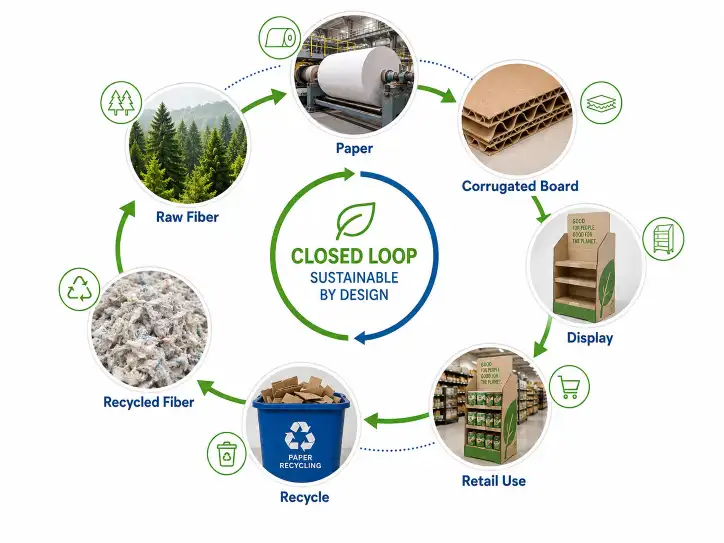
Common choices may include corrugated board, grey board, paperboard, kraft board, or laminated printed sheets. If sustainability matters, buyers can ask about FSC paper options or recyclable board discussion. For packaging formats and carton standards, industry groups and official packaging associations such as FEFCO can provide useful reference language.
Material should match the display job. A light counter display and a heavy floor display should not use the same structure logic.
Printing and Finishing
A retail display carries brand graphics, but print decisions affect cost and lead time. Buyers should confirm:
- CMYK or spot color requirements
- Matte or gloss lamination
- Spot UV, embossing, or foil stamping needs
- Color proof method
- Artwork dieline accuracy
- Barcode and legal text position
- Retail-facing panel priorities
A manufacturer should review artwork before bulk production. Small errors in panel direction, fold lines, or product window placement can become expensive once printing starts.
Load-Bearing and Assembly Checks
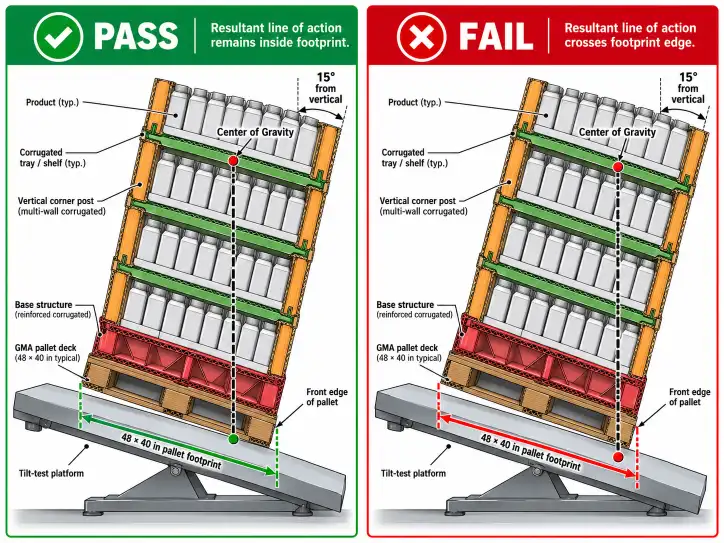
For display packaging, structure failure can damage both product and campaign timing. Buyers should ask whether the supplier can test loaded samples before mass production.
A practical check may include placing the target product weight on shelves, testing the base, checking side wall pressure, and confirming whether store staff can assemble the unit without special tools.
The best structure is not always the most complex one. It is the one that protects the product, displays it clearly, and can be assembled at retail level.
How to Verify Supplier Ranking Before Sending an Inquiry
Before choosing a cardboard display supplier from a ranking list, buyers can use a short verification process.
-
Match the supplier to your display type
Check whether the supplier has experience with your required format, such as PDQ display, counter display, sidekick display, floor display, pallet display, or dump bin display. -
Send clear product information
Share product size, product weight, quantity per display, target store channel, and any reference structure. -
Ask for structure advice
A capable supplier should explain board choice, shelf support, insert design, and flat packing method. -
Request a sample plan
Confirm whether the sample will test size, printing, product fit, load, and assembly. -
Review packing details
Ask how the displays will be packed for export, whether they are shipped flat, and how cartons protect printed surfaces. -
Check communication quality
Good replies should be specific. Watch for vague answers that avoid material, structure, or production details.
This process turns a ranking list into a working supplier filter.
When a Lower-Ranked Supplier May Be a Better Choice
A lower-ranked supplier may still be a better fit when the project requires custom engineering or careful production follow-up. Some factories focus on manufacturing rather than broad online promotion.
For example, a buyer with a seasonal retail campaign may need quick structure adjustment, sampling feedback, print file review, and export packing coordination. A supplier with direct production control may support that better than a supplier with higher public visibility but limited technical involvement.
A good factory should be able to discuss:
- Whether the display will ship flat or pre-assembled
- How store staff will assemble it
- Whether shelves need hidden reinforcement
- How inserts or trays keep products in position
- How carton packing protects corners and printed panels
- Whether bulk production will match the approved sample
For buyers who want direct project discussion, Leader Display project support can help turn early ideas into a more workable inquiry package.
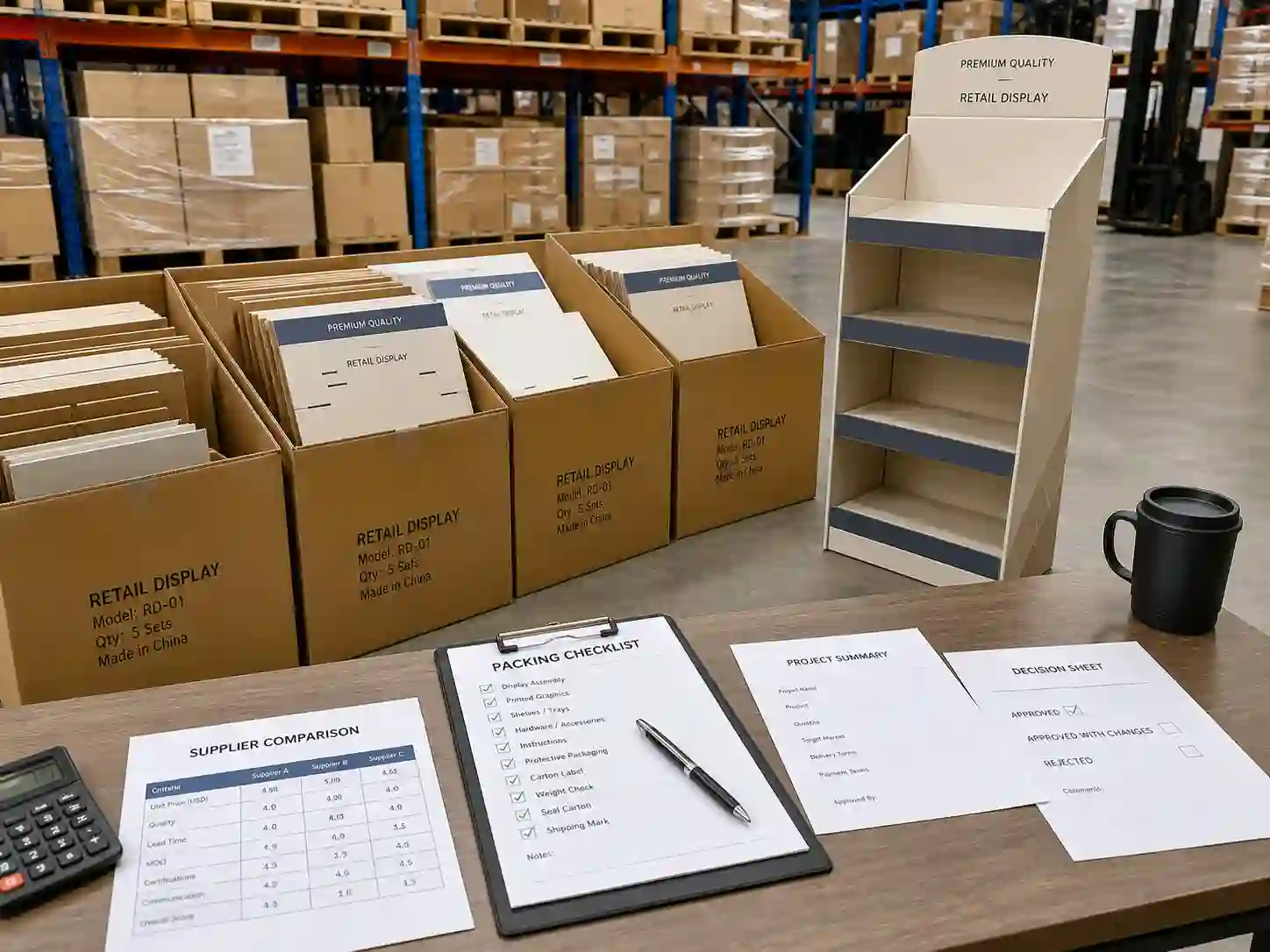
Red Flags in Cardboard Display Supplier Reputation
Not every strong-looking supplier profile deserves trust. Buyers should watch for signals that create project risk.
Red flags include:
- No clear display structure explanation
- No questions about product weight
- No sample process before bulk order
- Only beauty photos, no packing or production details
- Unclear material descriptions
- No artwork checking process
- Vague answers about lead time
- No discussion of export carton protection
- Price quoted before display size and load are known
A supplier does not need to answer every technical detail in the first message. But the reply should show control over the project path.
If the supplier cannot explain how the display will stand, hold product, ship safely, and assemble in store, the ranking position should not carry much weight.
What Buyers Should Prepare Before Contacting a Supplier
A stronger inquiry helps the factory respond with better structure advice and a more accurate quotation. It also helps buyers compare suppliers fairly.
Prepare these details where possible:
- Product photos
- Product dimensions
- Product weight
- Quantity per display
- Target display type
- Target retail channel
- Expected order quantity
- Artwork file status
- Reference display photo
- Packing preference
- Destination country
- Launch or delivery schedule
Do not worry if everything is not ready. A practical manufacturer can help refine the structure after seeing product details and retail goals.
For projects that need custom structure, sampling, printing, and bulk production support, custom cardboard display solutions can help buyers move from supplier comparison to a clear production plan.
Final Thoughts on Cardboard Display Rankings
A cardboard display ranking list is useful when it helps buyers discover possible suppliers. It becomes risky when buyers treat it as proof of production ability.
The better approach is to read rankings together with factory evidence: display structure experience, product weight review, material selection, sampling process, printing control, load testing, packing method, and export support.
Strong suppliers make the project clearer. They ask better questions. They explain trade-offs. They help buyers understand whether a counter display, floor display, peg hook display, sidekick display, PDQ display, or pallet display fits the retail goal.
That is where the buying decision should move next: from reputation on a list to a project conversation based on product details, retail setup, production control, and delivery needs.