Beverage products can look simple on a retail shelf, but the display structure behind them needs careful planning. Bottles, cans, cartons, sachets, and multipacks all create different pressure points, refill habits, and store placement needs. A practical cardboard display for beverages should balance product visibility, load strength, easy assembly, and safe transport from factory to store.
For beverage brands, the best display is not always the largest one. It is the structure that matches product weight, retail channel, campaign period, and how store staff will refill it.
Why Beverage Displays Need More Structural Planning
Beverages are heavier than many impulse retail products. A display for 250 ml juice boxes faces different stress than a display for 1 L cartons, bottled coffee, canned soda, energy drinks, or alcohol-free beverage promotions.
The key risk is not only total weight. It is also how the weight is distributed.
A beverage display may fail if the shelves sag, the side panels bow, the base loses shape, or the front lip cannot hold products during customer handling. For this reason, a cardboard display for beverages should be designed around the actual product size, packed weight, shelf count, refill method, and store traffic.
At Leader Display, beverage display projects often start with product dimensions and case packing information. Before recommending a structure, a manufacturer should ask for bottle diameter, carton height, unit weight, number of facings, retail channel, estimated display quantity, and whether the display will ship flat or pre-packed.
Common Cardboard Display Types for Beverage Products
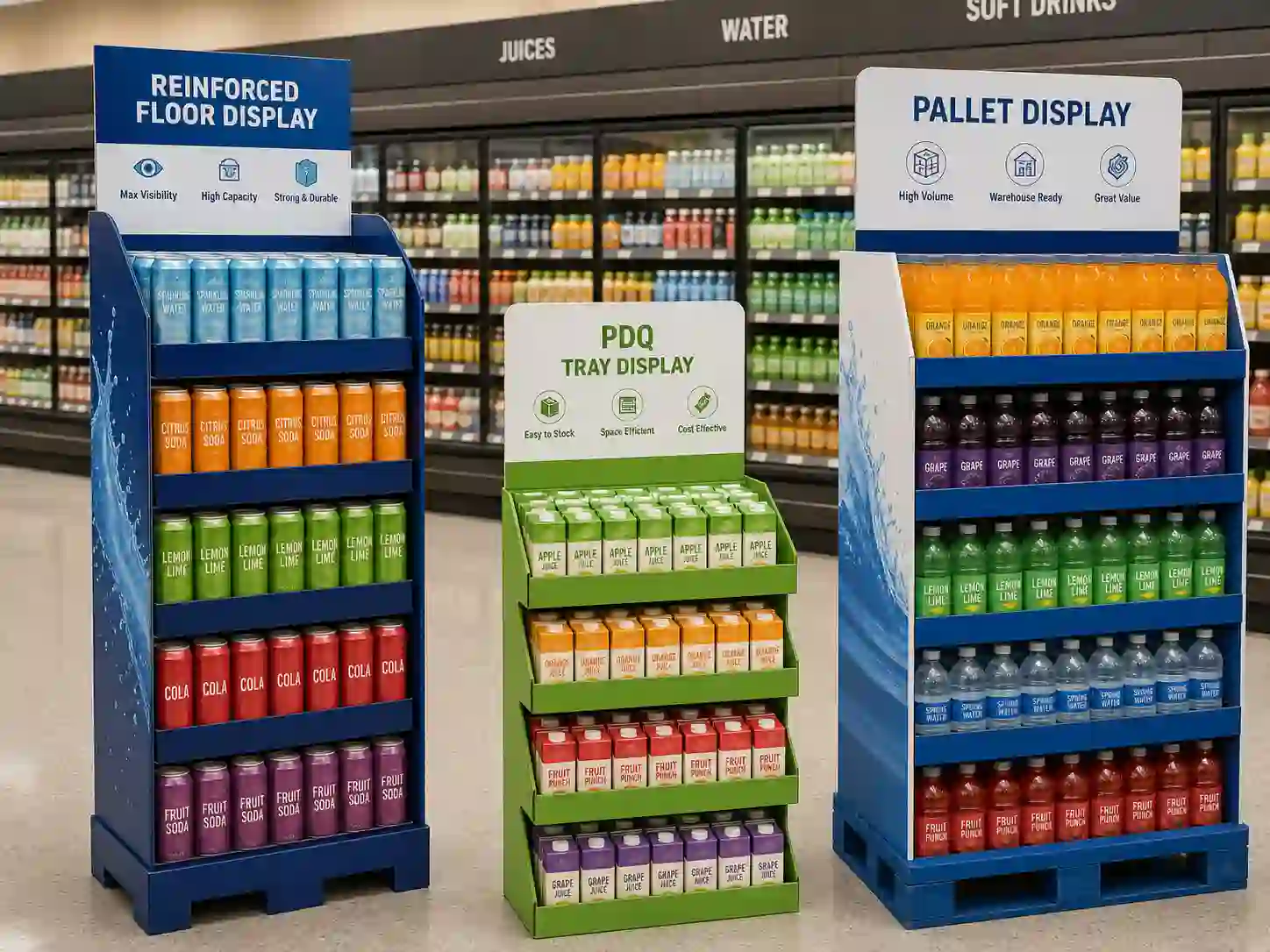
Different beverage campaigns need different display formats. A small counter display may work for single-serve drink powders, while a pallet display may suit bulk club-store promotions.
Floor Displays for Bottles, Cans, and Cartons
Floor displays are one of the most common options for beverage promotions because they offer strong visibility and more product capacity. They are suitable for bottled drinks, canned beverages, coffee cans, juice cartons, tea drinks, functional drinks, and seasonal beverage launches.
A beverage floor display usually needs reinforced shelves, stable side panels, and a strong base. The display may use corrugated board with internal support panels, shelf beams, or double-layer shelves to improve load performance.
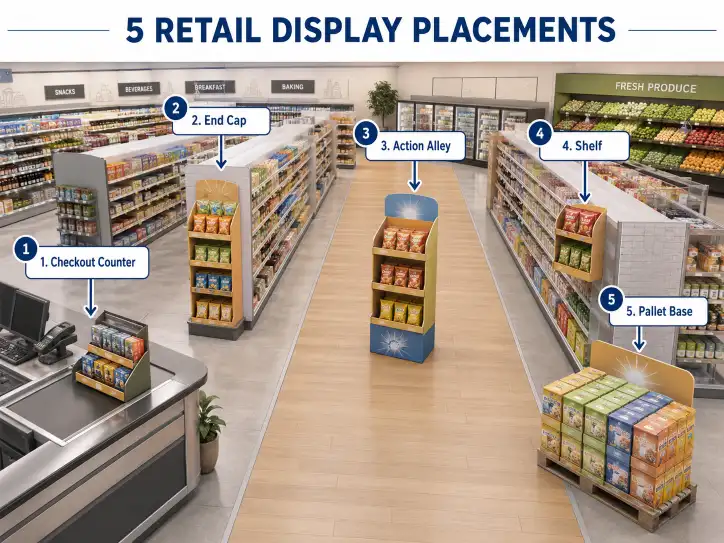
Floor displays work well when the brand wants a separate retail zone away from the standard shelf. They are useful near aisle ends, promotional spaces, checkout-adjacent areas, and seasonal retail zones.
For custom structures, buyers can review more options through custom cardboard displays when planning different shelf heights, graphics, headers, and product-facing layouts.
PDQ Displays for Small Beverage Packs
PDQ displays are useful for small beverage-related products such as drink powders, flavor drops, mini cans, sample packs, sachets, and single-serve promotional items. They are often placed on counters, shelf trays, or retail promotional tables.
A PDQ display for beverages should be easy to open, easy to refill, and strong enough to hold product rows without collapsing at the front. If the item is light, a simple tray may work. If the item is heavier, the front wall and side panels need more support.
PDQ displays are often chosen for fast-moving promotions because they can be packed with products at the factory or packed separately for store setup. This makes them useful for launch campaigns, tasting promotions, and checkout impulse sales.
Counter Displays for Beverage Samples and Add-On Sales
Counter displays are suitable for lightweight beverage products or small accessory items. Examples include drink sachets, instant coffee sticks, tea packs, sample bottles, mini cartons, and promotional gift packs.
Because counter space is limited, the design should focus on clear branding and clean product arrangement. A counter display does not need the same height as a floor display, but it still needs accurate product fit. If the pocket is too loose, products look messy. If the pocket is too tight, store staff will struggle during refill.
Counter displays are also a strong choice when the campaign relies on impulse decisions. They can sit near checkout, sampling stations, convenience-store counters, trade-show desks, or beverage service points.
Pallet Displays for Bulk Beverage Promotions
Pallet displays are often used for wholesale clubs, supermarkets, warehouse stores, and large seasonal promotions. They work well for beverage cartons, multipacks, canned drinks, and case-stack campaigns.
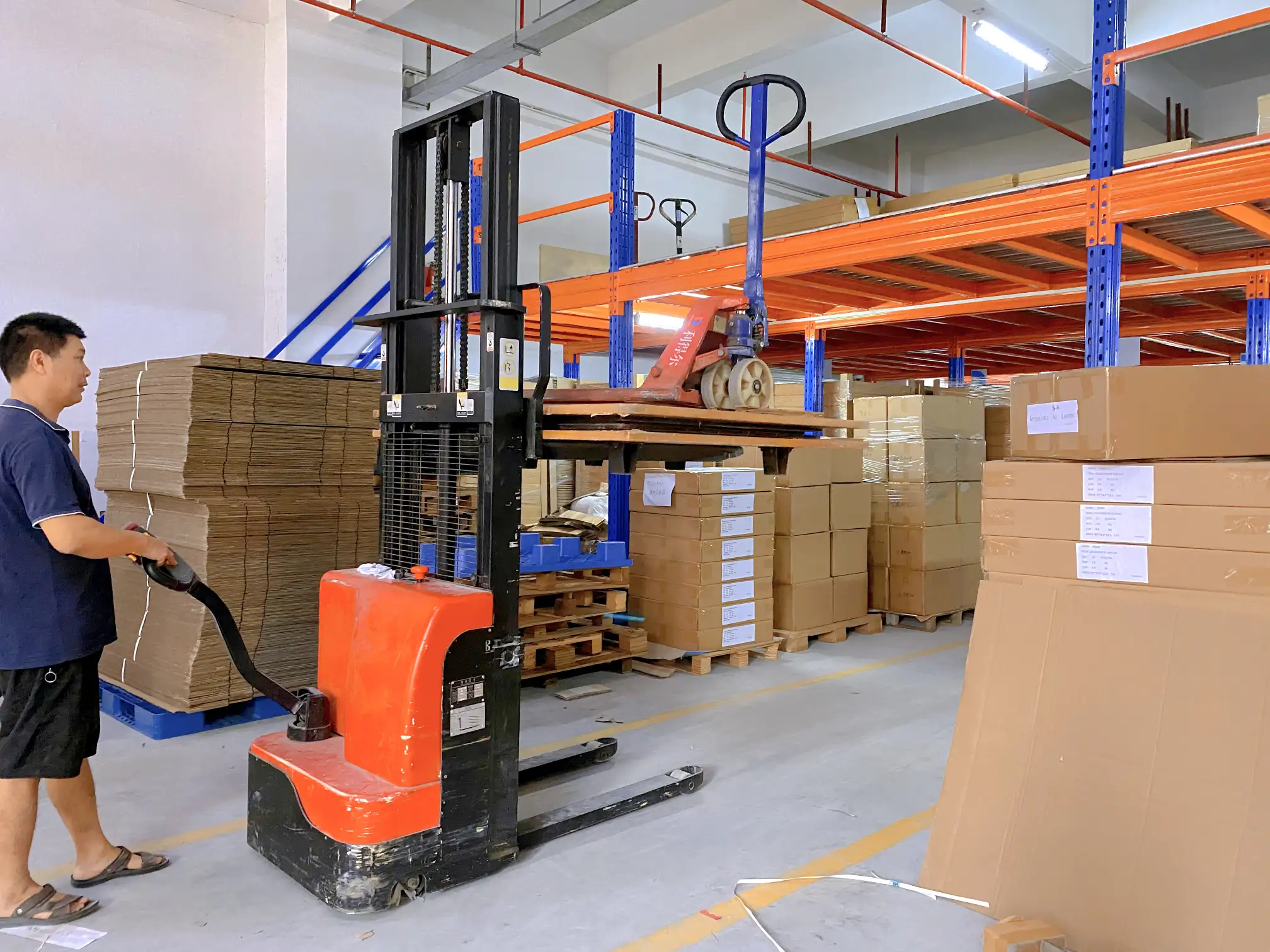
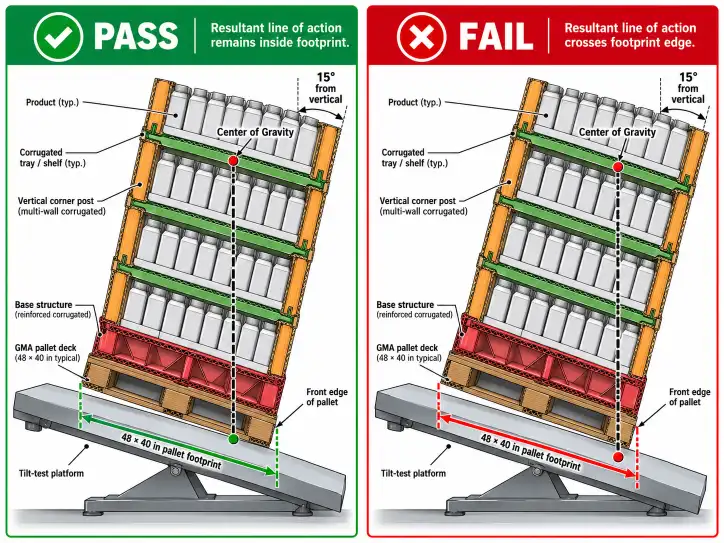
A pallet display must be planned around pallet size, carton stacking, weight, forklift handling, and store setup. Some beverage pallet displays combine case stacking with a printed pallet skirt, header card, corner guards, and side panels. This approach can provide branded visibility without forcing every product case into a separate shelf system.
Pallet displays are practical when product volume matters more than detailed shelf presentation. They are common for holiday beverages, summer drinks, sports drinks, bottled water promotions, and multipack offers.
Dump Bin Displays for Loose or Flexible Beverage Items
Dump bins can work for lightweight beverage-related products such as small pouches, soft packs, promotional cartons, or mixed sample packs. They are less suitable for heavy glass bottles or tall unstable beverage packs unless the structure is heavily reinforced.
The benefit of a dump bin is easy access. Customers can pick products quickly, and staff can refill without arranging each row. The trade-off is that product presentation may look less organized than a shelf display.
For beverage products where brand order and facing count matter, a shelf display may be better. For clearance, sampling, or mixed promotional packs, a dump bin can be efficient.
Beverage Display Comparison Table
| Display Type | Best Beverage Use | Key Structural Concern | Retail Placement | Buyer Notes |
|---|---|---|---|---|
| Floor display | Bottles, cans, cartons, multipacks | Shelf load, base stability, side support | Aisle, promotion zone, end area | Good balance of visibility and capacity |
| PDQ display | Small cans, sachets, sample packs | Front lip strength, tray fit, refill access | Counter, shelf, promo table | Good for fast campaigns and smaller units |
| Counter display | Drink sticks, mini packs, samples | Product pocket fit, compact footprint | Checkout, service desk, sampling area | Best for impulse and trial-size items |
| Pallet display | Bulk cartons, case stacks, multipacks | Pallet size, stacking strength, transport handling | Club store, warehouse retail, supermarket | Best for high-volume beverage promotions |
| Dump bin display | Pouches, mixed packs, lightweight products | Wall strength, product access, bin depth | Promotional floor area | Good for loose or mixed beverage items |
How Product Weight Changes the Display Design
Product weight is the first detail a manufacturer should check. A display that looks attractive in a rendering may not work after loading real beverage products.
A shelf holding 12 lightweight tea boxes is not the same as a shelf holding 24 glass bottles. Bottles create concentrated pressure points. Cans may roll if the shelf angle is wrong. Cartons may push against the front lip during customer handling.
For heavier beverage items, the display may need:
Stronger Corrugated Board
Corrugated board selection affects load strength, print result, cost, and packing volume. Common choices may include single-wall or double-wall corrugated board depending on the product weight and display size.
For beverage displays, many projects require stronger flute combinations, reinforced shelf panels, or laminated printed sheets mounted onto corrugated board. The goal is to keep the display stable during retail use without making assembly too complex.
Reinforced Shelves and Support Panels
Shelf sag is one of the most common problems in beverage displays. A practical structure may include support beams under shelves, back panels that lock into side panels, internal dividers, or reinforced shelf fronts.
The manufacturer should test the display with the real product weight, not only with empty samples. A shelf can look fine during sample approval but weaken after several days under full load.
A Stable Base
A beverage display should not feel top-heavy. If tall products sit on upper shelves, the base needs enough depth and stiffness. A narrow display may look elegant, but it can become unstable in busy stores.
The base may require extra locking panels, hidden support feet, or wider side panels. These details matter when customers pull products from the front or when store staff move the display into position.
Matching Display Type to Retail Channel
Retail channel has a direct impact on display choice. A convenience-store promotion, supermarket aisle program, trade-show launch, and warehouse club campaign should not use the same structure.
Convenience Stores
Convenience stores often have limited floor space. Compact floor displays, counter displays, and PDQ trays work well. The display should be easy to place, easy to move, and simple for staff to refill.
Single-serve beverages, coffee products, energy drinks, and trial packs often perform well in this setting. Clear front-facing graphics are important because shoppers make decisions quickly.
Supermarkets
Supermarkets can support larger floor displays, sidekick displays, pallet displays, and end-cap related structures. Beverage displays in supermarkets need enough stock capacity because refill frequency can be high.
A supermarket display should consider aisle width, customer flow, product visibility from a distance, and stability when shoppers remove products from different levels.
Club Stores and Wholesale Retail
Club-store beverage promotions often need pallet displays, case-stack displays, or pallet skirt systems. The main goal is high product volume with strong brand blocking.
For this channel, export packing and transport protection matter. A display may need corner protection, strong outer cartons, pallet packing guidance, and clear store setup instructions.
Trade Shows and Sampling Events
Trade shows need displays that are clean, portable, and brand-focused. Counter displays, small floor displays, and standee-style beverage displays can support product introductions, sample distribution, and buyer conversations.
The structure should assemble quickly and pack flat after the event when needed. For global exhibitions, lighter packing weight can reduce shipping costs.
Product Visibility: More Than Large Graphics
Graphics help attract attention, but beverage displays also need smart product presentation. Buyers should check how much of the bottle, can, or carton remains visible after loading.
If the shelf lip is too high, it may cover product labels. If the shelf depth is too deep, front products may hide the rows behind them. If the display header is too small, the display may lose impact from a distance.
A practical cardboard display for beverages should show the product clearly while also explaining the campaign message. For example, a new flavor launch may need a header panel and side graphics. A bulk promotion may need price communication space. A sampling campaign may need product access at hand height.
The design should support shopper action, not only decoration.
Sampling and Prototyping Before Bulk Production
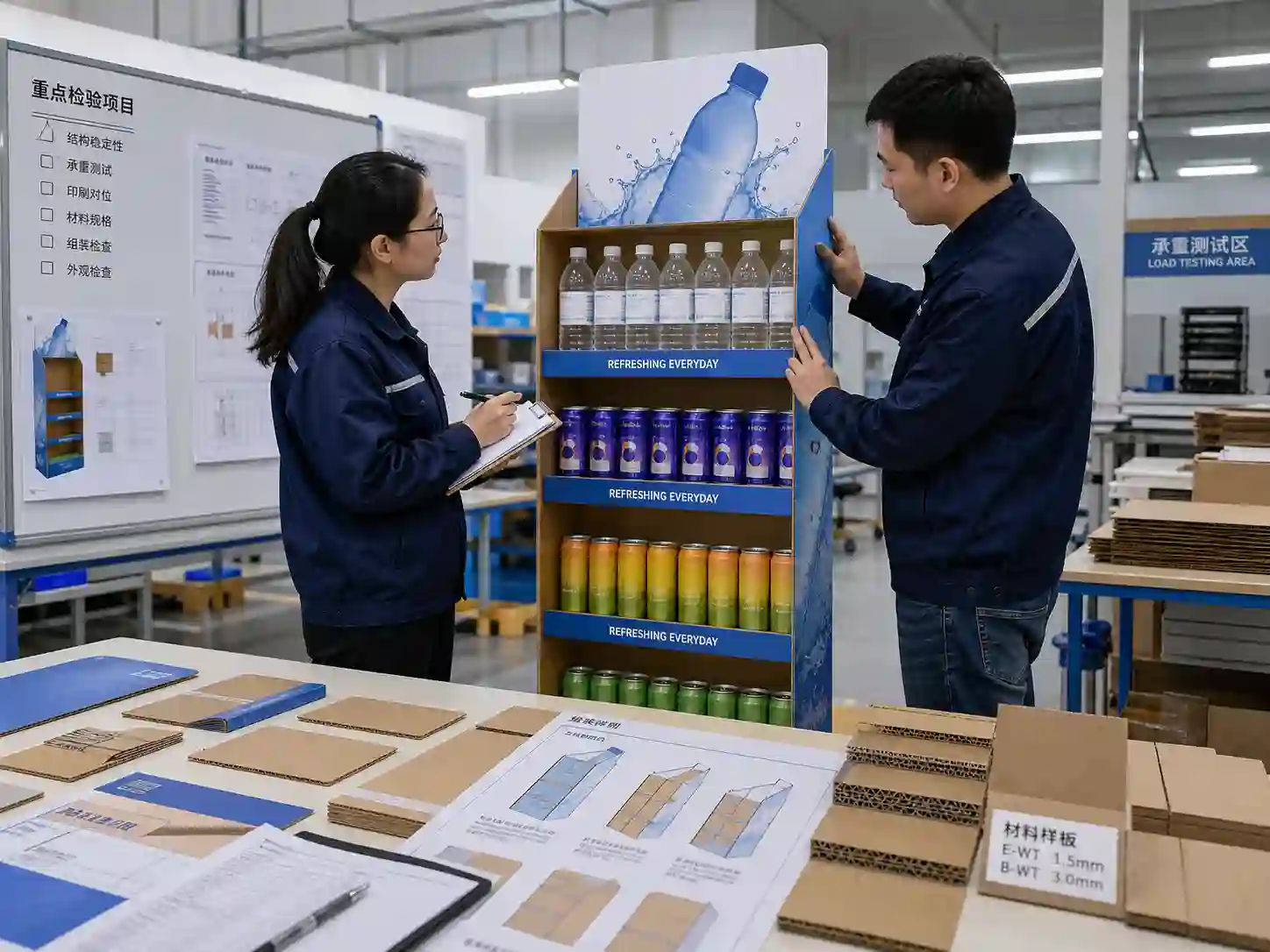
For beverage displays, sampling is a key step. A factory should create a physical sample to check size, load capacity, assembly process, print effect, and packing method before mass production.
During sample review, buyers should check:
- Whether the product fits each shelf or pocket correctly
- Whether the display stands straight after loading
- Whether the shelves hold weight without bending
- Whether the print aligns across panels
- Whether store staff can assemble it without confusion
- Whether products can be refilled without damaging the structure
- Whether the packed display can survive normal export handling
A sample may reveal small problems that are hard to see in drawings. For example, a bottle may rub against the shelf above it, a can may roll forward, or a front lip may block product branding.
Professional sampling helps reduce risk before tooling, printing, die-cutting, and bulk assembly.
Material Choice and Responsible Sourcing
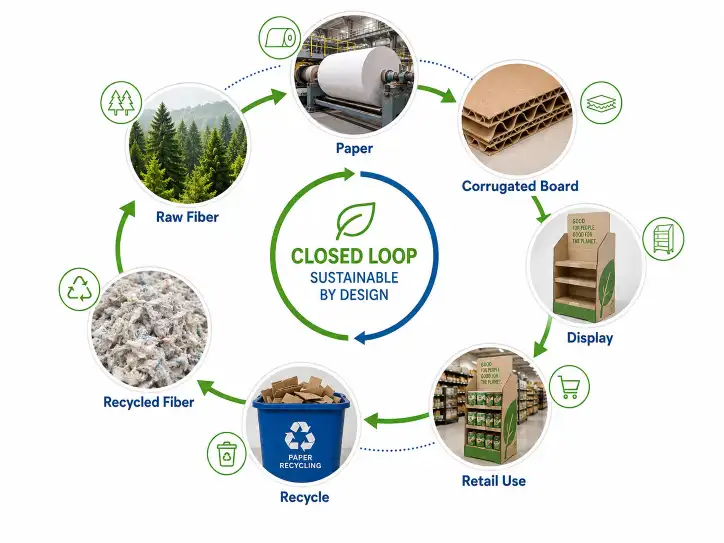
Many beverage brands also care about material responsibility. When buyers ask for paper-based retail displays, they may need FSC-related material options, recyclable board choices, or supplier documentation for internal approval.
FSC is often referenced for responsible forest management, while ISO-related systems can support process control and quality management discussions. FEFCO is also a common reference in the corrugated packaging industry because it provides standard codes for many corrugated box and packaging structures.
A manufacturer should not make claims without documentation. If a buyer requires FSC material, test reports, or specific compliance support, those requirements should be confirmed before production. This avoids delays after sample approval.
Leader Display can support project discussions around board selection, structure, printing, and export packing through cardboard display manufacturing solutions for different retail display needs.
Assembly, Refill, and Store Handling
A beverage display should be designed for store reality. If assembly takes too long, store staff may not set it up correctly. If shelves are hard to lock, the display may lose strength. If refilling is awkward, products may be placed unevenly.
Simple Assembly
Flat-packed beverage displays need clear assembly steps. A good design should use logical locking tabs, numbered parts when needed, and simple instructions.
For larger displays, the structure may include pre-glued sections to reduce setup time. For smaller PDQ trays, the display may arrive pre-assembled or partially assembled.
Easy Refill
Refill design depends on product type. Cans may need smooth shelf surfaces and stable dividers. Bottles may need enough clearance for staff to place products without hitting the shelf above. Cartons may need row control so the display does not become messy after several purchases.
A display with easy refill can stay attractive longer in store. That helps the brand protect presentation quality through the whole campaign period.
Safe Customer Interaction
Customers may pull products from different angles. They may remove items from the lower shelves first or lean products against the side panels. A practical beverage display should remain stable during normal shopper interaction.
This is why real loading tests matter. The design should be checked with full product weight and expected customer handling conditions.
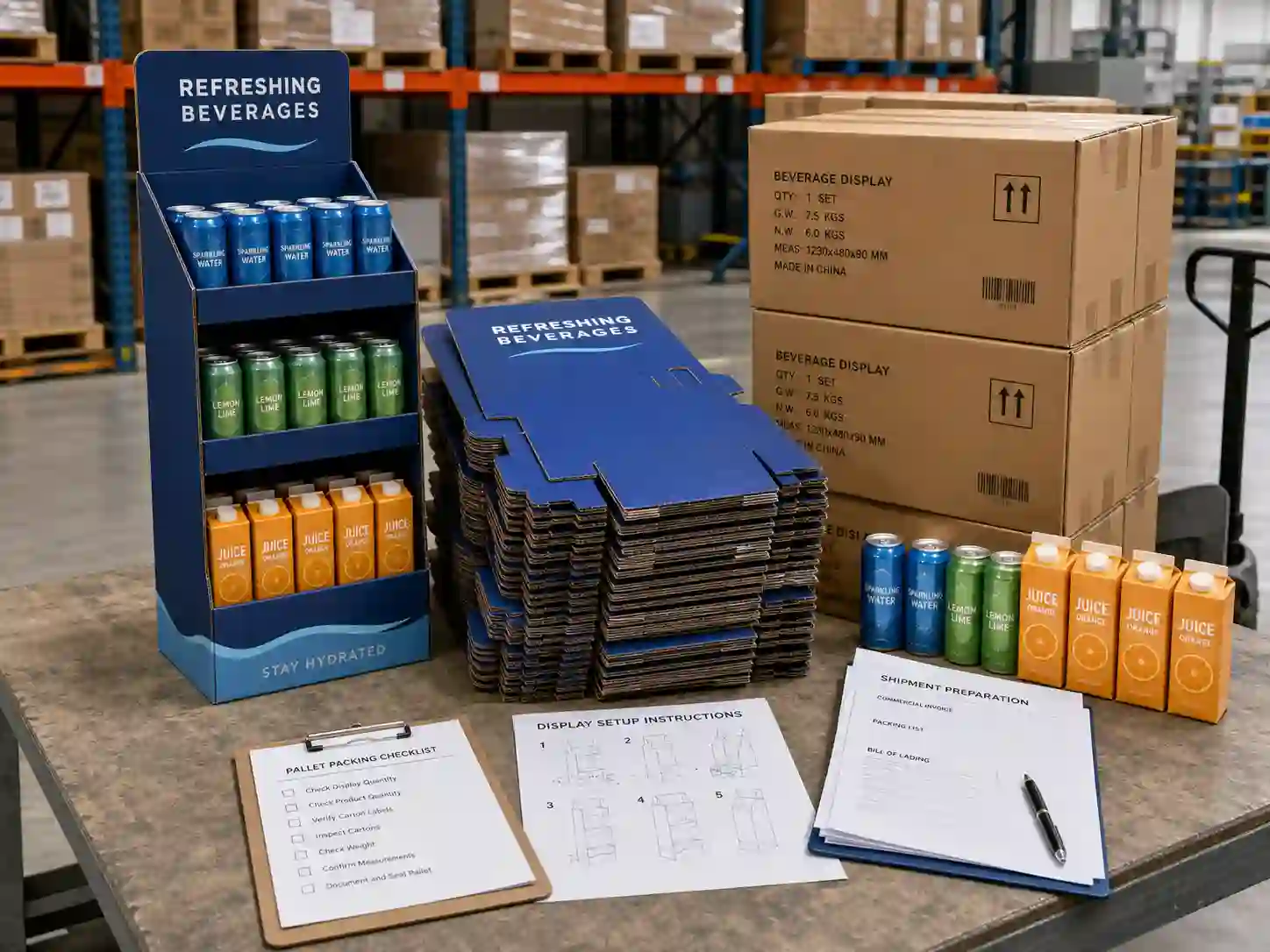
Flat Packing and Export Packing for Beverage Displays
Export packing affects cost, damage rate, and store setup. Many beverage display projects are shipped internationally, so the display must be protected from compression, moisture exposure, rough handling, and carton deformation.
Flat packing is common because it reduces shipping volume. However, a flat-packed structure must be easy to assemble at destination. If too many parts are packed separately, store setup becomes difficult.
For export projects, buyers should confirm:
- Outer carton size and weight
- Number of displays per carton
- Whether instructions are included
- Whether hardware or accessories are packed separately
- Whether headers, shelves, and side panels are protected
- Whether packed cartons are suitable for pallet loading
- Whether the display can be packed with products or shipped empty
Some beverage brands prefer displays shipped empty to a local co-packer. Others need displays packed with products before retail delivery. The best method depends on labor cost, shipping plan, product weight, and retail requirements.
For manufacturer support, buyers can start with Leader Display to discuss display style, packing method, and project details.
Choosing the Best Cardboard Display for Your Beverage Project
The best display depends on the sales goal. A new drink launch may need a floor display with bold graphics and controlled product rows. A trial-size campaign may need a PDQ display. A supermarket multipack promotion may need a reinforced floor display. A club-store campaign may need a pallet display.
Before choosing, ask these practical questions:
- What is the weight of each beverage unit?
- How many units should the display hold?
- Will the display stand on the floor, shelf, counter, or pallet?
- Will it ship flat, assembled, or packed with products?
- How often will store staff refill it?
- Does the product need dividers, angled shelves, or front lips?
- What retail channel will use the display?
- Are FSC material, ISO-related factory systems, or other documentation needed?
- How much graphic space is required for campaign messaging?
- What packing method protects the display during export?
These questions help convert a broad idea into a workable display specification.
How a Manufacturer Should Support the Buyer
A practical cardboard display manufacturer should do more than provide a price. The supplier should help the buyer check structure, material, artwork layout, sampling, load testing, packing, and production timing.
For beverage projects, the manufacturer should review product data first. Then it can suggest display type, board grade, shelf design, support structure, print method, finishing options, and packing plan.
A strong supplier should also explain trade-offs. For example, a stronger board may increase cost but reduce shelf sag. A larger display may improve visibility but raise shipping volume. A pre-packed display may reduce store labor but require stronger export protection.
This kind of discussion helps buyers make confident decisions before placing an order.
For brands planning custom retail campaigns, custom cardboard display production can support beverage launches, seasonal promotions, retail testing, and bulk display programs.
Final Buying Direction
For most beverage products, start with weight and retail placement. If the product is heavy and needs strong visibility, choose a reinforced floor display. If the product is small or trial-size, choose a PDQ or counter display. If the campaign is high-volume, choose a pallet display or case-stack system.
A good cardboard display for beverages should protect structure, present the product clearly, and make store handling easier. When the display is planned around product weight, shelf loading, refill habits, and export packing from the start, the project moves faster from sample approval to retail launch.
Send the product size, unit weight, target quantity, retail channel, and packing requirement to the factory, and the display structure can be developed with fewer revisions and a clearer path to production.