A cardboard display project can look simple at the idea stage, but the supplier you choose will decide whether it works in a real store. The right manufacturer should understand your product, retail channel, structure, packing method, and launch schedule before giving a serious quotation.
Many B2B buyers compare prices first. That is normal. But for retail display projects, the lower quotation is not always the safer choice because one weak structure, unclear assembly step, or poor packing plan can create extra cost later.
Start with the Real Retail Use, Not the Display Type
Before asking a supplier for a price, define where the display will be used. A counter display for small cosmetics, a sidekick display for hanging accessories, and a pallet display for warehouse club channels all need different material strength, structure design, packing logic, and assembly instructions.
A practical cardboard display manufacturer should ask questions such as:
- What product will be placed on the display?
- What is the product size and weight?
- How many units should each display hold?
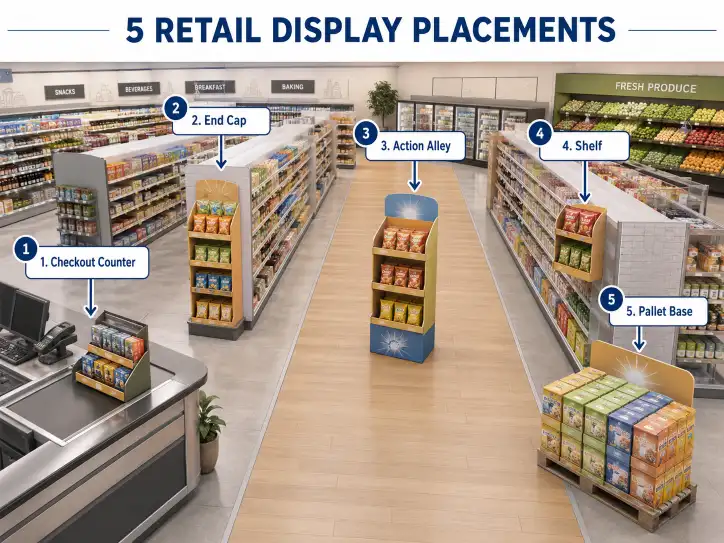
- Will the display stand on a counter, shelf, floor, pallet, or aisle side?
- Is the display for a seasonal campaign, product launch, or long-term retail program?
- Does the retailer need flat packing, pre-filled packing, or quick in-store assembly?
This early discussion matters. A display that looks attractive in a rendering may fail if it does not match the product weight, refill pattern, or store traffic. For example, a dump bin display for mixed snacks needs an opening that allows fast refill and clean product recovery after shoppers move items. A peg hook display for small accessories needs enough back panel strength to prevent bending when products hang forward.
Short answer: function comes first.

For buyers who are still comparing structures, reviewing custom cardboard display solutions can help connect display type, sampling, printing, and bulk production planning in one project flow.
Choose a Cardboard Display Manufacturer with Structure Experience
A cardboard display is not a printed box with shelves added. It is a temporary retail structure that must carry product, attract shoppers, protect brand presentation, and remain practical for store staff.
A strong manufacturer should be able to explain why one structure is better than another. For example, they may recommend:
- A PDQ display when products need fast shelf placement.
- A counter display when the goal is checkout visibility.
- A floor display when product quantity and aisle impact matter.
- A sidekick display when the retailer has limited floor space.
- A pallet display when the project involves club stores or bulk selling.
- A dump bin display when loose or bagged products need easy refill.
- A peg hook display when products are lightweight and hangable.
The key is not to select the largest display. The key is to select the structure that matches the product and the store environment.
Ask How the Supplier Checks Load Bearing
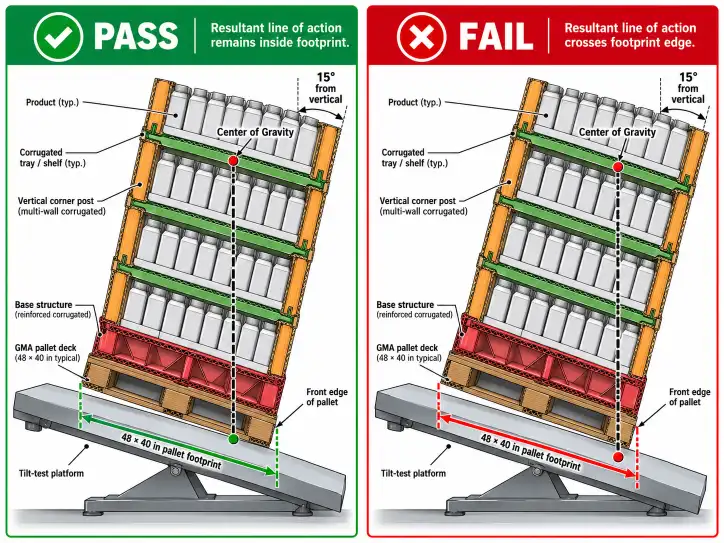
Load-bearing is one of the most important checks in a cardboard display project. The manufacturer should review product weight, shelf span, flute direction, reinforcement panels, tray depth, and pressure points.
For a floor display, the shelf may need extra support strips or double-wall corrugated board. For a counter display, the back panel angle and base lock may matter more. For a pallet display, the structure must work with product cases, pallet dimensions, header stability, and export handling.
A supplier who says “no problem” without checking details may not be doing enough.
Review the Assembly Method Early
Retailers often prefer displays that are fast to assemble. Store staff may not have time to study complex instructions. That is why a good cardboard display manufacturer should consider assembly during structure design, not after production.
Useful assembly details include:
- Clear folding sequence.
- Pre-glued sections where possible.
- Simple locking tabs.
- Numbered parts.
- Printed or separate instruction sheets.
- Flat packing that avoids damage during transit.
- Carton labels that help store teams identify the display quickly.
Good structure saves time.
Compare Supplier Capability Beyond the Quotation
Price matters, but it should not be the first filter. A low price can become expensive when sampling takes too long, printing colors are unstable, inserts do not fit, or the bulk order arrives with damaged display parts.
Use the table below to compare suppliers in a more practical way.
| Buying Factor | What to Check | Why It Matters for B2B Projects |
|---|---|---|
| Structure design | Does the supplier check product size, weight, and retail placement? | Prevents weak shelves, poor balance, and unsuitable display formats. |
| Sampling support | Can they create a white sample or printed sample before bulk production? | Helps confirm size, assembly, product fit, and visual effect. |
| Material selection | Do they explain board grade, flute type, and reinforcement needs? | Reduces risk during loading, shipping, and in-store use. |
| Printing control | Can they review artwork, color, lamination, and finishing details? | Protects brand presentation across bulk production. |
| Packing method | Do they plan flat packing, inner protection, carton strength, and labels? | Prevents damage and improves retailer setup efficiency. |
| QC process | Are checks done before, during, and after production? | Helps catch structure, color, and packing issues before shipment. |
| Communication | Do they ask useful questions before quoting? | Shows whether they understand retail display projects. |
This comparison is more useful than asking ten suppliers for the cheapest price. It helps buyers identify which manufacturer can support the project from concept to delivery.
Sampling Shows Whether the Idea Can Become a Working Cardboard Display
Sampling is where many problems become visible. A rendering can show shape and color, but a sample shows whether the product fits, whether the display stands well, and whether the assembly process makes sense.
There are usually two useful sample stages.
White Sample for Structure Confirmation
A white sample focuses on size, shape, product placement, load bearing, and assembly. It may not include final printing, but it helps answer important questions:
- Does the product fit the shelf, tray, hook, or insert?
- Is the display stable when fully loaded?
- Can the display be assembled without confusion?
- Does the header stay upright?
- Are the trays deep enough?
- Does the display look balanced from the shopper’s view?
This stage is helpful for custom cardboard display stand projects, especially when product size or retail requirements are not standard.
Printed Sample for Visual and Production Review
A printed sample helps confirm artwork position, logo size, color effect, finishing, and material feel. This is where buyers should review details such as matte lamination, gloss lamination, spot UV, foil stamping, embossing, or other finishing choices.
For retail display packaging, print consistency matters because the display represents the brand in store. If the final display looks different from the approved sample, it can affect campaign presentation.
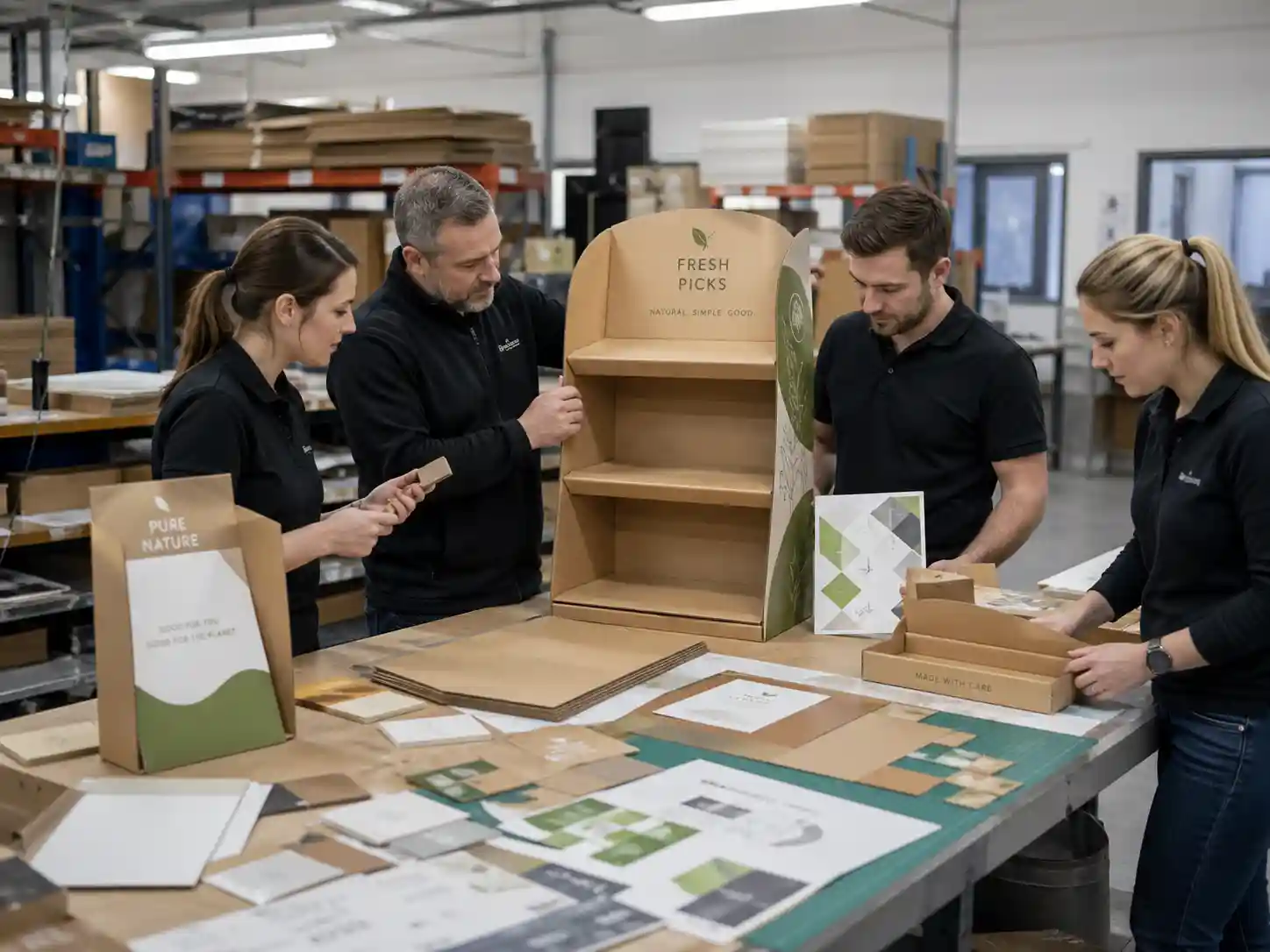
A manufacturer should also check whether the artwork works on folds, edges, shelf lips, side panels, and header boards. A strong front panel is helpful, but the side view may matter in a supermarket aisle. Every angle counts.
For more education on in-store display value, buyers can also review paper display stands for retail, especially when planning shelf, counter, or floor placement.
Material Selection Should Match Product Weight and Retail Conditions
Material choice should not be based on thickness alone. A thicker board is not always better if the structure is poorly designed. The manufacturer should consider board grade, flute direction, surface paper, lamination, reinforcement, and how the display will be packed.
Common material and structure considerations include:
- Corrugated board strength for shelves and side panels.
- Paperboard thickness for small PDQ or counter displays.
- Reinforced base panels for floor displays.
- Double-wall board for heavier products.
- Insert trays for product separation.
- Hook support for peg displays.
- Edge protection for shipping.
- Moisture resistance when needed for specific retail environments.
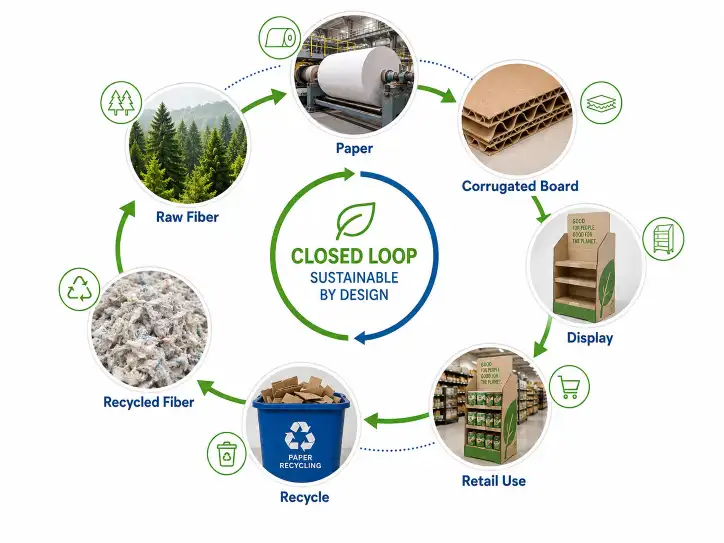
For sustainability or paper sourcing questions, buyers can ask whether the supplier can support FSC-related material requests or provide information aligned with recognized certification bodies. For process control, ISO-style quality management references may also be useful during supplier evaluation.
Do not treat compliance as a slogan. Ask what documents, material options, or production checks the supplier can support for your project.
Printing and Finishing Need Production Discipline
A cardboard display often carries large printed areas. That makes printing control important. Color variation, poor lamination, weak cutting accuracy, or finishing defects can make the finished display look unprofessional in store.
A capable manufacturer should check:
- Artwork file format and resolution.
- Die line accuracy.
- Bleed and safe zones.
- Color proof or sample approval.
- Surface finish.
- Folding and creasing positions.
- Logo placement.
- Barcode or product message visibility.
- Retailer-required warning labels or setup marks.
Printing should work with the structure. For example, a shelf lip may need a short message that remains visible after products are loaded. A side panel may need a bold graphic because it faces shoppers from the aisle. A header may need stronger contrast because it is viewed from a distance.
Good design supports selling. Good production protects that design.
Packing and Shipping Can Make or Break the Project
Many buyers focus on the display itself and forget packing until late. That is risky. Cardboard displays can be large, folded, layered, and sensitive to compression if not packed with care.
A manufacturer should plan packing based on the project type:
- Flat-packed displays for lower shipping volume.
- Pre-glued parts for faster assembly.
- Inner cartons for small PDQ display units.
- Edge protectors for large panels.
- Clear carton marks for retailer receiving.
- Export cartons matched to display size.
- Palletization for larger shipments.
- Protection against bending, corner crushing, and moisture.
For international shipments, export packing should be discussed before bulk production. A strong display can still arrive damaged if the packing method is weak.
Ask for packing photos if needed. Ask how many sets fit in each carton. Ask whether the display ships flat, semi-assembled, or pre-filled. These details affect freight cost, warehouse handling, and store setup.
A Good Manufacturer Helps You Prepare Inquiry Details
A supplier can give a faster and more accurate quotation when the inquiry includes the right information. You do not need a finished technical drawing at the beginning, but practical details help.
Prepare these details before contacting a cardboard display manufacturer:
- Product type and product photos.
- Product size and weight.
- Quantity per display.
- Target display type, if known.
- Retail channel, such as supermarket, chain store, club store, or counter placement.
- Reference display image or sketch.
- Printing artwork status.
- Expected order quantity.
- Packing preference.
- Target delivery time.
If you are unsure about the structure, send the product information first. A practical manufacturer can recommend a PDQ display, counter display, sidekick display, floor display, pallet display, peg hook display, or dump bin display based on the retail goal.
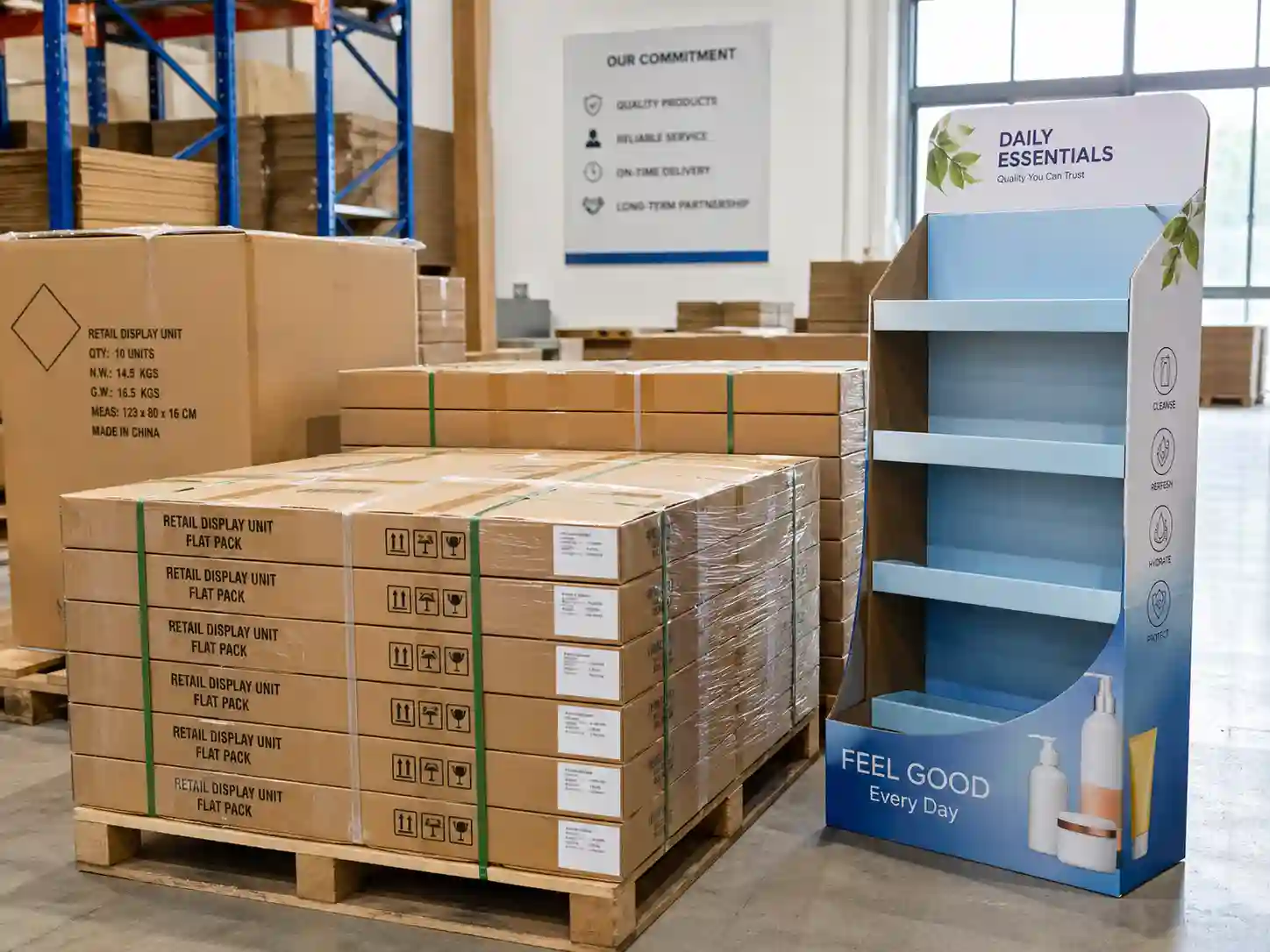
For broader project discussion, Leader Display project support can help buyers share requirements and review the next step for a custom display project.
Red Flags When Choosing a Cardboard Display Supplier
Some warning signs appear early. Pay attention to them before placing an order.
A supplier may not be the right fit if they:
- Quote without asking about product weight.
- Avoid discussing material and structure.
- Cannot explain the assembly method.
- Do not offer sample confirmation.
- Treat all display types the same.
- Ignore packing and shipping protection.
- Provide unclear production lead time.
- Cannot discuss QC steps.
- Use vague claims instead of project details.
B2B display projects need coordination. The supplier should think like a production partner, not a file printer.
Final Decision: Select the Cardboard Display Partner Who Reduces Risk
The right cardboard display manufacturer helps you reduce project risk before production begins. They ask about product weight, retail placement, display size, artwork, assembly, packing, and delivery because those details shape the final result.
A good partner will not push one structure for every project. They will compare the options, explain trade-offs, create a sample, check load bearing, confirm printing, plan export packing, and keep the bulk order aligned with the approved sample.
That is what B2B buyers need.
When your next cardboard display project is ready, prepare the product size, product weight, target quantity, retail channel, artwork status, and expected delivery time. With those details, the supplier can move from rough idea to structure recommendation, quotation, sample, and production plan with fewer delays.
The next step is simple: turn the display idea into clear project details, then choose the manufacturer who can protect the idea through sampling, production, QC, and shipment.