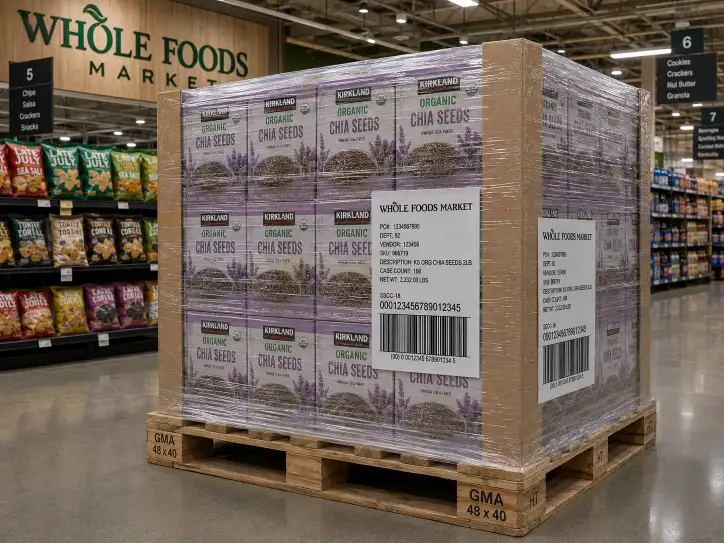
Whole Foods Market operates more than 530 stores across the United States, Canada, and the United Kingdom as a subsidiary of Amazon. Its vendor compliance framework reflects both its premium grocery standards — organic certification, ethical sourcing, heat-treated pallets — and Amazon's supply chain discipline: EDI 856 ASN transmission within 1 hour of departure, GS1-128 labels on every pallet, and automatic chargebacks for non-compliance routed through Amazon's vendor systems. For display vendors, Whole Foods is a distinct compliance target: it enforces a heat-treated GMA 48 × 40 pallet standard, a 48–54 inch height limit, display-ready corrugated packaging, and labeling requirements that mirror Amazon's GS1-128 framework.
This guide covers the Whole Foods Market pallet display requirements every vendor should know: the GMA 48 × 40 heat-treated pallet spec, the 48–54 inch height limit, display-ready case (DRC) and easy-open packaging rules, GS1-128 labeling, EDI 850/856/810 compliance through Amazon's systems, the 1-hour ASN transmission window, chargeback amounts, and how Whole Foods differs from Amazon Fresh and traditional grocery chains.
Why Whole Foods Is Different for Display Vendors
Whole Foods is a premium grocery chain operated under Amazon's supply chain infrastructure. For display vendors, three facts define how sourcing works for Whole Foods:
- Heat-treated pallets are mandatory. Whole Foods requires all wood pallets to be heat-treated and ISPM-15 certified. Standard white wood pallets that are not heat-treated are rejected at receiving. This is a higher standard than most grocery chains, which accept untreated white wood pallets.
- EDI timeline is Amazon-fast. Whole Foods requires the EDI 856 advance ship notice within 1 hour of shipment departure — not within 24 hours or even within 2 hours. This is the tightest ASN window in US grocery and is driven by Amazon's logistics standards.
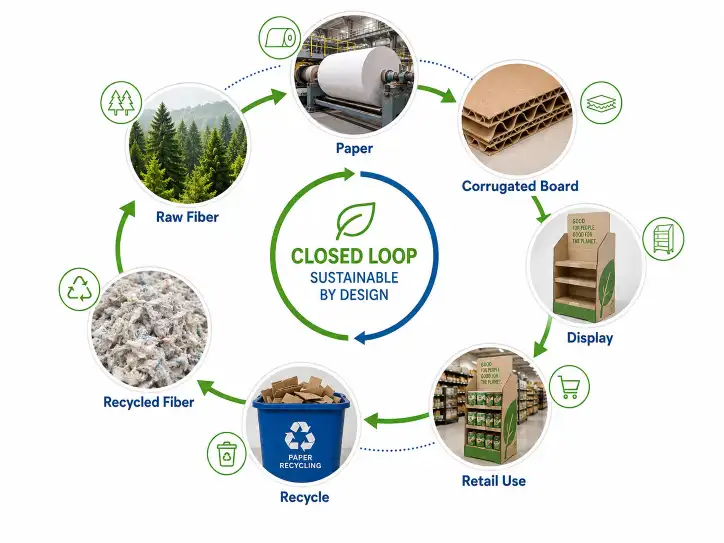
- Display-ready is a sustainability requirement. Whole Foods' commitment to environmentally responsible packaging means display-ready cases must use recyclable materials and easy-open designs. No foam, no mixed plastics, no metal banding. The display's end-of-life recyclability is considered at the design stage, not after production.
The practical implication: a Whole Foods display program must satisfy premium grocery aesthetics (clean, natural materials, ISPM-15 pallets) within Amazon's operational timeline (1-hour ASN, GS1-128 through Amazon Vendor Central). The two systems must be met together, not separately.
Whole Foods Pallet Requirements: Size, Type, and Treatment
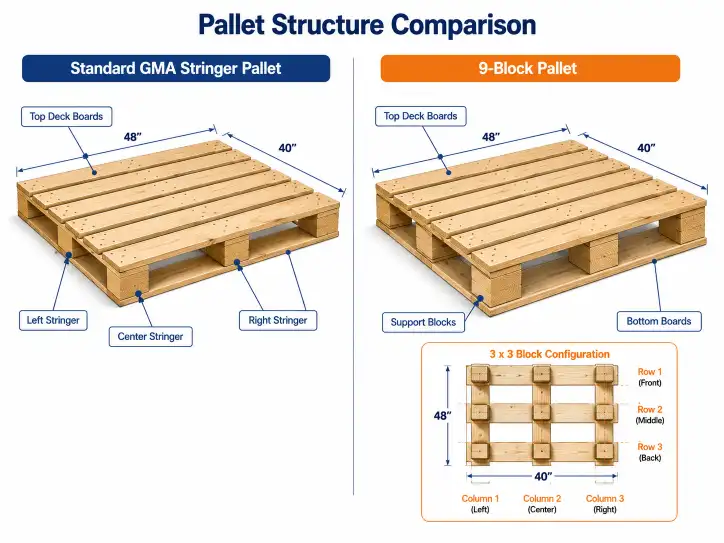
Whole Foods operates on a heat-treated GMA pallet standard:
| Requirement | Whole Foods standard |
|---|---|
| Pallet size | GMA 48 × 40 in |
| Entry type | 4-way entry |
| Treatment | Heat-treated, ISPM-15 certified — required |
| Acceptable types | Standard GMA heat-treated pallets |
| Condition | Good condition, no broken boards, no damage |
| Methyl bromide (MB) stamp | Not accepted |
| Mixed SKUs | Not allowed on one pallet unless pre-approved |
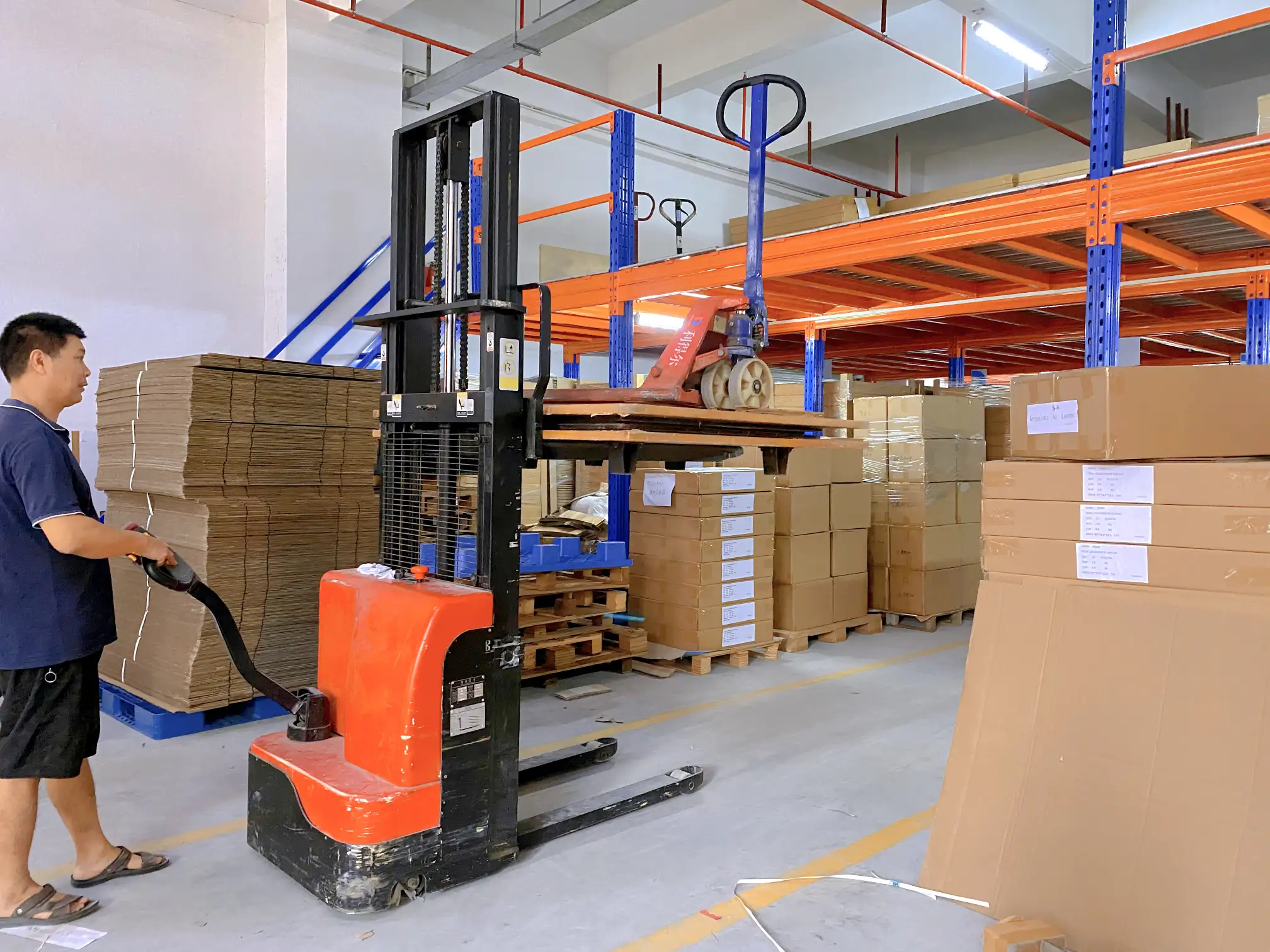
The heat-treatment requirement is the most distinctive spec at Whole Foods. ISPM-15 certification (the international standard for wood packaging material) is enforced consistently — a pallet that arrives without the HT stamp or with an MB (methyl bromide) stamp instead is a receiving failure. This spec affects pallet sourcing: vendors who use standard white wood pallets for other grocery chains must source heat-treated pallets specifically for Whole Foods programs. For the footprint context across premium grocers, the pallet display sizes guide shows where Whole Foods' 48 × 40 standard sits next to Aldi, Publix, and Amazon Fresh.
Display Height, Weight, and Load Limits
Whole Foods enforces moderate height limits with standard weight caps:
| Limit | Whole Foods standard | Comparison |
|---|---|---|
| Max loaded height | 48–54 inches (including pallet) — check the DC-specific routing guide | Aldi: 60 in; Publix: 48 in |
| Max weight per pallet | ~2,000–2,500 lb (standard GMA dynamic rating) | Standard grocery |
| Pallet footprint | GMA 48 × 40 in | Standard grocery |
| Product overhang | Not permitted | Enforced at receiving |
The 48–54 inch height range is comparable to Publix (48 inches) and tighter than Aldi (60 inches). The DC-specific variation means the vendor must check the routing guide for the specific Whole Foods distribution center the display ships to — some DCs enforce the lower end of the range. The 2,000–2,500 lb weight cap is standard for the GMA footprint and accommodates most grocery categories.
For half-pallet and quarter-pallet options that work within these limits, the retail-ready pallet display guide covers the corrugated design principles that apply in the premium grocery channel.
Display-Ready Packaging Standards
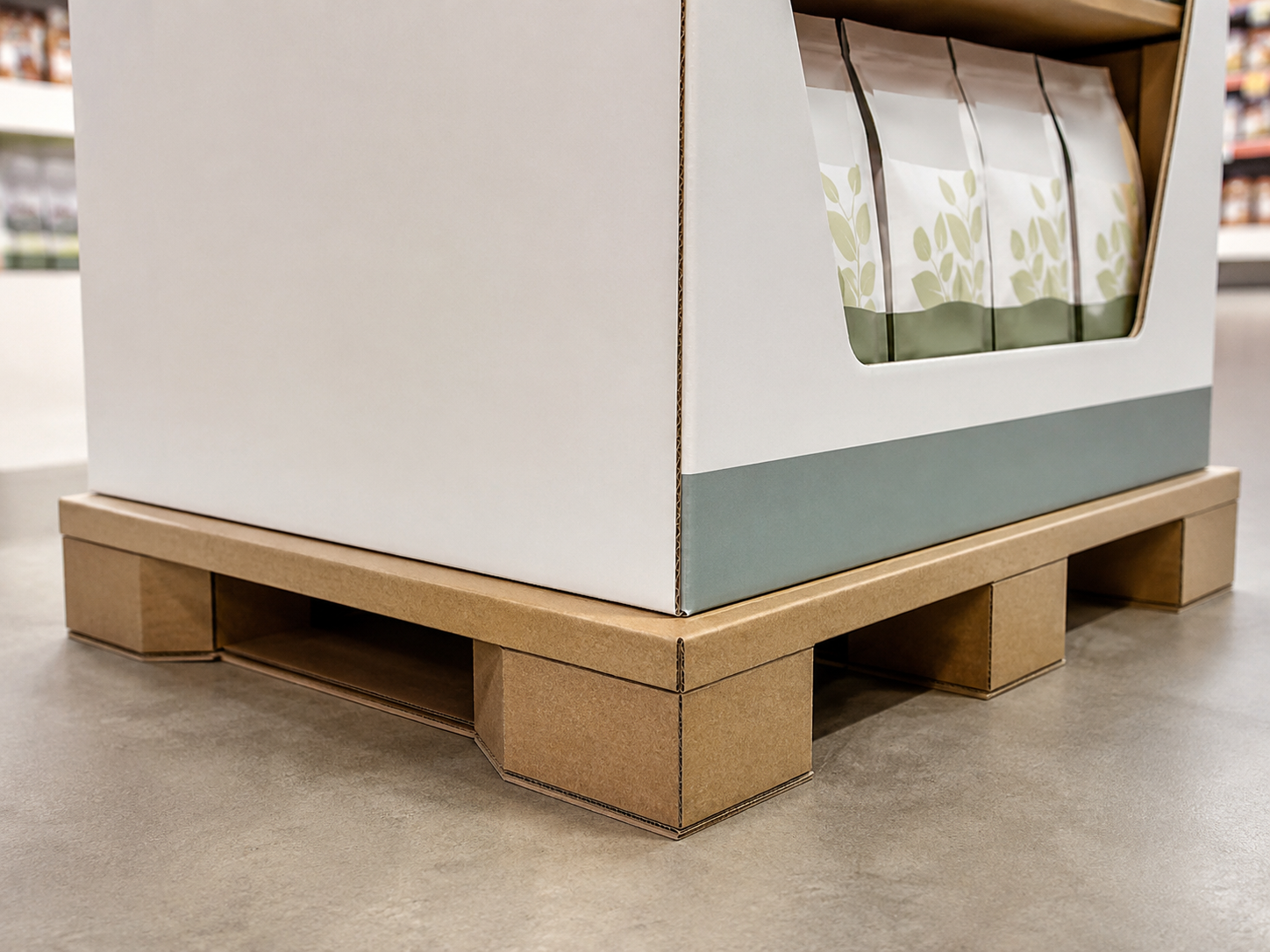
Whole Foods emphasizes display-ready packaging (DRC) that reduces in-store labor and waste:
| Requirement | Whole Foods standard |
|---|---|
| Display readiness | Cartons must go directly from pallet to shelf |
| Easy-open features | Perforations, tear strips required |
| Branding | Display tray must carry visible branding |
| Materials | 100% recyclable — no foam, no mixed plastics |
| Assembly | No tools required |
| Banding | No metal banding on the display body |
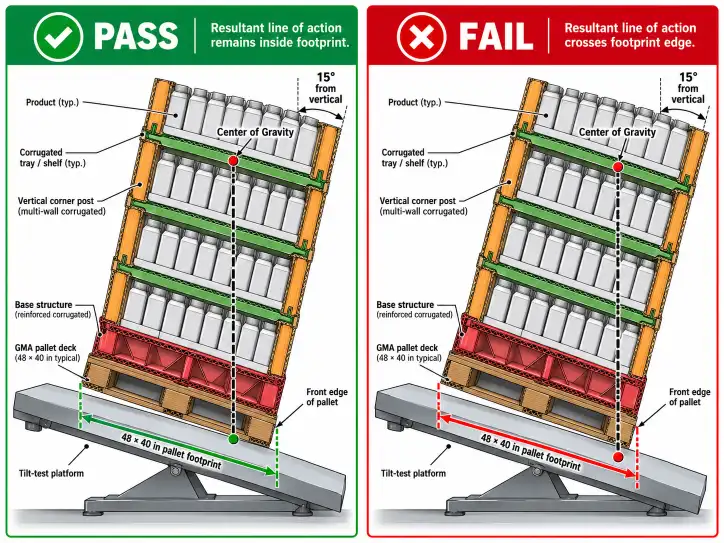
| Stability | Must be stable on the pallet for transit and sell-through |
The material requirement — 100% recyclable with no foam or mixed plastics — reflects Whole Foods' environmental standards and is stricter than most chains. A display that uses EPS foam inserts, mixed-material laminates, or non-recyclable coatings will fail the receiving inspection even if the dimensions are correct. For the corrugated structures that meet these requirements, our PDQ display guide covers tray and shipper specifications, and the display fixture structural design guide explains the board grades that provide stability without non-recyclable additives.
Labeling and EDI Compliance
Whole Foods labeling and EDI compliance follows Amazon's GS1-128 framework through Amazon Vendor Central:
| Requirement | Whole Foods standard |
|---|---|
| Label standard | GS1-128 (UCC-128) with unique SSCC-18 per pallet |
| Label data | SSCC-18, PO number, ship-to location, carton count, supplier ID |
| Label size | 4 × 6 in, thermal transfer |
| Barcode quality | ANSI/ISO Grade C or better |
| EDI documents | 850 (PO), 856 (ASN), 810 (invoice) |
| ASN timing | Within 1 hour of shipment departure |
| PO acknowledgment | EDI 850 must be acknowledged within 48 hours |
| Vendor systems | Amazon Vendor Central |
The 1-hour ASN transmission window is the tightest in grocery. It means the ASN must be generated and transmitted at the loading dock in real time — there is no room for end-of-day batch processing or next-day transmission. For a display program with multiple pallets and cartons, the ASN data and SSCC labels must be generated at the point of loading and transmitted automatically.
The Walmart pallet display requirements and Costco pallet display requirements guides show the GS1-128 conventions used across the industry — Whole Foods adds the Amazon operational layer on top of them.
Chargeback Prevention
Whole Foods, operating under Amazon's vendor compliance system, assesses chargebacks that are structured differently from traditional retailers:
| Chargeback category | Reported penalty | Prevention |
|---|---|---|
| Late EDI 856 ASN | $250–$500 per occurrence | Transmit within 1 hour of departure — automate at the loading dock |
| Missing or incorrect GS1-128 label | Deduction or rejection | Verify every label before wrapping |
| PO not acknowledged within 48 hours | $250 per occurrence | Set up automated 850 acknowledgment |
| Shipment discrepancy | 2–10% of invoice value | Match all SSCCs, quantities, and POs |
| Non-heat-treated pallet | Rejection at receiving | Source ISPM-15 certified pallets specifically |
| Non-recyclable packaging | Rejection | Use 100% recyclable materials, no foam |
| Routing guide violation | Deduction | Follow the Whole Foods routing guide for the specific DC |
The 2–10% of invoice value penalty for shipment discrepancies is a different structure from the flat fees used at most grocery chains. For a large display program, 2–10% of a high-value invoice can exceed the flat-fee penalties at other retailers by a significant margin. The most reliable prevention is a physical sample that loads real product onto a heat-treated pallet, wraps it to Whole Foods spec, applies GS1-128 labels, and verifies the ASN data against the PO before the bulk run. See the sampling process for what to check.
Whole Foods vs Amazon Fresh vs Trader Joe's: How Premium Grocers Compare
Whole Foods, Amazon Fresh, and Trader Joe's represent three approaches to premium grocery, and their pallet display requirements reflect their different models:
| Requirement | Whole Foods | Amazon Fresh | Trader Joe's |
|---|---|---|---|
| Store count | ~530 (US/UK/Canada) | ~40+ (growing) | ~560 (US) |
| Parent | Amazon | Amazon | Private |
| Pallet footprint | GMA 48 × 40 in | GMA 48 × 40 in | GMA 48 × 40 in |
| Pallet treatment | Heat-treated (ISPM-15) | Standard GMA | Standard GMA |
| Display format | Display-ready cases | Retail-ready | Pre-packed pallets |
| Height limit | 48–54 in | Standard | Custom per program |
| EDI system | Amazon Vendor Central | Amazon Vendor Central | Store-level ordering |
| ASN timing | Within 1 hour | Within 1 hour | Negotiated |
| Sustainability | 100% recyclable, no foam | Standard | Standard |
The practical takeaway: Whole Foods differs from Amazon Fresh primarily on the heat-treated pallet requirement and the strict sustainability material standard. It differs from Trader Joe's on the EDI/ASN timeline (Trader Joe's uses a less automated store-level ordering system). A display built for Whole Foods on a heat-treated pallet with recyclable materials and a 1-hour ASN will also meet Amazon Fresh standards, but the reverse is not guaranteed.
How to Order Compliant Displays for Whole Foods
The cleanest path to a Whole Foods display program is to brief the factory against the chain's specific requirements from the first quote:
- Source heat-treated GMA 48 × 40 pallets — ISPM-15 certified, 4-way entry. No standard white wood pallets. Confirm the HT stamp with your pallet supplier.
- Design to 48–54 inches loaded height — check the DC-specific routing guide for the exact target.
- Use 100% recyclable materials — no foam, no mixed plastics, no non-recyclable coatings. Confirm recyclability with your corrugated supplier.
- Spec display-ready cases with tear strips — easy-open features, visible branding, no metal banding.
- Set up GS1-128 labels through Amazon Vendor Central — SSCC-18 per pallet, PO, ship-to, carton count. ANSI Grade C+.
- Automate EDI 856 transmission at the loading dock — the 1-hour window requires real-time ASN generation, not end-of-day processing.
- Confirm the routing guide for the specific DC — height limits and appointment rules vary by distribution center.
- Order a physical sample — load real product onto the heat-treated pallet, wrap it to spec, apply the labels, and verify the dimensions, recyclability, and ASN data before the bulk run.
Conclusion
Whole Foods Market pallet display requirements are built on a framework that combines premium grocery standards — heat-treated ISPM-15 pallets, 100% recyclable materials, display-ready cases — with Amazon's operational discipline: EDI 856 within 1 hour, GS1-128 labels through Vendor Central, and chargebacks that can reach 2–10% of invoice value for shipment discrepancies. The heat-treatment requirement is the most frequent compliance trap for vendors who source standard white wood pallets for other programs, and the 1-hour ASN window is the tightest in grocery. Build the display on an ISPM-15 pallet, use recyclable materials, automate the ASN at the loading dock, and the program moves through Whole Foods receiving without friction.
Because Whole Foods' requirements are published through Amazon's supplier systems, the authoritative sources are the Whole Foods Market Supplier Portal for the current standards, the Whole Foods EDI guide for the ASN and label rules through SPS Commerce, and GS1 defining the label standard. When you are ready to spec a Whole Foods display, send us the product dimensions, case count, and target DC — we will size the display to the height limit, source heat-treated pallets, spec the recyclable corrugated structure, and produce a sample you can verify against the ASN before the bulk run.
FAQ
What pallet does Whole Foods Market require?
Whole Foods requires heat-treated GMA 48 × 40 inch pallets with ISPM-15 certification. Standard white wood pallets without HT treatment are rejected. Methyl bromide (MB) treated pallets are not accepted.
What is the height limit for Whole Foods pallet displays?
The maximum loaded height is 48–54 inches including the pallet, depending on the specific distribution center. Check the DC routing guide for the exact limit.
What is the weight limit for Whole Foods pallet displays?
The maximum weight per pallet is approximately 2,000–2,500 lb, standard for the GMA 48 × 40 footprint.
Does Whole Foods require display-ready packaging?
Yes. Whole Foods requires display-ready cases that go directly from pallet to shelf with easy-open features (perforations or tear strips). Packaging must be 100% recyclable with no foam or mixed plastics.
What labeling does Whole Foods require?
Whole Foods requires GS1-128 labels with unique SSCC-18 per pallet, including the PO number, ship-to location, carton count, and supplier ID. Labels must meet ANSI/ISO Grade C barcode quality.
Does Whole Foods require EDI?
Yes. Whole Foods requires EDI 850 (PO), 856 (ASN), and 810 (invoice) through Amazon Vendor Central. The ASN must be transmitted within 1 hour of shipment departure, and the PO must be acknowledged within 48 hours.
What chargebacks does Whole Foods assess?
Reported penalties include $250–$500 for late ASNs, $250 for unacknowledged POs, and 2–10% of invoice value for shipment discrepancies.
Can I use the same display for Whole Foods and Aldi?
Not without changes. Whole Foods requires heat-treated ISPM-15 pallets and 100% recyclable materials, while Aldi accepts standard Grade A pallets and has a 60-inch height limit. Each retailer's spec must be confirmed separately.