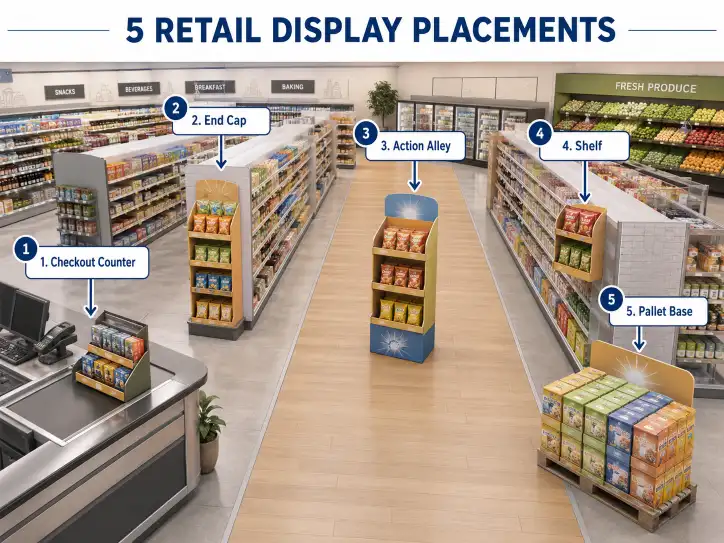
A floor display can create strong retail impact, but it does not work equally well for every product. Some products look powerful on a floor display and sell faster because the format gives them space, visibility, and stronger retail presence. Other products only become bulky, hard to refill, or harder to understand once they leave the shelf.
This guide explains what sells better on a floor display and why. The goal is simple: help brands, retailers, and importers choose the right products for a cardboard floor display before spending money on the wrong structure. Start there.
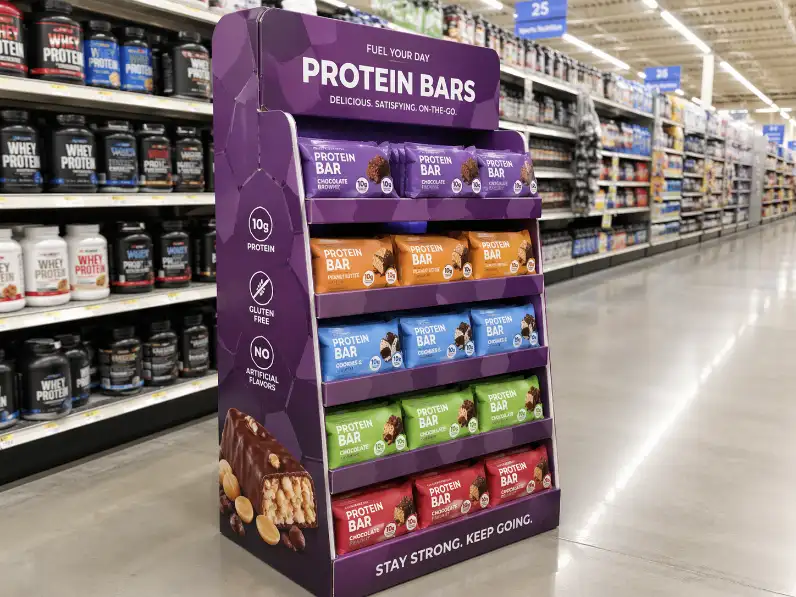
Rule 1: Products Sell Better on a Floor Display When They Need More Presence Than a Shelf Can Give
A floor display is not only a holder. It is a selling surface. That means the product should gain something from leaving the regular shelf and moving into its own freestanding space. If the product looks no different on the floor than it does inside the shelf bay, the display may not earn its retail footprint.
This is why products that need more presence often perform better on a retail floor display. New launches. Seasonal lines. promotional assortments. Strong visual brands. Products with good packaging that benefit from distance visibility. These are the kinds of items that can use extra floor presence to change the shopper’s path.
If you want to compare structure options first, our cardboard display category and floor display product page are the best internal starting points. That context helps before you judge product fit.
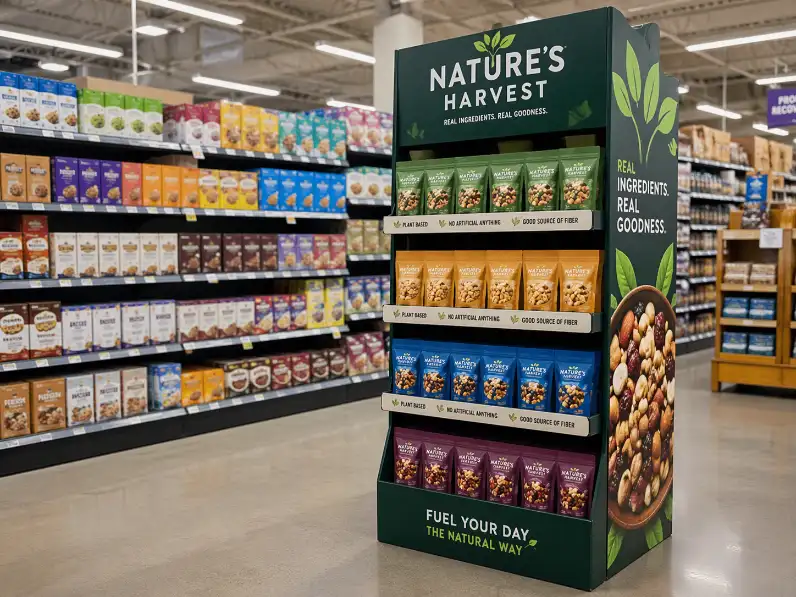
Rule 2: Medium-Size Products Usually Work Better Than Tiny or Overly Large Ones
Tiny products often disappear on a floor display unless the unit is designed very carefully. Overly large products can create the opposite problem. They eat space too fast, make refill harder, and reduce the visual effect of the structure. That is why medium-size products often perform best on a cardboard floor display.
The ideal product size usually lets the display look full, clear, and easy to shop at the same time. Think snack multipacks, bottled beverages in manageable sizes, boxed personal care items, pet products, supplements, home accessories, and compact seasonal goods. These products give the display visual mass without making it feel overloaded.
The key point is balance. A floor display should look active, not crowded. It should feel substantial, not heavy. Product size decides that more than many buyers expect.
Rule 3: Products With Clear Front-Facing Packaging Usually Win
A floor display gets noticed from a distance. That means the products on it should still communicate clearly when the shopper is not standing inches away. Packs with strong branding, clear category signals, and simple visual hierarchy usually perform better because the display can work both as a big branded block and as a shopping zone.
If the products rely on small text, technical details, or subtle differences that only show up at close range, the floor display may not be the best first choice. Those items often need a shelf, a peg layout, or a closer comparison format instead.
This is one reason corrugated displays are often effective in retail. The format supports strong brand graphics and larger product communication at the same time. For broader industry context on corrugated’s display value, see the Fibre Box Association brandable graphics page.

Rule 4: Multi-Pack, Promotion, and Seasonal Products Often Sell Better on a Floor Display
Some products do not need a floor display all year. They need it during the moment when sales can be accelerated. This is where a floor display often becomes far more useful than a normal shelf location.
Seasonal packs, promotional bundles, holiday assortments, trial collections, gift-with-purchase packs, and limited-time flavors often work well because the floor display gives the campaign a temporary stage. The unit tells the shopper that something special is happening now. That matters.
A shelf can hold the same products, but it usually cannot create the same interruption effect. A freestanding display unit creates a small retail event around the product. That is why time-sensitive product lines often perform better there.
Your existing article on what a floor display is is a good internal reference here because it explains the broader selling role of this format in store.
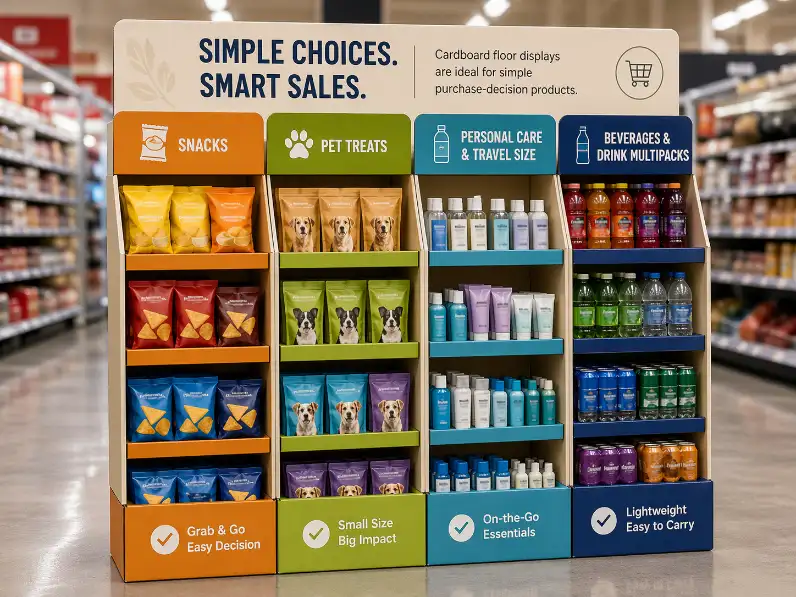
Rule 5: Products With a Simple Purchase Decision Usually Convert Better
A floor display can attract attention fast, but it still needs products that are easy to understand. If the customer has to compare too many technical differences, the display may pull attention without converting it into action. The strongest floor display products are often the ones that support a quick retail decision.
That does not mean the products must be cheap. It means the value should be clear quickly. Snacks, drinks, seasonal beauty lines, pet treats, personal care staples, household refills, promotional packs, and everyday accessories often perform better because the decision feels familiar.
By contrast, products that need careful feature comparison often work better in other display types. A floor display is strongest when it turns attention into movement, not when it turns the shopper into a researcher.
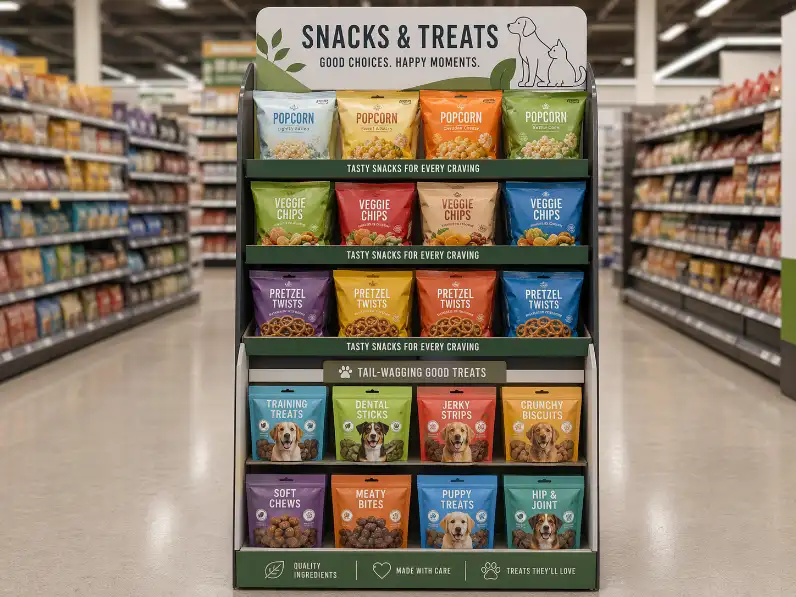
Rule 6: Products That Can Hold Visual Order After Partial Sell-Through Are Stronger Floor Display Products
A display should not only look good when fully loaded. It should still look sellable after some units are gone. This is one of the most practical tests when judging floor display products.
Some products break the display too quickly once a few facings sell out. Others continue to look balanced even after uneven movement. This matters because retail reality is never as neat as launch-day photos. One lane sells faster. One shelf looks emptier. One best seller goes first.
The products that sell better on a floor display are often the ones that still leave the unit looking organized after partial sell-through. That is why product size, pack shape, and assortment planning all affect the answer. If you are working through assortment density, our SKU planning article is the right next internal page.
Rule 7: Products That Retailers Can Refill Easily Usually Perform Better Over Time
A product may look strong on a floor display and still underperform if store staff dislike dealing with it. Refill matters. Products that can be restocked quickly, faced neatly, and returned to order without guesswork usually keep selling better because the display stays cleaner longer.
This is where many projects lose value. The design looks good. The product looks good. But the refill pattern is slow, awkward, or unclear. That weakens the display over time.
Retail-ready corrugated guidance often comes back to the same retail priorities: easy identification, easy shelf placement, easy shopper access, and easy replenishment. Those ideas are highly relevant when deciding which products belong on a floor display. See FEFCO Shelf Ready Packaging for the broader retail logic.
| Product Type | Does It Usually Sell Better on a Floor Display? | Main Reason | Main Risk |
|---|---|---|---|
| Promotional snack packs | Yes | Strong visibility and easy impulse lift | Can look messy if assortment is too wide |
| Seasonal beverage runs | Yes | Good volume presence and high traffic appeal | Weight and refill planning matter |
| Beauty gift sets and promo bundles | Yes | Benefit from stronger presentation space | Premium lines need controlled graphics |
| Pet treats and compact pet products | Yes | Repeat-purchase logic works well | Sell-through can become uneven |
| Large heavy household items | Sometimes | Can create strong volume impact | Structure and handling become harder |
| Technical comparison products | Usually no | Need more evaluation time | Attention may not convert well |
What Buyers Should Ask Before Choosing Floor Display Products
- Does the product gain visibility by leaving the shelf?
- Is the pack size right for a freestanding display unit?
- Can the shopper understand the product quickly?
- Will the display still look balanced after sell-through?
- Can store staff refill the unit without friction?
- Does the product support a promotional or seasonal story?
Those questions will usually tell you more than a nice mockup. A strong floor display product should make the display easier to sell, easier to manage, and easier for the shopper to understand. That is the real standard.
Conclusion
The products that sell better on a floor display are usually the ones that need more presence, fit a medium-size retail rhythm, communicate clearly from a distance, support fast purchase decisions, and stay organized through refill and sell-through. In practice, that often means promotional packs, seasonal assortments, repeat-purchase goods, compact bundles, and products that benefit from a stronger retail stage. Choose products that make the floor display easier to read and easier to maintain, and the display will do far more than hold stock. It will sell.
For help deciding whether a floor display is right for your next product line, please contact us.
FAQ
What products usually sell better on a floor display?
Products that benefit from stronger visibility, quick recognition, and a clear promotional story usually perform better on a floor display.
Are floor displays good for beverages?
Yes, many beverage promotions work well on floor displays, especially when the product size and weight are planned correctly.
Do premium products work on a floor display?
They can, especially for seasonal or promotional campaigns, but the structure and graphics need tighter control.
Why do some products fail on a floor display?
They often fail because they are too bulky, too technical, too hard to refill, or too weak in front-facing communication.
Should small products go on a floor display?
Some can, but tiny products often need careful structure planning so they do not disappear visually in a large unit.
Is a floor display better than a shelf for every product?
No. A floor display works best when the product gains something from added presence and stronger retail interruption.