Which cardboard display supplier is best? Buyers usually ask that question when the price list is already on the table. That is late. The better time is earlier, when you can still compare how each supplier thinks, tests, and solves problems before the project becomes expensive.
As a cardboard display manufacturer, we see the same pattern again and again. One supplier sends a fast quote and a nice rendering. Another asks harder questions, talks through load, fit, setup, refill, and shipping, and takes longer to price the job. In most retail projects, the second supplier is easier to trust because the work behind the display has already started.

Check 1: Does the Cardboard Display Supplier Ask the Right Questions Before Quoting?
A weak supplier often sounds efficient in the first email. Send artwork. Send quantity. Get price. That feels easy. It also hides risk.
A stronger cardboard display supplier usually starts with better questions. What is the product weight? How many units will each shelf carry? Will the display sit in a supermarket, a pharmacy chain, or a specialty store? Does the project need a flat-pack rollout? Will store staff refill the unit fast, or will they rebuild the layout every time they touch it?
Those questions matter because a retail display is not only a printed structure. It is a working sales tool. If the supplier does not ask enough at the start, the quotation may only reflect the idea of the display, not the real job.
That is a warning sign. Buyers often think fewer questions mean faster service. In custom cardboard display work, fewer questions often mean more assumptions, and assumptions are where expensive mistakes begin.
If you want to compare the product side first, start with our cardboard display category. It helps frame the project before supplier comparison turns into a price-only conversation.
Check 2: Does the Supplier Think Like a Cardboard Display Manufacturer or Like a Printer?
Many suppliers can make a display look attractive in a mockup. Fewer can explain why that structure will still work after shipping, setup, partial sell-through, and refill. That difference is big.
A capable cardboard display manufacturer should be able to explain structure in plain language. Why is the shelf depth set this way? Why is the base reinforced? Why is this unit better as a floor display and not a sidekick? Why will this peg layout stay cleaner after refill? If the answers are vague, the supplier may be styling the job instead of engineering it.
That matters even more when the unit carries beverages, pet products, personal care items, or mixed SKUs. A display that looks fine in a rendering can still lean, sag, or lose order in store if the structure was not built around the real retail load.
This is where supplier quality starts to show. A strong custom cardboard display supplier thinks about what happens after approval, not only what looks good during approval.
If you need a better reference point for material and load logic, our corrugated grades guide is the right internal page to review before locking a supplier decision.
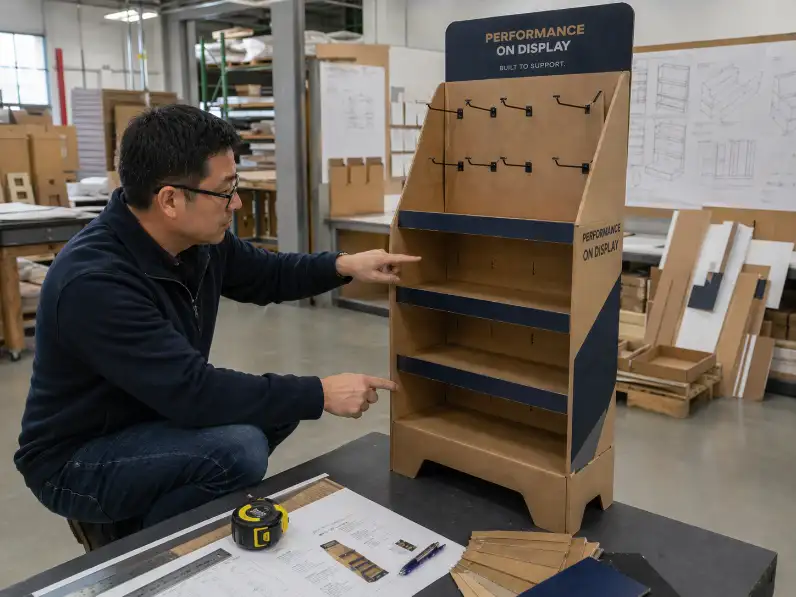
Check 3: Can the Cardboard Display Supplier Run a Sample Process That Reduces Risk?
The sample stage is where supplier quality becomes visible. Or not. A strong cardboard display supplier treats the sample as a proof stage. A weak one treats it as a formality.
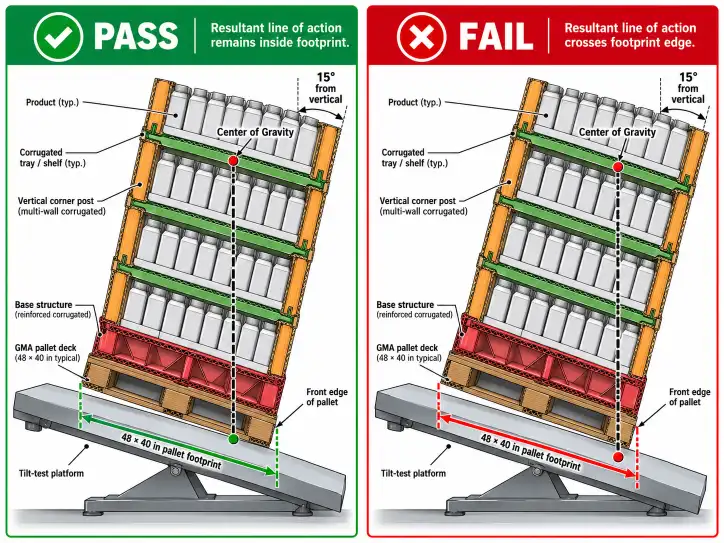
Ask what the sample is supposed to prove. Product fit? Hook spacing? Shelf loading? Setup speed? Partial sell-through? Export packing? If the answer is unclear, the sample process is weak from the start.
A better supplier should also be able to tell you what can still change after the first sample and what should already be fixed before mass production. That clarity saves time. It also cuts down the long chain of revisions that often appears when a supplier moves too fast into approval without testing the hard parts first.
This is one of the cleanest buying signals. When a retail display supplier can explain sample logic with confidence, there is usually stronger operational thinking behind the whole project.
For a fuller review framework, see our display sample approval guide. It will help you judge whether the supplier is reducing risk or moving it downstream.
Check 4: Does the Supplier Understand Store Execution, Not Only Factory Output?
A display does not succeed inside the factory. It succeeds in the store. Many buyers know that in theory. Fewer use it when they compare suppliers.
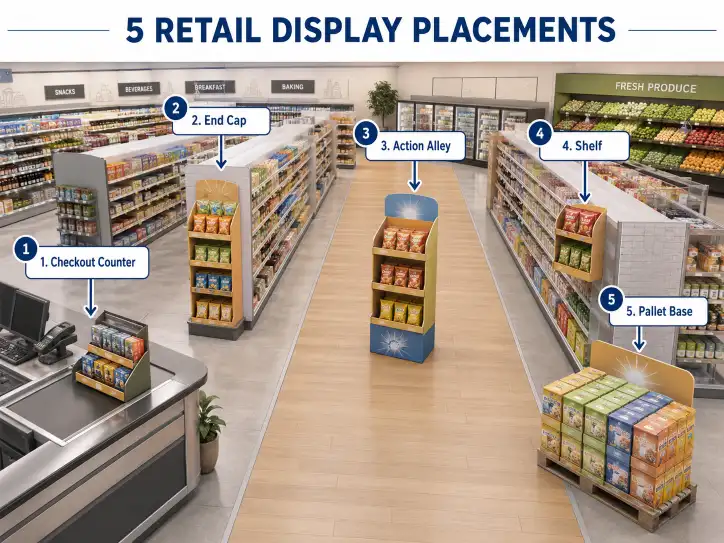
The best cardboard display supplier should understand what happens after the cartons arrive. Can store staff assemble the unit quickly? Can they refill it without guessing? Will the display still look balanced after one SKU sells faster than the others? Does the structure fit the pace of the retail environment it is going into?
This is where many suppliers separate themselves. Some are good at making the object. Better suppliers are good at making the object work. That includes setup logic, refill logic, grouping logic, and display recovery after partial sell-through.
A display that looks impressive but creates store friction is not a strong result. It is a delayed problem. A supplier who talks through retail execution early is often worth more than a supplier who only talks about printing and price.
If you want a sharper view of store-side performance, read our easy setup guide and easy refill guide. Those pages show the kind of thinking a stronger supplier should already bring into the project.

Check 5: Does the Supplier Connect Design, Packing, and Rollout as One Job?
Some suppliers quote the display and leave the rest for later. Better suppliers connect structure, packing, and rollout from the beginning. That difference changes the real cost.
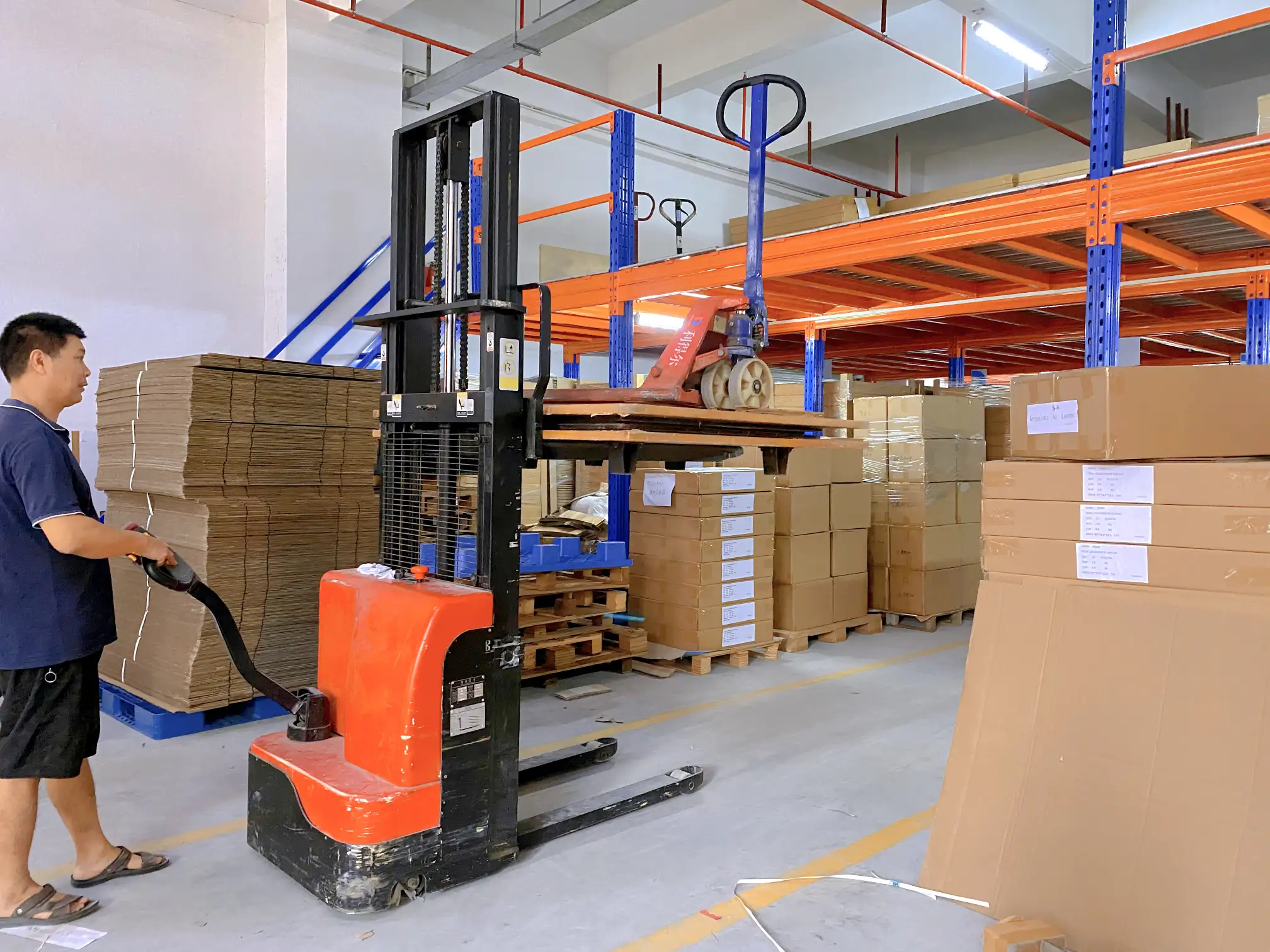
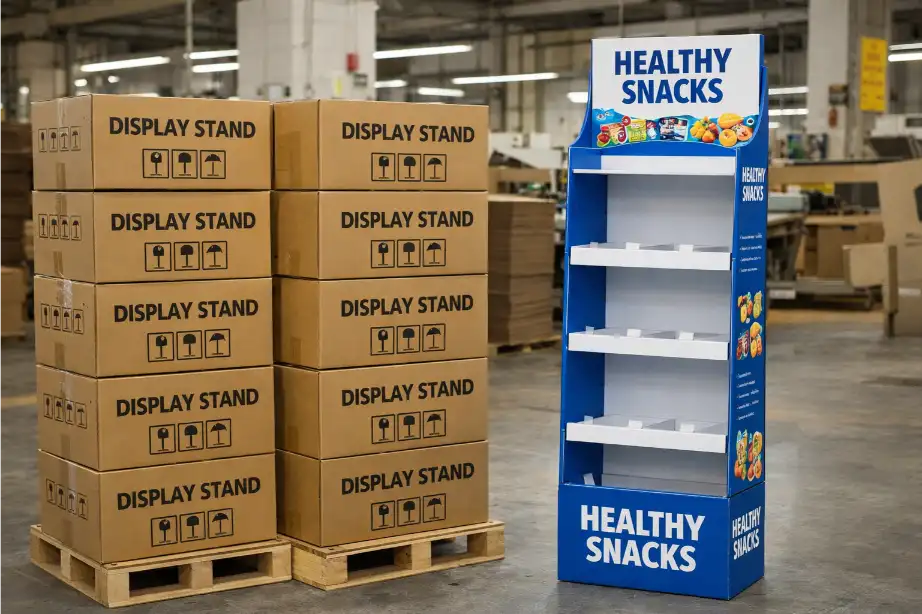
A display that packs badly can erase the value of a lower unit price. A unit that wastes carton space, lacks inner protection, or creates damage risk in export handling often becomes the more expensive choice after freight is counted. The best supplier should be able to explain why the display is packed a certain way and how that choice supports transport, setup, and store rollout at the same time.
This is not a side issue. It is part of supplier quality. If the supplier thinks only about production, the project stays fragmented. If the supplier thinks about production, export packing, store setup, and replenishment together, the project becomes easier to trust.
That is the difference between a display vendor and a real cardboard display supplier. One delivers a unit. The other supports a rollout.
If shipping efficiency matters in your case, our export packaging guide and flat-pack shipping guide are the next internal pages to review.
A Quick Supplier Comparison Table Buyers Can Use
| Buyer Check | What a Strong Supplier Usually Shows | What Should Make You Careful |
|---|---|---|
| Early questions | Asks about weight, retail use, setup, refill, and shipping | Quotes fast with limited project detail |
| Structure thinking | Explains shelves, hooks, balance, and board logic clearly | Focuses only on graphics and price |
| Sample process | Defines what the sample must prove before approval | Treats sampling as a basic visual step |
| Store execution | Understands setup, refill, and real retail handling | Talks only about factory completion |
| Packing and rollout | Connects structure, cartons, and rollout logic | Leaves shipping assumptions unclear |
What Buyers Usually Miss When They Compare a Cardboard Display Supplier
Buyers often compare visible things first. Price. Lead time. Rendering quality. Those matter. They do not tell the full story.
The bigger question is whether the supplier reduces uncertainty or hides it. A strong cardboard display supplier makes the project clearer as the conversation moves forward. A weaker one often keeps the project simple only because the hard parts have not been discussed yet.
That is why clarity is a buying signal. So is structure logic. So is sample discipline. So is rollout thinking. The best supplier is rarely the one who makes the project look easy by ignoring the difficult parts. The best supplier is the one who makes the difficult parts manageable before they become expensive.
For broader corrugated display context, the Fibre Box Association overview of corrugated is useful. For retail-ready handling logic, the FEFCO shelf-ready packaging page is also worth reviewing.

Conclusion
Which cardboard display supplier is best? The answer usually becomes clearer after five checks: better early questions, stronger structure thinking, a sharper sample process, better store execution logic, and stronger packing and rollout planning. Use those five checks in your next supplier conversation, ask the supplier to prove each one, and you will make a better decision than price alone can ever give you. Then ask for the sample that proves it.
For help reviewing a supplier or a display project, please contact us.
FAQ
What is the most important thing to check in a cardboard display supplier?
The most important check is whether the supplier understands the full job, including structure, sample logic, retail execution, and shipping, not only the quotation.
Should buyers choose the cheapest cardboard display supplier?
Not automatically. A lower quote can hide weaker assumptions about board strength, sample scope, packing, or rollout support.
Why is the sample process important when choosing a supplier?
Because the sample stage shows whether the supplier is reducing risk or moving the project forward without enough proof.
Can a supplier look strong in photos but still be weak for retail execution?
Yes. Good renderings and clean print do not guarantee strong setup, refill, or store performance.
Why does shipping logic matter when comparing suppliers?
Because a display that packs badly can erase the value of a lower unit price once freight and rollout costs are added.
What makes one supplier easier to trust than another?
Clearer thinking, better questions, stronger sample discipline, and more practical retail logic usually make the difference.