There are many cardboard display manufacturers in China — from small workshops with 10 workers to large factories with 500+ employees and automated production lines. For a buyer sourcing from overseas, the first step is finding a manufacturer that matches your project requirements. But these factories are not the same in capability. Some specialize in dump bin displays, others focus on floor displays, and many lack the equipment or experience to handle specific printing requirements. So with thousands of factories across Guangdong, Zhejiang, and Fujian, how do you find a reliable cardboard display manufacturer that delivers quality work on time?
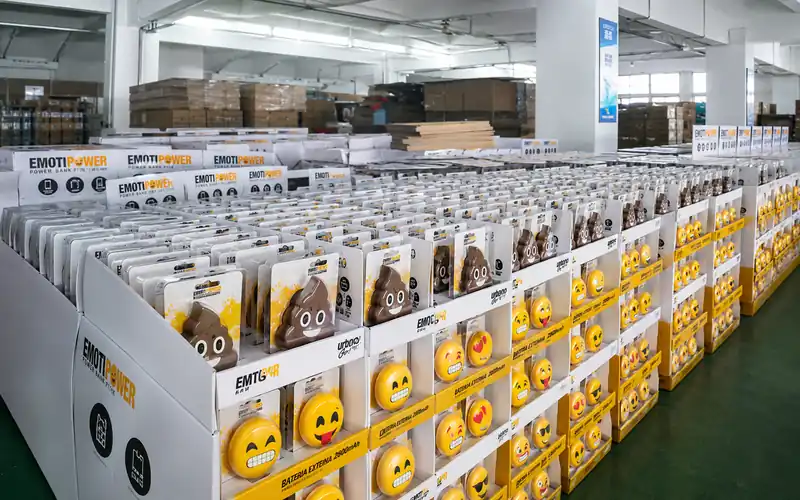
A cardboard display manufacturer is a factory that produces custom retail displays — floor displays, counter displays, PDQ trays, pallet displays, and dump bins — using corrugated cardboard, printed and die-cut to customer specifications. China has been the world's largest producer of corrugated packaging and displays for over a decade, and thousands of factories serve international buyers. But the gap between a good factory and a bad one is enormous. At Leader Display, I have spent 16 years in this industry, and I have seen buyers save 40% on their display costs by choosing the right factory — and I have seen others lose their entire investment by choosing the wrong one. This guide covers the criteria for evaluating manufacturers, the questions to ask before placing an order, and the red flags that signal a factory to avoid.
Why Source Cardboard Displays from China
China dominates global cardboard display manufacturing for three reasons: raw material availability, production scale, and cost efficiency. The country produces over 40% of the world's corrugated board, and the concentration of display factories in the Pearl River Delta and Yangtze River Delta means manufacturers have access to a complete supply chain — from paper mills to printing plate makers to die-cut mold manufacturers — all within a few hours' drive.
| Factor | China Advantage | Typical Cost Savings vs US/Europe |
|---|---|---|
| Raw material cost | Domestic paper production, lower labor costs | 20–30% |
| Labor cost | Skilled workforce at competitive rates | 30–50% |
| Tooling and die-cutting | Local mold makers, fast turnaround | 40–60% |
| Printing | Advanced printing infrastructure | 25–40% |
| Shipping (sea freight) | Major ports, established export routes | Varies by destination |
| MOQ flexibility | Factories accept small to large orders | No premium for small orders |
However, the cost advantage comes with trade-offs. Lead times are longer due to shipping (4–6 weeks sea freight to US/Europe). Communication requires time zone management. And the biggest risk — quality consistency — depends entirely on choosing the right factory. The sections below address how to evaluate factories to minimize these risks.
Types of Display Factories in China
Not all display factories are the same. Understanding the different types helps you match your project requirements to the right factory size and capability.
| Factory Type | Employee Count | Typical MOQ | Equipment | Best For | Risk Level |
|---|---|---|---|---|---|
| Small workshop | 10–30 | 200–500 units | Manual die-cutters, basic printers | Small orders, simple displays | High — quality varies |
| Medium factory | 50–150 | 500–2,000 units | Automatic die-cutters, flexo printers | Mid-volume, standard displays | Medium |
| Large factory | 200–500+ | 1,000–5,000 units | Full auto line, litho laminator, digital proofing | High-volume, complex displays | Low |
| Export-focused factory | 100–300 | 500–2,000 units | Export packaging, QC systems, English-speaking staff | International buyers | Low |
| Specialized factory | 30–100 | 300–1,000 units | Niche equipment (e.g., E-flute, micro-flute) | Specialty displays, premium print | Medium |
Factory Type Selection Guide
| Your Project | Recommended Factory Type | Why |
|---|---|---|
| Prototype or small test order (200–500 units) | Medium factory or specialized factory | Small workshops lack QC; large factories have high MOQ |
| Mid-volume production (1,000–5,000 units) | Medium or large factory | Better pricing at scale, consistent quality |
| High-volume production (5,000+ units) | Large factory | Best pricing, automated production, export experience |
| Complex print (litho laminated, 4-color process) | Large or specialized factory | Requires litho laminator and color management |
| Simple flexo print, 1–2 colors | Small or medium factory | Lower cost for simple work |
| Club store pallet displays | Export-focused large factory | Compliance knowledge, pre-filling capability |
Key Criteria for Evaluating a Manufacturer
1. Production Capability and Equipment
The first question to ask is whether the factory has the equipment to produce your specific display type. A factory that only runs flexo printers cannot produce litho-laminated displays. A factory without automatic die-cutters will struggle with complex shapes.
| Equipment | What It Does | Why It Matters |
|---|---|---|
| Automatic die-cutting machine | Cuts display shapes precisely | Consistent quality across large runs |
| Litho laminator | Laminates printed sheets to corrugated | Photo-quality print for premium displays |
| Flexo printer | Prints directly on corrugated | Cost-effective for 1–2 color work |
| Digital printer | Short-run, variable data printing | Low MOQ, fast turnaround for prototypes |
| Flatbed die-cutter | Heavy-duty cutting for thick board | Double-wall and triple-wall displays |
| Folder-gluer | Folds and glues display structures | Consistent assembly, reduced labor cost |
2. Quality Control Systems
A reliable manufacturer has documented QC processes at every stage of production. The absence of a formal QC system is the single biggest indicator of a high-risk factory.
| QC Stage | What to Check | What to Ask |
|---|---|---|
| Incoming material | Paper grade, flute type, liner quality | "Do you test incoming paper for ECT and moisture content?" |
| Pre-production | Dieline confirmation, color proof | "Do you provide a signed proof before production?" |
| During production | First article inspection, in-line checks | "What is your first article inspection process?" |
| Final inspection | Dimensions, print quality, structure | "What is your AQL (Acceptable Quality Level) standard?" |
| Pre-shipment | Packing, labeling, pallet condition | "Do you take photos of every pallet before loading?" |
3. Export Experience
For international buyers, the factory's export experience is critical. A factory that has never exported will not understand international shipping requirements, customs documentation, or the packaging standards needed to protect displays during sea freight.
| Export Experience Indicator | What to Look For |
|---|---|
| Export percentage | > 50% of total output is exported |
| Destination countries | Experience shipping to your country/region |
| Container loading | Experience with full container loads (FCL) and shared containers (LCL) |
| Customs documentation | Can provide commercial invoice, packing list, bill of lading |
| Incoterms familiarity | Understands FOB, CIF, DDP terms |
| Packaging for export | Uses export-grade cartons, pallet wrapping, edge protection |
For more on how displays are packed and shipped, see our display fulfillment and palletizing guide.
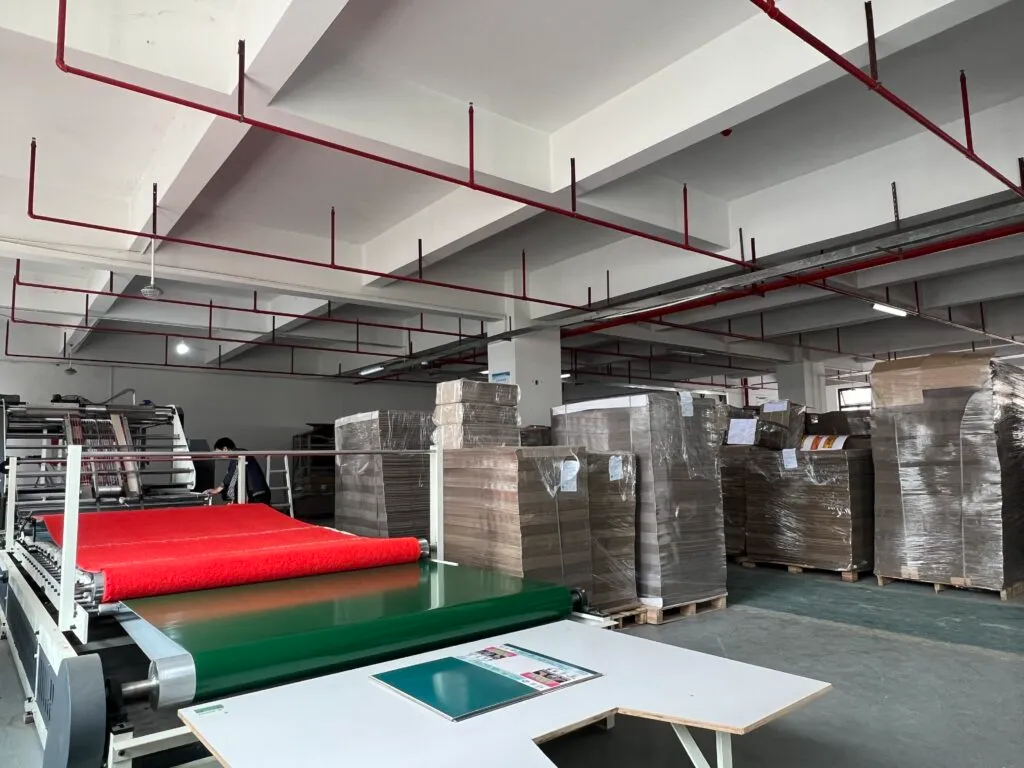
Factory Capability Assessment Checklist
Use this checklist when evaluating a potential manufacturer. A factory that meets 8 or more of these criteria is a low-risk partner.
| # | Criteria | How to Verify | Pass/Fail |
|---|---|---|---|
| 1 | Factory has been in business for at least 5 years | Check business license, ask for company history | |
| 2 | Factory has a dedicated export department | Ask for export team size and contact person | |
| 3 | Factory provides a physical sample before mass production | Request a pre-production sample | |
| 4 | Factory uses digital proofing for artwork approval | Ask about their proofing process | |
| 5 | Factory has at least one automatic die-cutting machine | Request a factory tour video or photos | |
| 6 | Factory can provide material certificates (ECT, board grade) | Ask for material test reports | |
| 7 | Factory has a written QC process | Request a QC checklist or SOP | |
| 8 | Factory provides packing list and photos before shipment | Ask about their pre-shipment process | |
| 9 | Factory has experience with your specific display type | Ask for similar project references | |
| 10 | Factory communicates in your language (English or your native language) | Assess communication responsiveness |
Questions to Ask Before Placing an Order
| Question | What the Answer Should Tell You |
|---|---|
| "Can you show me a similar display you have produced?" | Confirms experience with your display type |
| "What is your typical lead time from order to shipment?" | Sets expectations for production scheduling |
| "What is your MOQ for this display design?" | Determines if the factory fits your volume |
| "Do you provide a pre-production sample?" | Confirms QC process before mass production |
| "What is your defect rate target?" | A good factory targets < 1% defects |
| "How do you handle defective products?" | Should offer replacement or credit |
| "Can I visit your factory or take a video tour?" | Willingness to show facilities indicates transparency |
| "What are your payment terms?" | Standard is 30% deposit, 70% before shipment |
The Quotation Process: What to Expect
A reliable manufacturer provides a detailed, itemized quotation. A vague or incomplete quote is a red flag.
What a Complete Quote Should Include
| Line Item | What It Covers | Why It Matters |
|---|---|---|
| Material specifications | Flute type, wall structure, ECT rating, liner type | Confirms the display will meet structural requirements |
| Printing method | Flexo, litho laminated, digital | Affects print quality and cost |
| Finishing | Lamination, coating, UV | Affects durability and appearance |
| Die-cutting | Tooling cost (one-time) | Significant upfront cost, typically $200–800 |
| Assembly | Flat pack, semi-assembled, pre-filled | Affects labor cost and shipping volume |
| Packaging | Individual polybag, bulk pack, palletizing | Affects product protection during shipping |
| Shipping terms | FOB, CIF, EXW, DDP | Determines who handles shipping and insurance |
| Payment terms | Deposit percentage, balance before shipment | Standard is 30/70 or 50/50 |
| Lead time | Production days + shipping days | Sets delivery timeline |
Quote Comparison: What to Watch For
| Scenario | What It Means | Action |
|---|---|---|
| One quote is 50% lower than others | Factory may be using inferior materials or skipping QC | Request material specification in writing |
| Quote does not specify flute type or ECT | Factory may use whatever board is cheapest | Insist on written material specs |
| Tooling cost is waived | Tooling cost is included in unit price, not actually free | Compare total cost including tooling |
| Shipping cost is unusually low | May use slower shipping or less reliable carrier | Confirm shipping method and transit time |
| Quote is valid for 30+ days | Factory is confident in material pricing | Standard practice, no concern |
For a detailed breakdown of display costs, see our custom cardboard display cost guide.
Quality Control During Production
Production Stages and QC Checks
| Stage | What Happens | QC Check | Buyer Action |
|---|---|---|---|
| Material arrival | Corrugated board arrives at factory | Verify ECT, flute type, liner color | Request material test report |
| Die-cutting | Board is cut into display shapes | Check dimensions, cut accuracy | Request first-article photo |
| Printing | Graphics are applied to board | Check color accuracy, registration | Request digital proof approval |
| Lamination | Protective coating is applied | Check adhesion, bubbles, peeling | Request sample photo |
| Folding and gluing | Display structure is assembled | Check glue strength, fold accuracy | Request video of assembly test |
| Packing | Displays are packed for shipping | Check packing method, pallet quality | Request packing photos |
| Container loading | Cartons are loaded into container | Check loading density, damage | Request loading photos or video |
Third-Party Inspection
For large orders, consider hiring a third-party inspection company. This is standard practice for international buyers and adds approximately $300–$500 per inspection day.
| Inspection Type | Timing | What Is Checked | Cost Estimate |
|---|---|---|---|
| During production | When 20–30% of production is complete | Material, print quality, dimensions | $300–400/day |
| Pre-shipment | When 100% of production is complete | Quantity, packing, labeling, random sampling | $300–500/day |
| Container loading | During container loading | Loading quality, damage prevention | $300–400/day |
Communication and Project Management
Communication Channels
| Channel | Best For | Response Time Expectation |
|---|---|---|
| Formal communication, specifications, approvals | 24 hours | |
| WhatsApp / WeChat | Quick questions, photo updates, video calls | 2–8 hours |
| Video call (Zoom, Teams) | Factory tour, problem-solving, design review | Scheduled in advance |
| In-person visit | Factory audit, sample approval, contract signing | By appointment |
Time Zone Management
| Your Time Zone | Best Time to Contact China (GMT+8) | Your Working Hours |
|---|---|---|
| US Eastern (EST) | 8:00–10:00 PM (China morning) | 7:00–9:00 AM |
| US Pacific (PST) | 8:00–10:00 PM (China morning) | 5:00–7:00 AM |
| UK (GMT) | 8:00–10:00 AM (China afternoon) | 12:00–2:00 PM |
| Europe (CET) | 8:00–10:00 AM (China afternoon) | 1:00–3:00 PM |
| Australia (AEST) | 9:00–11:00 AM (China morning) | 11:00 AM–1:00 PM |
A reliable manufacturer will have English-speaking staff available during overlapping business hours. If a factory only responds to emails once per day and cannot accommodate a video call, that is a red flag.
Red Flags When Evaluating Factories
| Red Flag | Why It Is a Problem | What to Do Instead |
|---|---|---|
| Factory cannot provide a physical sample | No sample means no way to verify quality | Insist on a pre-production sample before any deposit |
| Quote is 40%+ lower than all other quotes | Likely using inferior materials or skipping QC steps | Request written material specifications and compare |
| Factory claims "no MOQ" | No MOQ often means no experience with consistent production | Set a minimum order quantity and get it in writing |
| Communication is slow or unclear | Poor communication leads to specification errors | Test responsiveness before committing to an order |
| Factory asks for 100% payment upfront | No leverage if quality is poor | Standard is 30% deposit, 70% before shipment |
| Factory cannot provide client references | No track record to verify | Request at least 3 client references |
| Factory does not have a website or Alibaba page | Difficult to verify legitimacy | Use Alibaba Trade Assurance or similar protection |
| Factory changes quoted specifications after deposit | Bait-and-switch tactic | Get all specifications in writing before deposit |
Cost Comparison: China vs Other Sourcing Destinations
| Sourcing Destination | Unit Cost Index (China = 1.0×) | Shipping Cost (to US) | Lead Time (to US) | Typical MOQ | Quality Consistency |
|---|---|---|---|---|---|
| China (Guangdong) | 1.0× (baseline) | $1,500–3,500/container | 4–6 weeks | 500+ units | Medium to high |
| China (Zhejiang) | 1.05× | $1,500–3,500/container | 5–7 weeks | 500+ units | Medium to high |
| Vietnam | 1.1–1.2× | $2,000–4,000/container | 5–8 weeks | 1,000+ units | Medium |
| India | 1.0–1.1× | $1,800–3,500/container | 6–10 weeks | 1,000+ units | Variable |
| Mexico | 1.3–1.5× | $500–1,500/container | 1–3 weeks | 2,000+ units | Medium to high |
| United States | 2.0–3.0× | Domestic shipping | 2–4 weeks | 500+ units | High |
| Europe (Eastern) | 1.3–1.6× | $1,000–2,500/container | 3–5 weeks | 1,000+ units | High |
Note: These are general estimates based on typical production volumes. Actual costs vary by display complexity, quantity, and current material prices. The International Corrugated Case Association publishes industry data on global corrugated production volumes that can help you understand regional supply dynamics.
FAQ
How do I find a cardboard display manufacturer in China?
The most common methods are Alibaba.com, trade shows (Canton Fair, ISM, NRF), and industry referrals. Alibaba is the most accessible starting point but requires careful vetting. Look for factories with Trade Assurance, at least 3–5 years on the platform, and verified factory assessments. The Canton Fair (held in Guangzhou every April and October) is the largest trade show for display manufacturers.
What is the minimum order quantity for cardboard displays in China?
Typical MOQs range from 200–500 units for small to medium factories and 1,000–5,000 units for large factories. Some factories accept 100-unit trial orders at a higher unit price. Always confirm the MOQ in writing before requesting a quote, and ask whether the MOQ applies per design or per SKU.
How much does a custom cardboard display cost from China?
A simple single-color flexo-printed counter display starts at $0.50–$1.50 per unit. A 4-color litho-laminated floor display with shelves costs $3.00–$8.00 per unit. A pre-filled pallet display for club stores ranges from $5.00–$15.00 per unit depending on complexity. Tooling costs add $200–$800 one-time per design.
How long does it take to produce a cardboard display in China?
Typical production lead time is 3–5 weeks from order confirmation, plus 4–6 weeks for sea freight to the US or Europe. Air freight is available (1–2 weeks) but significantly more expensive. The total timeline from order to delivery is usually 8–12 weeks for sea freight or 5–7 weeks for air freight.
Can I visit the factory before placing an order?
Yes — most reputable factories welcome visits. If you cannot visit in person, request a video tour. A factory that refuses to show its facilities is a major red flag. For small orders, a video tour is usually sufficient. For large orders (over $10,000), an in-person visit is strongly recommended.
How do I verify the quality of a factory's work?
Request a pre-production sample before mass production begins. This sample should be produced using the same materials and processes that will be used for the full production run. Check the sample for dimensions, print color accuracy, structural strength, and assembly quality. For large orders, consider third-party inspection during production and before shipment.
What payment terms are standard for Chinese display manufacturers?
The most common terms are 30% deposit with order and 70% balance before shipment. Some factories accept 50/50 terms. For new relationships, avoid paying 100% upfront. Use Alibaba Trade Assurance, PayPal, or a letter of credit (L/C) for larger orders. Bank transfer (T/T) is the most common payment method.
What is the difference between FOB and CIF pricing?
FOB (Free on Board) means the factory delivers the goods to the port and you arrange and pay for shipping. CIF (Cost, Insurance, Freight) means the factory includes shipping and insurance to the destination port. FOB is more common for experienced importers. CIF is simpler for first-time buyers. Always clarify which Incoterm is used in the quote.
How do I handle defects or quality issues after delivery?
This should be addressed in the contract before production. A reliable manufacturer will offer replacement for defective units or a credit toward your next order. Take photos of all defects immediately and document the issue. For disputes, platforms like Alibaba offer Trade Assurance protection. The International Chamber of Commerce provides dispute resolution services for international trade.
Should I use a sourcing agent to find a display manufacturer in China?
A sourcing agent can help if you have no experience with Chinese factories or if your order volume is small (under $5,000). Agents typically charge 5–10% of the order value. However, working directly with the factory gives you better pricing and direct communication. For first-time buyers, I recommend starting with a factory that has English-speaking staff and export experience rather than relying on an agent.