A successful cardboard display for limited-time promotions needs to attract shoppers fast, hold the right product volume, and stay practical for retail teams. The best structure depends on promotion length, product weight, store position, refill plan, and shipping method. For B2B buyers, the goal is not only a good-looking display, but a promotion tool that arrives safely, sets up quickly, and supports sales during a short campaign window.
Why Limited-Time Promotions Need a Different Display Strategy
Limited-time promotions move fast. Seasonal launches, holiday campaigns, sampling programs, bundle offers, and new product trials often have a narrow sales period. If the display is hard to assemble, too weak for the product weight, or too large for the store space, the promotion can lose impact before it starts.
A practical display plan should answer a few production and retail questions early. Where will the unit be placed? How many SKUs will it hold? Will stores refill it? Does the retailer need a pallet-ready solution, a counter unit, or a compact floor display?
At Leader Display, we usually start with the product size, product weight, quantity per display, retail channel, and packing method. These details decide the board grade, shelf depth, support structure, header size, and flat-pack design.
Main Display Options for Short Campaigns
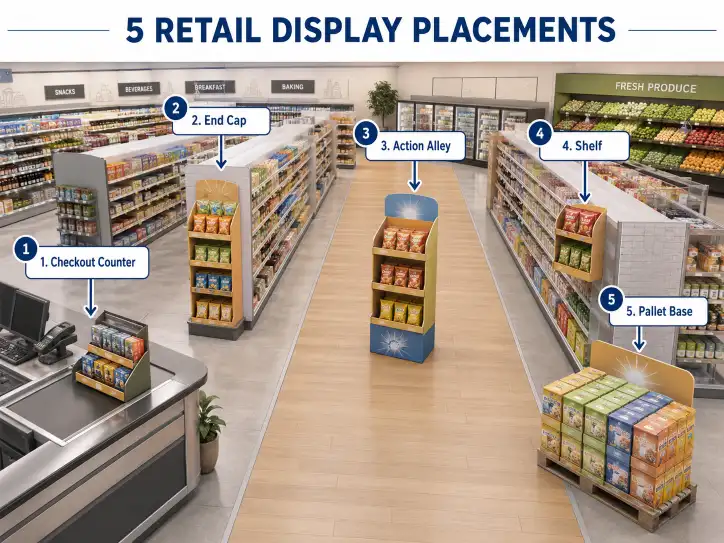
Different cardboard display types work for different promotion goals. A counter display can push small add-on products near checkout, while a floor display can create stronger visual impact in a main aisle. A PDQ tray can help stores place products quickly with less handling.
Counter Displays for Small Products and Checkout Offers
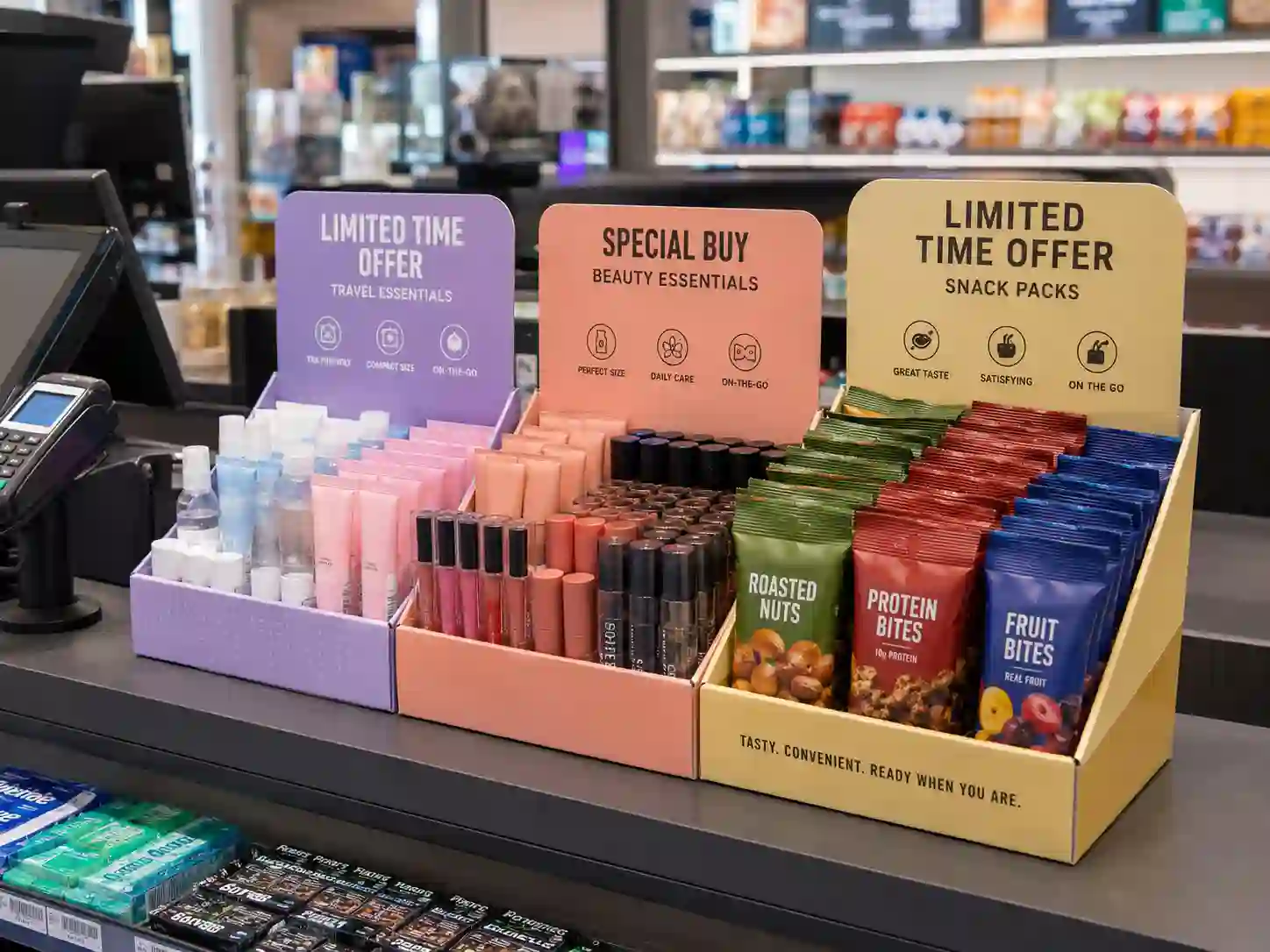
Counter displays work well for cosmetics, lip balm, snacks, small gifts, batteries, sample packs, and impulse-buy products. They are compact, easy to place, and cost-effective for short retail periods.
For limited campaigns, the structure should be simple. A foldable body, printed header, and pre-glued design can reduce setup time. If the product is light, standard corrugated board may be enough. For heavier items, stronger side panels, bottom locks, or inner support cards can prevent deformation.
Counter units are useful when the buyer wants broad store coverage without a large freight volume. They can be shipped flat or packed with products, depending on the retailer’s handling requirements.
PDQ Displays for Fast Retail Placement
PDQ displays are designed for quick placement. The full name, “pretty darn quick,” reflects the idea: open the carton, remove the cover, and place the tray on shelf, counter, or checkout area. For a short promotion, that speed matters.
A PDQ tray is suitable for small packaged goods, trial-size products, food items, personal care products, and small accessories. It can also work as a shelf-ready packaging solution when the outer carton protects the display during transport.
For buyers comparing options, custom PDQ and cardboard display solutions can help connect the display structure with the product size, printing needs, and export packing plan.
Floor Displays for Strong Campaign Visibility
A floor display is a better option when the campaign needs higher visibility or more product capacity. It can stand in an aisle, near an endcap, beside a seasonal zone, or close to a checkout lane.
For limited-time promotions, floor displays often include a strong header, multiple shelves, side panels, and enough product facings to support fast sell-through. The structure must match the product load. Beverage packs, pet products, cleaning products, and boxed goods need stronger shelves than lightweight cosmetics or snacks.
A good manufacturer will check shelf span, flute direction, board thickness, and load distribution before sampling. Small structural changes can decide whether the display stays straight during the full promotion.
Sidekick Displays for Aisle and Endcap Attachment
Sidekick displays attach to store fixtures or stand near aisle ends. They are useful for cross-selling, trial products, small seasonal items, and add-on purchases. Because they use less floor space, they can be attractive for retailers with strict placement rules.
The key is balance. If the sidekick is too narrow or the product load is uneven, it may lean or twist. Reinforced hanging holes, stable back panels, and clear assembly instructions help retail teams install it correctly.
Pallet Displays for High-Volume Promotions
Pallet displays work best for warehouse clubs, supermarkets, large-format retail, and bulk promotions. They are built for volume and fast shopping decisions. Typical uses include beverages, snacks, household products, promotional bundles, and holiday gift packs.
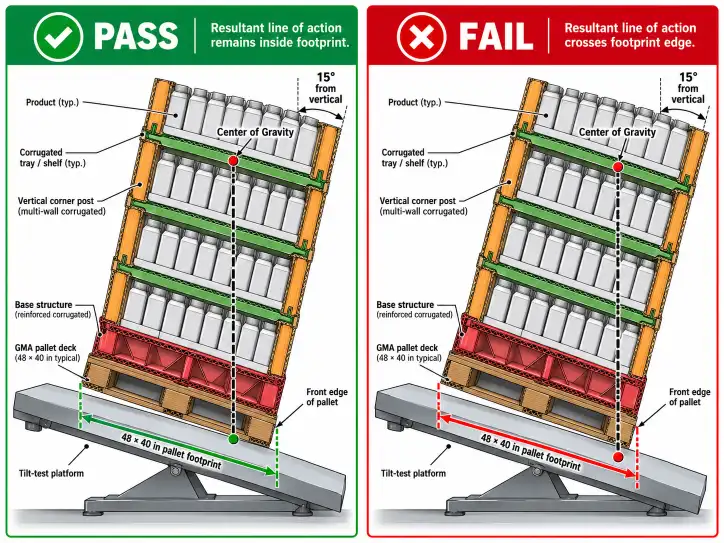
A pallet display requires more planning than a small counter unit. The base size, pallet pattern, stacking strength, product arrangement, wrap method, and header stability all affect shipment and store setup. FEFCO-style corrugated structure knowledge can help buyers and factories communicate more clearly about carton formats, board types, and transport strength.
Quick Selection Table for B2B Buyers
| Promotion Goal | Recommended Display Type | Best For | Key Structure Check |
|---|---|---|---|
| Small impulse purchase | Counter display | Cosmetics, snacks, sample packs | Bottom lock, header stability, product fit |
| Fast shelf placement | PDQ display | Trial products, small packaged goods | Tray strength, carton protection, easy opening |
| Strong in-store visibility | Floor display | Seasonal launches, bundles, multi-SKU campaigns | Shelf load, side panel strength, anti-lean design |
| Cross-selling near aisles | Sidekick display | Add-on items, small accessories, mini packs | Hanging support, balance, refill access |
| High-volume retail campaign | Pallet display | Club stores, supermarkets, bulk promotions | Pallet base, stacking, export packing, header support |
What to Check Before Choosing the Structure
Product Weight and Shelf Load
Product weight is one of the first details a manufacturer needs. A display for lightweight paper gift boxes is different from a display for glass bottles, canned drinks, or pet products. The shelf span, board grade, and internal support must match the real load.
For floor displays, we often suggest testing each shelf with the planned quantity. If one shelf holds 20 products, the sample should be checked with that same load, not with empty boxes. This helps avoid bending, leaning, or tearing during retail use.
Store Placement and Shopper Distance
A display placed at checkout needs quick product recognition at close range. A display placed in a supermarket aisle needs stronger header graphics and cleaner product blocking. A pallet display may need bold printing because shoppers see it from a longer distance.
Before artwork starts, buyers should define the placement area. This affects the display height, header size, side printing, product angle, and access for refill.
Promotion Length
A two-week sampling campaign does not need the same structure as a two-month holiday display. Shorter campaigns can use simpler structures if product weight is light and handling is controlled. Longer campaigns need stronger shelves, better edge protection, and a refill-friendly layout.
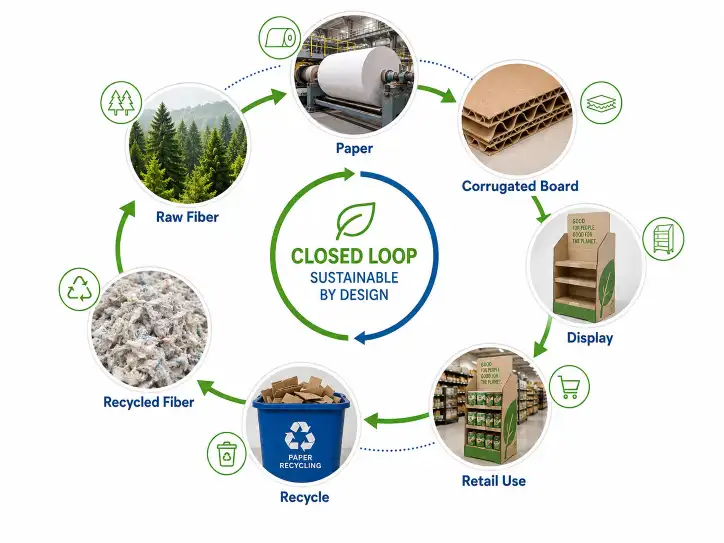
This is also where sustainability choices matter. FSC-certified paper materials can support responsible sourcing claims when the buyer’s brand or retailer requires them. ISO-related quality management practices can also help buyers evaluate factory process control, especially for repeat export orders.
Sampling Before Bulk Production
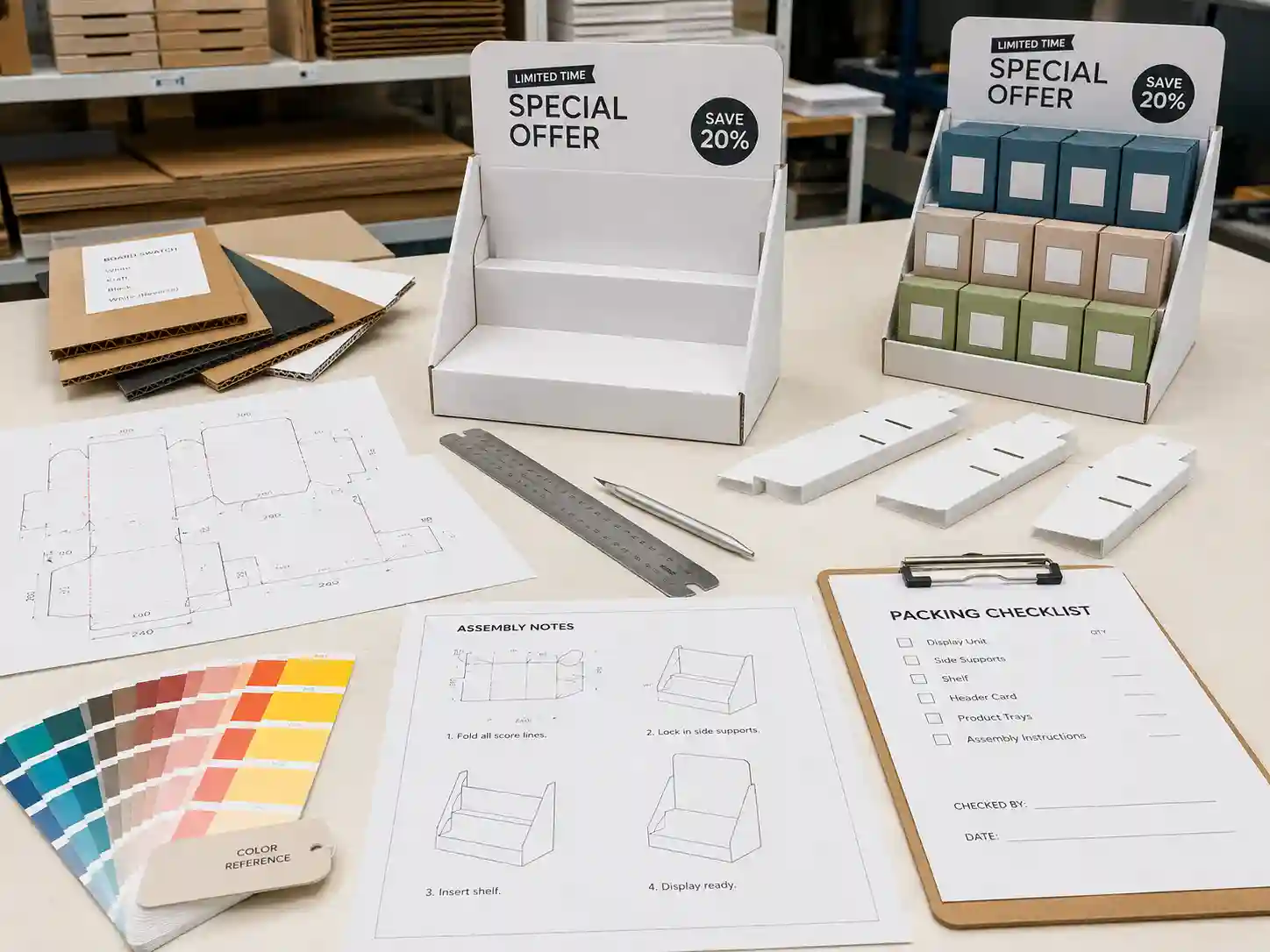
Sampling is where a display idea becomes a practical retail tool. A printed rendering can show the visual direction, but a physical sample checks the structure.
For B2B buyers, a sample should answer these questions:
Can the display hold the planned product weight?
Can one person assemble it without confusion?
Do the products sit straight?
Does the header stay upright?
Can the display be packed flat without damaging printed panels?
Does the outer carton protect corners during export shipping?
A white sample is useful for structure confirmation. A printed sample is better for color, finish, barcode position, brand layout, and retail presentation. For urgent campaigns, buyers can approve the structure first, then confirm print details once the dieline is locked.
Material and Printing Choices for Short Campaigns
Corrugated Board Selection
Common options include single-wall corrugated board, stronger double-wall board, and mounted paperboard structures. The right choice depends on product weight, campaign duration, and shipping route.
For counter displays and PDQ trays, single-wall corrugated board often works well. For floor displays, heavier shelves may need stronger flute combinations or hidden support parts. For pallet displays, the base and lower structure need more attention because they carry the most pressure.
Surface Paper and Finishing
Limited-time promotions often rely on fast visual impact. Gloss lamination can make colors feel brighter. Matte lamination can create a cleaner premium look. Spot UV, embossing, debossing, and foil stamping can be used for gift, beauty, or seasonal campaigns, but buyers should balance finish cost with promotion value.
For mass retail, simple and clear printing often works better than complex decoration. Product name, offer message, usage cue, and clear category graphics should be easy to read.
Retailer and Compliance Needs
Some retailers have display size rules, packing requirements, barcode requirements, and sustainability guidelines. Packaging associations, FSC, ISO, and FEFCO references can help teams speak the same technical language, but each retailer’s final instruction should be checked before production.
A practical factory will ask for retailer manuals when available. This reduces the risk of display rejection, repacking, or last-minute redesign.
Assembly, Flat Packing, and Export Packing
A limited-time campaign can fail if retail teams cannot set up the display on time. That is why assembly design matters.
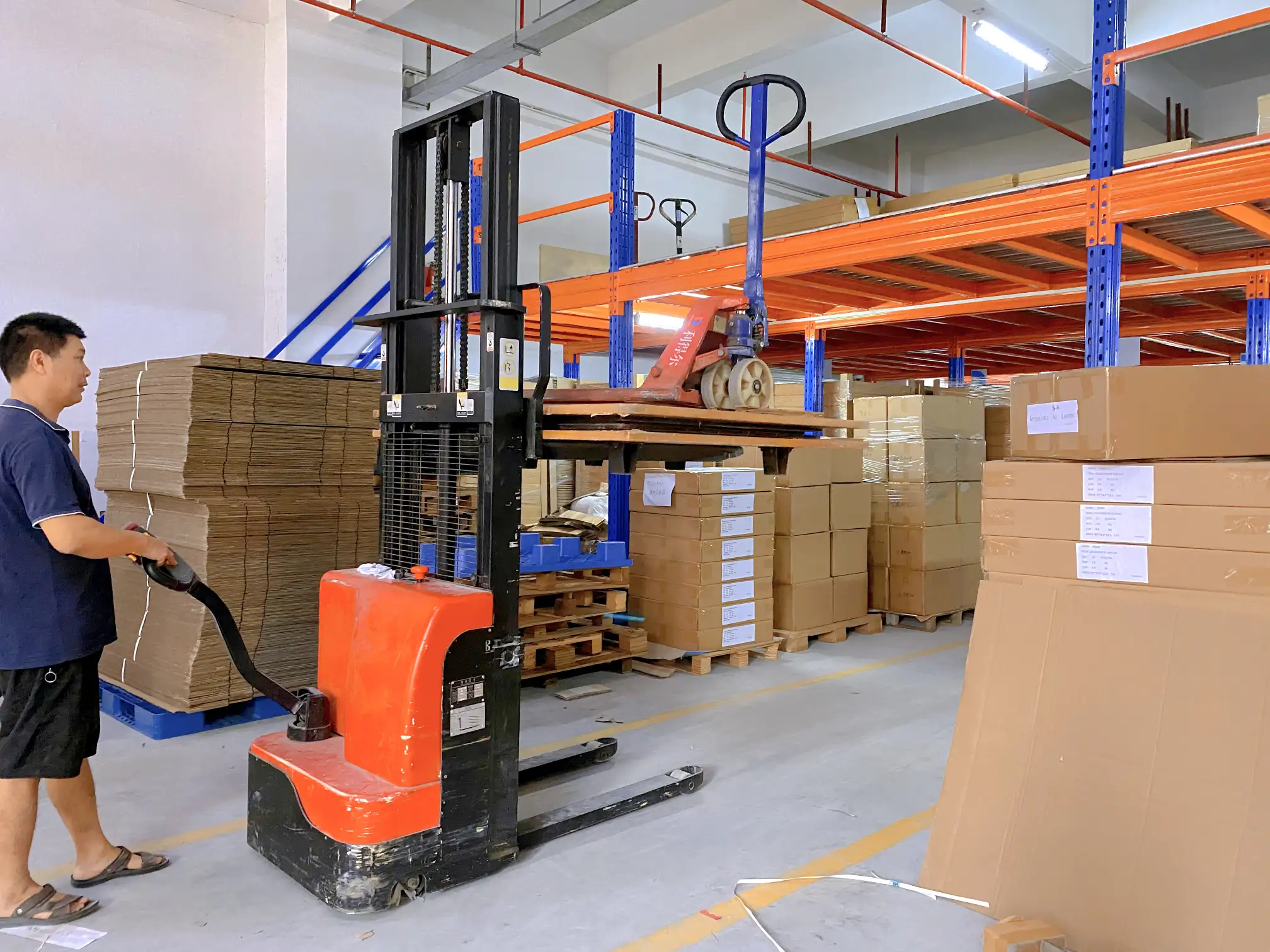
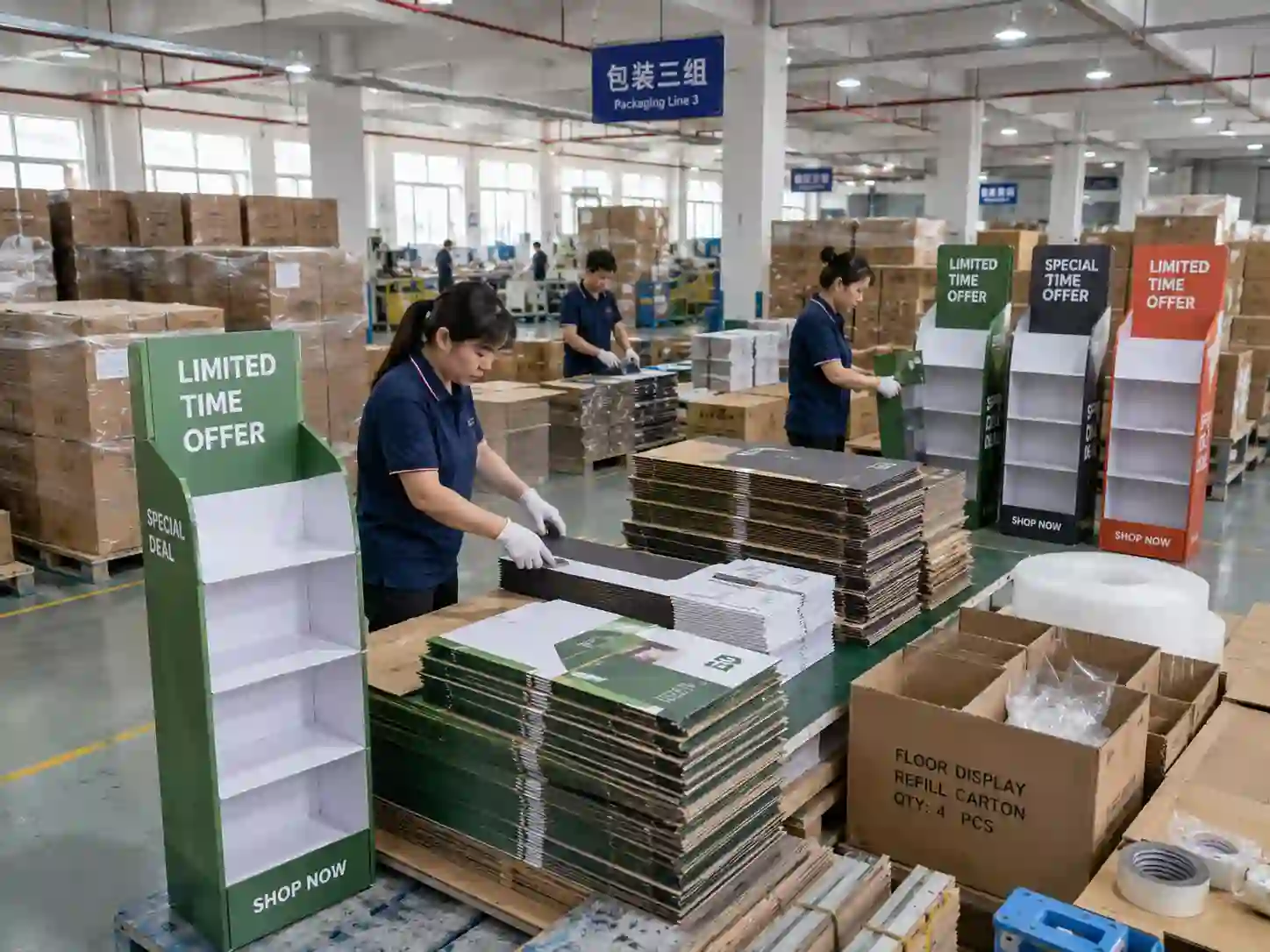
For many B2B projects, flat packing is the best method. It reduces shipping volume and protects printed panels. The display can be packed with assembly instructions, shelf parts, headers, hooks, clips, and protective sheets. For some PDQ or counter units, pre-loaded packing may be possible if the product and retailer allow it.
Export packing should include strong master cartons, corner protection when needed, clear carton marks, and pallet packing plans. If displays ship by sea, moisture control and carton strength need attention. If they ship by air, packing volume becomes a cost issue.
For more structure examples, buyers can review cardboard display product options and compare how different formats support different retail positions.
Refill Planning for Better Promotion Results
Some short promotions are one-time fill displays. Others need refill stock. This detail changes the structure.
If store staff will refill the display, shelves need enough front access. Product blocking should stay neat after shoppers remove items. For small products, dividers, stepped trays, or inner partitions can help maintain order. For heavier products, refill access should not weaken the shelf or side panels.
A good refill plan can extend the display’s sales life without increasing the display footprint. It also helps the buyer decide whether to ship extra products in separate cartons or design a base storage area inside the display.
How Leader Display Approaches Limited-Time Promotion Projects
Leader Display has worked as a custom paper display and packaging manufacturer since 2004. Our approach is practical: understand the product, confirm the retail use, build the structure around the load, then prepare production and export packing for bulk delivery.
For a new inquiry, useful details include product dimensions, product weight, target quantity per display, display type preference, retail channel, artwork status, required delivery date, and shipping destination. Photos of similar displays are also helpful, even when the final design needs to be custom.
Buyers who need a broader project discussion can start from Leader Display custom cardboard displays or visit Leader Display to review factory capabilities and send project details.
Choosing the Best Display for Your Campaign
For small and fast-moving products, a counter display or PDQ tray may be the most efficient choice. For stronger retail visibility, a floor display gives more space for branding and product volume. For high-volume retailer programs, a pallet display can move more stock and create stronger campaign presence.
The best choice comes from matching the display to the product, store position, campaign length, handling process, and shipping plan. Share the product details, target store environment, and promotion timeline early, and the structure can be developed with fewer revisions, cleaner sampling, and a smoother path to bulk production.