Holiday campaigns move fast, and the wrong display structure can cost space, labor, and sales opportunities. A practical cardboard display for holiday promotions should match the product weight, store traffic, replenishment plan, and shipping method before the design artwork begins.
For brand owners, wholesalers, retail buyers, and trade marketing teams, the question is not only “Which display looks good?” The better question is, “Which display can arrive flat, assemble smoothly, hold the product safely, and sell through during a short campaign window?”
Why Holiday Promotions Need a Different Display Strategy
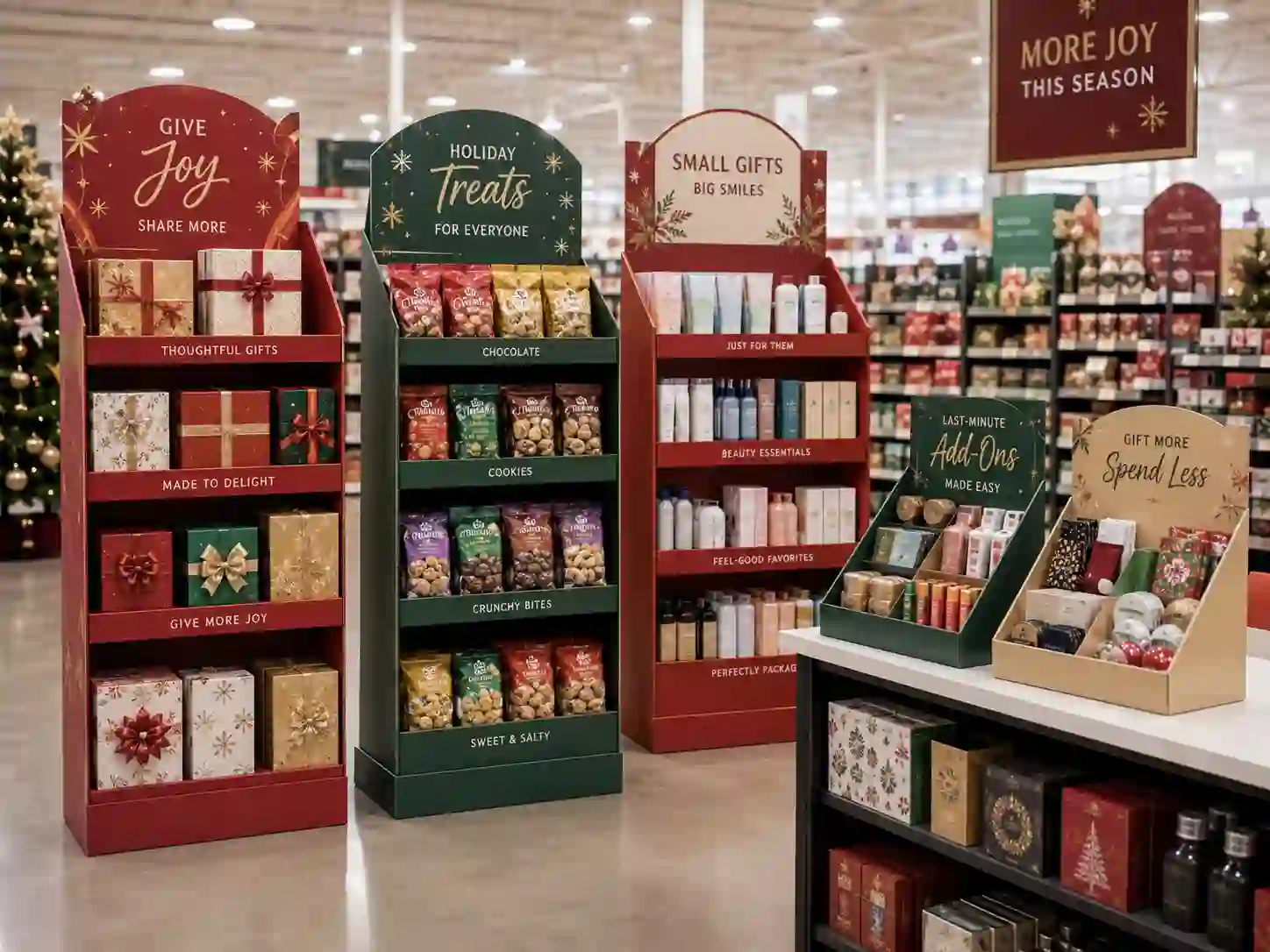
Holiday retail is crowded. Seasonal packaging, gift sets, limited editions, bundle packs, and impulse products often compete in the same aisle. During these weeks, a cardboard display must do more than carry products. It needs to explain the offer, attract attention, and help store staff manage fast replenishment.
A standard display may work for daily retail, but holiday campaigns often involve heavier product loads, higher SKU variety, mixed cartons, and tighter launch dates. The structure must be tested before mass production.
For example, a chocolate brand may need small PDQ trays for checkout zones, while a beverage gift pack may need a stronger floor display with reinforced shelves. A cosmetics campaign may require premium printing, spot UV, or foil effects, while a toy promotion may need larger header graphics and clear product separation.
As a manufacturer, we usually look at five points before recommending a cardboard display for holiday promotions: product size, product weight, store location, expected refill frequency, and packing method. These details help avoid weak shelves, oversized cartons, slow assembly, and poor store compliance.
Main Cardboard Display Types for Holiday Campaigns
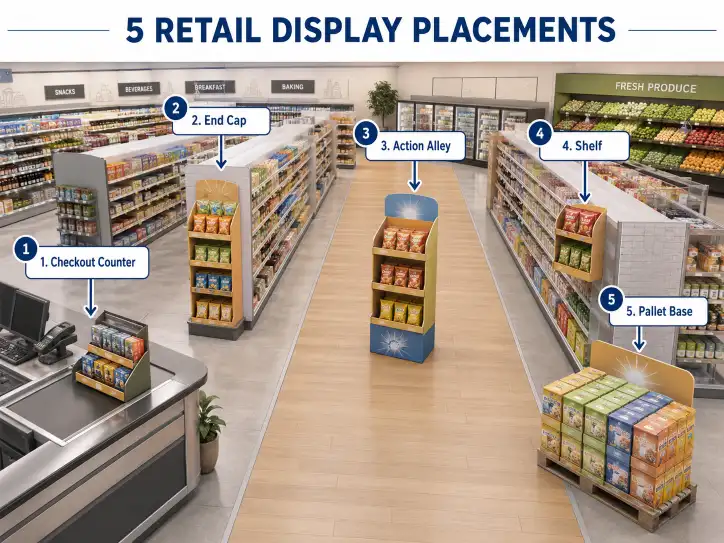
Different holiday campaigns need different display formats. The best structure depends on where the display will stand and how customers buy the product.
PDQ Displays for Checkout and Small Gift Items
PDQ displays are useful for small seasonal products such as lip balm, candy, small toys, accessories, gift cards, trial-size cosmetics, and mini gift packs. They are placed on counters, checkout lanes, shelf tops, and promotional tables.
A PDQ display works well when the product is light and the purchase decision is fast. The front lip, divider, and header card can be customized for seasonal graphics. For holiday promotions, PDQ trays also help retailers place many small items without using much shelf space.
From a production view, PDQ displays are efficient to flat pack or pre-pack with products, depending on the buyer’s packing plan. If the retailer wants faster store setup, pre-filled PDQ trays can save labor. If freight cost is a concern, flat-packed trays may be better.
Counter Displays for Premium Seasonal Products
Counter displays are suitable for beauty gift sets, small electronics accessories, holiday snacks, candles, stationery, and promotional bundles. Compared with a simple PDQ tray, a counter display can have more branding space, multiple tiers, side panels, and a stronger visual presentation.
A counter display is a good choice when the product needs explanation. Header cards, side wings, printed dividers, and QR code areas can help communicate the holiday offer. For lightweight products, paperboard or E-flute corrugated board may be enough. For heavier items, we may recommend reinforced side walls or thicker corrugated material.
Buyers can review more structure options through custom cardboard displays when planning seasonal display projects with different store placements.
Floor Displays for Aisle and Promotional Zones
Floor displays are one of the most common options for holiday campaigns because they create a strong in-store presence. They can hold gift boxes, snack packs, beauty kits, beverage cartons, pet products, toys, and household items.
A floor-standing cardboard display can include shelves, hooks, dump bins, trays, side panels, and large header graphics. For holiday promotions, the display needs enough graphic area to support seasonal messaging, but the structure must stay practical for loading, assembly, and transport.
Shelf strength matters here. A display for lightweight gift packaging has different requirements from a display carrying glass jars, bottled drinks, or multi-pack cartons. Before production, we usually check the product weight per shelf, total load, shelf depth, board grade, and whether an internal support system is needed.
Sidekick Displays for Secondary Placement
Sidekick displays are attached to retail shelves, endcaps, or aisle fixtures. They are useful when the brand wants extra visibility without requesting full floor space. For holiday promotions, sidekick displays work well for small packaged goods, personal care products, batteries, snacks, ornaments, and add-on items.
A sidekick display must be compact, stable, and easy for store staff to install. The hanging system, back panel, hook strength, and product depth should be tested before bulk production. If the product is heavy, a sidekick may not be the safest choice unless the retailer approves the structure and fixing method.
Pallet Displays for Club Stores and High-Volume Campaigns
Pallet displays are often used for warehouse clubs, supermarkets, and large retail chains. They support bulk promotions, mixed product cases, holiday bundles, and high-volume seasonal launches.
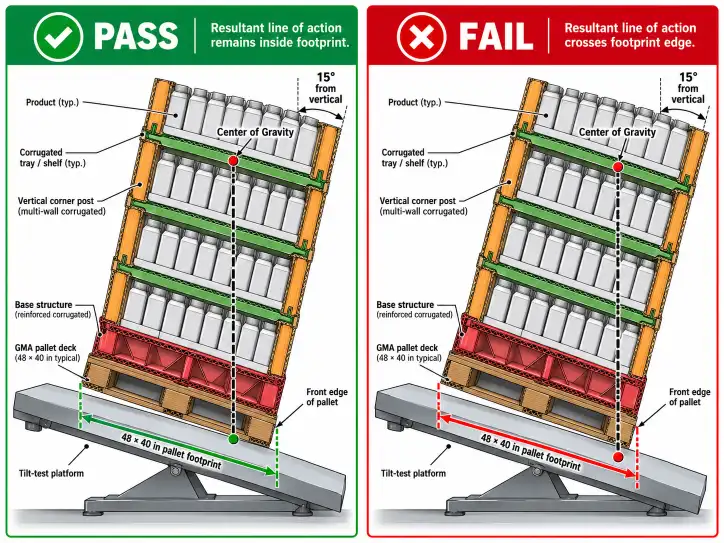
A pallet display can include a pallet base, stacked product cases, a skirt, side panels, corner boards, and a large header. It is practical when the retailer needs quick placement on the sales floor with limited unpacking. The display must be designed around pallet size, carton stacking, transport stability, and store handling.
For export projects, pallet display planning should include carton compression, moisture control, container loading, and protective packing. Standards from packaging groups such as FEFCO can help teams discuss corrugated case styles and packaging structures more clearly.
Comparison Table: Which Display Fits Your Holiday Product?
| Display Type | Best For | Store Placement | Key Structure Point | Packing Consideration |
|---|---|---|---|---|
| PDQ Display | Small impulse products, samples, candy, accessories | Checkout, shelf top, counter | Front lip, dividers, compact tray strength | Flat pack or pre-filled tray |
| Counter Display | Beauty items, small gift sets, premium seasonal products | Cashier counter, service desk, promo table | Tier height, header, side panels | Small master carton, fast setup |
| Floor Display | Gift boxes, snacks, toys, cosmetics, pet products | Aisle, endcap, seasonal zone | Shelf load, side wall strength, base stability | Flat packing with instructions |
| Sidekick Display | Small add-on items and light packaged goods | Shelf side, aisle fixture, endcap side | Hanging system and back support | Compact shipping carton |
| Pallet Display | Bulk packs, club store promotions, heavy campaigns | Warehouse club, supermarket, large-format retail | Pallet size, stacking strength, transport safety | Export pallet and protective wrapping |
How to Choose the Right Structure Before Artwork
Artwork is important, but structure should come first. A beautiful display can fail if it cannot hold the product or fit the retailer’s space. For a cardboard display for holiday promotions, structure planning should begin with product and store information.
Check Product Weight and Shelf Load
Product weight affects material choice, shelf design, and display size. A shelf holding ten small skincare boxes may only need standard corrugated support. A shelf holding glass bottles or food jars may need thicker board, inner reinforcement, or a different shelf angle.
A practical display supplier should ask for product dimensions, product weight, quantity per shelf, and total loading weight. If the buyer cannot provide final product samples yet, dummy samples or estimated weights can be used during the first structure proposal.
For holiday campaigns, overloading is common because buyers want maximum product exposure. The display should not be designed only for the first product arrangement. It should also handle store refill behavior, where staff may place extra items on the shelves during busy periods.
Match the Display to Store Placement
A checkout display needs a small footprint and easy product access. A floor display needs stronger balance and higher visibility. A pallet display needs transport stability and fast floor placement. The structure should be matched to the retail environment, not copied from a previous project without checking the new requirements.
Retailers may also provide display guidelines. These can include maximum width, height, aisle clearance, hook limits, header restrictions, safety rules, and pallet size. Buyers should share these rules early so the display can be engineered correctly.
For a broader view of available retail structures, buyers can review cardboard display solutions before choosing a display type.
Material, Printing, and Finish Choices for Holiday Displays
Holiday displays often need stronger visual impact than daily retail displays. But material and finishing choices should still support the commercial goal: safe product holding, consistent print quality, efficient production, and manageable cost.
Corrugated Board and Paperboard Options
Common material choices include E-flute, B-flute, BE-flute, and different grades of paperboard laminated onto corrugated board. Lightweight displays may use thinner board, while heavier products need stronger corrugated structures.
For premium holiday promotions, buyers may request smoother printing surfaces, better color control, or laminated finishes. A manufacturer should recommend material based on load, print requirements, budget, and export shipping conditions.
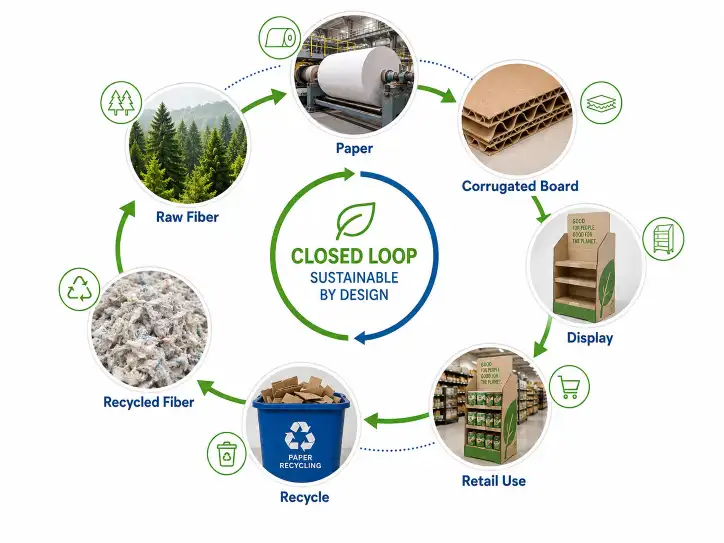
Sustainability may also matter for global brands. FSC-certified paper materials can support responsible sourcing claims when the supply chain and certification requirements are confirmed. ISO-related quality systems can also help buyers evaluate factory management and production consistency.
Printing and Finishing for Seasonal Impact
Holiday campaigns often use rich colors, metallic tones, snow patterns, gift visuals, and limited-edition messages. Offset printing is common for high-quality graphics, while digital printing may be useful for samples or small runs.
Finishing options can include matte lamination, gloss lamination, spot UV, embossing, debossing, and foil stamping. These effects can improve shelf impact, but they should be used with purpose. Too many finishes can raise cost and slow production.
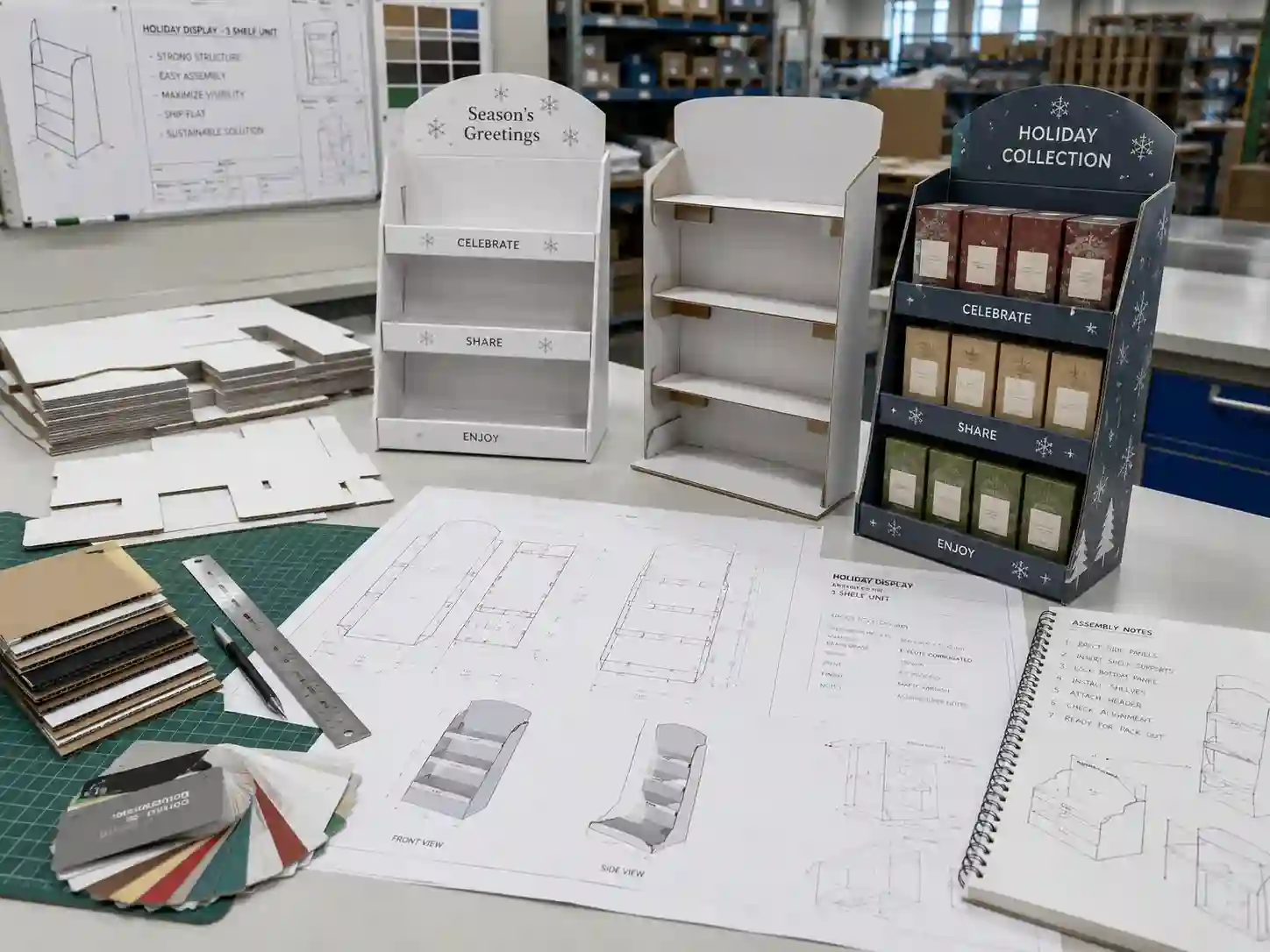
For B2B buyers, the sample stage is the right time to confirm color, structure, product fit, and finishing. A good sample should not only look close to the final display. It should also test assembly, loading, refill, and packing.
Sampling: The Step That Reduces Holiday Campaign Risk
Holiday promotion timing is strict. Once the display reaches stores, there may be no time to remake parts. Sampling helps reduce risk before bulk production.
A useful sample should check several points:
- Product fit inside trays, shelves, or hooks
- Shelf strength under expected product load
- Assembly steps and time needed by store staff
- Header stability and display balance
- Print color, surface finish, and logo position
- Flat packing size and carton protection
- Refill access for retail staff
For a cardboard display for holiday promotions, we often suggest testing the display with real products or accurate dummy products. Photos alone are not enough for load planning. A small change in bottle weight, box depth, or product quantity can affect the structure.
Sampling also gives the buyer a clear file for retailer approval. Many retail buyers need sample photos, assembly videos, packing details, and display dimensions before confirming the final order.
Flat Packing, Assembly, and Store Labor
A holiday display should be easy to assemble. Store teams are busy during seasonal campaigns, so complicated structures may be ignored or set up incorrectly.
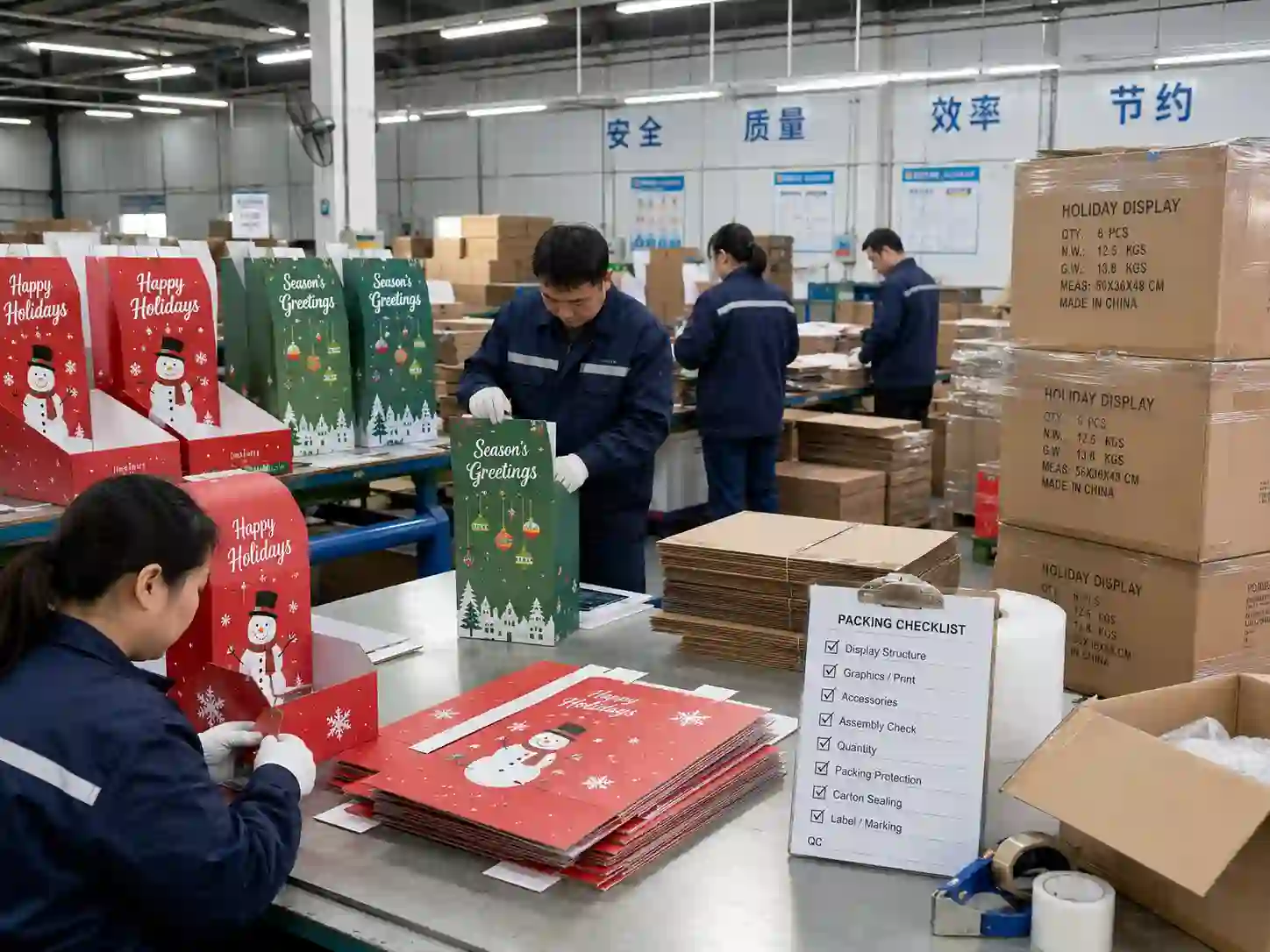
Flat-packed displays can reduce freight volume, but the design must include clear folding lines, locking tabs, numbered parts, and assembly instructions. If the display has shelves, hooks, trays, and a header, each part should be packed in a logical order.
For higher-volume projects, an assembly instruction sheet or short setup video can reduce mistakes. The master carton should also protect printed panels from scratches and bending during export shipping.
Pre-packed displays may be suitable when retailers want fast setup. In this case, the factory or co-packer may load products into the display before shipment. The structure must be strong enough to handle transport with products inside, and the outer carton must be designed for protection.
Refill Planning for Better Sell-Through
Holiday promotions often run for several weeks. A display that looks good on day one may lose impact if it is hard to refill.
Refill planning should answer three questions. Can store staff reach the product area easily? Can the display hold extra stock nearby? Will the structure still look neat when half the products are sold?
PDQ trays and counter displays often need clean dividers to keep products upright. Floor displays may need shelf lips, tray sections, or side walls to prevent messy placement. Dump bin displays should have the right inner depth so products remain visible instead of sinking too low.
For a cardboard display for holiday promotions, refill behavior should be discussed before finalizing the structure. This is especially important for snacks, cosmetics, small gifts, and mixed-SKU campaigns.
Export Packing Details B2B Buyers Should Confirm
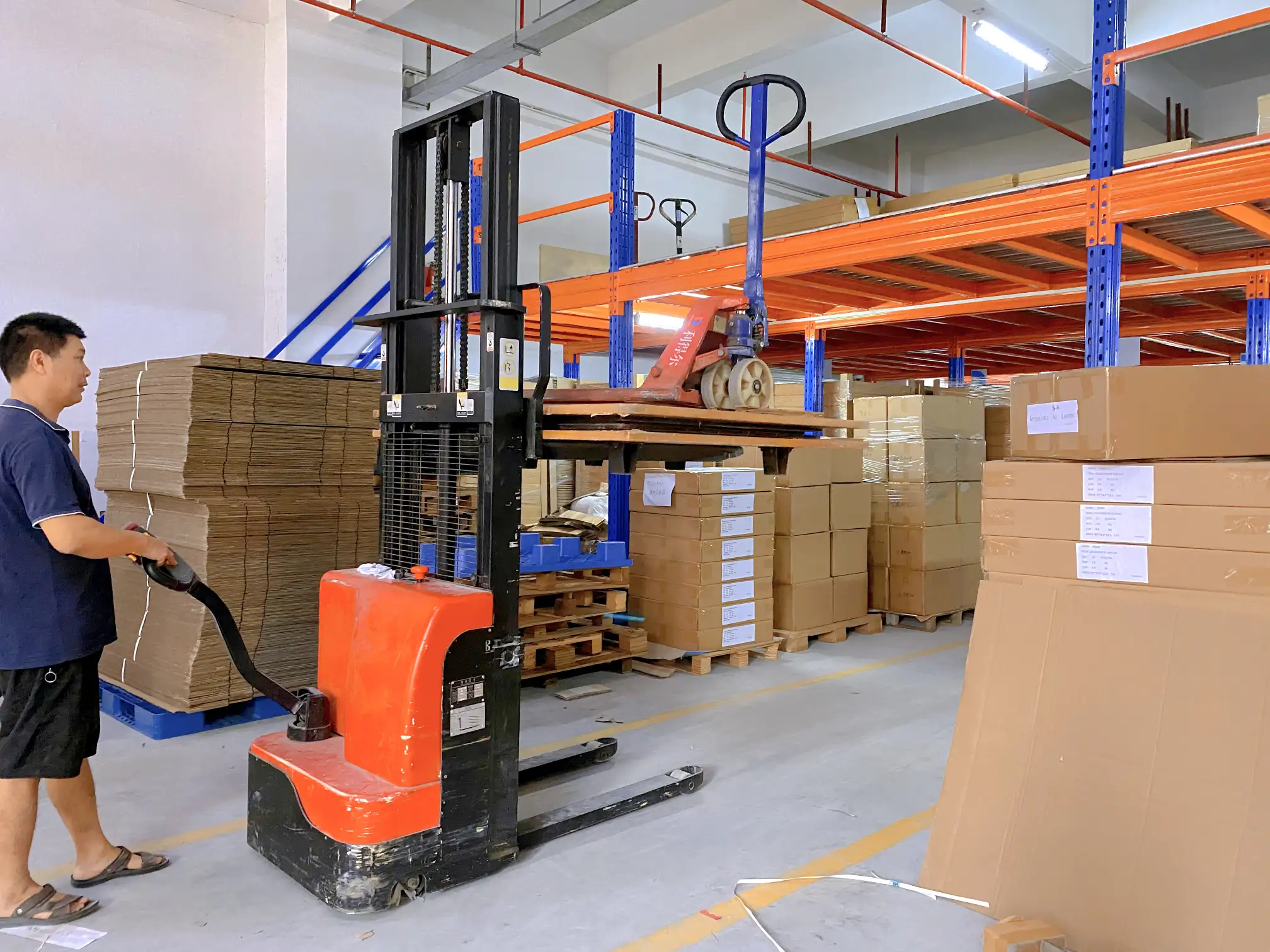
For international buyers, the display is not finished when printing ends. It still needs to survive packing, loading, sea freight, customs handling, warehouse storage, and store distribution.
A practical export packing plan may include:
- Flat-packed display parts in corrugated master cartons
- Protective paper between printed panels
- Reinforced corner protection for large headers
- Clear carton marks for display type and part quantity
- Assembly instruction sheets inside each carton
- Pallet wrapping for bulk shipment
- Moisture protection when needed
If the project includes multiple display versions, cartons should be labeled clearly. Mixed SKUs, language versions, retailer versions, and region-specific graphics can create mistakes if packing marks are not controlled.
Working with a manufacturer that understands export packing can reduce damage claims and store setup problems. Leader Display supports custom structures, sampling, printing, flat packing, and export packing for B2B retail display projects. Buyers can start from Leader Display’s manufacturing capability when planning a new seasonal program.
Common Mistakes When Choosing Holiday Displays
Many holiday display problems begin during early planning. Buyers can avoid delays by watching for these common mistakes.
Choosing by Appearance Only
A display may look attractive in a rendering, but it must also hold product weight, fit store space, and ship safely. Structure drawings and sample testing should come before final artwork approval.
Ignoring Retailer Space Limits
Retailers may reject a display if it is too wide, too tall, too deep, or unsafe for the aisle. Always confirm store placement and size limits before bulk production.
Underestimating Assembly Time
Holiday displays with too many parts may slow down store setup. Simple locking systems, clear instructions, and organized packing help store teams place the display correctly.
Using One Structure for Every Product
A small candy promotion and a heavy beverage gift pack should not use the same structure. Product weight, packaging shape, and refill needs should guide the design.
Leaving Export Packing Too Late
Export packing should be planned with the display structure. Large headers, printed panels, and shelves need protection during shipment. Carton size also affects freight cost.
When to Use a Custom Cardboard Display
A custom display is useful when standard shelf space cannot support the campaign goal. Holiday promotions often need custom structures because product shapes, gift bundles, and retail requirements change by season.
Custom development allows buyers to decide the number of shelves, tray size, display height, header shape, side graphics, hook layout, base strength, and packing method. It also helps match the display to brand positioning, whether the campaign is premium, value-focused, family-oriented, or gift-driven.
For complex campaigns, a custom cardboard display for holiday promotions can combine several functions. For example, a floor display may include shelves for gift boxes, hooks for small add-ons, and a header for campaign messaging. A pallet display may include case stacking with a printed skirt and top header. A counter display may include tiered product zones and a small tester area.
The best time to contact a manufacturer is before the artwork is locked. Early structure input can save cost, shorten sampling time, and improve retail approval.
Practical Information to Send Before Requesting a Quote
A clear inquiry helps the factory recommend the right solution faster. When contacting a display manufacturer, prepare the following details:
- Product size and weight
- Number of products per display
- Target store placement
- Display type preference, if known
- Retailer size limits, if available
- Quantity needed
- Printing requirements
- Finish preferences
- Flat pack or pre-pack requirement
- Destination country and export packing needs
- Project timeline and sample deadline
With these details, the manufacturer can suggest material, structure, dimensions, carton packing, and estimated production approach. For buyers planning a cardboard display for holiday promotions, early communication is the easiest way to avoid rushed changes later.
Holiday campaigns reward teams that make decisions early. Share product details, store requirements, and launch timing with the factory, then move into structure proposal, sampling, artwork, and production with a display built for real retail use.