Not every cardboard display that looks good in a mockup performs well in a real store. Some displays bend under weight. Some become messy after only a few days. Others never attract enough shopper attention in the first place. When that happens, the problem is rarely “cardboard” alone. In most cases, the display fails because the project was planned with the wrong assumptions.
For brands, retailers, and importers, understanding why displays fail is just as important as knowing how to design one. A successful cardboard display needs the right structure, the right product layout, the right retail placement, and the right shipping plan. In this guide, we break down seven common mistakes buyers should avoid before production begins.
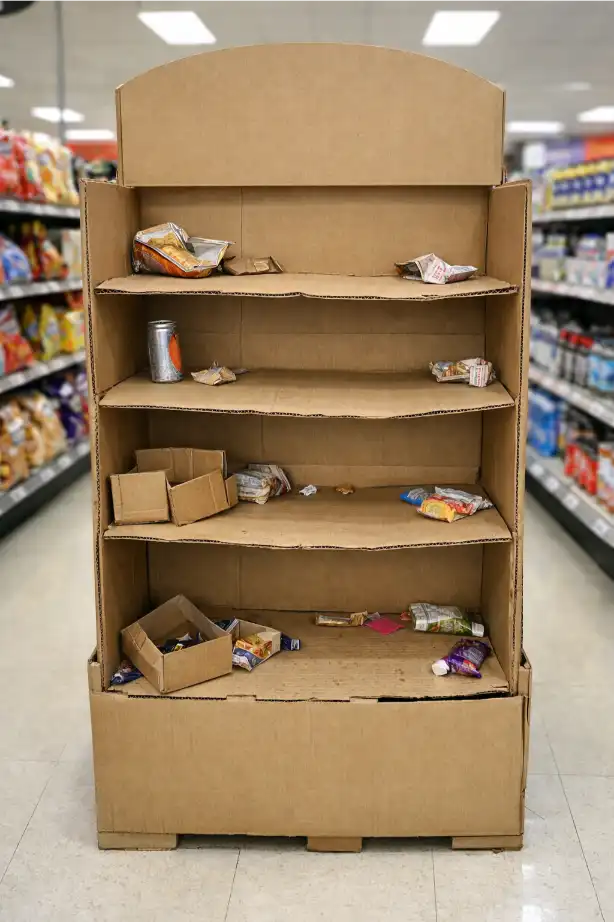
What “Failure” Actually Means in Retail
A cardboard display does not have to collapse completely to fail. In retail, failure often appears in smaller but more expensive ways. A display may look untidy after refill. Products may lean forward. Shoppers may not understand what the display is selling. Store staff may dislike assembling it. Retailers may stop using it because it takes too much space or creates too much work.
That is why a display should be judged not only by appearance, but also by stability, usability, refill speed, visual clarity, and store performance over time.
Mistake 1: Designing for Looks Before Product Reality
One of the most common mistakes is approving a display concept based mainly on visual appearance. A display may look attractive in a render, but if it does not match the real product size, weight, and pack shape, it will create problems later. This usually leads to wasted space, poor product fit, weak shelf presentation, or unnecessary structural complexity.
The better approach is to start with product data first. Buyers should confirm dimensions, unit weight, quantity per shelf, and product-facing direction before falling in love with a visual concept.
Mistake 2: Ignoring Real Shelf Load
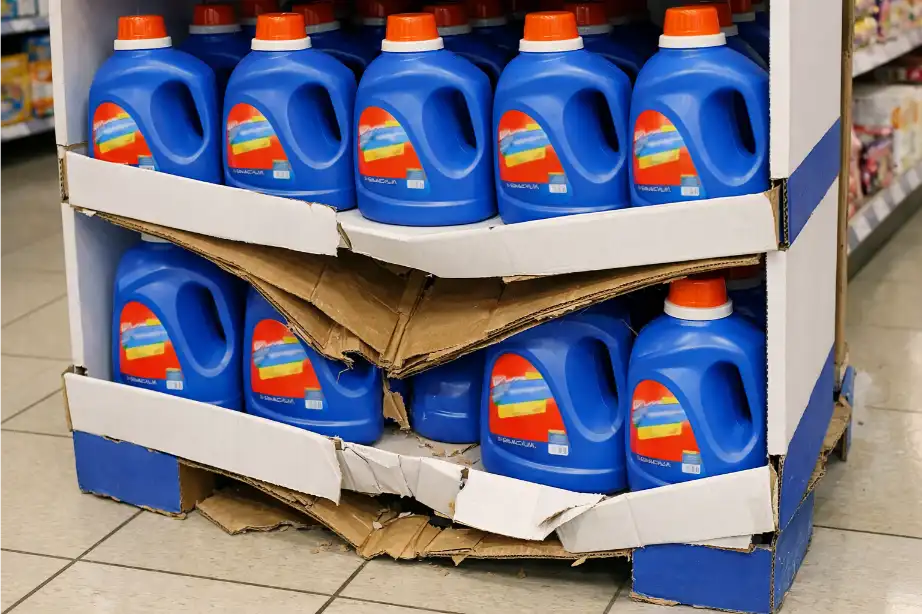
Many display failures happen because the real product load was underestimated. This is especially common in beverages, household goods, pet products, and larger personal care items. A shelf that holds up in an empty sample can behave very differently once fully loaded with the final retail quantity.
Good buyers do not ask only, “Can this hold the product?” They ask, “Can this hold the real retail load safely over time?” If your project involves heavier items, our corrugated grades guide can help you review the material side earlier.
Mistake 3: Putting Too Many SKUs on One Display
More products do not always mean more sales. In many cases, trying to place too many SKUs on one unit makes the display harder to browse and weaker visually. Shoppers need to understand the product family quickly. If they see too many similar items at once, the display becomes cluttered and slows decision-making.
This is especially true in snacks, cosmetics, electronics accessories, and household items. A display that is too full often looks less premium and performs worse than a simpler unit with stronger hierarchy.
Mistake 4: Choosing the Wrong Display Type for the Retail Location
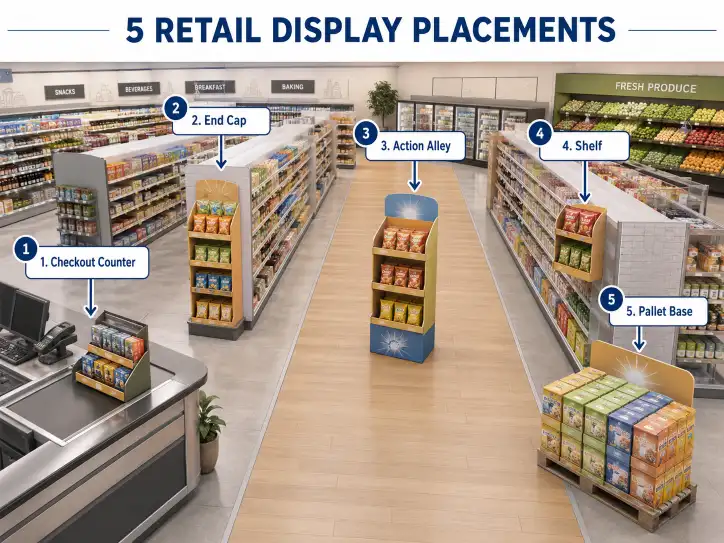
A display can also fail because it was built for the wrong placement. A counter display works differently from a floor display. A peg display behaves differently from a pallet unit. If the display is intended for a checkout zone but designed like an aisle feature, or if it needs floor presence but is built too compact, the retail result will be weak from the beginning.
That is why buyers should always match the display type to the actual store position. Retail location should be part of the structure brief, not an afterthought. If you need to compare structure types more broadly, our retail display solutions page is a useful reference.
Mistake 5: Treating Shipping as a Separate Issue
Some projects fail in store because they were already damaged or weakened during transport. Poor carton planning, weak inner protection, or inefficient flat-pack logic can create bent parts, scratched graphics, or assembly issues before the display even reaches the shelf.
Shipping is not separate from display performance. It is part of display performance. Buyers should check how the display will be packed, how many sets go into each carton, and whether the structure is practical for export handling. Our export packaging guide and our article on flat-pack cardboard displays are useful here.
Mistake 6: Approving a Sample Without Testing Real Use
A visual sample is not enough. Buyers should check real product fit, real load, real assembly, and real retail usability before production approval. Some problems only appear once the display is assembled by normal store staff or once the shelves are filled the way they will be filled in retail.
If the display is hard to assemble, difficult to refill, or unstable when fully loaded, those problems should be fixed before mass production. This is exactly why sample testing matters.
Mistake 7: Trying to Save Money in the Wrong Place
Cost control is important, but poor cost decisions can create bigger losses later. Buyers sometimes try to reduce price by shrinking structure too much, using weaker board than the product needs, removing useful supports, or asking one display to do too many jobs at once. That may reduce the quotation, but it often increases the real campaign risk.
The smarter approach is to control cost where it does not damage function. If you are balancing budget decisions right now, our cost guide, MOQ guide, and quote requirements guide are useful next reads.
Common Failure Signals Buyers Should Watch For
| Failure Signal | Likely Cause | What to Check |
|---|---|---|
| Shelves bend too early | Wrong board or weak structure | Real shelf load and reinforcement |
| Products look messy | Too many SKUs or poor spacing | Layout clarity and facings |
| Store staff dislike setup | Assembly logic is too complex | Assembly test with normal users |
| Display gets damaged in transit | Packing plan is weak | Carton strength and inner protection |
| Shoppers ignore the unit | Weak placement or poor hierarchy | Retail location and visual message |

How Buyers Can Reduce Failure Risk Before Production
- Confirm product size, weight, and real shelf quantity
- Choose the display type based on actual store placement
- Keep the SKU mix simple enough for easy browsing
- Test load, fit, and assembly before approval
- Review carton planning and shipment logic early
- Control cost without weakening the key structure
Useful External References
Google Search Central emphasizes that useful, people-first content should help users solve real problems rather than just target search rankings. That is one reason problem-solving content like failure analysis often works better than generic filler pages. See Google’s helpful content guidance. For corrugated basics and structural terminology, the Fibre Box Association overview of corrugated and the FEFCO code reference are also useful.
Conclusion
When a cardboard display fails in store, the material is usually not the real problem. The real problem is often a planning mistake: the wrong structure, the wrong load assumption, the wrong layout, the wrong shipping logic, or the wrong retail placement. Buyers who focus on these issues early usually avoid expensive failures later and get better results from the same display budget.
If you want help reviewing a display concept before production, feel free to contact us.
FAQ
Why do cardboard displays fail in store?
Most failures come from planning mistakes such as weak load assumptions, poor layout, wrong display type, or poor shipping preparation.
Is cardboard itself the problem?
Not usually. A well-designed cardboard display can perform very well if the structure and board choice match the product and retail conditions.
What is the most common buyer mistake?
Approving a display based on appearance before checking real product fit, load, and store use is one of the most common mistakes.
Can too many SKUs hurt display performance?
Yes. Too many SKUs often make the display look cluttered and harder to shop.
Why is shipping part of display success?
Because damage, bending, or poor packing decisions during transport can reduce retail performance before the display even reaches the store.
How can buyers reduce failure risk?
By testing product fit, real load, assembly, layout, and shipping logic before mass production begins.