Many buyers still assume that cardboard displays are only suitable for low-cost or short-term promotions. That idea is outdated. In reality, a premium cardboard display can work very well for the right product, the right retail environment, and the right campaign goal. The real question is not whether cardboard can look premium. The real question is whether the display is designed, printed, finished, and executed in a way that supports a premium brand image.
For brands, retailers, and importers, this matters because premium products need more than simple visibility. They need trust, presentation, and consistency. In this guide, we look at when a premium cardboard display makes sense, when it does not, and what buyers should check before moving into sampling or production.

Short Answer: Yes, But Only Under the Right Conditions
Cardboard displays can absolutely work for premium products, but only when the project is designed around premium expectations. That means cleaner structure, better print control, stronger finish selection, disciplined layout, and smarter retail placement. A premium product on a weak or cluttered display will look cheap. A premium product on a carefully designed cardboard display can look elevated, modern, and commercially effective.
The material alone does not decide whether the result feels premium. Execution does.
When a Cardboard Display Can Feel Premium
Cardboard displays work well for premium products when the brand needs strong visual storytelling, campaign flexibility, and efficient rollout. This is especially true for seasonal launches, beauty collections, premium food gifting, limited-edition products, and higher-end retail promotions where the display is part of the campaign rather than a permanent fixture.
In these cases, cardboard brings three advantages:
- full-surface branding and strong print coverage
- faster customization for limited campaigns
- better shipping and rollout efficiency than many permanent materials
When Cardboard Is the Wrong Choice
Cardboard is not the right answer for every premium project. If the display is expected to behave like a permanent store fixture for a very long period, or if the environment is unusually demanding, buyers may need to evaluate other materials as well. A premium display should match the business goal, not just the product price point.
Cardboard may be the wrong choice if:
- the display must stay in-store for a very long time without refresh
- the environment is highly exposed to damage or moisture
- the project needs a permanent luxury fixture rather than a campaign display
What Makes a Cardboard Display Look Premium?
| Element | What Premium Buyers Expect | What Weakens the Result |
|---|---|---|
| Structure | Clean silhouette, stable geometry, no visual clutter | Too many add-ons, weak shelf lines, messy proportions |
| Printing | Sharp artwork, controlled color, strong hierarchy | Soft images, weak contrast, inconsistent brand color |
| Finishing | Matte, gloss, or selective effects used with purpose | Too many effects competing at once |
| Layout | Simple product presentation and breathing space | Overloaded shelves and too many SKUs |
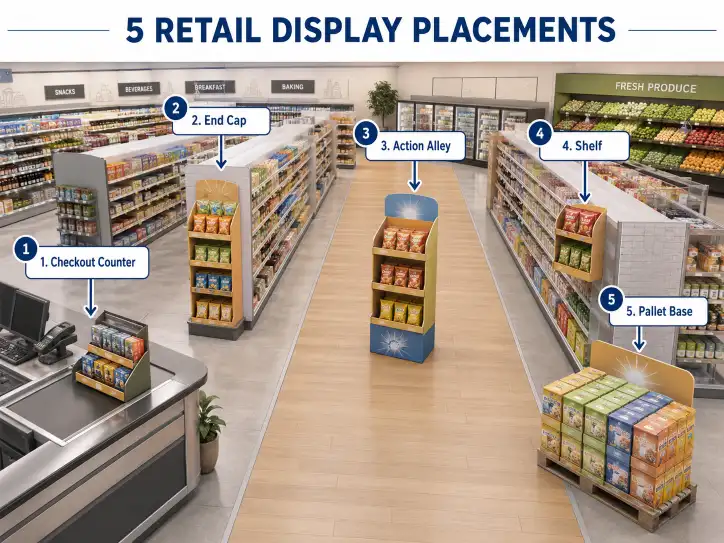
| Retail placement | Context that supports the product story | Wrong location or low-value store positioning |
Premium Starts With Restraint, Not Decoration
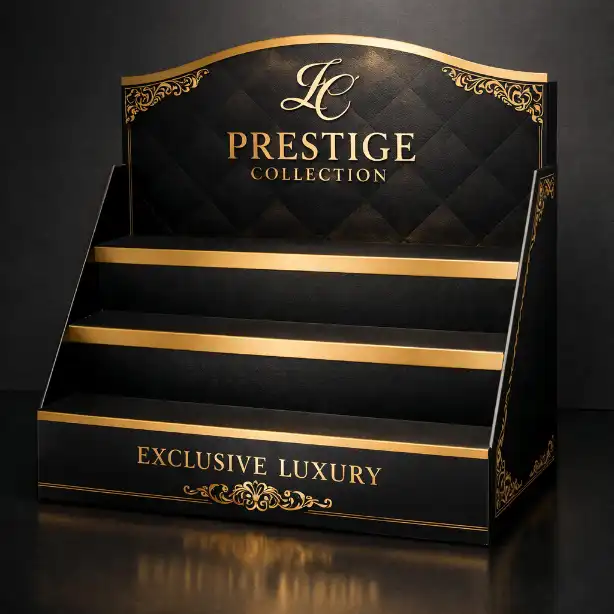
One of the biggest mistakes in premium display work is trying too hard. Buyers sometimes assume that a premium display needs more gold, more layers, more text, and more visual effects. In reality, premium presentation usually comes from restraint. Clean hierarchy, disciplined spacing, controlled color, and smart finishing often create a stronger impression than heavy decoration.
This is why premium displays usually perform better when they keep one clear hero message, one strong visual direction, and one main reason for the shopper to stop.
Printing and Finish Matter More Than Usual
For premium cardboard displays, surface treatment matters more than it does in many standard retail projects. Buyers should pay closer attention to lamination choice, color consistency, sharpness of photography, logo contrast, and whether special finishes are being used to support the brand or simply to add noise.
In many premium projects, matte lamination, gloss lamination, or selective spot UV can work well when used with control. Our printing and finishing guide explains these options in more detail.
Structure Still Has to Feel Solid
Premium does not mean fragile. Even if the display is elegant, it still needs to feel stable in-store. A display that wobbles, bends, or looks temporary in a negative way can damage the brand impression immediately. Buyers should review real shelf load, base stability, and assembly logic during sampling.
That does not always mean the heaviest material is needed, but it does mean the structure should be engineered with more discipline. If you are reviewing board choice, our corrugated grades guide is a useful reference.
Premium Display Projects Need Better Artwork Files
Premium projects are less forgiving when artwork quality is weak. Low-resolution imagery, poor color setup, and sloppy dieline placement are much more obvious on a premium display than on a basic promo stand. Buyers should treat artwork quality as part of product presentation, not just a factory file issue.
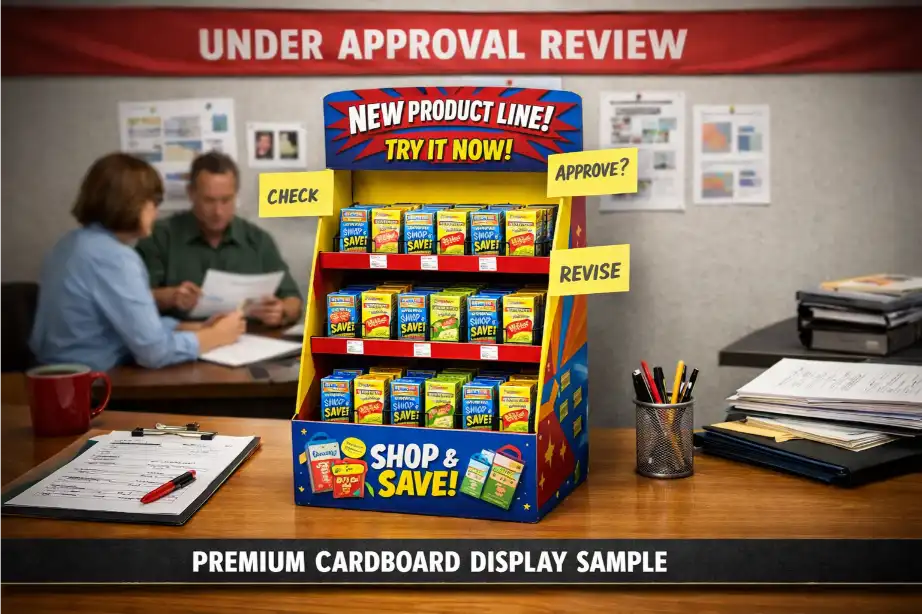
That is why premium projects should usually have tighter artwork review and more disciplined approval before production. Our artwork preparation guide explains what buyers should prepare to avoid delays and poor results.
Cost: Where to Invest and Where Not to Waste Money
Premium does not always mean expensive in every direction. Smart buyers usually invest in the areas customers actually notice: better print discipline, cleaner structure, stronger finish selection, and a more controlled product layout. They do not waste money on complexity that adds cost but not brand value.
This is especially important because premium projects often need smaller details to be right rather than everything to be bigger. If you are checking budget logic now, our cost guide and MOQ guide can help you compare what really changes price.
Questions Buyers Should Ask Before Approving a Premium Cardboard Display
- Does the structure look clean enough for the product price point?
- Is the finish supporting the brand, or distracting from it?
- Do the shelves feel stable when fully loaded?
- Are the graphics sharp enough for close viewing?
- Does the display still look premium after assembly and refill?
- Is the retail placement aligned with the intended brand image?
Useful External References
Google’s guidance on helpful content emphasizes that content should be created to genuinely help people rather than simply to attract rankings, which is why decision-focused pages like this often work better than repetitive generic pages. See Google’s helpful content guidance. For corrugated basics and structure language, the Fibre Box Association overview of corrugated and the FEFCO code reference are also useful.
Conclusion
So, can cardboard displays work for premium products? Yes, absolutely, but only when the project is built around premium execution rather than premium assumptions. Clean structure, disciplined artwork, the right finish, and strong retail logic are what make the result feel elevated. Buyers who focus on these areas usually get a much better premium result than those who simply add more decoration and more cost.
If you want help evaluating whether cardboard is the right premium display option for your next campaign, feel free to contact us.
FAQ
Can cardboard really look premium in retail?
Yes. With the right structure, printing, finish, and layout, cardboard displays can present premium products very effectively.
What finish is best for a premium cardboard display?
That depends on the brand look, but matte lamination, gloss lamination, and selective spot UV are often strong options when used with control.
Is cardboard suitable for luxury products?
It can be suitable for premium or luxury-positioned campaigns, especially when the display is designed for branding and retail storytelling rather than permanent fixture use.
What makes a premium cardboard display fail?
Weak graphics, cluttered layout, unstable structure, and over-designed decoration are common reasons the result feels cheap instead of premium.
Should premium cardboard displays use stronger material?
They should use the right material for the product and structure. Premium appearance still depends on stability, not just surface look.
Is cardboard better than permanent fixtures for premium campaigns?
For many limited campaigns, launches, and seasonal promotions, cardboard can be more flexible, more efficient, and more visually adaptable than permanent fixtures.