Not all pallet displays are created equal. A display designed for lightweight snack bags will fail catastrophically when loaded with 40 lb pet food bags, 24-packs of beverages, or bulk cleaning products. A pallet display for heavy products requires a fundamentally different approach to structural design — heavier board grades, reinforced trays, stronger pallet bases, and more rigorous transit testing.
For brands supplying heavy products to Costco, Sam's Club, and other warehouse retailers, the display must be engineered for the weight. The margin for error is small. A collapsed tray in transit means lost product, delayed shipments, and chargebacks. A display that tips over on the sales floor creates a safety hazard and damages the brand's reputation with the retailer.
This guide covers the structural design principles for heavy product pallet displays — board grade selection, weight distribution rules, tray reinforcement methods, pallet base requirements, and the transit testing needed to confirm the design works.
What Counts as a Heavy Product Display?
A "heavy" pallet display is not defined by a single weight number. It depends on the board grade, tray configuration, and how the weight is distributed. But in practical terms, a display that requires structural reinforcement beyond standard B-flute corrugated qualifies as heavy.
General Weight Classifications
| Classification | Total Display Weight | Product Examples |
|---|---|---|
| Light | Under 300 lbs | Chips, cereal, candy, lightweight household |
| Medium | 300–600 lbs | Granola bars, coffee bags, pet treats |
| Heavy | 600–1,200 lbs | Pet food (bagged), laundry detergent, multipack snacks |
| Very heavy | 1,200–2,500 lbs | Bottled water, beverage multipacks, bulk liquids |
Heavy Product Characteristics
A product is considered "heavy for display purposes" if:
- Any single unit weighs over 10 lbs
- The total loaded display exceeds 600 lbs
- The product packaging is rigid and creates point loads (e.g., bottle caps, bag corners)
- The product shifts or settles during transit (e.g., bags, loose items)
For an overview of pallet display structural options, see our PALLET DISPLAY product page.
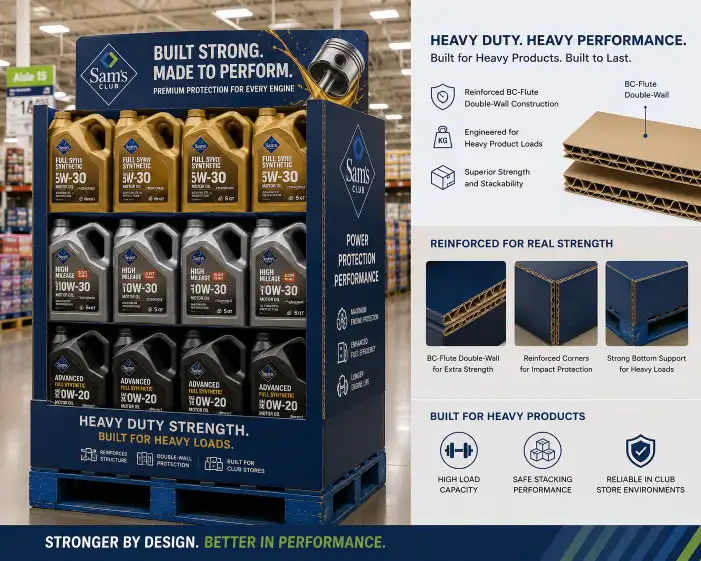
Board Grade Selection for Heavy Loads
Board grade is the most important structural decision for a heavy product display. Using board that is too weak is the fastest way to fail.
ECT Requirements by Display Weight
| Display Weight | Minimum ECT | Recommended Board | Typical Application |
|---|---|---|---|
| Under 300 lbs | 28 lbs/in | B-flute | Light snacks, candy |
| 300–600 lbs | 32 lbs/in | C-flute | Cereal, coffee, pet treats |
| 600–1,000 lbs | 38–44 lbs/in | C-flute or BC-flute | Pet food, multipack detergents |
| 1,000–1,800 lbs | 48–55 lbs/in | BC-flute double-wall | Bottled water, beverage packs |
| 1,800–2,500 lbs | 55+ lbs/in | BC-flute or triple-wall | Bulk liquids, heavy bulk goods |
Understanding ECT
ECT (Edge Crush Test) measures the vertical compression strength of corrugated board. Higher ECT means the board can support more weight when stacked.
- B-flute (ECT 28): Standard for lightweight displays. 3.2 mm thick
- C-flute (ECT 32): Medium strength. 4.0 mm thick. Common for medium-heavy displays
- BC-flute (ECT 48+): Double-wall construction. 6.5 mm thick. Required for heavy displays
- Triple-wall (ECT 65+): Three layers of flutes. 9+ mm thick. Used for extreme loads
Common Board Grade Mistakes
| Mistake | Consequence |
|---|---|
| Using B-flute for displays over 600 lbs | Tray sag, collapse during transit |
| Using single-wall for bagged products | Bag corners puncture through the tray floor |
| Selecting ECT based on total weight only | Point loads from individual heavy items cause localized failure |
| Not accounting for moisture | Wet corrugated loses up to 80% of ECT strength |
For board grade specifications and material selection, see our PRODUCTION page.
Weight Distribution Rules
How the weight is distributed across the display is as important as the board grade. Poor weight distribution causes tipping, tray collapse, and uneven stress on the pallet base.
The Bottom-Heavy Rule
The heaviest products must always be on the bottom tiers. This is not a suggestion — it is a structural requirement for heavy displays.
| Tier Position | Weight Allocation | Reason |
|---|---|---|
| Bottom tier | 40–50% of total weight | Lowest center of gravity, most stable |
| Middle tier | 30–35% of total weight | Moderate weight, transitions to lighter |
| Top tier | 15–25% of total weight | Lightest products, easy customer access |
Layer Pads
Every tier of a heavy display needs a corrugated layer pad between it and the tier below. Layer pads serve three purposes:
- Distribute weight evenly across the tray surface below
- Prevent product corners from pressing into the tray below
- Add structural rigidity to the overall display
For heavy displays, use the same board grade for layer pads as for the trays. A BC-flute display needs BC-flute layer pads.
Pallet Surface Coverage
Weight must be spread across the full 48×40 inch pallet surface. Concentrating weight in the center creates a "belly" effect — the pallet bows in the middle, and trays on the ends tilt inward.
- Fill the entire pallet surface with product trays
- Avoid leaving empty space on the pallet (use filler boards or dunnage if needed)
- For half pallet displays, center the display on the pallet base
Tray Design for Heavy Products
Standard trays collapse under heavy loads. Heavy product displays need reinforced trays designed for the specific weight and packaging type.
Tray Types for Heavy Loads
| Tray Type | Best For | Max Load | Construction |
|---|---|---|---|
| Standard double-wall tray | Boxed heavy products | 30 lbs per tray | BC-flute, all walls double-wall |
| Reinforced tray with support panel | Bagged products | 40 lbs per tray | Double-wall + internal support panel |
| Compartmentalized heavy tray | Bottles, jars | 25 lbs per compartment | Individual slots with 3-wall dividers |
| Full-depth heavy tray | Tall heavy packages | 50 lbs per tray | Extended tray walls for lateral support |
| Tray with steel or plastic reinforcement | Extreme loads | 75+ lbs per tray | Rare — only for specialty programs |
Tray Wall Height for Heavy Products
| Product Type | Tray Wall Height as % of Product Height |
|---|---|
| Boxed heavy products | 30–40% |
| Bagged heavy products | 60–70% |
| Bottled heavy products | 40–50% |
| Loose heavy items | 50–60% |
Higher tray walls provide more lateral support, which is critical for heavy products that shift during transit.
Tray Bottom Reinforcement
The tray bottom takes the most stress in a heavy display. Reinforcement options:
| Reinforcement | How It Works | Cost Impact |
|---|---|---|
| Double-wall bottom | Standard for BC-flute trays | Included in board grade |
| Extra corrugated layer | Add a second corrugated sheet to the tray floor | Low additional cost |
| Plastic corner inserts | Plastic corners at high-stress points | Medium — used for extreme loads |
| Cross-corrugation | Flute direction oriented perpendicular between layers | No additional material cost |
Dividers for Heavy Products
Dividers between heavy products serve multiple functions:
- Prevent products from shifting into each other
- Distribute weight to the tray walls instead of concentrating it on the tray floor
- Keep different SKUs separated
- Add structural rigidity to the tray itself
For heavy displays, dividers should be made from the same board grade as the tray. BC-flute dividers for BC-flute trays.
Pallet Base Requirements for Heavy Loads
The pallet base for a heavy product display must do more than just hold the display — it must support up to 2,500 lbs and survive forklift and pallet jack handling.
Pallet Condition
For heavy displays, the pallet must be in excellent condition:
| Pallet Feature | Requirement |
|---|---|
| Board condition | No broken, cracked, or split boards |
| Nail condition | All nails flush. No protruding nail heads |
| Stringer condition | No cracks or splits in the stringers |
| Moisture content | Dry — warped pallets do not sit flat |
| Grade | Grade A or B preferred. Avoid recycled pallets with significant wear |
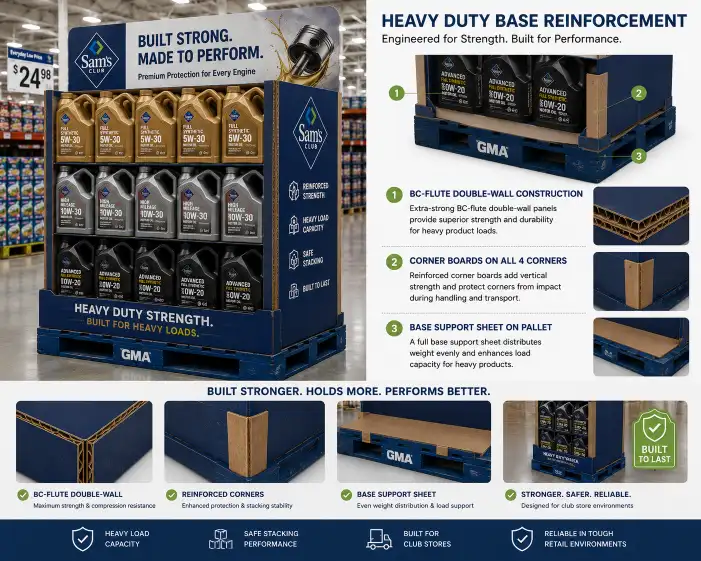
Base Support Sheet
For displays over 1,200 lbs, add a corrugated base support sheet between the display structure and the pallet:
- Material: BC-flute double-wall (same as the display)
- Size: Full 48×40 inch coverage
- Purpose: Distributes the display weight evenly across the pallet surface, prevents the display from "cupping" into gaps between pallet boards
Corner Board Reinforcement
Corner boards on heavy displays must be:
- Full-length from pallet base to the top of the display
- L-shaped (3×3 in minimum)
- Applied to all four corners
- Secured with stretch wrap (not just tape)
Without corner boards, the stretch wrap on a heavy display can loosen as the display settles during transit. Corner boards keep the wrap tension even across all four sides.
For packing and palletizing specifications, see our SHIPPING page.
Reinforcement Methods for Heavy Displays
Beyond board grade selection, several reinforcement methods can strengthen a heavy product display.
Structural Reinforcement Options
| Method | Description | Best For |
|---|---|---|
| Internal support columns | Vertical corrugated columns inside the display that transfer weight to the pallet | Tall displays with heavy top tiers |
| Cross-bracing | Diagonal corrugated panels inside the display that resist lateral movement | Displays that will be stacked 2-high during transit |
| Perimeter reinforcement | Extra corrugated layer around the display perimeter | Displays with heavy point loads near the edges |
| Strap reinforcement | Plastic straps around the display (under the stretch wrap) | Very heavy displays that need additional compression resistance |
| Base apron | Extended corrugated apron around the pallet base perimeter | Heavy displays on damaged or uneven pallets |
When to Use Each Method
| Display Condition | Recommended Reinforcement |
|---|---|
| Display over 72 in tall with heavy top tier | Internal support columns |
| Display that will be stacked during transit | Cross-bracing |
| Pet food display with 40 lb bags | Perimeter reinforcement + heavy tray reinforcement |
| Beverage display over 1,500 lbs | Strap reinforcement + base support sheet |
| Display on recycled/cosmetic pallet | Base apron + base support sheet |
Cost vs Benefit
Reinforcement adds cost to the display. Evaluate the need based on:
- Total display weight
- Number of product units per display
- Transit distance and handling complexity
- Product value per display
- Chargeback risk if the display fails
A $2 per-unit reinforcement cost is insignificant compared to a $500 chargeback for a damaged display.
Partial Sell-Through for Heavy Displays
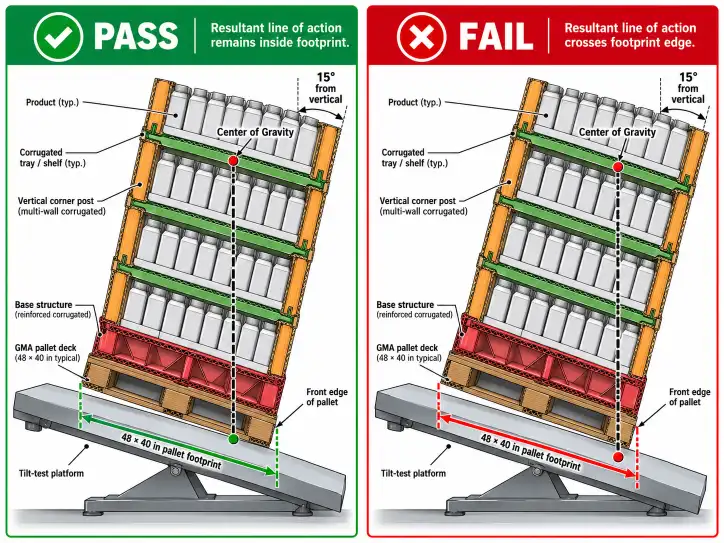
Heavy product displays change structurally as products are removed. Weight distribution shifts. The center of gravity moves. Stability decreases.
The Heavy Display Problem
When a heavy display is full, the weight keeps it stable. As products sell:
- The total weight decreases — the display becomes lighter and more prone to tipping
- The center of gravity moves up — lighter at the bottom (where heavy products sold first) but heavy products remain at the top
- The base may become unloaded — a display that needs weight on the base for stability may tip when the base products are gone
Design Strategies
| Strategy | How It Works |
|---|---|
| Tiered product removal | Design the bottom tier as the last to sell. Heaviest products at the bottom, but customers should take from the top first |
| Stability-weighted base | Add non-product weight (ballast) to the display base if needed |
| Wider footprint at the base | Taper the display so it is wider at the bottom than the top |
| Anti-tip testing | Test the empty display (with no product) — if it tips when empty, the design needs a wider base |
| Multiple small trays vs one large tray | More trays distribute weight better and reduce the impact of removing one heavy unit |
Sell-Through Testing Protocol
For heavy displays, test at:
- Full display — Baseline stability check
- Top 30% removed — Most common early sell-through stage
- Top 50% removed — Half the product gone, check for tipping
- Top 70% removed — Only bottom products remain, check stability
- Display empty — Should not tip over when empty (safety requirement)
Transit Testing for Heavy Pallet Displays
Transit testing for heavy displays is non-negotiable. The consequences of a transit failure — collapsed trays, crushed products, damaged adjacent pallets — are severe.
Required Tests
| Test | Heavy Display Criteria | Why It Matters |
|---|---|---|
| Compression (ECT) | Min 48 lbs/in for double-wall | Verifies the board can support the stacked weight |
| Vibration | No structural failure after 30–60 min | Simulates truck transit. Heavy products generate more vibration stress |
| Drop | 6–12 in drops, no tray or product damage | Simulates forklift handling. Heavy displays have more impact force |
| Tilt | Display must not tip at 15–20 degrees | Heavy displays have higher tipping risk at partial sell-through |
| Point load test | Verify tray floor holds a single heavy unit | Simulates a single 40 lb bag on the tray floor |
Heavy Product Specific Tests
- Settling test — After vibration, measure how much products have settled. If settling exceeds 1 inch, the tray depth is insufficient
- Corner puncture test — Load a heavy bag (40 lbs) in the tray. Apply vibration. Check for bag corners pushing through the tray floor
- Strap tension test — After vibration, check that plastic straps (if used) are still tight. Loose straps indicate settling
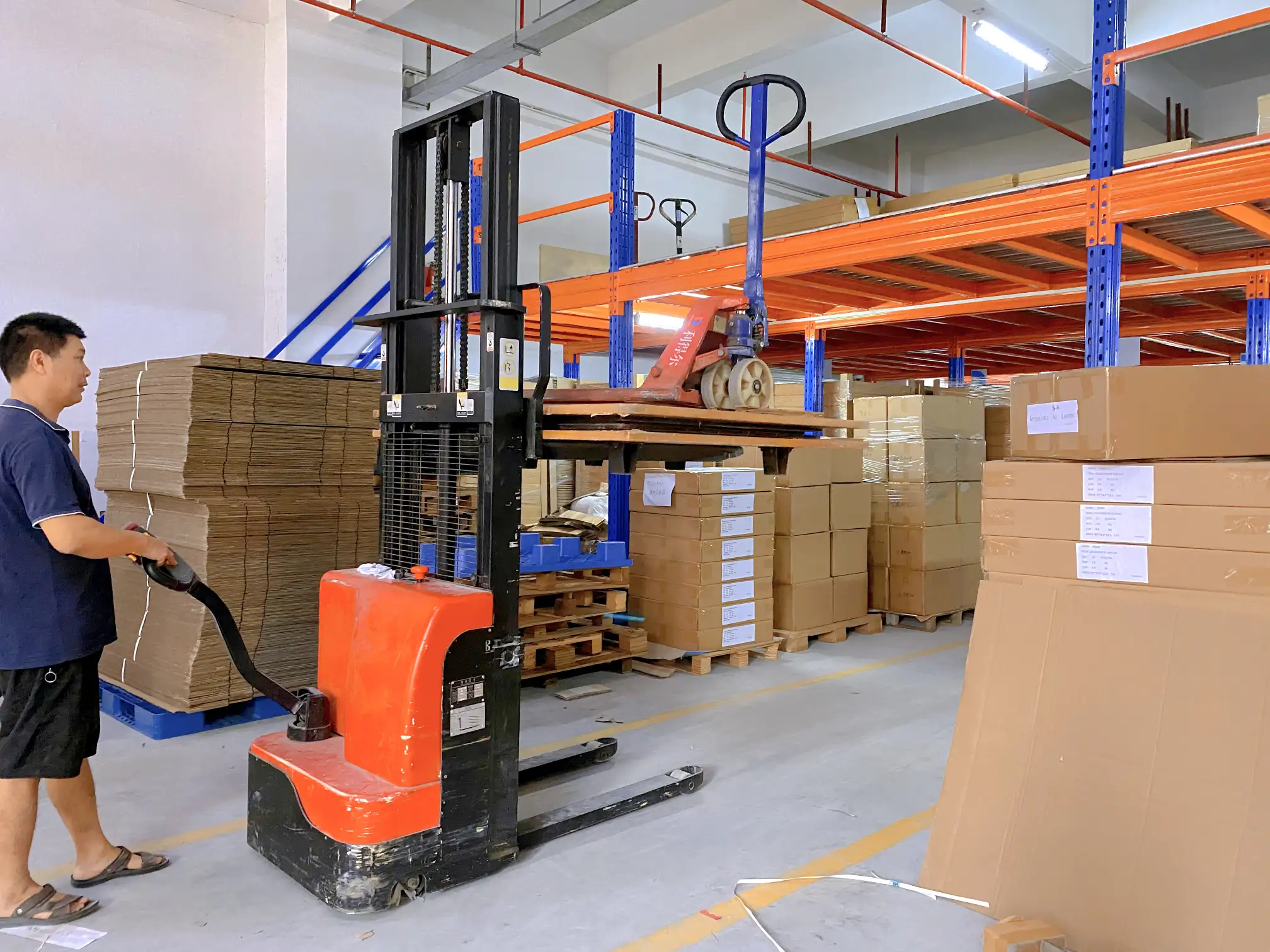
- Pallet jack test — Move the loaded display with a pallet jack. The display must remain stable during movement
Test Frequency
| Change | Test Required |
|---|---|
| New display design | Full test battery |
| Board grade change | New ECT and vibration |
| Product weight increase over 10% | Full test battery |
| Product packaging change | New fit test and vibration |
For testing procedures and lab requirements, see our SAMPLING page.
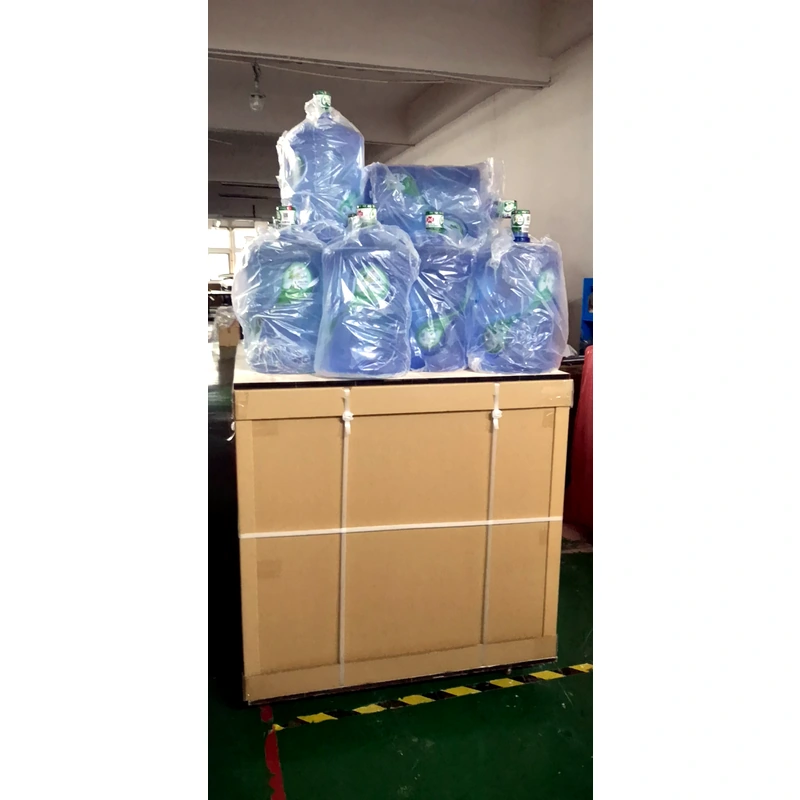
Buyer Checklist for Heavy Product Displays
| Check Item | Status | Notes |
|---|---|---|
| Total display weight calculated | ☐ | Include product + display structure |
| Board grade matches weight | ☐ | BC-flute for 600+ lbs |
| ECT rating confirmed | ☐ | 48+ for double-wall |
| Heaviest products on bottom tier | ☐ | Weight distribution plan documented |
| Layer pads between tiers | ☐ | Same board grade as trays |
| Tray bottom reinforced | ☐ | Extra corrugated layer for heavy bags |
| Tray walls at 60% of product height | ☐ | For bagged heavy products |
| Pallet base support sheet added | ☐ | Required for 1,200+ lbs |
| Corner boards on all 4 corners | ☐ | Full-length, L-shaped |
| Stretch wrap 5+ layers | ☐ | Extra base reinforcement |
| Partial sell-through test passed | ☐ | Test at 30%, 50%, 70%, empty |
| Transit testing completed | ☐ | ECT, vibration, drop, tilt |
| Point load test passed | ☐ | Single heavy unit on tray floor |
| Sample approved with real product | ☐ | Filled product at retail weight |
Conclusion
A pallet display for heavy products demands rigorous structural engineering that is not needed for standard displays. Every component — from the board grade to the tray design to the pallet base to the stretch wrap — must be specified for the product weight it will carry. The consequences of under-engineering are collapsed displays, damaged products, and chargebacks from the retailer.
For B2B buyers, the most important rule is: test with real product at retail weight. An empty box test or a partial load test does not tell you how the display will perform under full weight. Invest the time in complete structural and transit testing before production, and the display will perform from the first shipment to the last sell-through.
If you are planning a heavy product display for Costco or Sam's Club, start with the PALLET DISPLAY product page for structural specifications, or review the COSTCO DISPLAYS product page for Costco-specific requirements. For board grade selection and material testing, see our PRODUCTION page.
FAQ
What is a pallet display for heavy products?
A pallet display for heavy products is a reinforced corrugated display unit designed for products weighing 600+ lbs total or individual units over 10 lbs. It uses double-wall board, reinforced trays, and a strengthened pallet base.
What board grade is needed for heavy product displays?
For displays over 600 lbs, use BC-flute double-wall board with ECT 48+ lbs/in. For displays over 1,200 lbs, consider BC-flute with ECT 55+ or triple-wall construction.
How do I prevent tray collapse in heavy displays?
Use double-wall board for all trays, add tray bottom reinforcement (extra corrugated layer), keep tray walls at 60% of product height for bagged items, and include layer pads between every tier.
Can heavy displays be stacked during transit?
Yes, but with limitations. For heavy displays (1,000+ lbs), limit stacking to 2 high. Verify the bottom display's compression strength can support the stacked weight. Use cross-bracing if needed.
What is the most common failure in heavy product displays?
Tray floor puncture from heavy bag corners and tray sidewall bulging from lateral pressure are the most common failures. Both are prevented by using double-wall board and reinforcing the tray bottom.
Do heavy displays need more stretch wrap?
Yes. Heavy displays need minimum 5 layers of stretch wrap (vs 3 for standard displays). Additional wrap is needed at the base (7–8 layers) to prevent the display from shifting during pallet jack movement.
How do I test a heavy display for transit safety?
Required tests include ECT (compression), vibration (30–60 min), drop (6–12 in), tilt (15–20 degrees), and heavy-specific tests like point load (single unit) and settling tests.
Can a heavy display also be a half pallet display?
Yes, but with more design caution. Half pallet heavy displays have a higher center of gravity relative to their footprint. Use BC-flute board, keep the heaviest items in the bottom tier, and test tilt stability rigorously.