
The wrong shipping format can ruin a good display project. Not because the structure is weak. Not because the print is poor. Because the rollout plan asks the display to save money in one place and spend it back somewhere else.
That is why flat-pack vs semi-assembled vs pre-filled displays is not a packaging detail. It is a rollout decision. The format you choose affects freight cost, warehouse handling, setup speed, store labor, damage risk, and how quickly the display starts selling once it reaches the floor.
Many teams decide too late. They approve the display shape first, then discover that the shipping format changes the whole project math. When that happens, nobody feels fully wrong, but the budget still gets worse.

Start With the Retail Rollout, Not the Carton
Buyers often compare these three options as if they were only packing methods. That is the first mistake. They are rollout models.
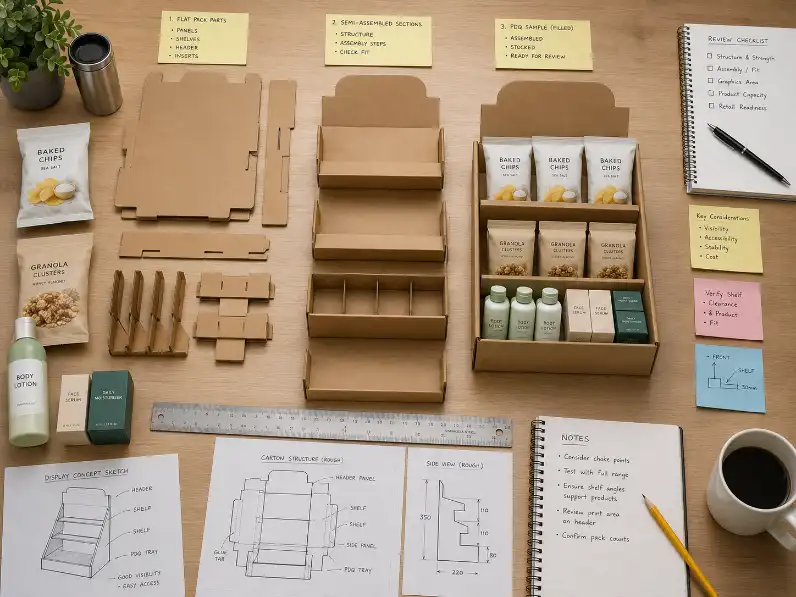
A flat-pack unit is usually chosen to save freight and storage space. A semi-assembled unit is usually chosen to reduce store setup time without creating a fully loaded shipping problem. A pre-filled unit is usually chosen when speed on the retail end matters more than carton efficiency. Each one solves a different operational problem.
So before you compare prices, define the real rollout conditions:
- How many stores are involved?
- Who sets the display up?
- How much time do store staff actually have?
- Does the product ship inside the display or separately?
- Is the project freight-sensitive or labor-sensitive?
- Will the unit go to a supermarket, pharmacy, convenience chain, or club store?
Without those answers, the format decision turns into guesswork. And once it becomes guesswork, the sample stage stops telling you the truth.
If you are still comparing overall display routes, start from custom cardboard displays and then narrow the discussion to rollout method. That keeps the decision tied to the project, not to a random preference.
Flat-Pack Displays Save Space First
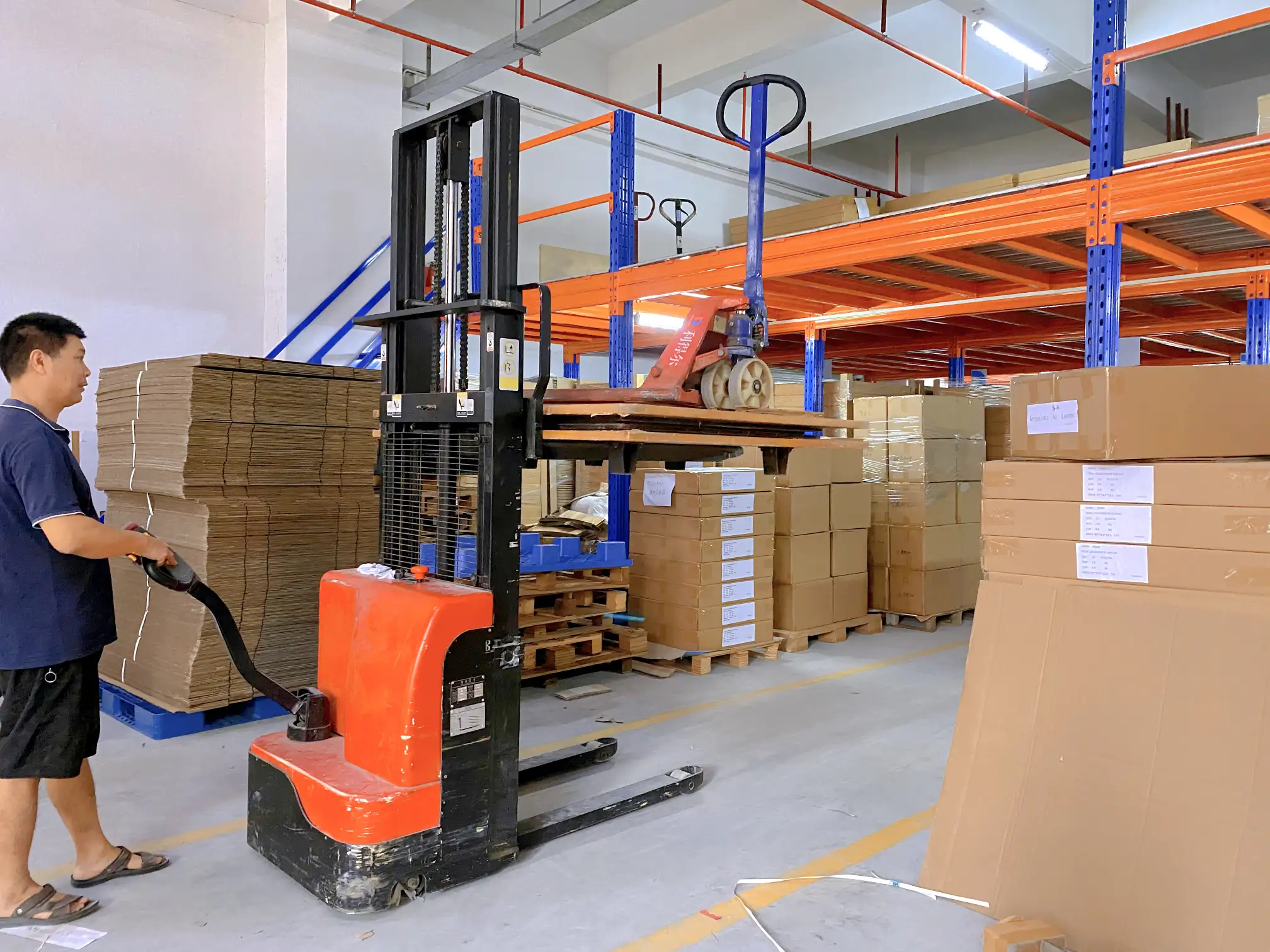
A flat-pack display is usually the most freight-efficient option. The structure ships knocked down. Parts stay compact. Master cartons stay tighter. Warehouses can hold more units in the same footprint. For export projects, that matters.
This is why flat-pack formats often make sense when:
- the order quantity is large
- the destination is far from the factory
- freight cost is a strong pressure point
- the retailer accepts some setup work
- the display structure is easy to assemble correctly
That last point matters most. A flat-pack display only works when the assembly logic is easy enough that the person opening the carton does not need to stop and think too long. If the unit looks simple in the sample room but confusing in a store back room, the freight saving can disappear through labor, delay, or poor setup.
In other words, flat-pack is not automatically the cheapest option. It is the best option when the project can convert shipping efficiency into a clean retail setup without losing time.
For projects where store setup is a concern, your assembly instructions page should support this article naturally, because buyers asking about flat-pack almost always worry about what happens after the carton is opened.
Semi-Assembled Displays Trade Some Space for Easier Execution
Semi-assembled formats sit in the middle for a reason. They protect some of the freight efficiency of flat-pack, but they reduce the amount of work required at the retail end. That balance makes them useful for many chain rollouts.
A semi-assembled display often arrives with the trickiest structural steps already handled. The base may be formed. Key panels may already be fixed. Shelves may still need to be inserted. Headers may still need to be locked into place. The exact mix changes by design, but the logic stays the same: reduce the error points without shipping air unnecessarily.
This format usually works best when:
- the display has moderate structural complexity
- store teams have limited time but not zero time
- the project still needs reasonable freight control
- the rollout needs more consistency than a fully knocked-down unit can guarantee
Semi-assembled displays are often underrated because they do not sound dramatic. But in practical B2B work, middle-ground solutions are common for a reason. They reduce friction where friction causes the most expensive mistakes.
If the project includes multiple sampling rounds, connect this article to sampling because semi-assembled formats often reveal their value only after teams compare actual setup behavior across versions.
Pre-Filled Displays Buy Speed at the Store End
A pre-filled display is built for a different priority. It is chosen when retail speed matters so much that the display and product should arrive together as close to shelf-ready as possible.
This can be useful for high-volume promotions, short selling windows, seasonal programs, urgent launches, or retail environments where staff do not have time to build and load displays correctly. In those cases, the project is not trying to save the most freight. It is trying to protect execution.
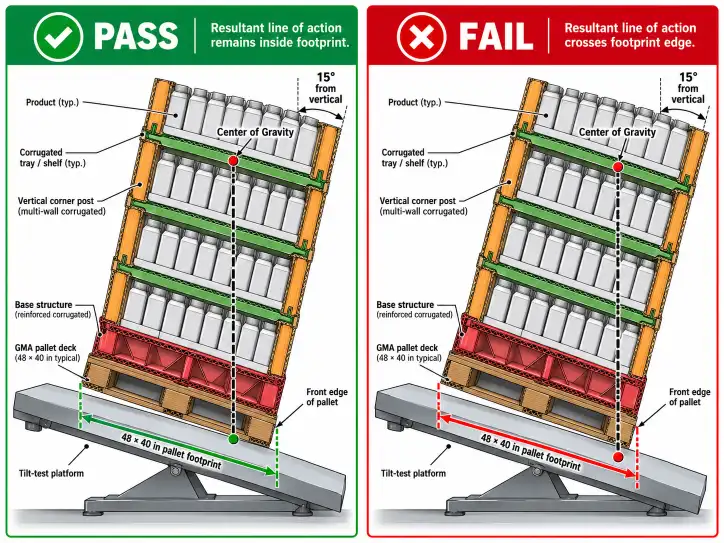
That protection has a price. Pre-filled units usually take more shipping volume. They may increase transport risk if the product shifts inside the structure. Carton planning becomes stricter. Transit testing matters more. Palletization matters more. Outer protection matters more.
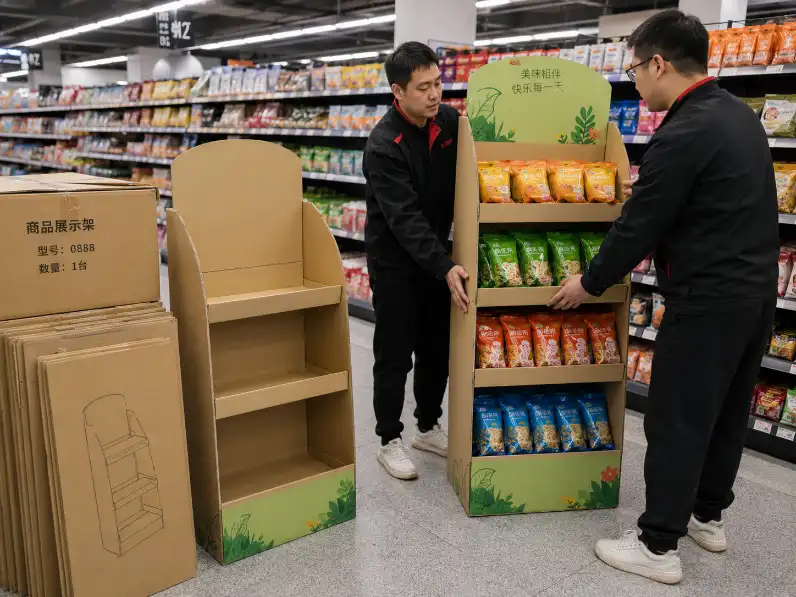
Still, when a retail team needs speed, a pre-filled route can make the whole rollout more reliable. A display that arrives ready to place can outperform a cheaper format that arrives as a labor problem.
This is where many buyers get misled by unit cost alone. The right comparison is not display cost against display cost. It is total rollout cost against total rollout cost.
That is why your shipping page should be part of the reading path here. Once a buyer starts thinking about pre-filled displays, shipping stops being a background issue and becomes one of the main decision points.
The Cheapest Option on Paper Is Often Not the Cheapest in Practice
This is the part buyers already know, but it still gets ignored.
A flat-pack unit may look cheapest until store staff spend too much time assembling it. A pre-filled unit may look expensive until it prevents rollout delays across dozens of stores. A semi-assembled unit may look like a compromise until it cuts both labor errors and freight waste enough to win overall.
So compare the formats through five cost layers, not one:
- factory packing cost
- freight and storage cost
- warehouse handling cost
- store setup labor
- execution failure cost
The last one is the easiest to ignore and the hardest to recover. A display that arrives late, sets up badly, or looks wrong in store can waste an entire promotion window. That cost does not always show up as a clear invoice line, but it is still real.
For a buyer already comparing quotation structures, this article should also point toward custom cardboard display cost, because rollout format changes the real cost picture more than many quotations first show.
Choose by Product Behavior, Not Only by Display Shape
Two displays with the same shape can need different rollout formats because the products behave differently.
Small, light snack pouches may work well in a pre-filled PDQ. Glass bottles or heavier multipacks may create a very different transit risk. Skincare sets can tolerate one route. loose accessories can tolerate another. A fast-moving checkout program creates different labor pressure than a slower floor display in a specialty aisle.
That is why the right question is not only, “What kind of display is this?” The better question is, “What happens to this product and this structure between factory packing and retail placement?”
That sounds simple. It is the difference between a rollout that feels predictable and one that keeps creating small, expensive surprises.
Industry guidance from FEFCO’s shelf-ready packaging resources is useful here because it ties retail readiness to handling efficiency, not to appearance alone. The Fibre Box Association is also a useful reference for corrugated performance context when structure and transit are part of the discussion.
A Quick Comparison Table Buyers Can Use
| Format | Main Advantage | Main Risk | Best Fit |
|---|---|---|---|
| Flat-pack | Saves freight and storage space | More setup work and more room for assembly error | Large export orders with manageable in-store setup |
| Semi-assembled | Balances freight control and easier execution | May still carry some setup steps and partial volume loss | Chain retail projects needing moderate setup speed |
| Pre-filled | Fastest retail deployment | Higher shipping volume and tighter transit demands | Promotional, seasonal, or labor-limited rollouts |
How to Test the Right Option Before Mass Production
Do not approve the format from a PDF alone. Test the actual behavior.
That means:
- Load the real products.
- Pack the display the way it will really ship.
- Ask someone outside the design discussion to set it up.
- Time the setup.
- Check whether the result still looks like the approved display.
That small test tells you more than a polished mockup. A rollout format is only successful if real people can execute it under ordinary pressure.
This is also where concept to design and production should come into the path. Buyers reading this article are already thinking past appearance. They are thinking about whether the project can survive the real chain from design to store.
Which One Is Best?
There is no universal winner.
Flat-pack is strongest when freight efficiency leads the decision and setup is realistic. Semi-assembled is strongest when the project needs cleaner execution without giving up too much shipping efficiency. Pre-filled is strongest when the store end has no patience for assembly and the promotion window depends on speed.
The wrong choice usually happens when the team optimizes one stage and ignores the others. The right choice usually happens when the team admits what the real pressure is and chooses the format that reduces that pressure first.
Final Buying Direction
Flat-pack vs semi-assembled vs pre-filled displays should be judged by total rollout logic, not by unit format alone. Flat-pack reduces volume. Semi-assembled reduces setup friction. Pre-filled reduces retail delay. Each option is useful when it matches the real store, freight, labor, and product conditions of the project.
Before asking for the final quotation, define the channel, the setup owner, the product weight, the shipping destination, and the cost pressure that matters most. Then test the display in the same format it will actually ship. That is how you stop the rollout plan from changing after the display is already approved.
If you are comparing these three routes for a current project, the next useful step is to line up your product dimensions, target retailer, quantity, and preferred setup method side by side. Once those four items are clear, the better shipping format usually shows itself fast.

One Response