This document specifies the structural and seasonal standards for lawn and garden pallet displays at Costco. It is written for outdoor brands that need a clear, referenced specification — not generic advice. Where a requirement comes from the standard Costco pallet display requirements or from ISTA 3E transit testing, it is cited. Use this specification as your checklist during design and pre-production review.
1. Scope and Applicability
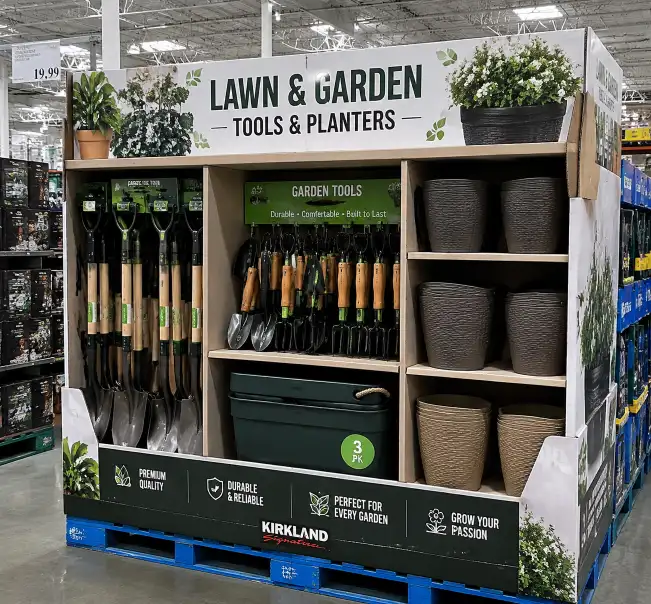
This specification applies to pallet displays for potting soil, fertilizer, planters, gardening tools, watering hoses, and outdoor accessories sold at Costco warehouse clubs. It supplements, and does not replace, the Costco pallet display requirements for GMA pallet dimensions (40 × 48 inches), maximum height (72 inches including pallet), and maximum weight (2,200 pounds). Outdoor brands should treat this document as the category-specific addendum.
2. Load Bearing Requirements
2.1 Soil and Fertilizer Bags. Bags weighing 20 to 40 pounds each must be placed on the bottom layer only. The supporting tray must be double-wall BC flute with a minimum 44 ECT. Maximum 1 to 2 layers. These are the heaviest products in the category, and the display structure must be engineered around them, not the other way around.
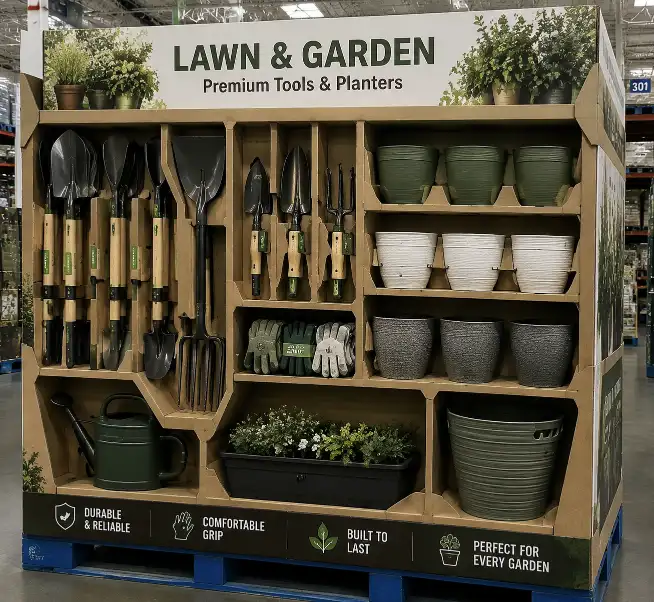
2.2 Weight Distribution. Weight must be distributed from heaviest at the bottom to lightest at the top. Soil and fertilizer on the bottom; planters and tools in the middle; gloves and small accessories on the top. Placing heavy bags above lighter products violates the standard and will fail compression testing.
3. Compartment Design Standards
3.1 Individual Compartments. Each bag of soil, each planter, and each tool set must be held in an individual compartment. The cavity depth must be at least 50 percent of the product height. This is a minimum, not a recommendation.
3.2 Odd-Shaped Products. Planters, hoses, and rakes do not fit standard rectangular compartments. Each odd-shaped product requires a custom compartment: foam inserts or corrugated padding for fragile planters; long, narrow compartments for hoses and rakes. Products that shift during transit will fail ISTA 3E — this is the most common failure mode for this category.
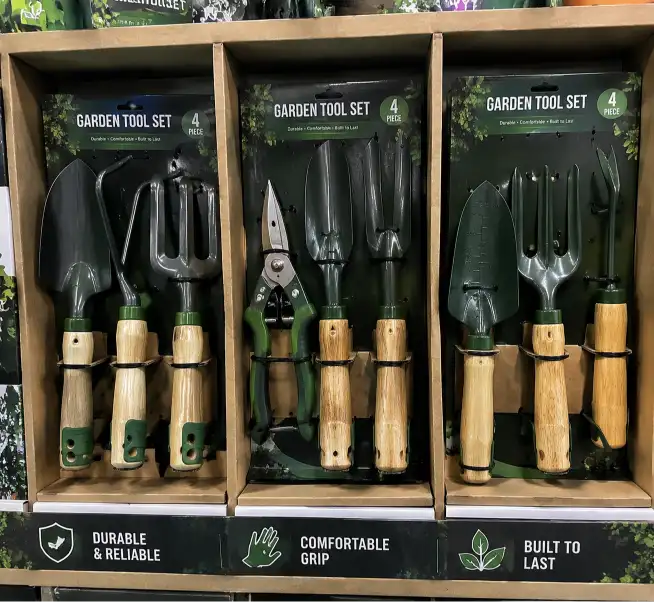
3.3 Lightweight Items. For gardening gloves and small tools, B flute or C flute single-wall is sufficient. Do not over-specify material for lightweight items; graduated material strength is both compliant and cost-efficient.
4. Moisture Protection Standards
4.1 Coating Requirement. All trays must receive moisture-resistant coating. Garden products are frequently stored in outdoor or damp environments before reaching the sales floor, which exposes the display to humidity and condensation.
4.2 Sealed Bags. Soil and fertilizer bags must be sealed to prevent dust from escaping. Dust damages display graphics and creates an unprofessional appearance in the store. Sealed packaging is a compliance requirement for this category.
4.3 Chemical Compatibility. The corrugated board must be compatible with the chemical properties of the products. When in doubt, reference the same moisture and chemical protection standards used for household chemical displays such as our Costco household display guide.
5. Material Specification Table
The following table defines the approved material grades by product type:
| Product Type | Material Grade | Max Layers |
|---|---|---|
| Soil, fertilizer (20–40 lb bags) | Double-wall BC flute, 44 ECT min | 1–2 |
| Planters, tools | C flute single-wall, 29 ECT | 3–4 |
| Gloves, small accessories | B flute single-wall, 26 ECT | 4–5 |
Material grades above the minimum are permitted where engineering analysis justifies them. Grades below the minimum are not permitted.
6. Printing and Finishing Standards
6.1 Print Quality. Lawn and garden products are purchased on visual appeal. Litho-laminated printing is the required standard for lifestyle imagery. For natural and organic garden brands, matte lamination is specified for a natural finish. A comparison of printing methods is available in our display printing methods guide.
6.2 Graphics Durability. Printed graphics must resist moisture and abrasion for the full in-store life of the display. Moisture-resistant coating must be applied over printed surfaces exposed to damp environments.
7. Testing and Compliance
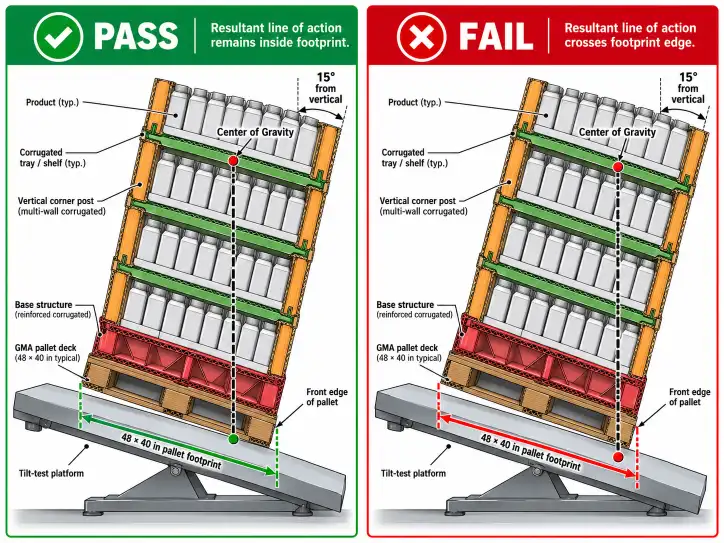
7.1 ISTA 3E Testing. Costco requires ISTA 3E testing for all pallet displays. For lawn and garden displays, the two mandatory test focus areas are: product shifting (odd-shaped items) and tray collapse (heavy soil bags). Testing must be performed with actual products in their real packaging. The full procedure is described in our Costco bulk display testing guide.
7.2 Acceptance Criteria. The display passes when products do not shift, trays do not collapse, and graphics are not damaged. Any failure requires redesign and retest before production approval.
8. Seasonal Scheduling Standard
8.1 Spring Window. The spring season (March to May) is the peak period for lawn and garden displays. Production must be complete by January for March in-store placement.
8.2 Deadline Rationale. The window is extremely tight — late delivery means a full year delay until the next spring season. There is no second chance for spring garden programs. Design must begin in October or November of the previous year.
8.3 Lead Time. The typical lead time is 8 to 12 weeks. Brands targeting the spring window should reference the scheduling principles in our Costco display approval process guide to avoid missing the deadline.
9. Documentation Requirements
Approved vendors must retain the following documentation for each program: structural drawings, material certificates (ECT and flute type), ISTA 3E test report, and proof of moisture-resistant coating application. This documentation is required for audit and reorder purposes.
10. Reference Standards
- Costco pallet display requirements: Complete specs for vendors
- ISTA 3E transit testing: Costco bulk display guide
- Related category: Costco tool displays
FAQ
How do I handle heavy soil and fertilizer bags?
Soil and fertilizer bags (20 to 40 pounds each) go on the bottom layer only. Use double-wall BC flute trays with 44 ECT minimum. Limit to 1 to 2 layers.
How do I design compartments for oddly shaped garden products?
Each odd-shaped product needs a custom compartment design. Use foam inserts for fragile planters. Use long, narrow compartments for hoses and rakes. Never use standard rectangular compartments for odd shapes.
What moisture protection is needed for garden displays?
Use moisture-resistant coating on all trays. Seal soil and fertilizer bags to prevent dust from escaping. Garden products are often stored in damp environments.
What is the spring season timeline?
Production must be complete by January for March in-store placement. The window is tight — late delivery means a full year delay. Start design in October or November.
What ISTA testing issues are common for garden displays?
The most common failures are product shifting from odd-shaped items and tray collapse from heavy soil bags. Test with actual products.
Conclusion
Following this specification reduces the risk of failed testing, rejected displays, and missed seasonal windows. The three non-negotiable items are: reinforced trays for soil bags, custom compartments for odd-shaped products, and a production deadline that clears the January mark. For more information, refer to the American Horticultural Society gardening guidelines and the ISTA testing standards.