If you are an automotive brand looking to get your motor oil, wiper blades, or car care products into Costco, you have probably read the standard Costco pallet display requirements. But automotive products are a different challenge. Motor oil is heavy and can leak. Wiper blades are oddly shaped and hard to organize. Antifreeze and concentrated cleaners can damage the display itself. And the category is highly seasonal — car care peaks in spring, wiper blades in winter. The display must also pass ISTA 3E transit testing without allowing oil bottles to leak or wiper blades to bend. So if you are planning to sell automotive products at Costco, what do you need to know about the display?
1. Oil Leak Prevention Is the Number One Priority
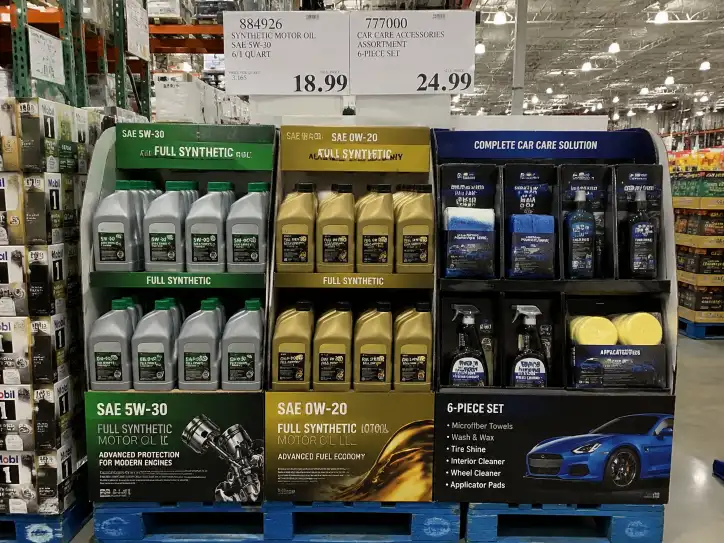
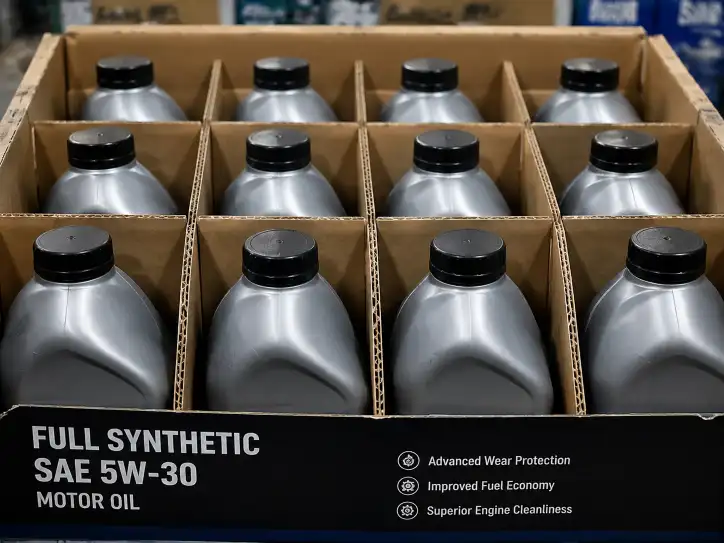
Motor oil bottles (5 quart) weigh 8 pounds or more. If they tip over during transit, the cap can loosen and oil will leak. A single leaking oil bottle can ruin the entire display and create a hazardous mess. Every oil bottle must be oriented with the cap facing up. The compartment depth should be at least half the bottle height. Apply moisture-resistant coating to the tray. For high-risk shipments, consider polybagging each oil bottle individually. This is not optional — it is the difference between a display that arrives clean and one that arrives destroyed.
2. Double-Wall Trays for Heavy Oil Bottles
Motor oil and antifreeze need double-wall BC flute trays with 44 ECT minimum. Limit to 2 to 3 layers maximum — oil is very heavy and the bottom trays must support significant weight. Never place oil bottles above other products. They must be on the bottom layer only. A full pallet of motor oil can easily exceed 1,500 pounds, so calculate total weight before finalizing the design.
3. Odd Shapes Need Custom Compartments
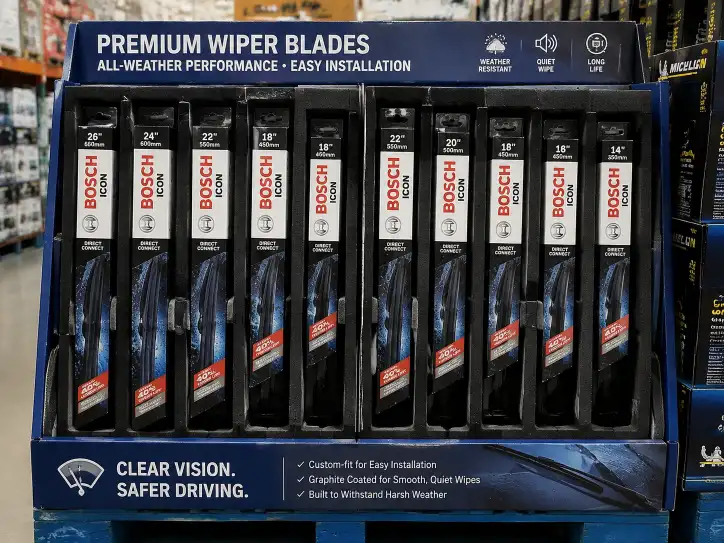
Wiper blades are long and narrow — they need individual slots or custom-shaped compartments. Car wash soap and antifreeze come in standard bottle shapes and work well in regular compartments. Microfiber cloths and small accessories work best in PDQ trays or on peg hooks. Each product type needs a different compartment design. Do not try to fit a wiper blade into a standard rectangular compartment — it will not be secure.
4. Seasonal Demand Drives the Category
Automotive products are highly seasonal. Car care products (wash, wax, microfiber) peak in spring and summer. Wiper blades and antifreeze peak in fall and winter. Motor oil and basic accessories are year-round. Each seasonal program requires its own production timeline. Start production 3 to 4 months before the seasonal in-store date. Spring car care programs should be in production by January. Winter wiper blade programs should be in production by August.
5. Material Reference: What to Use for Each Product
| Product Type | Material Grade | Why |
|---|---|---|
| Motor oil, antifreeze | BC flute double-wall, 44 ECT | Heavy weight, leak risk |
| Car wash soap, small bottles | C flute single-wall, 29 ECT | Medium weight, standard protection |
| Wiper blades, accessories | B flute single-wall, 26 ECT | Lightweight, custom shapes |
Always use moisture-resistant coating for trays holding chemical products.
6. Chemical Products Need Extra Protection
Bleach, antifreeze, and concentrated cleaners can react with corrugated board over time. Use moisture-resistant coating on all trays that hold chemical products. For highly concentrated chemicals, use polybagging or sealed plastic liners inside the corrugated compartment. This prevents chemical damage to the board and protects the display graphics.
7. Printing: Brand Recognition from a Distance
Motor oil and car care products are purchased on brand trust. Litho-laminated printing provides the vibrant, durable graphics needed to make your brand recognizable from across the aisle. For value brands, flexo 4-color printing is a cost-effective alternative. The right printing can make a budget product look premium.
8. ISTA 3E Testing: What to Expect
Costco requires ISTA 3E testing for all pallet displays. For automotive displays, the most common failures are bottle cap loosening, oil leakage, and tray collapse from heavy products. Include a leak check in the testing protocol. Test with actual filled bottles. A display that passes ISTA testing before production is far less likely to arrive with damaged products.
9. Layer Count Reference
| Product Type | Max Layers |
|---|---|
| Motor oil | 2–3 |
| Car wash soap, antifreeze | 3–4 |
| Wiper blades, accessories | 4–5 |
10. Timeline: Planning Your Automotive Display
The typical lead time for a Costco automotive display is 8 to 12 weeks. For seasonal programs, start production 3 to 4 months before the in-store date. Spring car care: production by January. Winter wiper blades: production by August. Year-round motor oil: any time, but avoid Chinese New Year (January to February).
FAQ
How do I prevent motor oil from leaking in a Costco display?
Every oil bottle must be oriented with the cap facing up. The compartment depth should be at least half the bottle height. Apply moisture-resistant coating. For high-risk shipments, polybag each oil bottle individually.
What material grade is needed for motor oil displays?
Motor oil and antifreeze need double-wall BC flute trays with 44 ECT minimum. Limit to 2 to 3 layers. Never place oil bottles above other products.
How do I design compartments for oddly shaped wiper blades?
Wiper blades need individual slots or custom-shaped compartments. Car wash soap and antifreeze work well in standard compartments. Each product type needs a different design.
What is the seasonal demand pattern for automotive products?
Car care peaks in spring and summer. Wiper blades and antifreeze peak in fall and winter. Motor oil is year-round. Start production 3 to 4 months before the seasonal in-store date.
How do I keep chemical products from damaging the display?
Use moisture-resistant coating on all trays holding chemical products. For highly concentrated chemicals, use polybagging or sealed plastic liners inside the compartment.
Conclusion
Getting your automotive products into Costco with the right display comes down to three things: preventing oil leaks, using the right material grade for heavy products, and planning for seasonal demand. The brands that succeed are the ones that take leak prevention seriously and start production early enough for seasonal windows. For more information, refer to the American Petroleum Institute (API) for motor oil certification and SAE International for automotive product standards.