If you are a stationery brand looking to get your office supplies into Costco, you have probably read the standard Costco pallet display requirements. But office supplies are a mixed bag. Copy paper is extremely heavy — a 10-ream pack weighs 50 pounds. Pens and markers are tiny and easy to lose on a large pallet. And the entire category is driven by the back-to-school season, which has a tight timing window. The display must also pass ISTA 3E transit testing without allowing paper to bend or small items to shift. So if you are planning to sell office supplies at Costco, what kind of display do you need, and how do you handle the weight of paper?
1. Paper Products Must Be Separated from Stationery
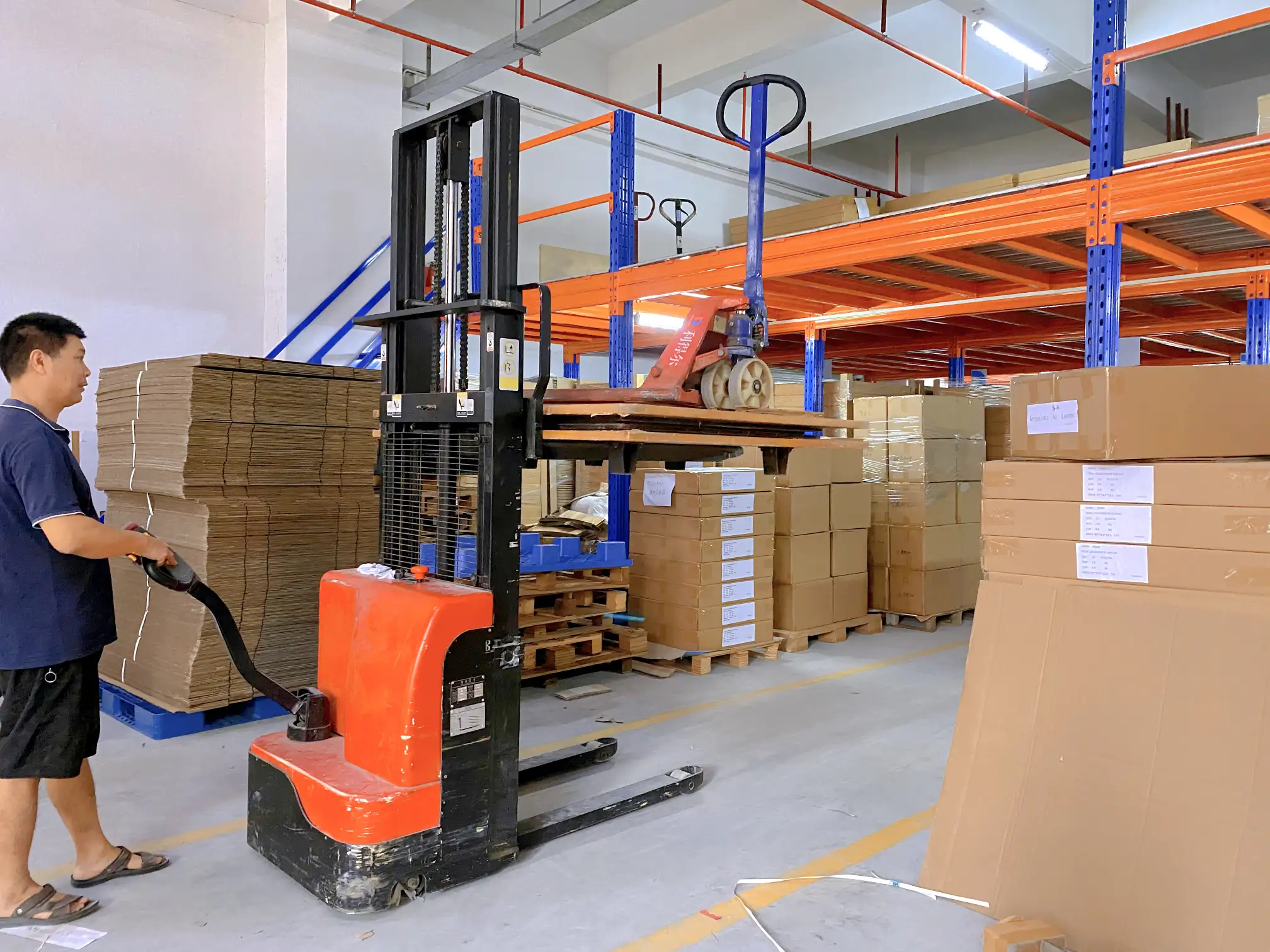
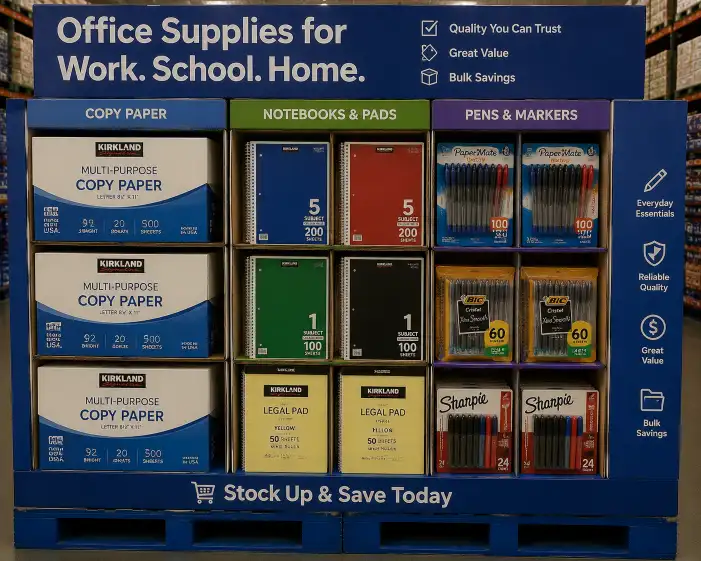
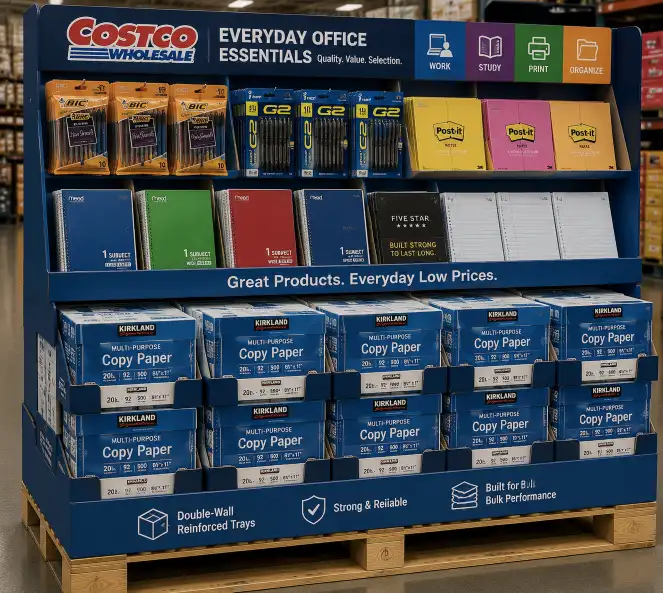
This is the most important rule for office supply displays. Copy paper is heavy — a 10-ream pack weighs 50 pounds. These must go on the bottom layer with reinforced double-wall trays. Notebooks and binders go in the middle. Pens, markers, and small stationery items go on top in PDQ trays or cross-lock divider compartments. Never put paper products above lightweight stationery. The weight will crush the smaller items and create an unstable display.
2. Double-Wall Trays for Copy Paper
Copy paper reams and multi-packs need double-wall BC flute trays with 44 ECT minimum. For 10-ream packs, use double-wall BC with corner supports and 61 ECT — the strongest standard grade. Limit paper-only displays to 3 to 4 layers. The weight adds up quickly, and the display must not exceed 2,200 pounds total. When in doubt, calculate the weight of each layer before finalizing the design.
3. PDQ Trays for Small Stationery Items
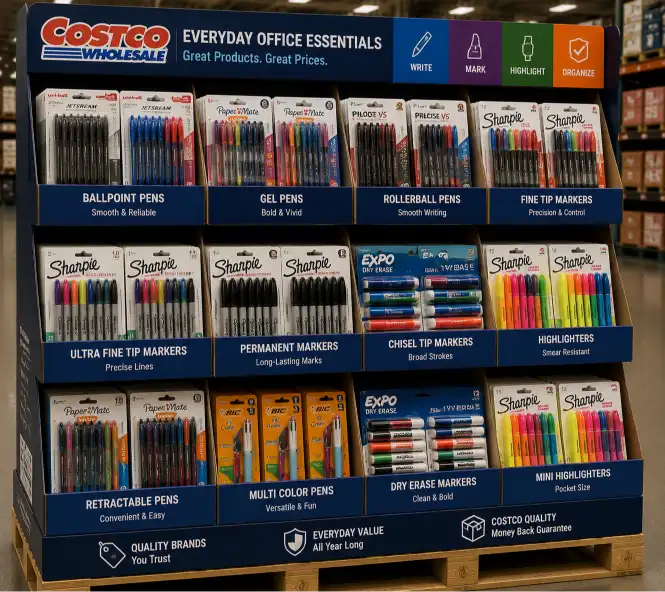
Pens, markers, and small accessories work best in pre-loaded PDQ trays. These trays can be packed at the factory and placed directly on the pallet display. This saves labor at the store and keeps small items organized. Use cross-lock dividers to keep different pen types and colors separate. E flute or B flute single-wall is sufficient for lightweight stationery. Each PDQ tray should hold 6 to 12 units depending on product size.
4. Material Reference: What to Use for Each Product
| Product Type | Material Grade | Why |
|---|---|---|
| Copy paper (10-ream packs) | BC flute double-wall, 61 ECT | Extremely heavy, needs corner supports |
| Copy paper (standard reams) | BC flute double-wall, 44 ECT | Heavy, needs reinforcement |
| Notebooks, binders | C flute single-wall, 29 ECT | Medium weight, standard protection |
| Pens, stationery | E or B flute single-wall | Lightweight, cost-effective |
5. Label Everything by Category
Office supply shoppers look for specific items — copy paper, pens, notebooks, folders. They are not browsing aimlessly. Every section of the display should have a clear category label with large, readable text. Include pack counts and sizes (ream count, page count, pen count) on the shelf edge labels. A shopper looking for 24-pack pens should be able to find them in 3 seconds, not 30.
6. Back-to-School Season: The Critical Window
The back-to-school season (July to September) is the peak period for office supply displays at Costco. Production must be complete by May for July in-store placement. The window is tight — late delivery means missed sales for an entire year. Start the design process in January or February. For year-round programs, any time of year works, but you will get the most traffic by targeting the back-to-school window.
7. Printing: Seasonal Appeal vs. Year-Round Value
Back-to-school displays benefit from bright, colorful graphics that appeal to both parents and children. Litho-laminated printing provides the quality needed for seasonal themes. For value brands, flexo 4-color printing is a cost-effective alternative. The right printing can make a budget-friendly product look like a premium choice.
8. ISTA 3E Testing: What to Expect
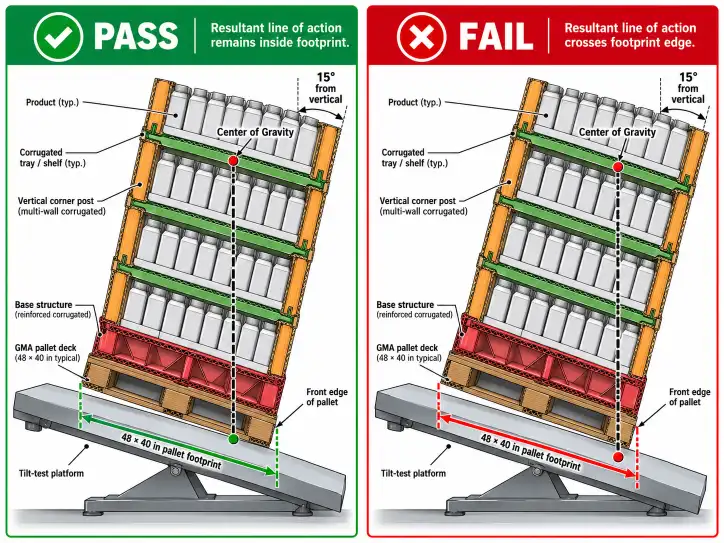
Costco requires ISTA 3E testing for all pallet displays. For office supply displays, the most common failures are tray collapse from heavy paper, paper bending from inadequate flat support, and product shifting from mixed-weight items. Test with actual products. A display that passes ISTA testing before production is far less likely to arrive with damaged products.
9. Layer Count Reference
| Product Type | Max Layers |
|---|---|
| Copy paper | 3–4 |
| Notebooks, binders | 4–5 |
| Pens, stationery | 5–6 |
10. Timeline: Planning Your Office Supply Display
The typical lead time for a Costco office supply display is 8 to 12 weeks. For back-to-school programs, production must be complete by May. Plan your program at least 4 to 5 months in advance of the July in-store date. Start the design process in January or February.
FAQ
How should I separate paper products from stationery?
Copy paper goes on the bottom layer with reinforced double-wall trays. Notebooks and binders go in the middle. Pens, markers, and small stationery go on top in PDQ trays. Never put paper above lightweight stationery.
What material grade is needed for copy paper?
Copy paper reams need double-wall BC flute with 44 ECT minimum. For 10-ream packs, use BC flute with corner supports and 61 ECT. Limit paper displays to 3 to 4 layers.
How do PDQ trays work for small stationery items?
Pens and markers work best in pre-loaded PDQ trays packed at the factory. Use cross-lock dividers to keep different types and colors organized. E flute or B flute single-wall is sufficient.
What labeling is needed for office supply displays?
Every section should have a clear category label with pack counts and sizes. Shoppers look for specific items, so make it easy to find what they need.
When should I start production for back-to-school displays?
Production must be complete by May for July in-store placement. Start the design process in January or February. Late delivery means missed sales for an entire year.
Conclusion
Getting your office supplies into Costco with the right display comes down to three things: separating paper products from stationery, using reinforced trays for heavy copy paper, and planning for the back-to-school season. The brands that succeed are the ones that start early and use the right material grade for each product type. For more information, refer to the EPA's Safer Choice for environmentally preferable office products.