If you are a clothing brand looking to get your apparel into Costco, you have probably read the standard Costco pallet display requirements. But apparel is a different challenge from most other categories. Socks and underwear are lightweight but need organized size separation. Shoppers need to touch and feel the fabric before buying. And the display must look neat and presentable even after hundreds of shoppers have picked through it. The display must also pass ISTA 3E transit testing without allowing soft goods to shift or wrinkle. So if you are planning to sell apparel at Costco, what kind of display do you need?
1. Organize by Size — The Most Important Rule
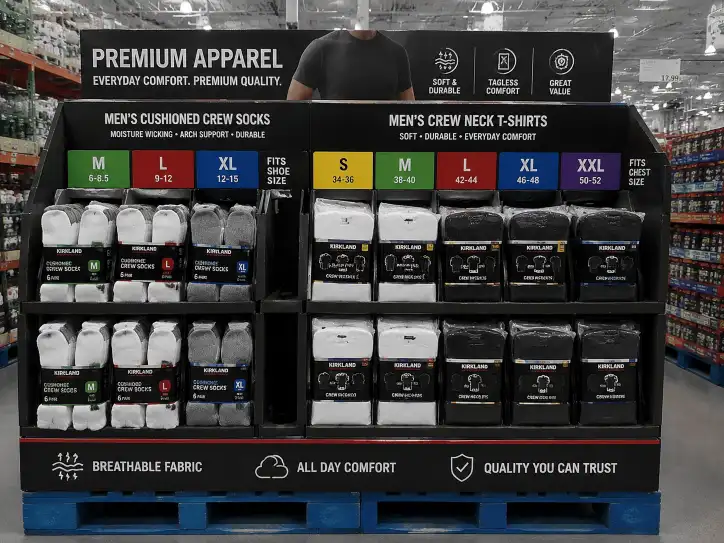
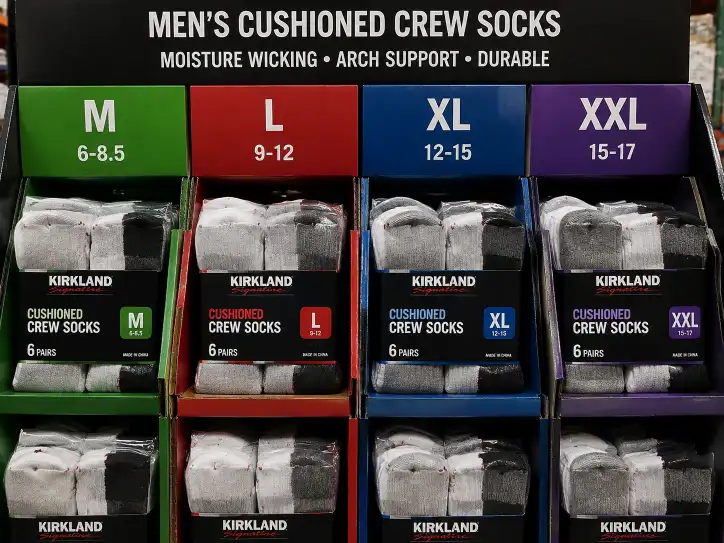
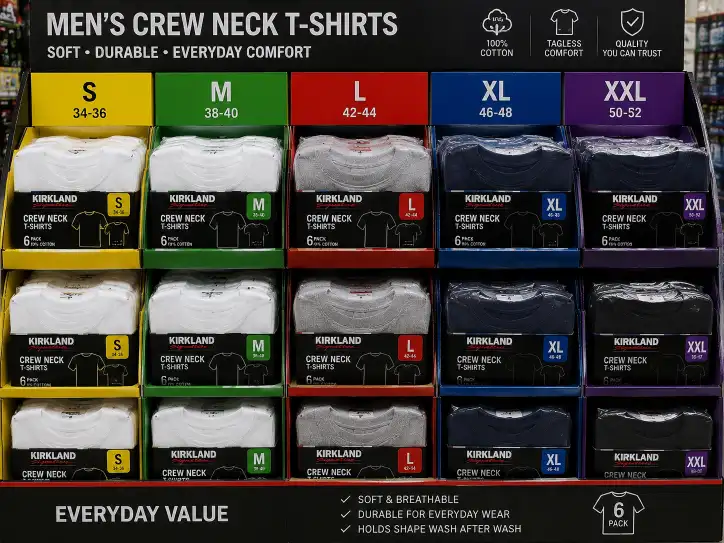
Apparel at Costco is purchased by size. Every compartment must have a clear, large-print size label. Use color-coded compartments if possible — blue for small, green for medium, yellow for large, red for extra large. Place the most popular sizes (medium and large) in the most accessible positions at eye level. Include a size conversion chart on the header sign. If a shopper cannot find their size in 3 seconds, they will move on.
2. Cross-Lock Dividers for Multi-Packs
Socks and underwear are sold in multi-packs. Cross-lock dividers keep each pack separate and organized. The compartment should be sized to fit the multi-pack snugly — not too tight and not too loose. B flute single-wall corrugated is sufficient for all apparel since it is lightweight. The key is keeping the packs neatly aligned so the display looks professional.
3. Design for Touch and Feel
Apparel shoppers want to touch the fabric before buying. Use open tray designs that allow easy access. Do not use closed boxes or lids. The front of each compartment should be low enough for shoppers to reach in and feel the fabric. At the same time, the compartment must be deep enough to keep products secure during transit. This balance between accessibility and security is the key design challenge for apparel displays.
4. Keep Products Flat and Neat
Apparel must look presentable on the display. Multi-packs should be folded neatly and arranged with the label facing up. Use tiered compartments for smaller items like socks. Flat storage prevents wrinkles and keeps the display looking professional throughout its in-store life. A messy display makes shoppers assume the products are low quality.
5. Seasonal Planning: When to Launch
Apparel is seasonal. T-shirts and activewear peak in spring and summer. Pajamas and loungewear peak in the holiday season. Socks and underwear are year-round. Each seasonal program requires its own production timeline. Start production 3 to 4 months before the seasonal in-store date. Spring apparel: production by January. Holiday apparel: production by August.
6. SKU Count: How Many Is Too Many?
A standard full pallet display can hold 4 to 8 SKUs depending on pack size. For sock and underwear displays, aim for 6 to 8 SKUs covering the most popular sizes and styles. For t-shirt displays, 4 to 6 SKUs is sufficient. Too many SKUs makes the display look cluttered and confuses shoppers. When in doubt, fewer SKUs with more depth per SKU is better.
7. Printing: Lifestyle Appeal That Sells
Apparel is purchased on style and brand perception. Litho-laminated printing provides the quality needed to show lifestyle imagery, fabric textures, and color options. For activewear brands, use bold, energetic graphics. For basics like socks and underwear, clean, simple graphics work best. The right printing can make basic products look premium.
8. ISTA 3E Testing: What to Expect
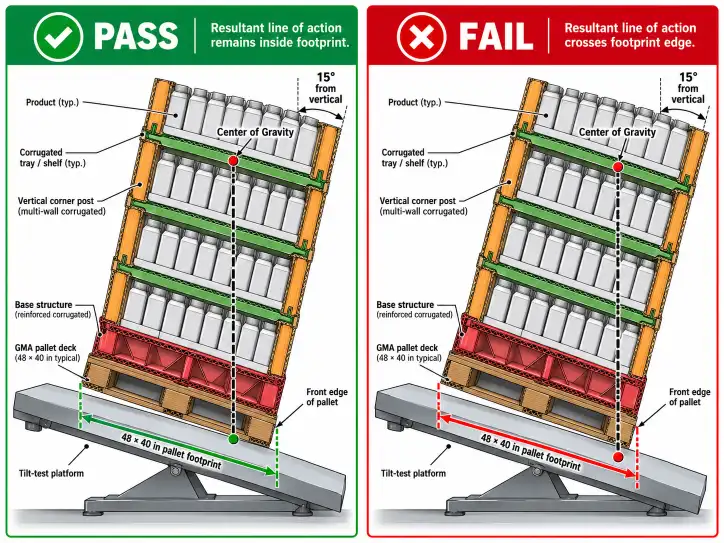
Costco requires ISTA 3E testing for all pallet displays. For apparel displays, the most common failures are product shifting (soft goods move during transit) and compartment collapse from inadequate divider strength. Test with actual products in their real packaging. A display that passes ISTA testing before production is far less likely to arrive with disorganized products.
9. Layer Count: Apparel Is Pallet-Efficient
Apparel is lightweight. You can stack 5 to 6 layers without compression concerns. This makes apparel one of the most pallet-efficient categories at Costco. Use the full 72-inch height to maximize product count per pallet. More layers mean more products per display, which means more sales potential.
10. Timeline: Planning Your Apparel Display
The typical lead time for a Costco apparel display is 8 to 12 weeks. For seasonal programs, start production 3 to 4 months before the in-store date. Spring apparel: production by January. Holiday apparel: production by August. Year-round programs: plan 3 to 4 months in advance.
FAQ
How should I organize apparel by size in a Costco display?
Every compartment must have a clear, large-print size label. Use color-coded compartments if possible. Place the most popular sizes (medium and large) at eye level. Include a size conversion chart on the header sign.
What type of dividers work best for sock multi-packs?
Cross-lock dividers keep each pack separate and organized. The compartment should fit the multi-pack snugly. B flute single-wall is sufficient for all apparel.
How do I design a display that allows shoppers to touch the fabric?
Use open tray designs with low front edges. Do not use closed boxes or lids. The compartment must be deep enough for transit security but low enough for easy access.
How many SKUs should an apparel display have?
Aim for 6 to 8 SKUs for sock and underwear displays. 4 to 6 SKUs for t-shirt displays. Too many SKUs makes the display look cluttered.
How many layers can I stack in an apparel display?
You can stack 5 to 6 layers without compression concerns. Apparel is one of the most pallet-efficient categories at Costco. Use the full 72-inch height.
Conclusion
Getting your apparel into Costco with the right display comes down to three things: organizing clearly by size, designing for touch-and-feel shopping, and planning your seasonal timeline early. The brands that succeed are the ones that make it easy for shoppers to find their size and feel the fabric. For more information on apparel labeling standards, refer to the Federal Trade Commission (FTC) textile labeling requirements and the American Apparel and Footwear Association.