Snacks and candy move fast, but they do not all sell the same way. A small impulse chocolate, a family-size snack bag, and a checkout mint pack need different display logic. That is why the best cardboard display for snacks and candy starts with product behavior, not with a favorite structure.
From a manufacturer’s side, snack display projects usually succeed when buyers match the display to pickup speed, pack size, and refill pressure. That sounds simple. It changes everything.
For B2B buyers, the real question is not “Can we make a display?” The better question is “Which cardboard display idea helps this snack or candy line sell faster, stay organized longer, and fit the retailer’s daily routine?” This guide breaks that down into practical retail choices you can use before sampling starts.
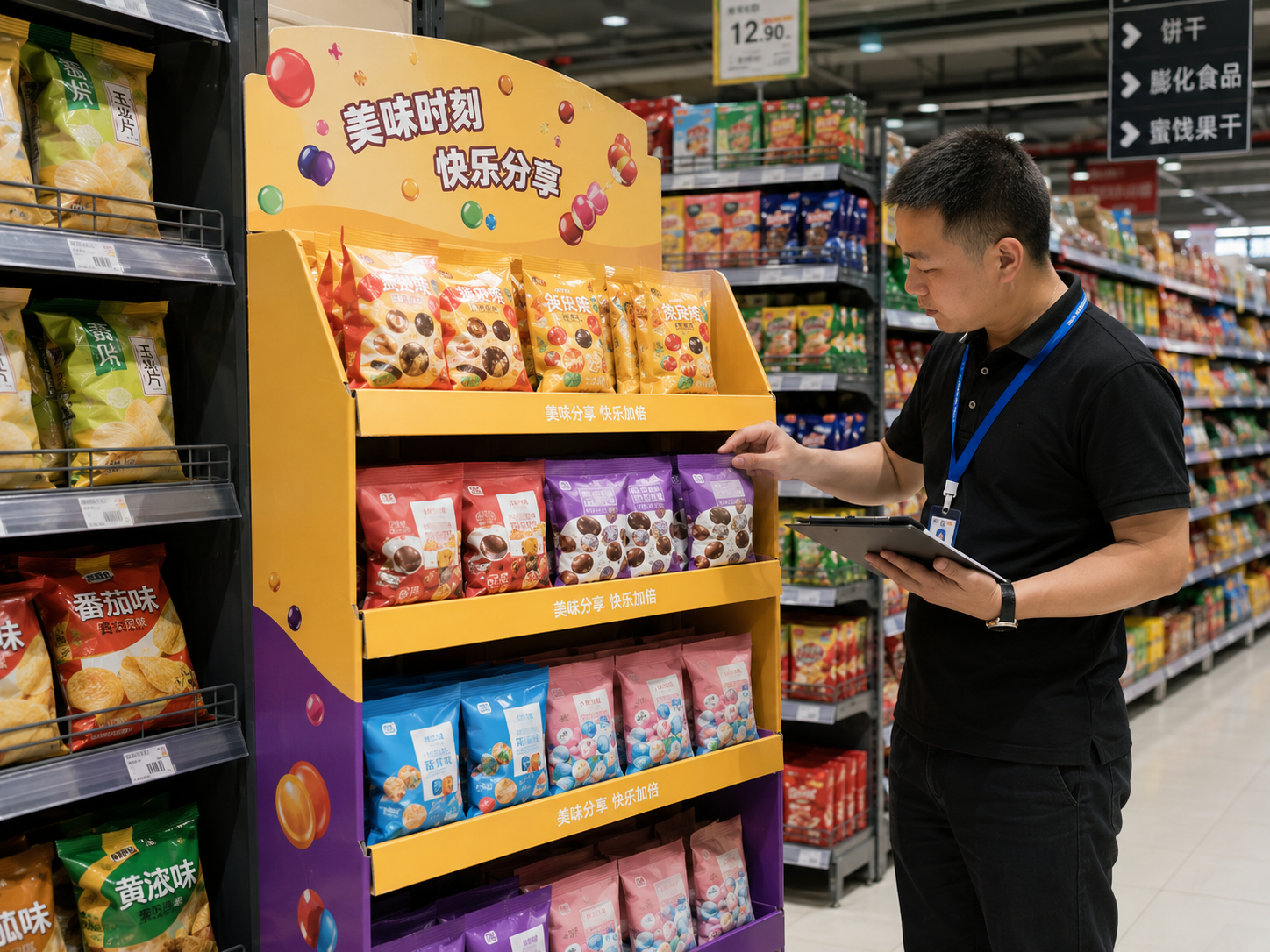
Start With the Product, Not the Structure
Many snack display projects go off track for one reason. The buyer chooses the structure first and fits the products into it later. That creates avoidable problems. Small candy packs may disappear on a floor display. Heavy snack bags may overload a lightweight counter unit. Mixed SKUs may look attractive in a mockup and messy in store.
The smarter method is to split snacks and candy into retail behavior groups first:
- small impulse products
- hangable snack or candy packs
- boxed counter units and PDQ-ready items
- promotional bundles and mixed assortment lines
- larger volume or bulk snack packs
Once that is clear, the display choice becomes easier. In our experience, the strongest projects are not the most complicated ones. They are the ones where the structure matches how shoppers decide and how store staff refill.
If you want a broader overview of display formats before choosing one, see our cardboard display category and our custom cardboard display solutions page. Those pages make it easier to compare structure options before the project moves into sampling.
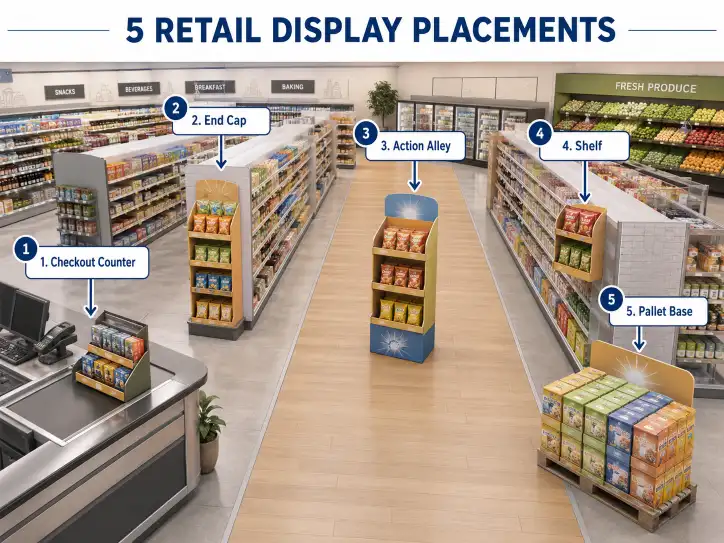
Idea 1: Use a Counter Display for Small Candy and Fast Impulse Products
Counter displays are often the most efficient answer for compact candy lines. Think mints, chewing gum, mini chocolate bars, hard candy, lollipops, and small seasonal treats. These products do not need long evaluation. They need fast visibility near payment or near a small decision point.
A counter display works best when the product is easy to read at close range and easy to pick up in one motion. For snacks and candy, that usually means:
- small packs with a strong front panel
- simple flavor or variant grouping
- a tidy fill pattern
- easy refill from the back or top
This is one of the best cardboard display ideas for snacks and candy when the retailer wants a compact footprint and a high impulse rate. The mistake is overloading it with too many flavors or too many mixed pack sizes. That weakens the visual block and slows refill.
If your product line is small and checkout-driven, a counter unit often beats a larger display because it fits how the purchase actually happens. Quick decision. Quick pickup.
Idea 2: Use a PDQ Display for Shelf-Ready Snack Programs
PDQ displays are strong when the product already arrives in a retail-ready tray or can be packed into a simple shelf-drop format. This works well for cookies, snack bars, biscuits, multipack candy pouches, and promotional cartons where quick replenishment matters.
The appeal of a PDQ display is not only speed on shelf. It is speed in store execution. Retailers like formats that reduce setup time and simplify refilling. That is why a PDQ can be one of the strongest cardboard display ideas for snacks and candy in supermarkets, convenience stores, and club-style promotional programs.
For buyers, the key question is whether the tray still looks organized after partial sell-through. A strong PDQ layout should keep the front row readable after the first fast-selling SKU moves. If the tray looks broken too early, the design needs work.
Our paper display stands for retail page is useful here because it connects shelf-ready thinking with broader display strategy.
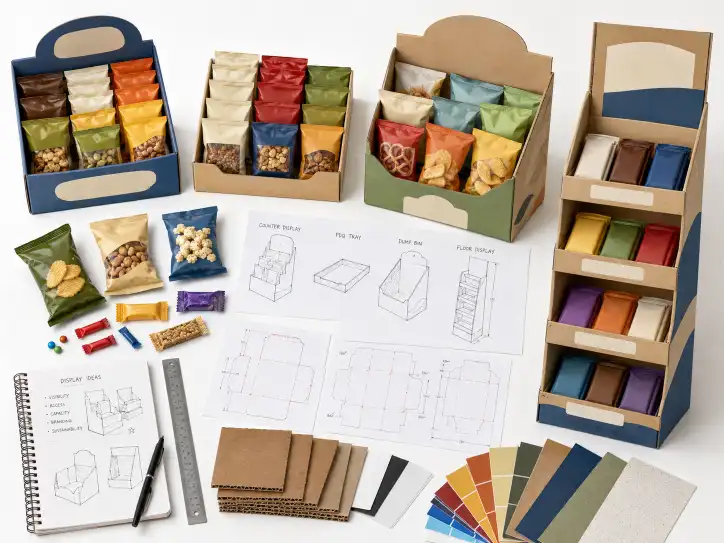
Idea 3: Use a Floor Display for Promotional Snack Ranges and Seasonal Candy
A floor display makes sense when the product needs more presence than a shelf can give. This is often the right answer for seasonal candy launches, movie-night snack collections, mixed confectionery ranges, holiday offers, and limited-time flavor campaigns.
A floor unit is not only a holder. It is a retail stage. That matters for snacks and candy because many purchases are driven by visibility, timing, and display energy. A shelf may carry the same product, but it often cannot create the same interruption effect.
From a manufacturer’s perspective, floor displays for snacks and candy work best when three things line up:
- the product family is easy to understand quickly
- the shelf or tray layout supports fast refill
- the graphics create one clear message instead of too many competing messages
Seasonal candy is a good example. The display should make the promotion obvious from a distance. The retailer should still be able to refill it without reorganizing the full unit by hand every time. If the display is visually strong but operationally weak, it will not stay attractive for long.
If you are exploring bigger formats, our Leader Display project support page is the best place to start a discussion around structure, loading, and retail rollout.
Idea 4: Use a Dump Bin for Loose, Browseable Candy and Low-Friction Snack Packs
Dump bins are a practical choice when the product invites browsing and the shopper does not need a strict comparison layout. This works well for grab-and-go candy, low-cost snack packs, individually wrapped sweets, promo bags, and seasonal loose-fill programs.
The advantage of a dump bin is simple. It supports discovery. Shoppers can approach from different angles, browse quickly, and grab products without needing a precise shelf structure.
That said, not every snack or candy line fits a dump bin well. Products that crumple too easily, tangle together, or look messy after the first few sales can lose value fast in this format. A dump bin works best when the pack is durable enough to handle movement and simple enough to stay visually active even when the stock level drops.
For B2B buyers, the most important design question is bin depth. Too deep, and refill becomes awkward. Too shallow, and the display loses volume presence too early. For snacks and candy, the right bin depth changes how quickly staff can recover the display after customer handling.
Idea 5: Use a Peg Display for Hanging Snack Accessories or Narrow Pack Lines
Peg displays are not the first thing buyers think of for snacks and candy, but they can work well in the right project. This usually applies to long narrow packs, hanging novelty candy, trial-size items, or compact snack accessories that sell better when shoppers compare them one by one.
The strength of a peg format is visual separation. It makes each pack easier to see. That can help when the range includes multiple flavors, characters, or mini formats that would otherwise get lost in a shelf tray or bin.
The weakness is overcrowding. If the hook spacing is too tight or the pack sizes vary too much, the display becomes noisy fast. That is why peg units for candy need tighter SKU planning than many buyers expect.
This approach is usually better for selected lines than for a full snack family. In other words, use a peg display when visibility by unit matters more than bulk impact.
Idea 6: Use a Pallet Display for High-Volume Promotions
When the snack or candy line is sold in larger packs, carton bundles, or warehouse-style promotions, a pallet display can become the stronger answer. This applies to bulk confectionery programs, club-store snack multipacks, and large promotional runs where the product benefits from volume presence.
A pallet display is not the right answer for everything. It asks for real quantity, real structure, and a product that gains something from scale. For snacks and candy, that usually means products with fast recognition and easy purchase logic.
Heavier packs or bulk formats need stronger board selection, cleaner tray logic, and better transport planning. The visual impact may look easy in a rendering. The actual job is technical. Buyers should treat pallet displays as structural projects, not only branding projects.
| Snack or Candy Type | Best Display Idea | Main Strength | Main Risk |
|---|---|---|---|
| Mini candy, gum, mints | Counter display | Fast impulse pickup | Too many SKUs create clutter |
| Snack bars, cookies, shelf-ready packs | PDQ display | Easy retailer setup and refill | Weak tray design looks empty too early |
| Seasonal candy ranges | Floor display | Strong visual promotion | Poor grouping weakens week-two appearance |
| Loose-fill or low-cost browseable candy | Dump bin display | Encourages quick browsing | Can look messy after heavy traffic |
| Long narrow hanging packs | Peg display | Unit-by-unit visibility | Overcrowded hooks reduce clarity |
| Bulk snack promotions | Pallet display | Strong volume presence | Needs stronger structure and logistics planning |
What Buyers Should Compare Before Choosing a Cardboard Display for Snacks and Candy
Before you move into artwork or sample approval, compare these points first:
- How fast is the purchase decision?
- Does the product need comparison or just visibility?
- Will the retailer refill it often?
- Does the pack hold shape well after handling?
- Will the display still look full after partial sell-through?
- Does the product need volume presence or a smaller impulse footprint?
That sequence matters because it keeps the project tied to retail reality. Many display decisions fail because the discussion starts with graphics, not with product behavior.
For broader retail-ready logic, the FEFCO shelf-ready packaging guidance is a useful reference. For corrugated performance, transport, and retail communication background, the Fibre Box Association overview of corrugated is also worth reviewing.
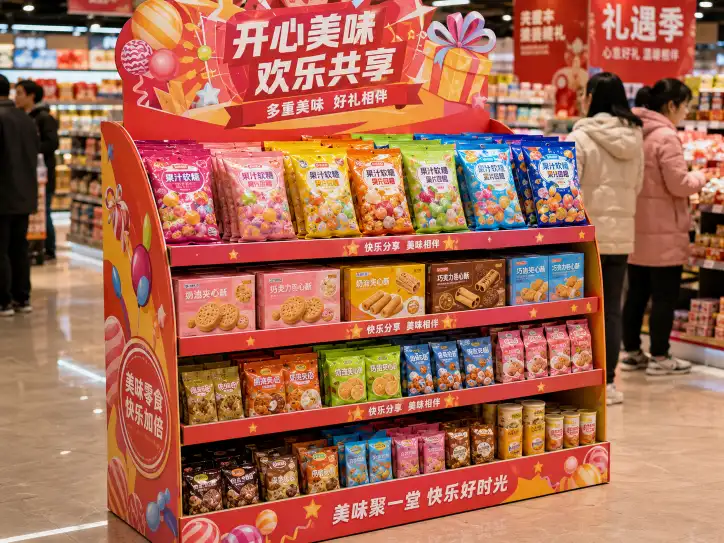
Why the Best Snack Display Ideas Usually Look Simpler Than Expected
Buyers often assume the strongest display idea is the one with the most features. In snack retail, that is often not true. The strongest cardboard display for snacks and candy usually feels easier to shop, easier to refill, and easier to understand in one glance.
That is why the best projects often come down to a few clear decisions:
- fewer SKUs per structure
- cleaner grouping by flavor or pack size
- more realistic tray or shelf depth
- graphics that support one message
- structure chosen for retail handling, not only visual impact
In our experience, the best cardboard display ideas for snacks and candy do not try to solve every problem in one unit. They solve the right retail problem with the right structure. That is the difference.
Final Buying Direction
The best cardboard display for snacks and candy depends on how the product sells, how it is refilled, and how much visibility it needs. Counter displays work well for compact impulse items. PDQ displays suit shelf-ready programs. Floor displays help promotional and seasonal ranges. Dump bins support browseable candy. Peg units help selected hanging lines. Pallet displays fit bulk movement.
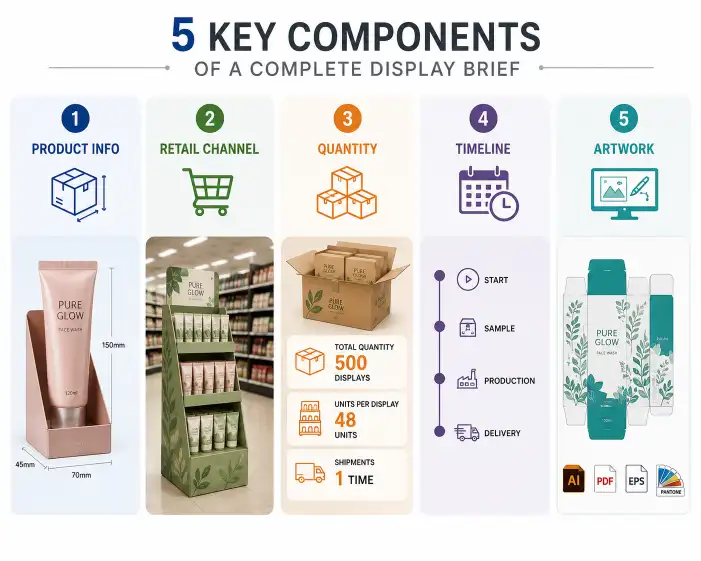
Before you choose a structure, define the product size, unit weight, SKU count, retail channel, refill pattern, and expected shipment method. Then move into sampling with a clearer target. That will save time and improve the display outcome.
For help matching your snack or candy line to the right cardboard display idea, please contact us with your product size, pack weight, target quantity, retail channel, and any reference structure you already have in mind.