Choosing a cardboard display supplier is not only about price. For B2B buyers, the right supplier should understand product weight, retail placement, printing needs, packing limits, and the pressure of a launch schedule. One weak detail can affect the whole in-store program.
A good supplier does more than quote a unit price. They help you turn a product, campaign idea, or retailer requirement into a display that can be produced, packed, shipped, and assembled with fewer risks.

Why the Right Cardboard Display Supplier Matters
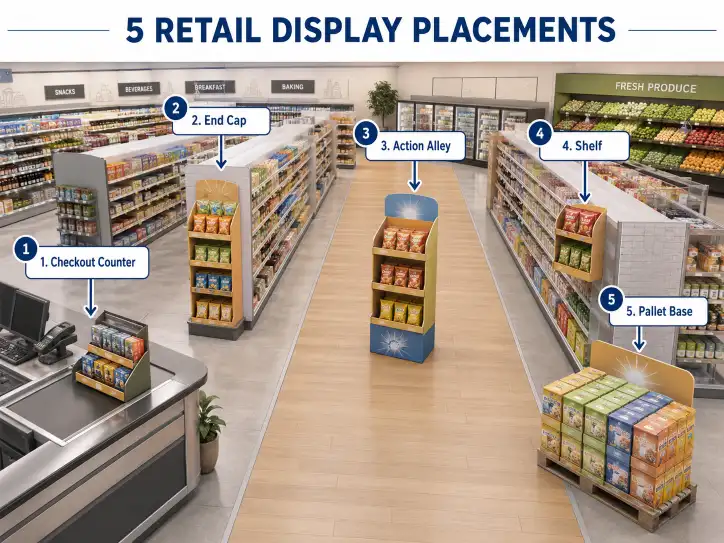
A cardboard display is often the first physical touchpoint between your product and a shopper. It may stand at a checkout counter, sit in a supermarket aisle, hang on a side shelf, or hold products during a seasonal promotion.
That means the supplier must think beyond appearance.
They need to consider:
- Product size and weight
- Number of SKUs
- Shelf load capacity
- Retail floor or counter space
- Printing artwork and color control
- Assembly time in store
- Flat packing method
- Export carton protection
- Bulk production consistency
A display that looks good in a rendering can still fail during transport or store setup. A strong B2B supplier should be able to explain the structure before production starts.
For example, a light cosmetic counter display may only need a compact PDQ display with printed dividers. A beverage promotion may need a floor display with stronger board, reinforced shelves, and a safer base. A hanging product may require a peg hook display with backing board support and hook spacing checks.
Different projects need different answers.
Start With Your Retail Goal, Not the Display Type
Many buyers begin by asking for a counter display, floor display, pallet display, or dump bin display. That is useful, but it should not be the only starting point.
The better first question is: what should the display achieve in the store?
A supplier who understands retail display planning will ask about the selling situation before suggesting a structure. Is the display for a product launch? A supermarket promotion? A seasonal campaign? A chain store program? A warehouse club? A small-batch trial?
Each situation changes the design.
For Product Launches
A product launch display often needs stronger visual impact. The supplier should help with header design, product arrangement, and display packaging that makes the new item clear from a distance.
A launch display may need:
- A large printed header
- Clear product grouping
- Brand color matching
- Sample approval before bulk production
- Quick assembly instructions for retail staff
For Supermarkets and Chain Stores
Retail buyers often care about footprint, shelf height, stability, and packing efficiency. The display should fit store rules and reduce setup problems.
For this kind of project, a supplier should confirm dimensions, product count, board strength, and retail setup method before giving the final quote.
For Seasonal Campaigns
Seasonal promotions usually involve tight schedules. The supplier should plan sampling, artwork confirmation, material preparation, production, inspection, and shipping with enough buffer.
Late artwork can delay everything.
A Good Cardboard Display Supplier Asks Better Questions
A serious supplier does not rush to send a low price without checking the project details. That kind of quote may look attractive, but it often hides missing costs, weak material choices, or unclear packing assumptions.
A practical supplier will ask for details such as:
- Product dimensions
- Product weight per unit
- Total product quantity per display
- Display type or reference photo
- Target retail channel
- Printing artwork
- Expected order quantity
- Packing method
- Delivery deadline
- Destination country or shipping route
These questions protect the buyer. They also help the factory choose the right board grade, flute direction, shelf reinforcement, insert design, and export carton structure.
For custom projects, it is useful to work with a supplier that offers custom cardboard display solutions because structure, printing, sampling, and bulk production should be considered together.
One project file should connect the full process.
No guessing.
Compare Supplier Capability by Project Stage
The right supplier should support the full B2B buying process, not only the production stage. A display project usually moves from idea to structure, then to sampling, artwork, production, packing, and shipping.
The table below shows what B2B buyers should check before choosing a supplier.
| Project Stage | What Buyers Should Check | Why It Matters |
|---|---|---|
| Inquiry review | Does the supplier ask about product size, weight, quantity, and retail channel? | It shows whether the quote is based on real display requirements. |
| Structure design | Can the supplier suggest PDQ, counter, sidekick, floor, pallet, or dump bin options? | The display type should match the store environment and product load. |
| Material selection | Does the supplier explain board thickness, flute type, and reinforcement points? | Weak material can cause bending, leaning, or shelf failure. |
| Sampling | Can the supplier make a sample for structure and printing confirmation? | Sampling reduces risk before bulk production. |
| Printing | Can they check artwork, color, finish, and panel alignment? | Poor print control can damage brand presentation. |
| Load testing | Do they test shelves, hooks, base strength, or product fit? | A display must hold products safely during retail use. |
| Packing | Is the display flat packed, semi-assembled, or packed with products? | Packing affects freight cost, damage risk, and store setup time. |
| QC and shipment | Are inspections done before export packing? | Bulk consistency matters for chain store programs. |
A supplier who can answer these points clearly is easier to work with.
Check Structure Knowledge Before You Check Price
Price matters. But with a cardboard display, structure often decides whether the price is fair.
Two suppliers may quote the same display at different prices because they are not quoting the same structure. One may use thicker board, reinforced shelves, better insert support, or safer export packing. Another may quote a lighter version that looks similar on screen but performs poorly in store.
Ask the supplier how the display will carry the product.
Key Structure Questions to Ask
Before approving a cardboard display stand, ask:
- How many products will each shelf hold?
- What is the weight per shelf?
- Does the base need reinforcement?
- Will the display be moved after assembly?
- Are hooks, trays, dividers, or inserts needed?
- Will the display ship flat or pre-assembled?
- Can retail staff assemble it without tools?
- Does the display need printed instructions?
Small details matter. A peg hook display needs hook spacing and backing support. A floor display needs shelf strength and base balance. A pallet display needs size planning for logistics and retailer handling. A dump bin display needs wall strength and opening design.
The supplier should explain these choices in plain language.
Sampling Shows How the Supplier Thinks
A sample is not only a prototype. It is a test of the supplier’s process.
During sampling, a reliable cardboard display supplier should check structure, product fit, print layout, material choice, and assembly steps. The goal is not to impress the buyer with a photo. The goal is to find risks early.
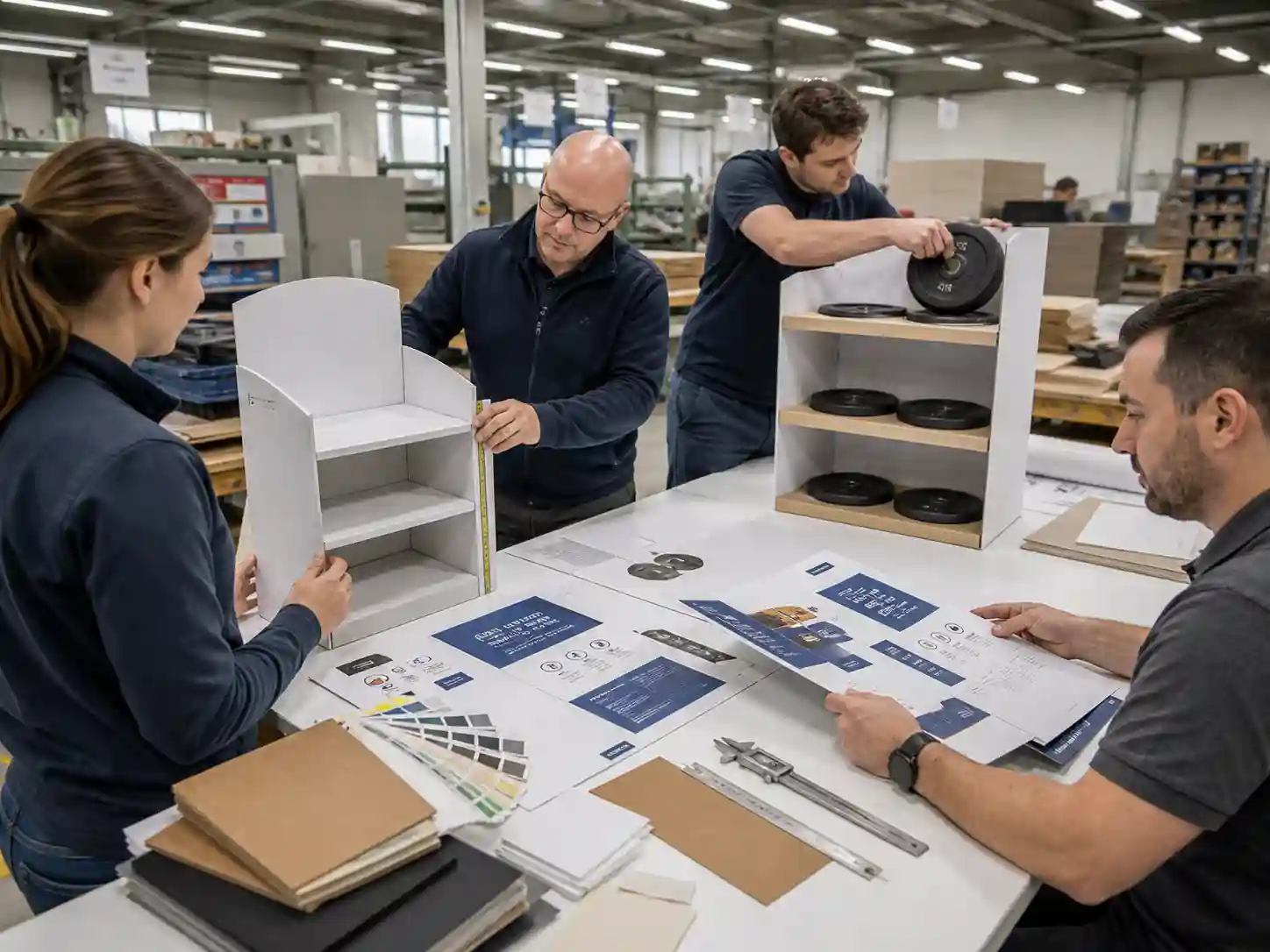
A useful sample review should include:
- Product fit check
- Shelf or tray strength check
- Assembly method review
- Graphic panel position check
- Header and side panel alignment
- Insert or divider adjustment
- Flat packing test
- Export carton size estimate
For branded retail display programs, artwork confirmation is also important. The supplier should check whether key text, logos, product images, barcodes, warnings, and campaign messages fit the display panels.
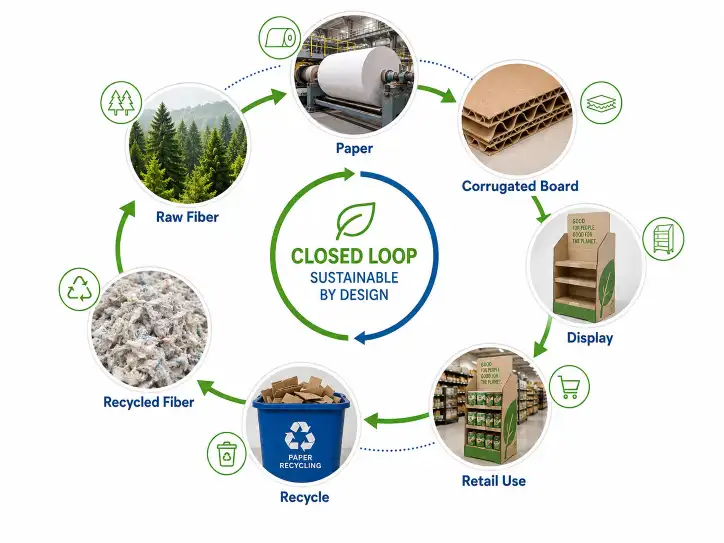
Printing standards may involve color references, coated paper selection, lamination, spot UV, embossing, or other finishing choices. For paper sourcing or sustainability requirements, buyers may ask about FSC-related documentation or other official certification bodies when needed.
Do not leave these points until bulk production.
Material Choice Should Match Product Weight and Retail Use
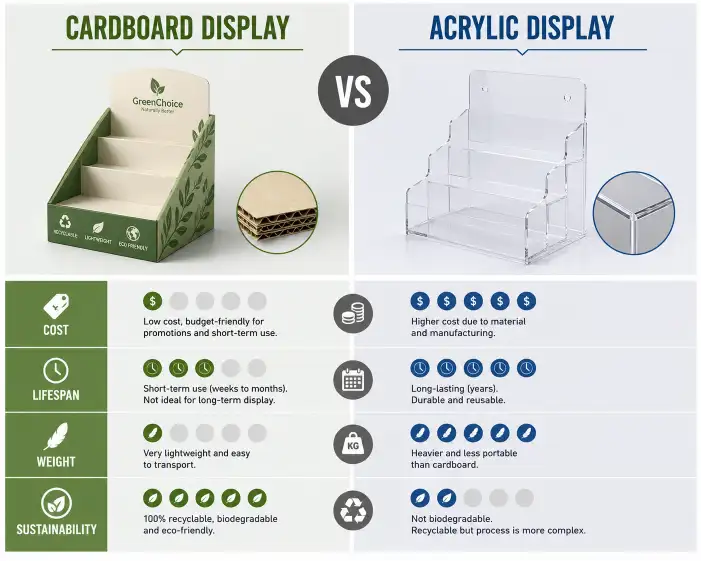
Cardboard displays are not all made from the same paperboard. The material depends on load, display size, print effect, cost target, and shipping method.
A small counter display for light skincare products may use different board from a floor display for bottled drinks. A pallet display for a warehouse club may need stronger material and a different packing plan.
Common material and structure considerations include:
- Corrugated board thickness
- Flute direction
- Greyboard or paperboard support
- Laminated printed sheets
- Reinforced shelves
- Inner trays or dividers
- EVA, paper, or molded inserts when needed
- Edge protection for export cartons
A supplier should not treat every project the same. They should match the display to the product and the store environment.
That is where factory experience matters.
Printing and Finishing Need Production Control
A retail display must carry products, but it also carries brand communication. Printing should be handled with care because color, panel alignment, and surface finish affect how the product appears in store.
For B2B buyers, the supplier should confirm:
- Artwork file format
- Dieline accuracy
- Bleed and safe area
- Color references
- Surface finish
- Print position
- Barcode readability if needed
- Header and shelf lip graphics
Matte lamination, gloss lamination, spot UV, embossing, debossing, and foil stamping may be suitable for some campaigns. They are not needed for every project. A practical supplier will recommend finishing based on display use, budget, and retail environment.
For educational content about paper display use in stores, buyers can also review paper display stands for retail.
The display should support selling. It should not create production waste.
Bulk Production Requires More Than a Good Sample
A sample approval does not guarantee smooth bulk production. The supplier must control repeatability.
Bulk production involves material purchasing, printing, mounting, die cutting, gluing, assembly checks, packing, and final inspection. Each stage can create small errors. For chain store or bulk retail programs, small errors become expensive.
A supplier should have checks for:
- Board thickness and material batch
- Printing color consistency
- Die-cut accuracy
- Creasing and folding lines
- Glue strength
- Shelf fit
- Hook hole position
- Insert size
- Carton packing quantity
- Final appearance before shipment
Ask whether the supplier can provide production photos or inspection details during the order. For large projects, this helps the purchasing team track progress before shipment.
Packing and Shipping Can Decide the Final Result
Some displays fail after production because packing was not planned well.
A cardboard display may be shipped flat packed, semi-assembled, or packed with products. Each method has different risks. Flat packing can save freight cost, but the display must be easy to assemble. Semi-assembled packing can save store labor, but carton size may increase. Product-loaded displays need stronger packing and careful handling.
For export orders, packing design should consider:
- Carton size
- Carton strength
- Edge protection
- Moisture control
- Pallet loading
- Labeling
- Assembly instructions
- Spare parts if needed
- Shipping route and destination
A supplier with export experience will think about these points before shipment. This is important for buyers who need displays delivered to distributors, warehouses, or retail partners.
Red Flags When Choosing a Cardboard Display Supplier
Not every supplier is the right fit for a B2B retail display project. Some may be good at simple printing but weak in display structure. Some may quote fast but avoid technical questions.
Watch for these warning signs:
- The supplier quotes without asking product weight
- They cannot explain material selection
- They avoid sample structure checks
- They only discuss printing, not load-bearing
- They cannot show packing logic
- They do not ask about retail channel
- They cannot support artwork or dieline review
- They offer one structure for every product
- They do not confirm assembly method
- They give unclear production timelines
A low price can become expensive if the display bends, arrives damaged, takes too long to assemble, or does not fit the products.
What to Prepare Before Sending an Inquiry
A clear inquiry helps the supplier respond with a more accurate structure, quote, and timeline. You do not need to have every detail ready, but the more practical information you provide, the faster the project can move.
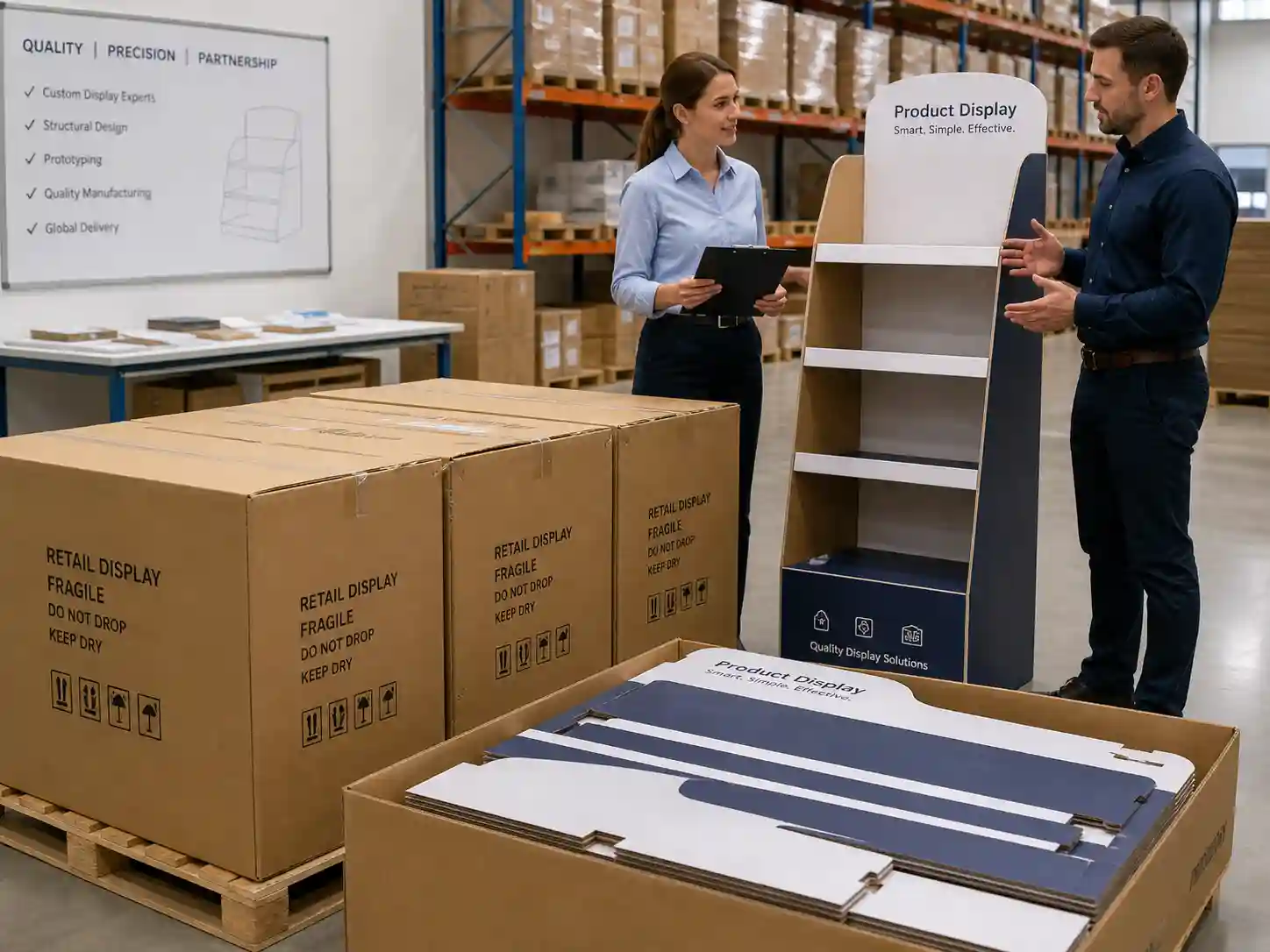
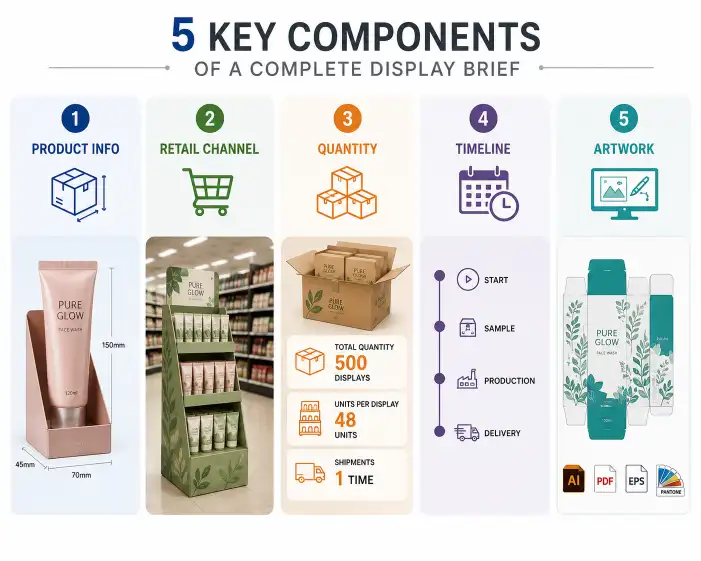
Prepare these details when possible:
-
Product size and weight
Include the dimensions and weight of each product unit. -
Display type or reference image
Share whether you need a PDQ display, counter display, sidekick display, peg hook display, floor display, pallet display, or dump bin display. -
Product quantity per display
This helps calculate shelf load, hook layout, tray size, and carton packing. -
Retail channel
Mention supermarket, chain store, convenience store, club store, trade show, or promotional event. -
Printing artwork
Send artwork files, brand guidelines, or a rough layout if available. -
Order quantity
Share estimated display quantity for sampling and bulk production planning. -
Packing method
Confirm whether displays will ship flat, semi-assembled, or with products. -
Delivery time
Give the target in-store date or required shipping date.
With these details, the supplier can give better advice. The quote becomes more useful.
The Right Cardboard Display Supplier Helps You Reduce Risk
The right cardboard display supplier is not always the lowest-price option. It is the supplier that understands your product, retail channel, structure requirements, printing needs, packing method, and delivery pressure.
For B2B buyers, a strong fit usually has three qualities: practical engineering, stable production control, and clear communication. They should help you check the display before it reaches the store.
That includes product fit, shelf strength, artwork position, material choice, assembly method, flat packing, export carton protection, and QC before shipment.
When your team is preparing a retail promotion, product launch, or chain store display program, share the key project details early. A practical supplier can then suggest the right structure, sample path, material plan, and production schedule.
For project discussions, buyers can contact Leader Display project support or explore custom cardboard display solutions to plan the next cardboard display project with clearer technical direction.