A dump bin display can create fast retail movement, but it can also become messy fast. That usually happens when the display is easy to launch and hard to refill. The result is familiar: uneven stock, poor product facing, slower restocking, and a unit that loses selling power before the promotion is over.
From a cardboard display supplier perspective, easy refill is one of the clearest signs of a strong retail design. A dump bin display should not only look good when fully loaded. It should also stay easy for retailers to restock after real customer traffic begins. This guide explains what makes that possible and what B2B buyers should check before approving the job.
The Real Test Starts After the First Sales
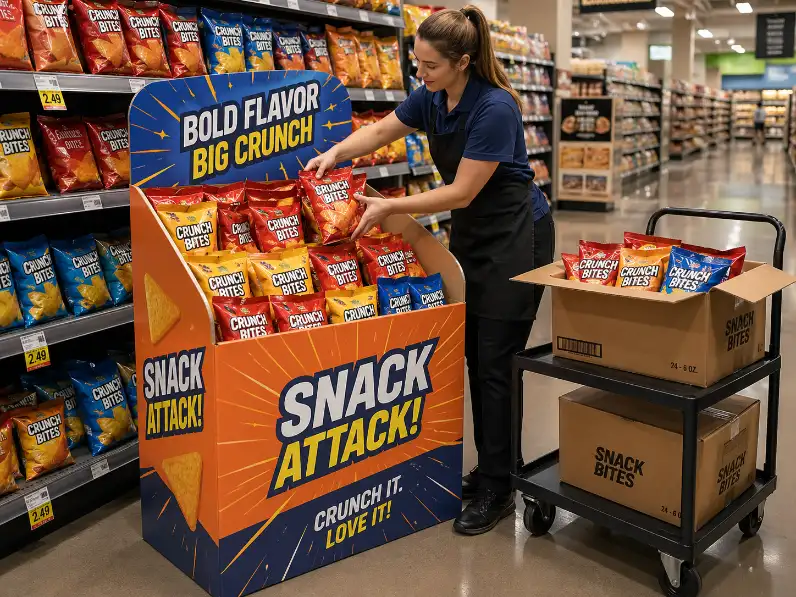
A dump bin display is easy to admire on launch day. It is full. The product block looks strong. The graphics feel clean. Then the first busy sales period starts. One SKU drops faster than the others. Shoppers move products around. Store staff refill the unit quickly between other tasks. That is when weak dump bin design begins to show.
Retailers do not judge the display only by how it looks when the supplier presents it. They judge it by how easy it is to bring back to a clean, sellable condition after repeated handling. That is the difference between a display that helps the store and a display that becomes one more task.
If you want the broader display context first, our cardboard display category and our article on what a dump bin display is are the best starting points before you focus on refill performance alone.
Easy Refill Starts With the Right Product Mix
The first refill decision is not structural. It is product-based. Some products refill cleanly because they are compact, stable, and easy to drop back into the bin without disrupting the rest of the stock. Other products twist, tip, interlock, or create awkward empty pockets as soon as the first layer is disturbed.
That is why dump bins usually work better with products that are easy to browse and easy to replace. Individually wrapped snacks, candy, sachets, pet treats, small impulse goods, and simple promotional packs often refill more cleanly than fragile, bulky, or irregular products. The less correction a store employee needs to make after adding new stock, the stronger the display stays over time.
In our experience, the best dump bin display projects begin with one blunt question: can this product be dropped back into the bin quickly without creating visual disorder? If the answer is weak, the refill problem has already started before the first carton ships.
Bin Depth Matters More Than Buyers Expect
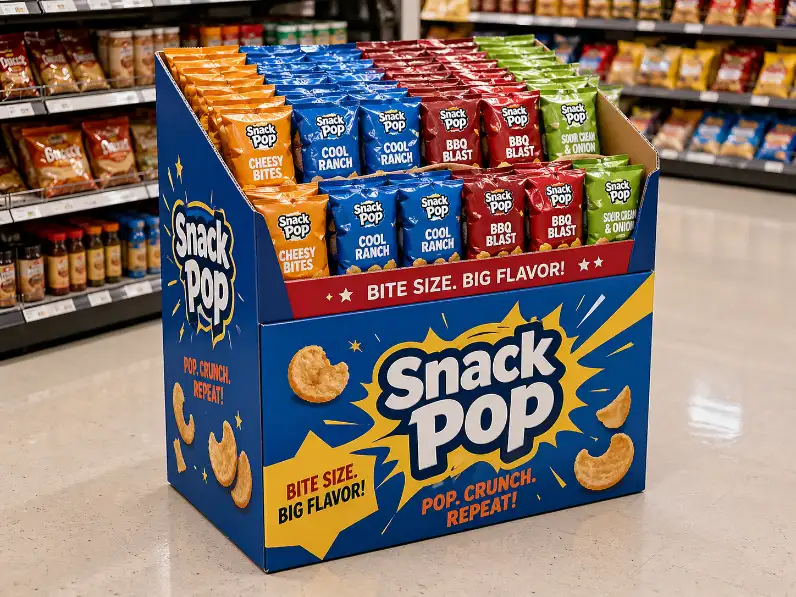
Many refill problems come from the bin itself, not the product. A dump bin that is too deep may look generous on paper, but it often slows restocking because the staff member has to reach too far, reposition products by hand, or pull hidden stock forward to restore the front look. A bin that is too shallow creates the opposite problem. It loses volume presence too fast and forces more frequent refill.
The right depth should match both product size and hand movement. That matters. Easy replenishment is not only about how much stock the display can hold. It is about how easily the stock can be restored without wasting time or breaking visual order.
This is where a good supplier usually sounds different. A better cardboard display manufacturer will talk about reach, stock behavior, and retail handling, not only about capacity. That is stronger thinking.
The Best Dump Bin Display Usually Refills Without Re-Sorting Every Time
A weak dump bin display often needs too much correction after refill. Products go in, but the visual block does not recover. Staff then have to sort, rotate, face, and rebalance the unit by hand. That slows the job and makes the display harder to maintain across multiple stores.
A stronger dump bin display usually avoids that problem by keeping the assortment simple and the pack behavior predictable. Fewer SKUs often help. Similar pack sizes help. Clear grouping helps. When the product mix is too wide or the pack shapes vary too much, the bin turns into a visual pile instead of a selling display.
If assortment width is still under review, our SKU planning guide is the best next internal page to read before you lock the dump bin layout.
Front-Facing Graphics Should Help Refill, Not Only Sell
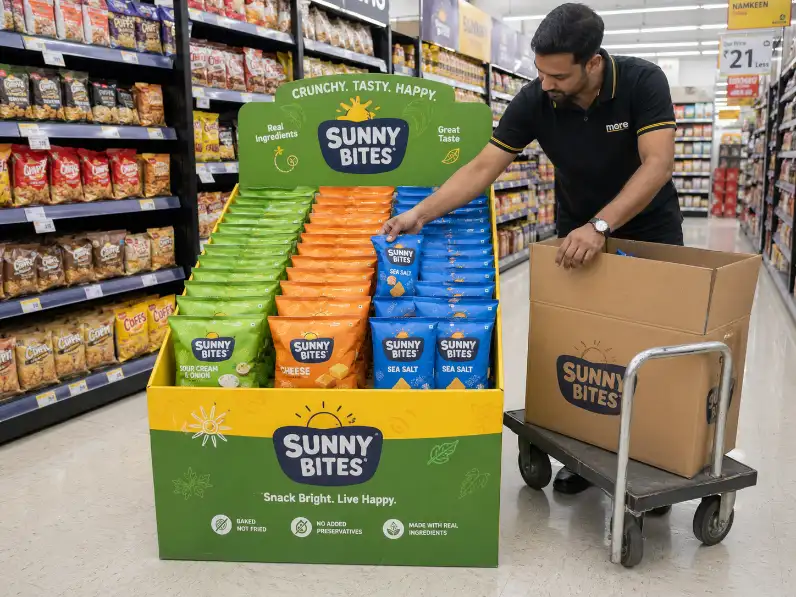
Many teams treat the front panel and bin walls as branding space only. That is not enough. Good dump bin graphics also support refill by making the intended product family, value message, and visual block easier to restore.
This is especially important in high-traffic areas where the bin can lose order fast. If the graphics are too busy, the product category is harder to read. If the front message is too weak, the staff member has less visual guidance for what the finished refill state should look like. Strong refill-friendly graphics do not have to be loud. They have to be clear.
A cleaner visual system also helps when the display is partly depleted. The products may move unevenly, but the bin should still look intentional. That is easier when the display uses simple hierarchy instead of crowding every panel with messages.
For a broader look at how structure and visual order work together, our easy refill guide connects these same ideas across other display formats too.
Store Staff Need a Refill Pattern They Can Read in Seconds
In a real store, refill happens fast. Staff do not want a display that requires interpretation every time. The best dump bin display usually makes the refill pattern obvious. One product family. One pack type. One clear logic. If the display depends on perfect sorting to stay strong, it is usually asking too much from the store.
This is why dump bins often work best for simple retail stories. Value packs. Seasonal snacks. Promotional treats. Grab-and-go extras. The product should be easy to understand. The refill should be easy to repeat. The finished look should be easy to recover.
That principle also aligns with broader retail-ready handling logic. FEFCO repeatedly emphasizes easy identification, easy shopper access, and easy replenishment in corrugated retail environments. A dump bin display follows the same store logic when the project is planned well. See FEFCO Shelf Ready Packaging.
Partial Sell-Through Is the Refill Test Buyers Should Never Skip
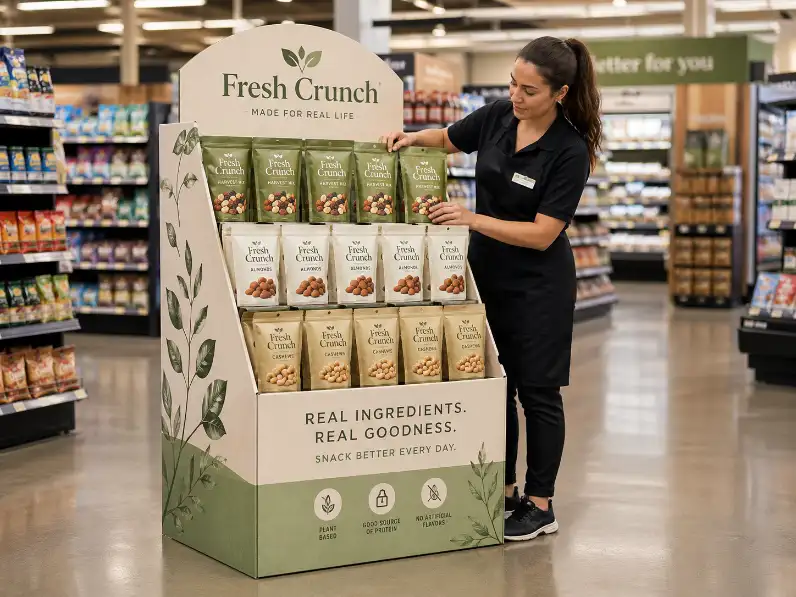
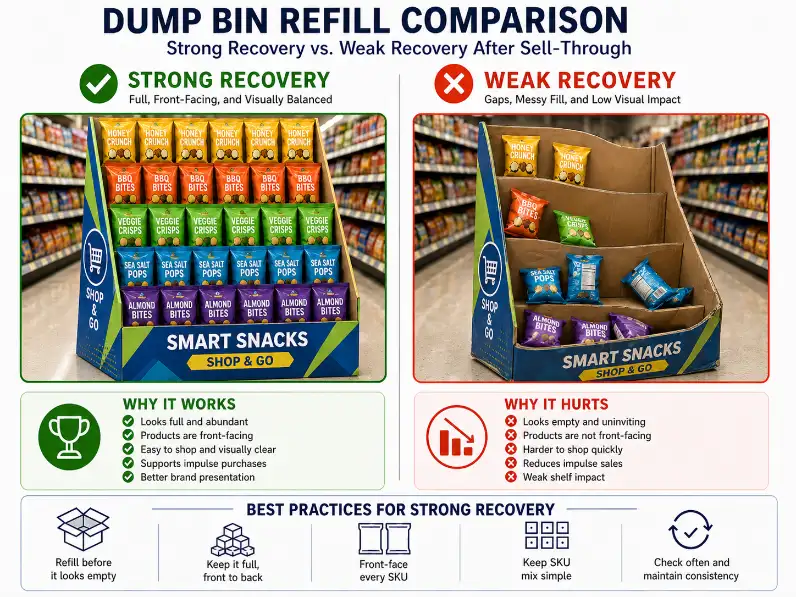
A dump bin display should never be judged only when full. Remove one-third of the stock. Then step back. Does the unit still look active? Does the product block still make sense? Can a store employee rebuild the visual shape quickly by adding new stock from the top without sorting the whole bin again?
This matters because some dump bins look strong only when every product is perfectly loaded. Once the first fast-selling items disappear, the display starts to look hollow, mixed, or neglected. That is not only a visual problem. It is a refill design problem.
A stronger design protects the selling look after partial depletion. The bin should still feel full enough to invite browsing, and the refill pattern should still feel obvious. If the unit needs too much rescue after early sales, the design is weaker than it looked in the approval stage.
If you are reviewing this during the sample phase, our display sample approval guide is the right internal reference before the project moves into production.
What Buyers Should Compare First in a Dump Bin Refill Review
When you compare two dump bin display concepts, do not start with graphics. Start with refill behavior. Load real products. Remove part of the stock. Add new stock quickly. Then compare which design recovers faster and stays cleaner with less manual correction.
The stronger dump bin display is usually the one that supports simple hand movement, clearer volume recovery, easier front-facing balance, and less reliance on store staff to rebuild the layout by hand. That design may look simpler. It is often the more commercial design because it protects the display longer in real store use.
| Refill Check | What a Strong Dump Bin Display Usually Shows | What Should Make Buyers Careful |
|---|---|---|
| Product mix | Stock drops in cleanly and stays stable | Products twist, jam, or create empty pockets |
| Bin depth | Easy reach and good volume balance | Too deep to restore quickly or too shallow to stay full |
| SKU behavior | Simple assortment keeps the bin readable | Too many pack types create visual disorder |
| Graphics support | Front panel helps restore the visual block | Busy design adds clutter during refill |
| Partial sell-through | The display still looks active after stock drops | The unit looks empty or broken too early |
What Strong Retailers and Strong Suppliers Usually Agree On
Retailers want displays that do not slow the aisle down. Suppliers want displays that survive real use without damaging brand presentation. When both sides agree, the refill logic usually becomes simple: easier reach, cleaner product mix, clearer visual recovery, and faster restocking with less correction.
That is also why corrugated display projects work best when the supplier thinks beyond production. A stronger retail display supplier usually talks about product behavior, restocking rhythm, and store handling before the job is approved. That is a better sign than a dump bin that only looks good in a studio image.
For broader corrugated context, the Fibre Box Association overview of corrugated is also useful when you want the larger retail and transport background.
Conclusion
What makes a dump bin display easy for retailers to refill? In most projects, the answer comes down to five things: the right product mix, the right bin depth, a cleaner SKU plan, graphics that support visual recovery, and a layout that still looks active after partial sell-through. Build those refill checks into the sample stage, and the display will stay stronger, cleaner, and easier to manage once the real selling begins. Then test the refill, not only the launch look.
For help reviewing a dump bin display concept, sample, or refill layout, please contact us.
FAQ
Why is refill performance important for a dump bin display?
Because a bin that is hard to restock loses visual order quickly and stops selling as strongly after the first wave of store traffic.
What products usually refill best in a dump bin display?
Compact, stable, easy-to-browse products such as snacks, candy, sachets, and pet treats usually refill more cleanly.
Does bin depth affect refill speed?
Yes. A bin that is too deep or too shallow can slow restocking and weaken the visual result.
Should buyers test partial sell-through before approval?
Yes. A dump bin should still look active and easy to recover after part of the stock is gone.
Can graphics help retailers refill the dump bin faster?
Yes. Clear graphics and strong front-panel cues make the intended finished look easier to restore.
What is the biggest refill mistake in dump bin planning?
The biggest mistake is approving the full launch look without testing how the bin behaves after uneven sales and fast store restocking.