A cardboard display may look great in a rendering, but that does not mean it will work well in a real store. Retailers care about setup just as much as appearance. If a display takes too long to assemble, needs too much explanation, or feels unstable during installation, it can quickly become a problem instead of a selling tool.
That is why setup should be treated as part of the design strategy, not as an afterthought. For brands, retailers, and importers, an easy to set up cardboard display usually performs better because it reduces store friction, speeds up execution, and helps the unit look right from the beginning.
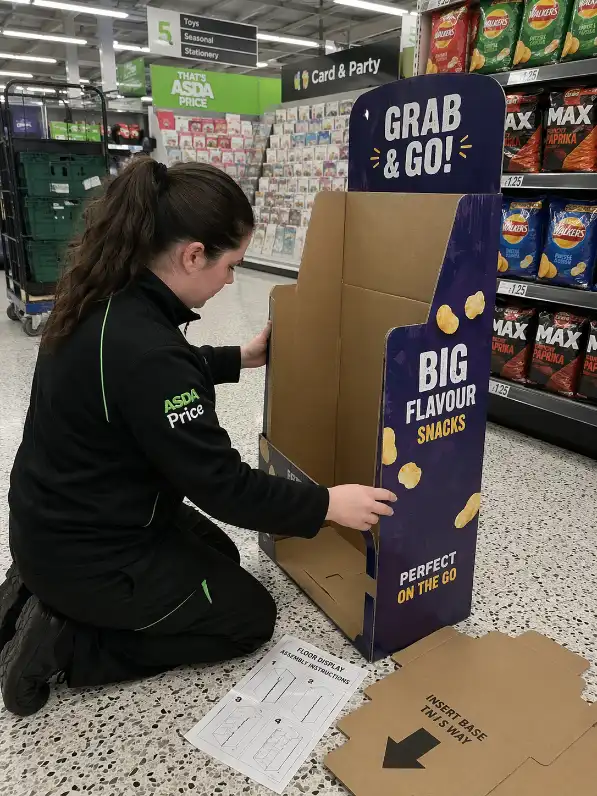
Setup Speed Matters More Than Many Buyers Expect
Retail staff usually do not have much time to interpret a complicated structure. They want a display that opens, folds, locks, and stands with clear logic. If setup is slow or confusing, the display may be assembled incorrectly, left in the stockroom, or placed on the floor with missing parts and weak presentation.
That is why setup performance affects more than labor time. It also affects how consistently your display appears across stores.
The Best Displays Usually Require Fewer Decisions
A display becomes easier to set up when the structure asks the installer to make fewer choices. Good setup design reduces hesitation. The fold direction feels obvious. The tabs line up naturally. The base forms quickly. The shelves lock where they are supposed to lock.
In other words, easy setup usually comes from clear structural logic, not from adding more instructions.
What Easy Setup Usually Looks Like
| Setup Factor | What Good Looks Like | What Causes Problems |
|---|---|---|
| Fold direction | Natural, visible, and easy to follow | Confusing panel sequence |
| Base assembly | Locks quickly and feels stable | Weak bottom structure or hidden tabs |
| Shelf installation | Shelves slide or lock into place clearly | Shelves require force or guesswork |
| Part count | Minimal loose parts | Too many separate components |
| Instructions | Simple and visual if needed | Long text-based explanation |
| Finished stability | Display stands correctly after setup | Wobble, tilt, or poor balance |
If the Display Needs Tools, It Is Usually Already Less Retail-Friendly
In many retail programs, the best cardboard displays can be assembled without tools. That does not mean every project must be extremely simple, but it does mean store staff should not need extra equipment just to make the display usable. If the display needs too much force, added fastening, or unusual handling, the store experience becomes weaker.
For most cardboard retail displays, setup should feel quick enough that a normal store employee can manage it without technical support.
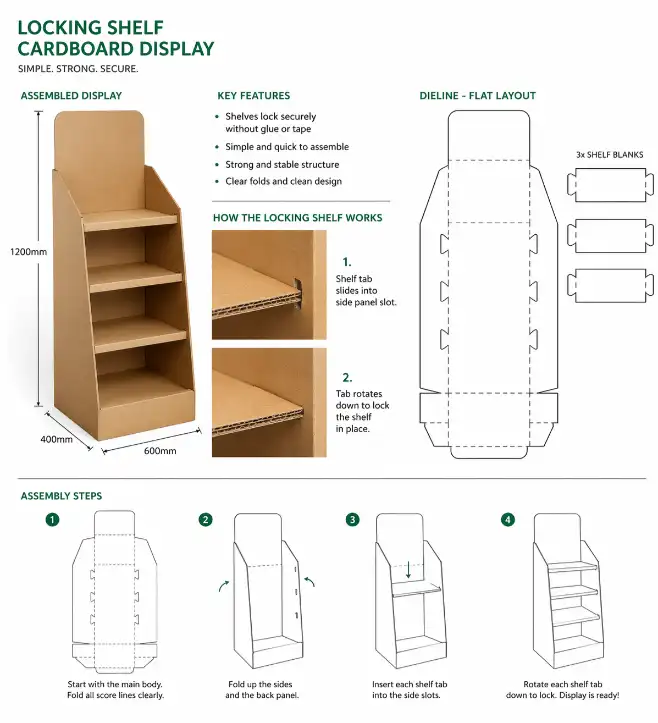
Stability During Setup Is Just As Important As Stability After Setup
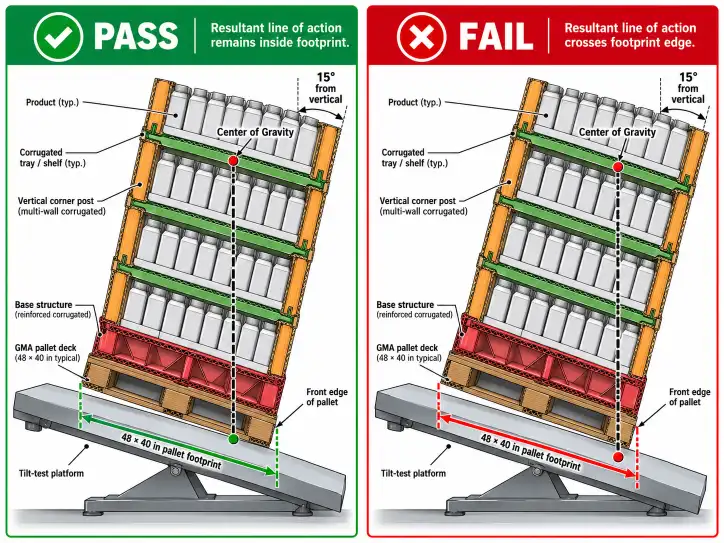
Some displays only look stable once they are fully loaded, but they feel awkward during assembly. That can cause damage or frustration before the products are even placed. A good design should stay manageable at every step: base formation, shelf insertion, header attachment, and final standing position.
This matters especially for larger floor displays, where poor balance during setup can create errors even if the finished structure looks acceptable later. If you are reviewing heavier units, our corrugated grades guide can help you evaluate structure and material together.
Too Many Parts Usually Mean More Setup Mistakes
Loose headers, extra inserts, separate braces, and too many detachable parts often create more opportunities for error. That does not mean modular design is always wrong, but it does mean buyers should ask whether every extra part is truly necessary.
Retailers usually prefer displays that keep the number of handling steps low. The more pieces there are, the more chances the display will be assembled incorrectly or incompletely.
Good Instructions Should Support the Structure, Not Rescue It
Instructions are useful, but they should not be expected to solve a badly designed setup process. If the display only works when someone studies a long instruction sheet, the setup logic is probably too complex. The best instructions are short, visual, and used as confirmation, not as rescue.
This is one reason assembly should be tested in the sample stage. Our article on what a cardboard display sample should prove before approval is a useful next read if you want to review this process more carefully.
Retailers Care About Setup Because It Affects Rollout Consistency
In a multi-store project, small setup difficulties become bigger problems very quickly. A display that takes only “a little longer” in one store may become a rollout issue across dozens or hundreds of locations. Easy setup helps brands protect not only labor efficiency, but also consistency of presentation.
This is especially important in promotions, seasonal launches, and high-volume retail programs where timing matters.
Questions Buyers Should Ask Before Approving a Setup Design
- Can one store employee assemble the display without tools?
- Does the fold and locking sequence feel obvious?
- Are there too many loose components?
- Does the display remain stable during assembly?
- Will different stores set it up the same way?
- Are visual instructions enough to support the process?
How Easy Setup Connects to Cost and Shipping
Easy setup is not separate from commercial logic. It often connects to packing, part count, assembly instructions, and flat-pack shipping efficiency. A smarter setup design may reduce labor at destination and improve rollout quality, even if the display is not the absolute cheapest option at first glance.
If you are comparing total project value, our cost guide, lead time guide, and export packaging guide can help you review the broader picture.
Useful External References
For retail-ready logic, FEFCO’s guidance on shelf-ready packaging is useful because it emphasizes easy identification, easy opening, and easy shelf placement, all of which connect closely to setup efficiency in store environments. See FEFCO Shelf Ready Packaging. For broader corrugated background and why it works well in retail handling and transport, the Fibre Box Association overview of corrugated is also useful.
Conclusion
What makes a cardboard display easy for retailers to set up? In most cases, it comes down to clear fold logic, low part count, simple shelf locking, stable structure, and instructions that support rather than rescue the design. Buyers who think about setup early usually get better execution, faster rollout, and more consistent retail results.
If you want help developing a cardboard display that is easier for retailers to assemble and launch, feel free to contact us.
FAQ
Why is easy setup important for cardboard displays?
Because difficult setup slows store execution, increases mistakes, and can weaken the final retail presentation.
Should a cardboard display require tools?
In many retail projects, no. Tool-free assembly is usually more practical for store staff.
What causes setup problems most often?
Confusing fold logic, too many loose parts, weak locking points, and unstable structure are common causes.
Can instructions solve a difficult display design?
Only to a limited extent. Instructions help, but the structure itself still needs to feel clear and intuitive.
Should setup be tested before mass production?
Yes. Buyers should check assembly performance during the sample stage to avoid rollout problems later.
Does easy setup also help with commercial performance?
Yes. Faster and more consistent setup often improves rollout quality, labor efficiency, and store-level execution.