If you are a baby product brand looking to get your diapers, wipes, or formula into Costco, you have probably read the standard Costco pallet display requirements. But baby products are a unique challenge. Diaper boxes are huge but lightweight. Formula cans are small but heavy. Baby food pouches are delicate and easily crushed. And parents inspect baby product packaging more closely than any other category — any damage or dirt can destroy trust. The display must also pass ISTA 3E transit testing without damaging the packaging that parents rely on. So if you are planning to sell baby products at Costco, what kind of display do you need, and how do you keep everything safe?
1. The Size and Weight Challenge: Baby Products Are All Over the Map
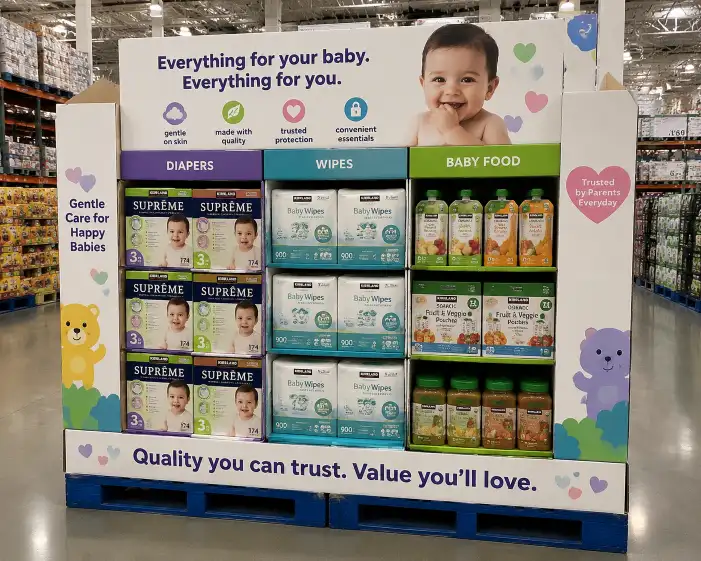
Baby products range from tiny food pouches (0.1 pound) to heavy formula cans (2 to 3 pounds) to large diaper boxes (3 to 5 pounds). You cannot design one tray that works for all of them. The key is to separate products by size and weight. Formula cans go on the bottom with the strongest trays. Baby wipes and lotion bottles go in the middle. Baby food pouches and snacks go on the top layer where they will not be crushed. Diaper boxes are large and need their own section with compartments sized to each box.
2. Formula Cans Need the Strongest Protection
Formula cans are heavy and dense. Each can needs an individual compartment that prevents movement during transit. If the cans can shift, they will dent each other. Use BC flute double-wall corrugated with 44 ECT minimum. The compartment depth should be at least half the can height. A snug fit is critical — too loose and the cans will rattle, too tight and they will be hard to load.
3. Baby Food Pouches: The Most Vulnerable Product
Baby food pouches are the most fragile item in any baby display. They must be placed on the top 1 to 2 layers only. Never put formula cans or diaper boxes above them. Use individual compartments or cross-lock dividers to keep each pouch secure. Add a corrugated divider pad between layers for extra protection. One crushed pouch can make the entire display look damaged.
4. Diaper Boxes: Big but Not Heavy
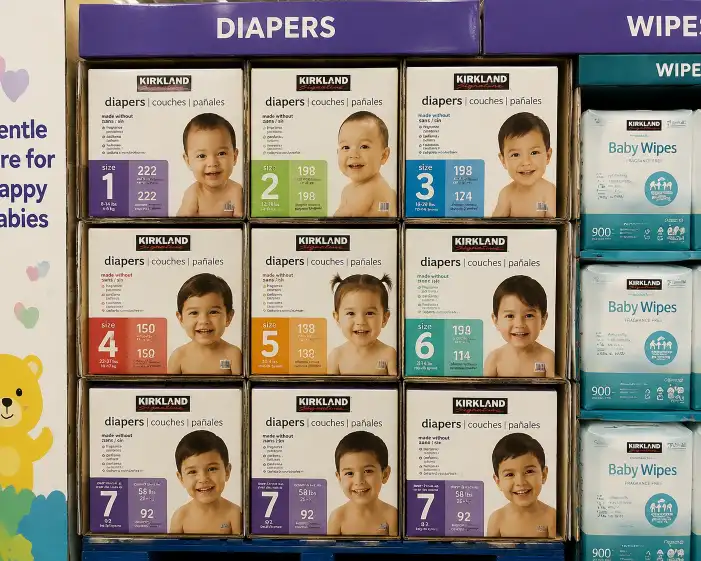
Diaper boxes are an interesting challenge — they take up a lot of space but do not add much weight. A full pallet of diaper boxes may only hold 24 to 48 units across 3 to 4 layers. Each box needs an individual compartment sized to its specific dimensions. B flute or C flute single-wall is sufficient since the boxes are lightweight. The bigger concern is keeping the boxes clean and undamaged — parents will notice scuffed packaging.
5. Packaging That Parents Trust Must Stay Perfect
Parents at Costco inspect baby product packaging closely. Any scuff, dent, or dirt spot can make them choose a different brand. Polybag food items for extra hygiene protection. Use dust covers on the display during storage. Make sure all compartments are clean and free of dust before loading. The packaging must look as good on the sales floor as it did in the factory.
6. Material Reference: What to Use for Each Product
| Product Type | Material Grade | Why |
|---|---|---|
| Formula cans | BC flute double-wall, 44 ECT | Heavy weight, must prevent denting |
| Diaper boxes, wipes | B or C flute single-wall | Lightweight, standard protection |
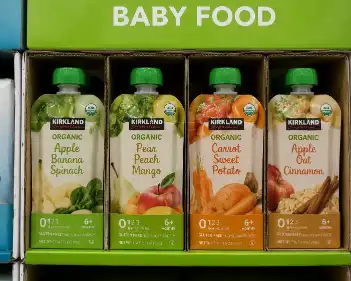
| Baby food pouches | E flute single-wall | Very light, just needs containment |
Using graduated material saves cost. You do not need heavy-duty board for lightweight pouches.
7. Labeling: Parents Shop by Age and Size
Baby products are purchased by age and size — newborn, stage 1, stage 2, size 3, and so on. Every compartment or row should have a clear label showing the age range or size. Use large, readable text. Include a simple age guide on the header sign. This helps parents find the right product quickly and reduces the time they spend browsing. A confused parent will move on to a brand they already know.
8. Printing: Building Trust Through Graphics
Parents need to trust the brands they buy for their babies. Litho-laminated printing gives you the quality to build this trust. For organic and natural baby brands, matte lamination creates a clean, natural look. For mainstream brands, gloss lamination with bright, cheerful colors works well. The right printing can make your product look safer and more reliable.
9. ISTA 3E Testing: What to Expect
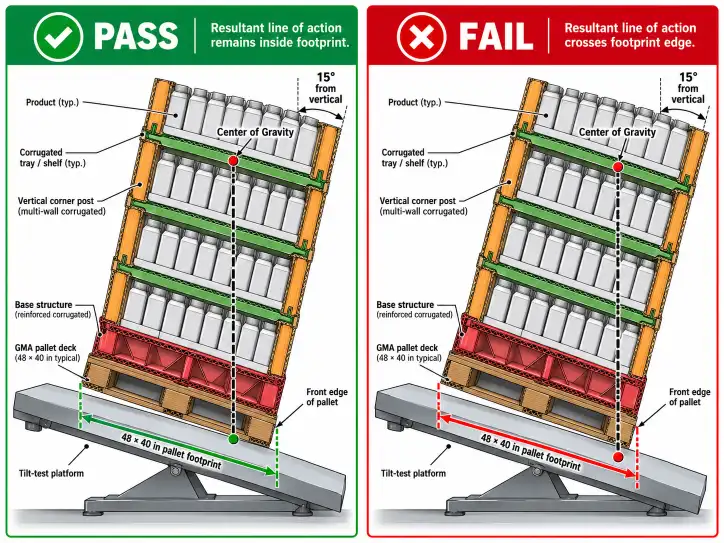
Costco requires ISTA 3E testing for all pallet displays. For baby products, the most common failures are diaper box shifting, baby food pouch crushing, and formula can denting. Always test with actual products in their real packaging. A display that passes ISTA testing before production is far less likely to arrive with damaged products. Budget 2 to 3 weeks for testing.
10. Timeline: Planning Your Baby Product Display
The typical lead time for a Costco baby product display is 8 to 12 weeks. Baby products are year-round, but back-to-school and holiday seasons see increased traffic. Plan your program at least 3 to 4 months in advance. For holiday gift set programs, start production by August.
FAQ
How should I arrange different baby products by weight in a Costco display?
Formula cans go on the bottom layer with double-wall BC flute trays. Baby wipes and lotion bottles go in the middle. Baby food pouches and snacks go on the top layer to prevent crushing. Diaper boxes need their own section with individual compartments.
What material grade is needed for baby formula cans?
Formula cans need BC flute double-wall corrugated with 44 ECT minimum. Each can needs an individual compartment with cavity depth at least half the can height. A snug fit prevents denting during transit.
How do I protect baby food pouches from being crushed?
Place pouches on the top 1 to 2 layers only. Never put formula cans or diaper boxes above them. Use individual compartments or cross-lock dividers. Add a corrugated divider pad between layers for extra protection.
What label information is needed for baby product displays?
Every compartment or row should show the age range, size, or stage clearly. Include a simple age guide on the header sign. Parents need to find the right product quickly.
What ISTA testing issues are common for baby product displays?
The most common failures are diaper box shifting, baby food pouch crushing, and formula can denting. Test with actual products in their real packaging.
Conclusion
Getting your baby products into Costco with the right display comes down to protecting the packaging that parents trust. Separate products by weight, use the right material grade for each type, and keep everything clean and undamaged. The brands that succeed are the ones that take packaging quality seriously. For more information on baby product safety standards, refer to the Consumer Product Safety Commission (CPSC) and FDA infant formula requirements.