Candy sells differently at club stores than at supermarkets. At Costco and Sam's Club, candy is not an impulse buy at the checkout — it is a planned purchase sold in bulk packs, variety boxes, and seasonal gift-size containers. A club store candy display needs to make the product look like a bulk value while still fitting the club store's pallet-based retail model.
For confectionery brands, the display design depends heavily on the season. Halloween, Christmas, Valentine's Day, and Easter drive the majority of club store candy sales. The display structure must be flexible enough to work for multiple seasonal promotions while staying within Costco and Sam's Club compliance requirements.
This guide covers pallet display and PDQ display options for candy at club stores — from seasonal gift packs to bulk variety boxes to year-round candy programs.
How Candy Displays Are Different at Club Stores
Candy at club stores is not the same as candy at supermarkets. The buying behavior, packaging format, and display requirements all shift when moving from a grocery aisle to a warehouse club floor.
Club Store Candy Characteristics
| Aspect | Supermarket Candy | Club Store Candy |
|---|---|---|
| Purchase type | Impulse (checkout aisle) | Planned (bulk aisle) |
| Pack size | Single bars, small bags | Bulk packs, variety boxes, gift tins |
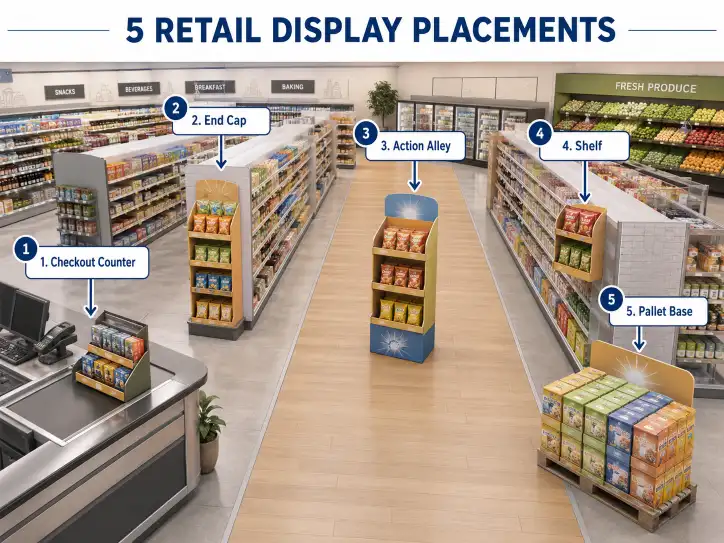
| Display location | Checkout, endcap | Pallet floor position, promotional aisle |
| Display format | PDQ tray, sidekick, counter | Full pallet display, half pallet, PDQ pallet |
| Seasonality | Year-round + seasonal peaks | Heavily seasonal (70%+ of sales) |
| Customer expectation | Quick grab | Bulk value perception |
What This Means for Display Design
- Candy displays must look like a value — The packaging and display graphics need to communicate bulk savings
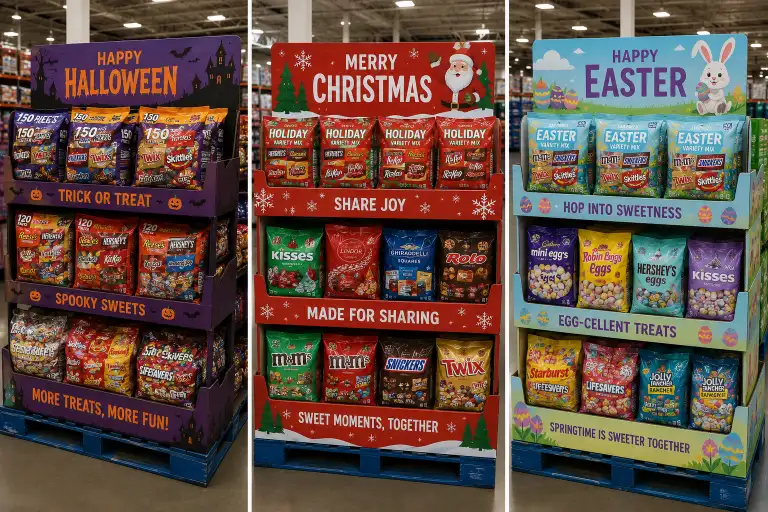
- Seasonal flexibility is critical — A Halloween candy display and an Easter candy display may use the same pallet structure but need different graphics and tray configurations
- Gift packs need tray slots that fit — Candy gift boxes, tins, and bags come in non-standard sizes. Custom tray slots are often required
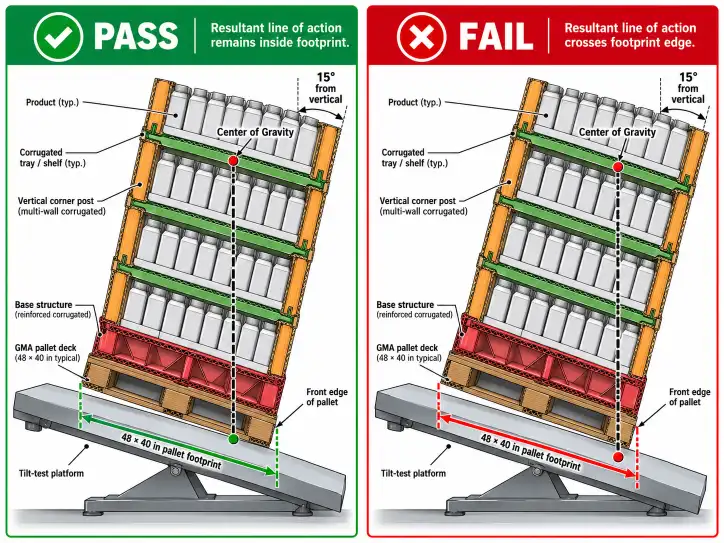
- Light weight means stability must be engineered — Candy is lightweight per unit. A display that is two-thirds empty can become unstable if not designed for partial sell-through
For a full overview of club store display options, see our COSTCO DISPLAYS product page.
Pallet Display Options for Candy
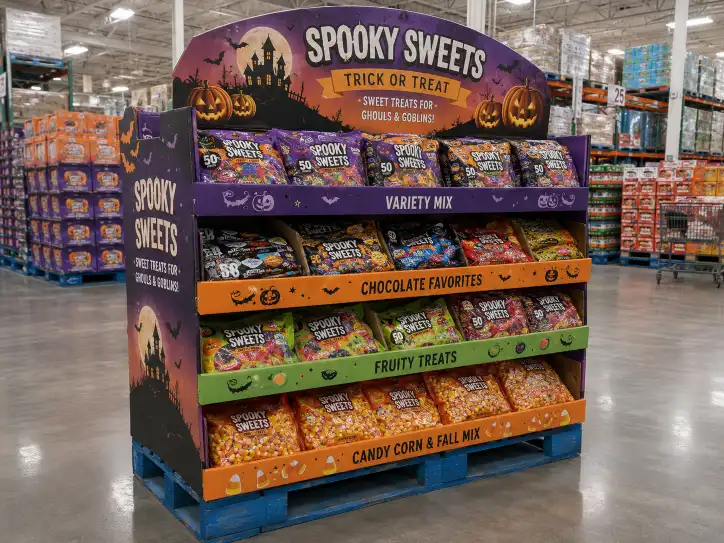
Full and half pallet displays are the most common formats for candy at club stores. The choice depends on the product volume, season, and store position.
Full Pallet Displays
| Use Case | Best For | Typical Configuration |
|---|---|---|
| Holiday gift packs | Christmas, Valentine's, Easter | 3–4 tiers of variety boxes, gift tins |
| Bulk bagged candy | Halloween candy bags, everyday snacks | 2–3 tiers of large bags |
| Multi-brand variety | Assorted candy from one supplier | Mixed PDQ trays on one pallet |
| Year-round program | Candy sold in the same position all year | Standard tray display with reorder capability |
Half Pallet Displays
| Use Case | Best For | Typical Configuration |
|---|---|---|
| Seasonal endcap | 6-week seasonal promotions | 48×20 half pallet, 2–3 tiers |
| New product trial | Testing a new candy line | 24×40 half pallet, compact footprint |
| Action alley promotion | Mid-aisle seasonal candy | 48×20 half pallet with tall header card |
Tray Configuration for Candy Pallet Displays
| Candy Type | Tray Type | Tiers | Notes |
|---|---|---|---|
| Gift boxes (chocolate, assorted) | Standard open tray — boxes are rigid and stack well | 3–4 | Ensure box height is visible above tray edge |
| Bagged candy (Halloween, bulk) | Wide shallow tray — bags need easy grab access | 2–3 | Bag height determines tray depth |
| Candy tins (popcorn, cookies) | Tight fit tray — tins are heavy and need reinforcement | 3–4 | Test tin-to-tin contact to prevent denting |
| Variety packs (mixed) | Divided tray — separate compartments per variety | 2–3 | Dividers must be tall enough to keep varieties separate |
For structural design details, see our PALLET DISPLAY product page.
PDQ Display Options for Candy
PDQ (Pretty Darn Quick) displays are popular for candy at club stores because they reduce setup time — critical for seasonal promotions where multiple stores need to be set up on the same day.
PDQ Pallet Displays for Candy
A PDQ pallet display combines a GMA pallet base with PDQ trays. The trays are pre-filled at the factory and opened on the sales floor by tearing off a perforated panel.
| Candy PDQ Type | Best For | Opening Feature |
|---|---|---|
| Full-front tear off | Bagged candy, gift packs | Entire front panel tears off |
| Side tear strip | Variety boxes, tins | Strips on both sides, front panel drops down |
| Top-opening + front cut-out | Tubs and canisters | Top removed, front window for visibility |
| Split tray | Two-flavor combos | Tray splits in half, each half holds a flavor |
PDQ Trays (Non-Pallet)
For smaller candy programs, PDQ trays placed on existing shelves or countertops:
| Type | Best For | Placement |
|---|---|---|
| PDQ tray | Single-flavor candy pouches | Shelf, counter, sidekick |
| Stackable PDQ tray | Multiple flavors stacked | Floor, shelf, endcap |
| Sidekick PDQ | Hanging display on shelf edge | Side of pallet display or shelf |
| Counter PDQ | Small candy at checkout | Membership counter, exit |
When to Use PDQ vs Standard Tray
| Factor | PDQ Recommended | Standard Tray Recommended |
|---|---|---|
| Store count | 100+ stores (labor savings matter) | Under 50 stores |
| Season | Tight launch window (Halloween, Christmas) | Year-round program |
| Product mix | Multi-SKU or multi-flavor | Single SKU, uniform boxes |
| Budget | Slightly higher per-unit cost acceptable | Cost-sensitive program |
Seasonal Candy Displays: Planning the Calendar
Seasonal candy drives the majority of club store candy sales. Timing the display design and production to match the seasonal calendar is critical.
Major Candy Seasons at Club Stores
| Season | Retail Window | Display Ship Date | Display Theme |
|---|---|---|---|
| Halloween | September 15 – October 31 | August | Bulk candy bags, variety packs |
| Christmas | November 1 – December 25 | September–October | Gift boxes, tins, holiday variety |
| Valentine's Day | January 15 – February 14 | December | Heart-shaped boxes, gift packs |
| Easter | March 1 – Easter weekend | January–February | Egg-shaped tins, spring variety |
| Back to School | August | June–July | Lunchbox snacks, mini packs |
Design Tips Per Season
Halloween candy displays are the largest candy display programs at club stores. Focus on:
- Large bag capacity — customers buy in volume
- Bright orange and purple graphics
- Sturdy trays that can hold heavy bag loads
- Quick-setup PDQ features for fast store placement
Christmas candy displays emphasize gift-giving. Focus on:
- Gift box and tin compatibility
- Festive red and green printing with foil accents
- Header cards with holiday messaging
- Tiered display to show multiple gift options
Valentine's Day candy displays are smaller but higher-value. Focus on:
- Premium uncoated or laminated corrugated
- Heart-shaped or curved tray designs (if the budget allows)
- Clear visibility of gift box fronts
- Lower tray walls to show product without obstruction
Easter candy displays prioritize seasonal shapes and colors. Focus on:
- Pastel color printing
- Tray designs that fit egg-shaped or novelty packaging
- Shorter display height (60 in max) for endcap placement
Lead Time Planning
For seasonal candy displays, production must start 3–4 months before the retail window. This allows time for:
- Sample and structural testing (4–6 weeks)
- Bulk production (3–4 weeks)
- Pre-filled assembly (1–2 weeks)
- Sea freight (3–4 weeks from China to North America)
Missing the seasonal window means the product arrives after the holiday has passed.
Tray Design for Different Candy Packaging
Candy comes in many packaging formats. Each requires a different tray design.
| Candy Packaging | Tray Design | Tray Wall Height | Special Considerations |
|---|---|---|---|
| Stand-up pouches (candy bags) | Wide, shallow tray | 4–6 in | Full front opening for PDQ. Customer needs to reach in easily |
| Gift boxes (chocolate, assorted) | Standard open tray | 3–4 in (boxes are tall) | Box height must be at least 60% above tray edge for visibility |
| Candy tins (metal) | Tight fit tray with padding | 4–5 in | Prevent tin-to-tin contact to avoid denting |
| Tub and canisters | Open tray with low walls | 2–3 in | Customer needs to see the full label on the tub |
| Variety packs (boxed) | Divided tray | Matches box height | Dividers prevent boxes from sliding into each other |
| Bulk bags (Halloween) | Deep wide tray | 6–8 in | Bag corners may need floor reinforcement. Bag weight up to 5 lbs |
| Loose candy (single-serve) | Divided compartment tray | 3–4 in | Each compartment holds one candy type. Prevent mixing |
Shared Design Rules
- Candy is lightweight — B-flute board (ECT 28) is sufficient for most candy displays. Use C-flute only for displays with heavy tins or bulk bags
- Visual access is critical — Candy sells by appearance. Keep tray walls low enough that customers see the product
- Bright graphics help — Candy displays benefit from high-quality litho-lamination printing on tray exteriors and pallet skirts
- Test with real packaging — Candy packaging varies between brands. A box from one brand may be 0.5 in taller than a box from another brand
Printing and Graphics for Candy Displays
Candy displays rely more heavily on print quality than most other product categories. The display graphics often need to create a seasonal mood, communicate value, and make the product look appetizing.
Recommended Printing Methods
| Method | Best For | Quality |
|---|---|---|
| Litho-lamination | Premium seasonal displays, gift-oriented programs | Photo quality, full CMYK |
| Digital printing | Short-run seasonal programs, test launches | Full CMYK, photo quality |
| Flexography | Simple graphics, large text, cost-sensitive programs | 1–3 colors |
Pallet Skirt and Header Card
| Component | Recommendation for Candy |
|---|---|
| Pallet skirt | Highly recommended. Full-color seasonal graphics on all sides |
| Header card | Strongly recommended. Vertical banner above the display height |
| Tray printing | Full-color on the outer tray surface. Consider printing the top edge of each tray |
Visual Design Considerations
- Seasonal colors — Match the graphics to the season (orange/purple for Halloween, red/green for Christmas, pastels for Easter)
- Product photography — High-resolution product images on the display increase grab rate
- Value messaging — "Bulk Value," "Family Size," "Limited Time" drive club store candy purchases
- No barcodes on graphics — Keep all scannable barcodes on GS1-128 labels, not on printed display surfaces
For printing capabilities and options, see our PRODUCTION page.
Partial Sell-Through in Candy Displays
Candy displays experience uneven product removal driven by the season and product type.
Sell-Through Patterns
| Candy Type | Sell-Through Pattern | Display Challenge |
|---|---|---|
| Halloween bulk bags | Fast, even removal — customers take multiple bags | Low. Bags are similar size, removal is balanced |
| Gift boxes | Slow start, then concentrated removal near the holiday | High. Front boxes sell first, back boxes may be forgotten |
| Variety packs | Uneven — popular flavors sell out first | Medium. Remaining flavors look picked over |
| Candy tins | Steady but slow | Medium. Tins are heavy, may shift if not snug |
Design Strategies
| Strategy | How It Helps |
|---|---|
| Tapered display | Wider at the bottom, narrower at the top. Keeps the display stable as products sell |
| Face-forward loading | All products facing forward. Even when some are removed, the display still looks organized |
| Mixed tray depletion | If one SKU sells faster, mix slower sellers across multiple trays so depletion is balanced |
| Printed tray interiors | Colorful graphics on the inside of PDQ trays keep the display looking full even when products are removed |
Candy-Specific Testing
Test the candy display at:
- 30% depleted — Remove front-row products. Check if remaining products are still visible
- 50% depleted — Remove half the display. Check if the structure is still stable
- Popular flavor sold out — Remove all products of one flavor. Check if the remaining flavors still look organized
Buyer Checklist for Club Store Candy Displays
| Check Item | Status | Notes |
|---|---|---|
| Candy season confirmed | ☐ | Halloween, Christmas, Valentine's, Easter, or year-round |
| Display format chosen | ☐ | Full pallet, half pallet, or PDQ |
| Packaging type identified | ☐ | Bags, boxes, tins, tubs, or variety packs |
| Tray design matches packaging | ☐ | Test with actual candy packaging |
| Board grade selected | ☐ | B-flute for light candy, C-flute for heavy tins |
| Printing method chosen | ☐ | Litho-lamination or digital for seasonal color |
| Pallet skirt included | ☐ | Seasonal graphics on all sides |
| Header card designed | ☐ | Branded messaging above display height |
| Partial sell-through tested | ☐ | Test at 30%, 50%, popular flavor depleted |
| Seasonal lead time planned | ☐ | Production starts 3–4 months before retail window |
| Pre-filled assembly confirmed | ☐ | Barcode scanning during loading |
| Sample approved with real product | ☐ | Test with actual candy packaging |
Conclusion
A club store candy display must do more than hold product — it needs to create seasonal excitement, communicate bulk value, and fit the club store's pallet-based retail model. Whether you choose a full pallet display for Christmas gift boxes, a half pallet for Halloween endcaps, or PDQ trays for Valentine's Day promotions, the design starts with understanding how candy sells at club stores: in seasons, in bulk, and with strong visual appeal.
For B2B buyers in the confectionery industry, the key to success is planning early. Seasonal candy displays require production to start 3–4 months before the retail window. Missing the production window means missing the season entirely.
If you are planning a candy display project for Costco or Sam's Club, start with the COSTCO DISPLAYS product page or the PALLET DISPLAY product page. For printing and graphics support, see our PRODUCTION page.
FAQ
What is a club store candy display?
A club store candy display is a corrugated pallet or PDQ display designed for candy products at Costco and Sam's Club. It typically holds bulk bags, gift boxes, variety packs, or seasonal candy items.
What display format is best for seasonal candy?
Full pallet displays are best for major seasons like Halloween and Christmas. Half pallet displays work well for endcap seasonal positions. PDQ trays are good for smaller seasonal programs and multi-store rollouts.
How far in advance should I plan a seasonal candy display?
Start planning 5–6 months before the season. Production should begin 3–4 months before the retail window to allow for sampling, testing, production, and sea freight.
What board grade is needed for candy displays?
B-flute board (ECT 28) is sufficient for most candy displays. Use C-flute (ECT 32+) for heavy gift tins or bulk bag displays over 400 lbs.
What printing method is best for candy displays?
Litho-lamination provides the highest quality color reproduction for seasonal candy displays. Digital printing is a good option for short-run seasonal programs.
Do candy displays need pallet skirts?
Yes. A printed pallet skirt with seasonal graphics significantly improves the visual impact of candy displays at club stores. It is recommended for all seasonal candy programs.
Can I use the same pallet structure for multiple seasons?
Yes, if the product packaging is the same size. The pallet structure and tray dimensions can remain the same while the graphics are updated for each season.
What is the most common mistake in club store candy displays?
Underestimating lead time for seasonal programs. Candy seasons have fixed dates. If the display arrives after Halloween, the sales opportunity is lost until next year.