Seasonal gift packs need more than attractive packaging. They need a retail display that helps shoppers understand the offer fast, keeps stock organized, and supports store teams during busy selling periods. A well-planned cardboard display for seasonal gift packs can make the difference between a neat promotional setup and a messy corner that loses sales after the first refill.
Seasonal retail moves quickly. Christmas, Valentine’s Day, Mother’s Day, Father’s Day, Back-to-School, Halloween, Easter, Ramadan, Lunar New Year, and mid-year promotions all create short sales windows. For brand owners, wholesalers, and retail buyers, the display structure must be practical from the first store setup to the final week of clearance.
This is where a cardboard display manufacturer can add more value than printing decoration alone. The right display considers gift pack size, carton weight, shelf position, floor space, assembly time, refill behavior, flat packing, export packing, and retail compliance before bulk production begins.
Why Seasonal Gift Packs Need a Different Display Plan
Seasonal gift packs are not handled like daily shelf products. They are often sold in limited periods, placed in high-traffic zones, and shipped as promotional batches. The packaging may include rigid boxes, paper gift sets, window boxes, hanging packs, tubes, cartons, or mixed product kits.
That creates several display challenges.
First, seasonal gift packs often have larger dimensions than regular SKUs. A skincare Christmas set, coffee gift box, stationery bundle, or confectionery assortment may need deeper shelves and stronger support panels.
Second, seasonal products are often purchased as gifts. Shoppers want to see the product face, price message, occasion, and usage clearly. A display that hides the box front or creates crowded rows weakens the gift appeal.
Third, store teams need to refill quickly. During peak retail weeks, a display that looks good only on the first day is not enough. The structure should keep rows front-facing and make stock replenishment simple.
For custom projects, Leader Display usually looks at the full selling process before suggesting a display type. That includes sample checking, load testing, printing approval, assembly method, flat-pack carton design, and export packing protection. You can explore more structure options through custom cardboard displays when planning a seasonal campaign.
Match the Display Type to the Gift Pack Format
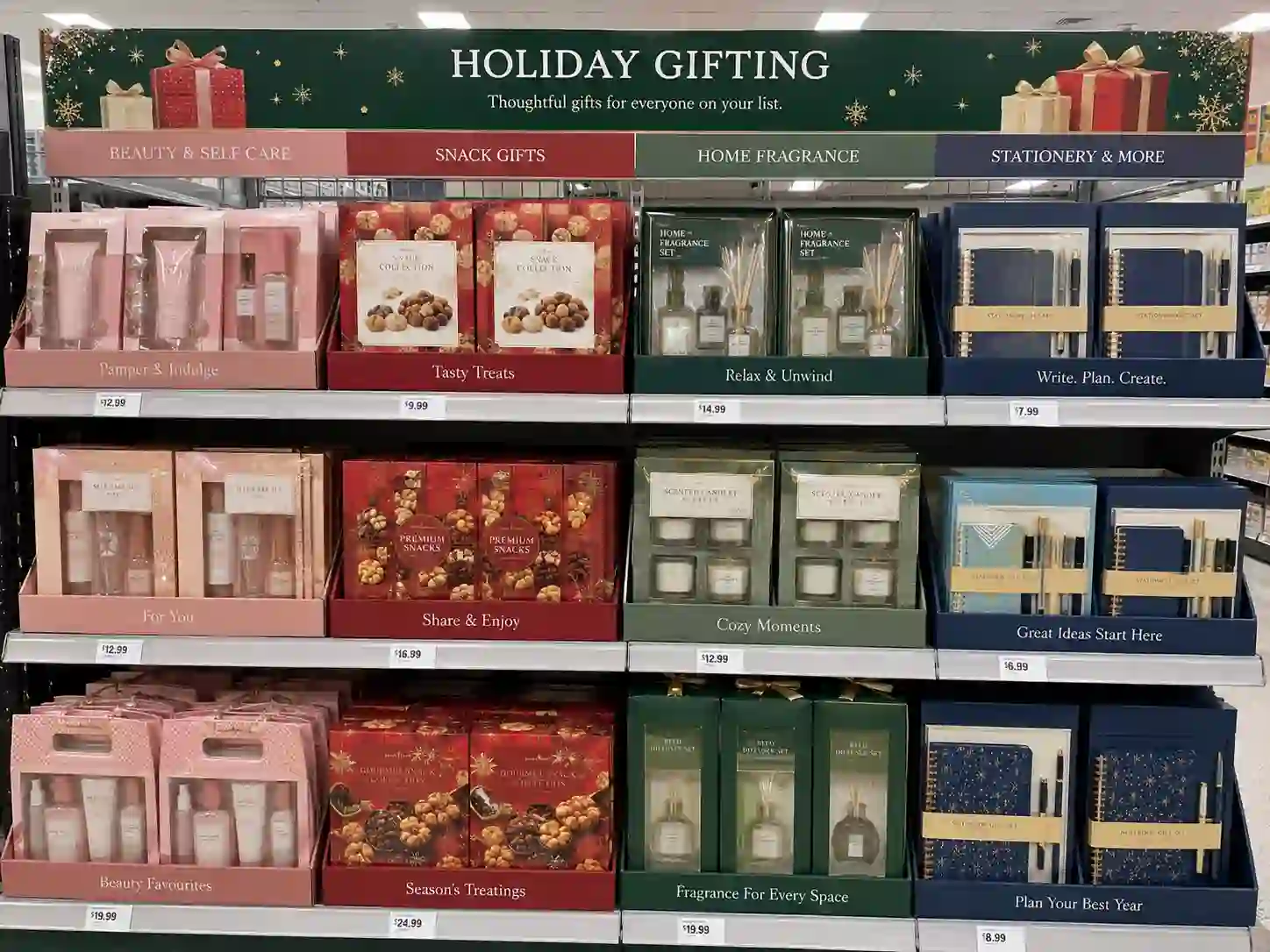
Not every seasonal gift pack needs a floor display. Some products sell better in counter displays, PDQ trays, pallet displays, or sidekick displays depending on product size, retail channel, and campaign volume.
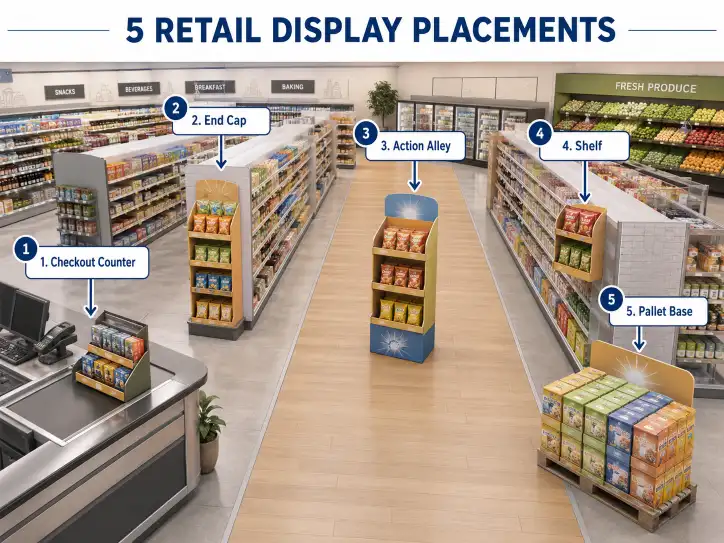
A compact gift pack may perform well near checkout. A medium-sized bundle may need a shelf-ready tray. A heavy family-size seasonal pack may require a floor stand with reinforced shelves or a pallet display for club stores.
Here is a practical selection guide.
| Gift Pack Type | Suitable Display Type | Best Retail Placement | Key Structure Detail |
|---|---|---|---|
| Small beauty gift sets | Counter display or PDQ tray | Checkout, beauty shelf, pharmacy counter | Low front lip, dividers, clear product facing |
| Chocolate or snack gift packs | Floor display or dump bin display | Seasonal aisle, supermarket promotion area | Strong base, easy refill opening, printed header |
| Beverage gift packs | Pallet display or reinforced floor display | Club store, supermarket entrance, beverage aisle | Heavy-duty board, load test, anti-lean structure |
| Stationery or toy gift bundles | Peg display or sidekick display | Endcap side, aisle side, bookstore, department store | Hook spacing, panel thickness, safe hanging layout |
| Premium boxed gifts | Tiered floor display or showroom-style display | Gift zone, department store, boutique area | Clean shelves, premium printing, controlled SKU count |
The table looks simple, but each choice affects production and logistics. A PDQ tray may reduce store labor. A floor display may improve visibility. A pallet display may reduce restocking pressure for heavy seasonal volume.
Counter Displays for Small Seasonal Gift Packs
Counter displays work well for small gift packs with strong impulse value. Examples include mini cosmetic sets, lip balm bundles, trial-size wellness kits, small confectionery boxes, holiday candles, or compact stationery gifts.
A good counter display should not be overbuilt. Buyers often want a low-cost, quick-turn solution for seasonal campaigns, so the design must balance presentation and production efficiency.
For small gift packs, we usually check:
Product Facing
The front of each gift pack should be visible. If the front lip is too high, the display hides the product design. If the tray is too shallow, packs may fall forward.
Compartment Layout
Dividers help keep different designs separated. They also prevent the display from looking messy after shoppers remove several packs.
Counter Footprint
Retail counters have limited space. A wide display may look impressive in a photo but fail in-store approval. The final footprint should match the buyer’s shelf or counter limits.
Packing Method
For export orders, counter displays can often be shipped flat packed or pre-assembled depending on the structure. Flat packing usually saves shipping volume, while pre-assembly may reduce store setup work.
For more general retail display types, see cardboard display solutions.
PDQ Trays for Shelf-Ready Seasonal Promotions
PDQ trays are useful when a seasonal gift pack needs fast shelf placement. They are common for supermarkets, pharmacies, club stores, and chain retail promotions.
The main advantage is speed. Products can be packed into the tray at the factory or by the brand’s packing team, then shipped to the retailer. Store staff open the shipping carton, place the tray on the shelf, and remove the cover if required.
For a cardboard display for seasonal gift packs, PDQ design needs special attention because gift packs may have delicate corners, window panels, foil stamping, ribbons, or sleeve packaging.
A strong PDQ tray should include:
Enough Wall Strength
The side walls must hold the product position during shipping and shelf display. For heavier packs, corrugated board may be better than thin paperboard.
Easy Tear-Off or Open Design
Retail staff should not need tools or long setup steps. Tear lines, removable covers, and clear opening instructions help reduce damage.
Clear Price and Campaign Area
Seasonal promotions need quick communication. A small header card or front panel can show the occasion, product type, or promotional message without crowding the packaging.
Carton Protection
Gift packs often include decorated surfaces. Export cartons should protect corners and printed finishes. Inner dividers may be needed when product packaging scratches easily.
FEFCO standards are often referenced in corrugated packaging structure discussions, especially when carton styles and shipping efficiency matter. For seasonal displays, these principles help teams think about strength, packing, and logistics from the start.
Floor Displays for High-Visibility Seasonal Selling
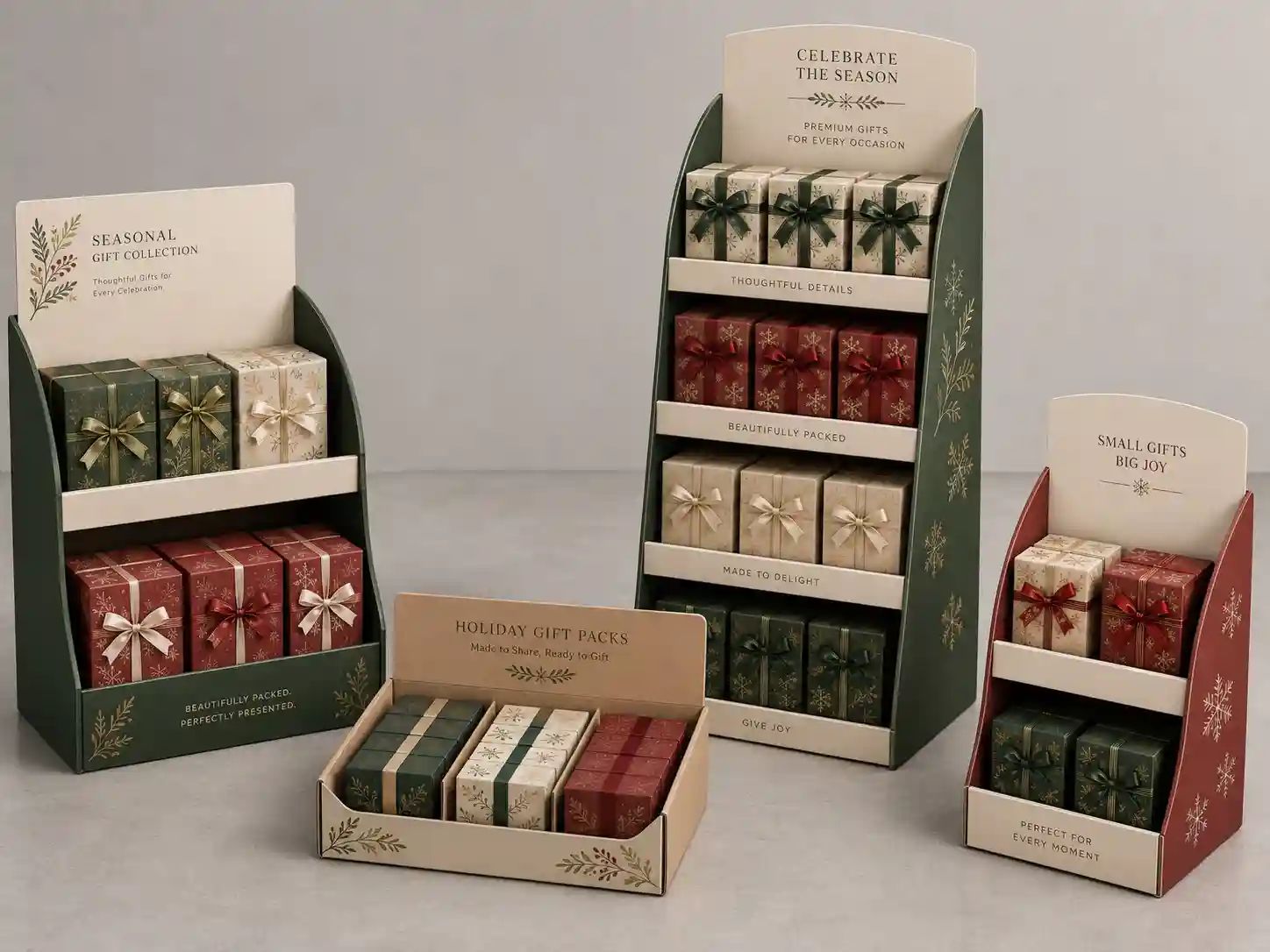
Floor displays are one of the strongest choices for seasonal gift pack campaigns. They create a dedicated selling point and can hold more inventory than a counter display or shelf tray.
A floor display works well for Christmas gift boxes, holiday snack sets, beverage multipacks, beauty gift sets, toy bundles, pet gift packs, home fragrance sets, and promotional kits.
But floor displays need careful structure planning.
Shelf Load
Seasonal gift packs can be heavier than they look. A rigid gift box with multiple products inside may place pressure on each shelf. Before bulk production, the factory should test shelf load with real or weighted samples.
Shelf Depth
If shelves are too deep, shoppers may struggle to reach the back row. If shelves are too shallow, the display needs frequent refill. The right depth depends on product height, product weight, and expected sell-through speed.
Base Stability
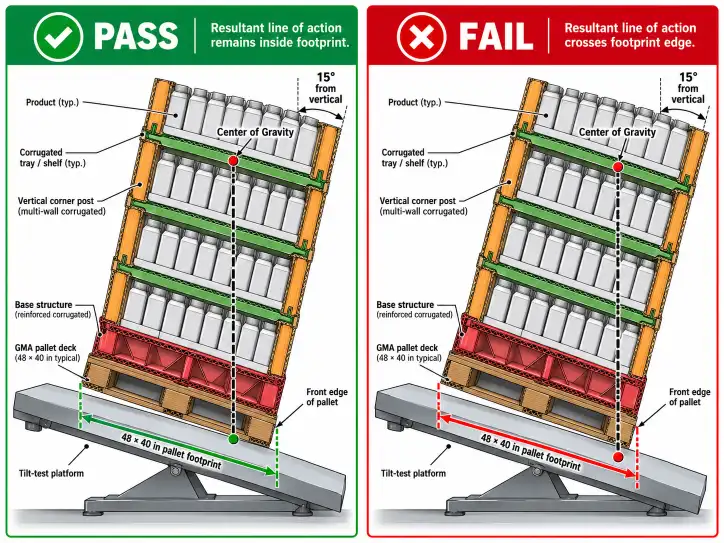
A tall seasonal display must stay stable when partially empty. The structure should consider center of gravity, base size, side panels, and product distribution.
Assembly Time
Retailers dislike complicated setups. Clear folding lines, numbered parts, quick-lock structures, and simple instruction sheets can reduce store complaints.
For seasonal campaigns, the best floor display is not always the biggest one. A controlled SKU count often works better. Clear grouping makes the display easier to shop and easier to refill.
Pallet Displays for Bulk Seasonal Gift Packs
Pallet displays are suitable when the campaign volume is high and product weight is significant. They are often used for warehouse clubs, supermarkets, beverage promotions, food gift packs, holiday bundles, and large seasonal events.
A pallet display can combine printed skirts, side panels, header cards, stacked trays, and product cartons. The goal is to reduce handling and create a strong retail block.
For B2B buyers, pallet displays are practical when:
The product is heavy.
The retailer wants fast floor placement.
The campaign needs strong visual impact.
The display must hold large stock.
The logistics plan supports palletized delivery.
A pallet display also needs strong communication between the brand, display manufacturer, packing team, and logistics partner. The final structure should match pallet size, carton stacking direction, transportation method, and retailer requirements.
This is where sample testing becomes important. A paper design may look good in a mockup, but the real test is whether the display survives packing, transport, warehouse movement, and retail setup.
Sidekick and Peg Displays for Lightweight Gift Packs
Sidekick displays and peg displays are useful for lightweight seasonal items. These can include hanging stationery gift packs, small toy bundles, personal care sets, accessory packs, socks, ornaments, or compact promotional kits.
They are often placed on endcap sides, aisle sides, or near related product categories. This makes them useful when the buyer wants secondary placement without taking full floor space.
For peg display planning, hook spacing matters. If hooks are too close, products overlap. If hooks are too far apart, display capacity drops. The backing panel must also be strong enough to support the hanging weight.
For sidekick displays, the attachment method should match the retail environment. Some stores require specific sidekick dimensions or hanging systems. A manufacturer should confirm this before final dieline and sample production.
Make the Seasonal Message Clear, Not Crowded
Seasonal displays often fail when the design tries to say too much. A gift pack display should communicate the occasion, product type, and purchase reason quickly.
For example:
“Holiday Gift Sets” is clear.
“Limited Seasonal Bundle” is clear.
“Gift-Ready Skincare Kits” is clear.
“Mix, Match & Gift” can work for multi-SKU displays.
The display does not need long copy on every panel. Strong structure, clean product facing, and a simple printed message often work better.
From a manufacturing perspective, cleaner artwork also reduces proofing mistakes. When multiple languages, product claims, icons, QR codes, and retailer requirements are added, the approval process becomes slower. A practical layout keeps important messages visible and print-ready.
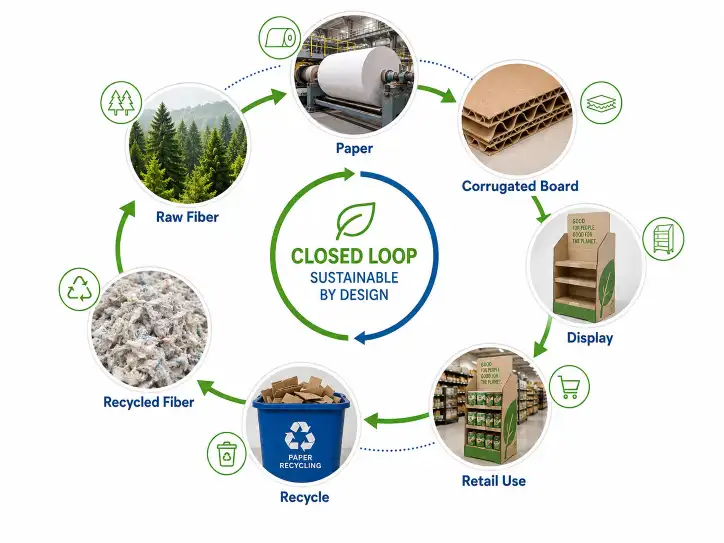
If sustainability is part of the buyer’s requirement, FSC-certified material can be discussed during material selection. ISO-related factory management systems may also be relevant for buyers who need supplier qualification documents.
Material Choice for Seasonal Gift Pack Displays
Material choice depends on product weight, display size, printing requirements, and shipping method.
For small counter displays, paperboard or E-flute corrugated board may be suitable. For medium floor displays, B-flute or stronger corrugated board may be required. For heavy gift packs, reinforced shelves, double-wall board, or added support columns may be needed.
The display should not only look good when empty. It must perform when fully loaded, partially sold, moved by store staff, and refilled during the campaign.
Common material decisions include:
Corrugated Board Thickness
Thicker board adds strength but may increase cost and shipping volume. The right choice should come from product weight and display structure, not guesswork.
Surface Paper
White kraft, coated paper, or specialty paper can change the final print effect. Premium seasonal campaigns may need smooth printing surfaces for refined graphics.
Lamination and Finish
Matte lamination, gloss lamination, spot UV, embossing, or foil stamping can improve presentation. But finishes must match budget, schedule, and recyclability goals.
Insert and Divider Materials
Gift packs may need dividers to prevent movement. Inserts can be made from paperboard, corrugated board, or other materials depending on protection needs.
Sampling Before Bulk Production
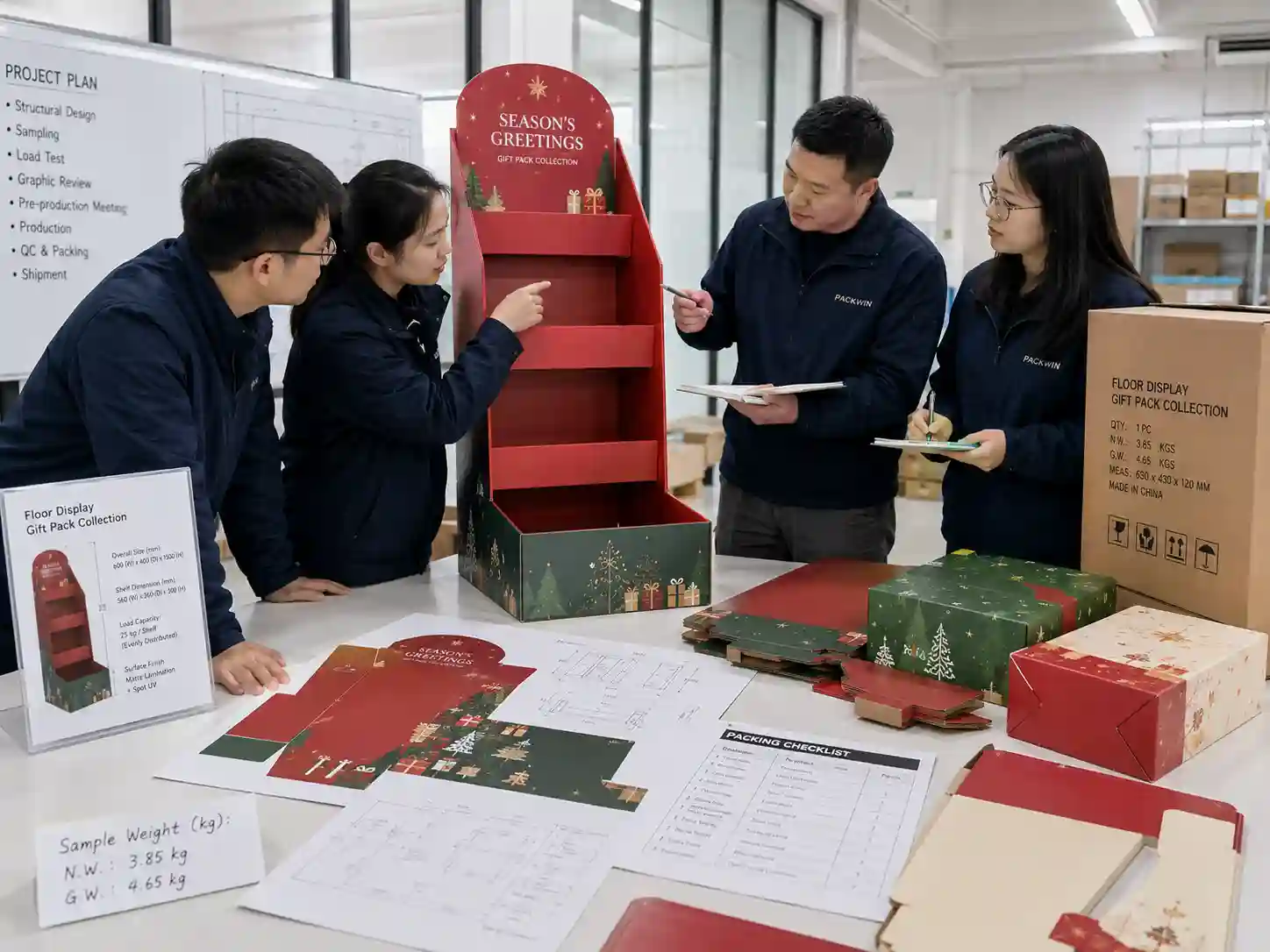
Sampling is one of the most important steps for seasonal gift pack displays. A small structure issue can become expensive when the selling season is close.
A good sample review should check:
Product fit
Shelf strength
Display balance
Printing position
Header visibility
Assembly steps
Carton packing method
Refill behavior
Barcode or price label area
Retail placement requirements
For seasonal products, timing is strict. Buyers should allow enough time for structure sampling, artwork proofing, sample approval, material preparation, production, packing, export shipping, and retailer delivery.
At Leader Display, sample development usually focuses on both appearance and function. A display must support the buyer’s sales plan, but it also has to match factory production conditions and shipping reality. You can learn more about the company through Leader Display.
Plan for Flat Packing and Export Cartons Early
Many buyers focus on display artwork first. Packaging engineers and factories know that export packing can decide whether the project runs smoothly.
A seasonal display may ship as flat parts, semi-assembled units, or packed product-ready trays. Each option affects freight cost, labor cost, damage risk, and store setup time.
Flat packing is often cost-effective for international orders because it reduces carton volume. But it requires clear assembly instructions. Semi-assembled packing can save store labor but may increase shipping volume. Product-loaded PDQ trays can speed retail setup but need stronger outer cartons.
Export cartons should be planned around:
Carton size
Gross weight
Board strength
Stacking direction
Moisture protection
Corner protection
Label position
Pallet loading plan
Container loading efficiency
For seasonal orders, avoid leaving packing decisions until the end. Once bulk production is complete, changing carton size or packing direction can delay shipment.
Refill Design Can Protect the Display’s Sales Power
A seasonal display may look perfect at launch but weak after shoppers remove the first row. Good refill design keeps the display presentable for longer.
For floor displays, shelf height and front lips should help products stay upright. For PDQ trays, dividers can keep rows separated. For pallet displays, clear product grouping helps staff restock without mixing SKUs.
Retail staff may not have time to fix messy displays during peak periods. The structure should guide the product position naturally.
A refill-friendly display may include:
Open front access
Stable shelf angle
Product dividers
Clear SKU blocks
Simple carton-to-display transfer
Front-facing product rows
Visible stock depth
Easy-to-read replenishment labels
These details do not always appear in a beauty render. They matter in real stores.
Design Ideas That Work Across Seasonal Campaigns
A strong seasonal display can be adapted across multiple occasions with artwork changes. This helps brands reuse structure logic and reduce development time.
Gift Wall Display
A tiered floor display can create a “gift wall” effect for boxed sets. This works well for beauty, food, stationery, home fragrance, and wellness products.
Mixed Price Point Display
Some campaigns need small, medium, and premium gift packs in one display. The structure should separate price levels clearly, so shoppers can choose quickly.
Countdown or Calendar Display
Advent calendar boxes and countdown gift packs benefit from wide front-facing shelves. These products often have strong packaging graphics, so the display should support visibility rather than cover the box.
Trial Kit Display
Small sample kits can work well in counter displays or PDQ trays. These are useful for new product launches, holiday trial sets, and promotional bundles.
Bulk Gift Pack Pallet
Heavy or high-volume gift packs can use pallet-ready displays. This option works well for supermarket and club store campaigns where stock turnover is high.
What Buyers Should Prepare Before Requesting a Quote
A clear brief helps the manufacturer suggest the right structure and price range. Buyers do not need to have everything finalized, but several details make the process faster.
Useful information includes product dimensions, product weight, number of SKUs, target display quantity, retail channel, expected placement, artwork direction, packing preference, destination country, and delivery deadline.
For a custom seasonal display inquiry, send:
Product photos or drawings
Product size and weight
Target display type
Expected display capacity
Retail placement requirement
Printing design or brand guideline
Preferred material or sustainability requirement
Packing method preference
Order quantity
Shipping destination
Project timeline
With this information, the factory can recommend a realistic structure, estimate material use, and decide whether a counter display, PDQ tray, floor display, sidekick, dump bin, or pallet display fits the campaign.
Build Seasonal Displays Around Real Retail Use
Seasonal gift pack displays should be designed for the store, not only for the catalog image. The product must fit securely. The structure must carry the weight. Store teams must assemble and refill it without confusion. The display must ship safely and arrive ready for the selling window.
That is the practical value of a well-developed cardboard display for seasonal gift packs. It helps buyers turn seasonal packaging into a clear retail presentation with stronger visibility, easier handling, and better campaign control.
For your next seasonal campaign, start with product size, weight, retail placement, and packing method. From there, a custom structure can be developed around the real sales environment, not guesswork.