Health and personal care products need retail displays that look clean, stay organized, and make product selection easy. For B2B buyers, the best cardboard display depends on product weight, package size, refill frequency, store location, and campaign goals. A practical display should protect the product, support fast setup, and help shoppers understand the offer at a glance.
Why Health and Personal Care Products Need the Right Display Structure
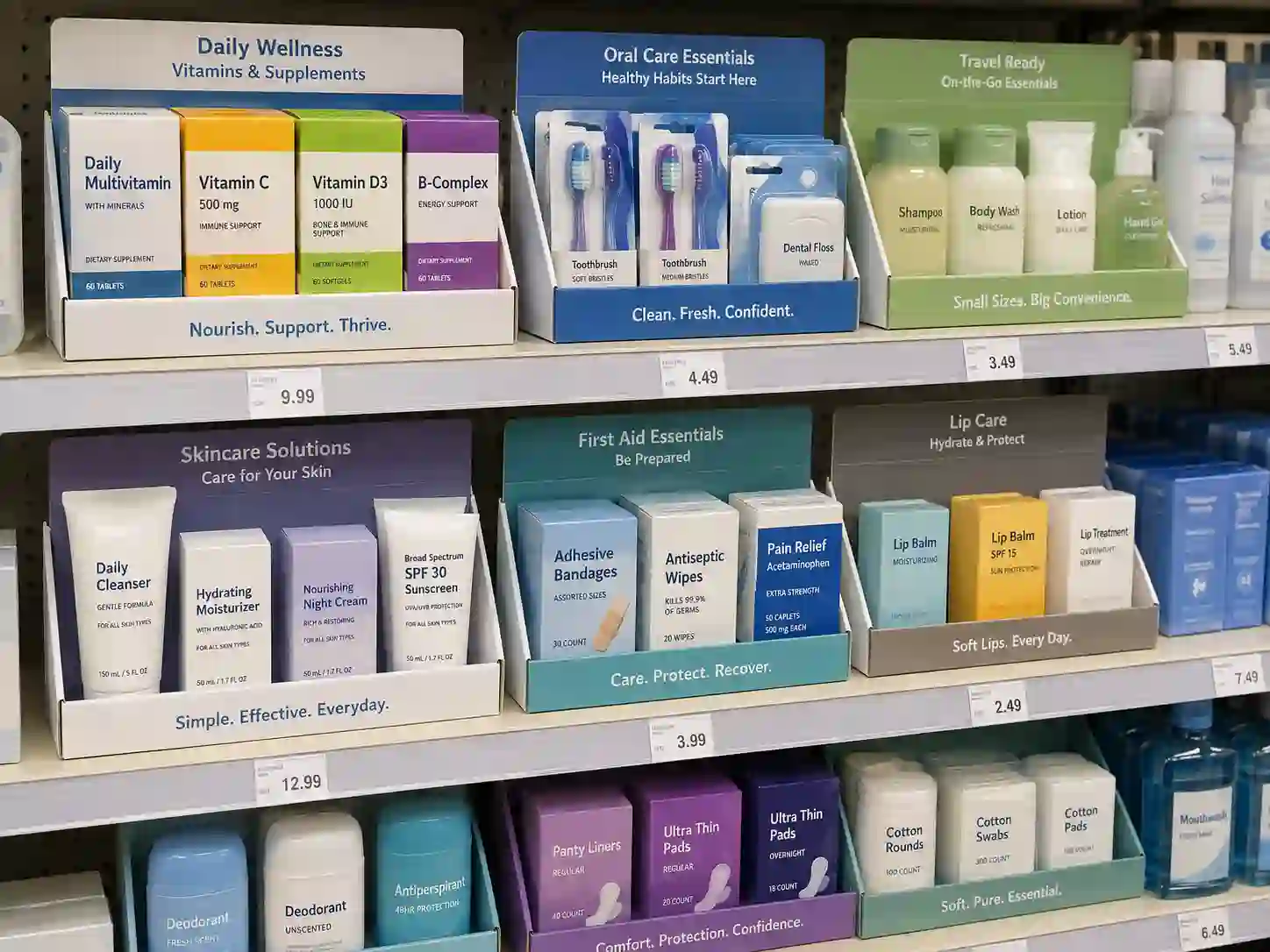
Health and personal care covers many product types: vitamins, supplements, oral care, skincare, hand cream, first-aid items, hygiene products, grooming tools, wellness kits, travel-size items, and seasonal care products. These products often sit in pharmacies, supermarkets, beauty stores, health stores, convenience stores, and club retail environments.
That means one display structure cannot solve every project.
A lightweight lip balm counter display has different needs from a floor display holding boxed vitamins. A PDQ tray for travel-size sanitizer has different refill behavior from a peg display for blister-packed grooming tools. If the display structure does not match the product, the retail result can look messy, unstable, or hard to shop.
For a manufacturer, the first question is not “Which display looks best?” The better question is: “Where will this product be placed, how heavy is it, and how will store staff refill it?”
That question leads to a better cardboard display for health and personal care products.
Main Display Options for Health and Personal Care Products
Different products need different display formats. Below is a practical comparison for buyers who are planning a custom retail display project.
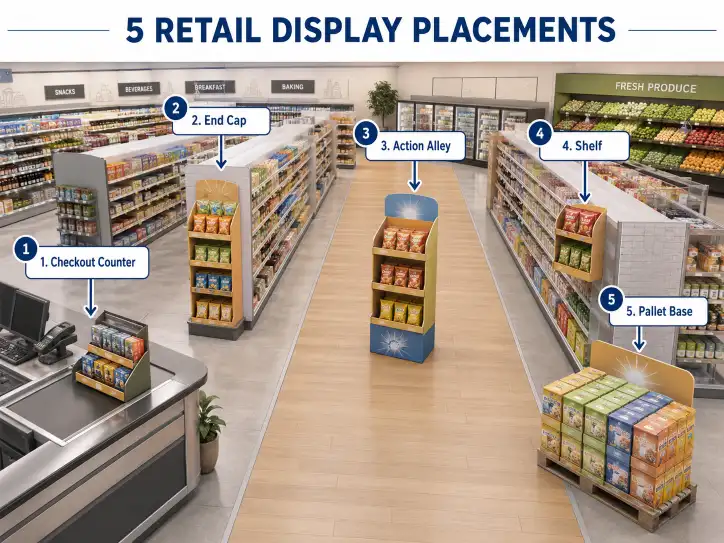
| Display Type | Best For | Retail Placement | Key Structure Focus | Typical Buyer Concern |
|---|---|---|---|---|
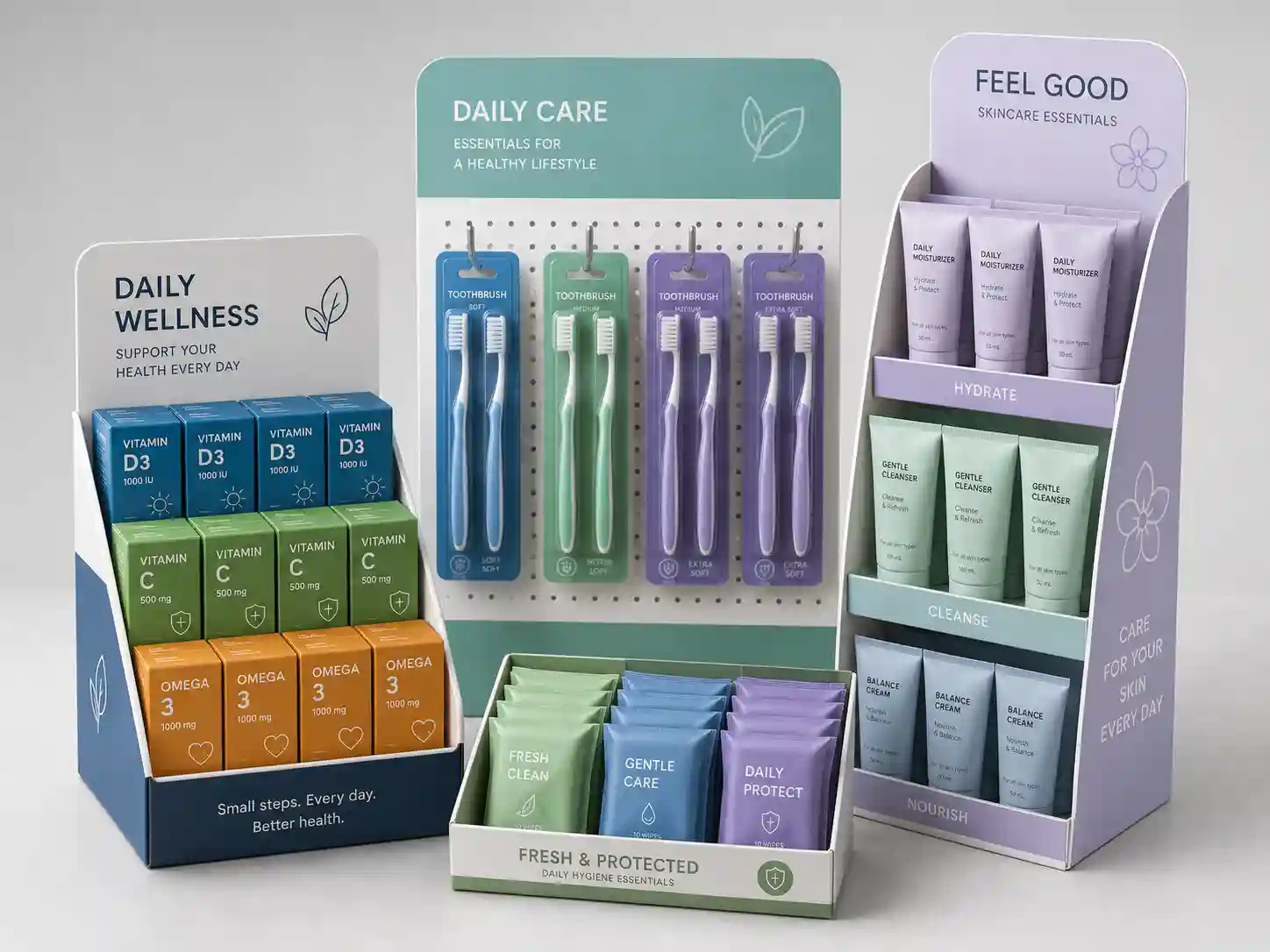
| Counter display | Small boxes, tubes, sachets, lip balm, travel-size care products | Checkout counter, pharmacy counter, beauty counter | Small footprint, front-facing product rows, easy pick-up | Must look neat in limited space |
| PDQ display tray | Multipack small items, boxed care products, trial-size products | Shelf, counter, promotional table | Fast loading, stable dividers, retail-ready packing | Needs quick retail setup |
| Peg display | Blister cards, grooming tools, toothbrushes, razors, accessories | Shelf end, wall area, side panel, compact retail zone | Hook spacing, header strength, balanced product weight | Hooks must stay aligned |
| Floor display | Vitamins, skincare kits, hygiene products, oral care bundles | Aisle, promotional area, pharmacy zone | Load-bearing shelves, strong side panels, stable base | Must hold enough stock safely |
| Sidekick display | Lightweight care products, seasonal wellness items, trial products | Aisle side, endcap side, club retail area | Hanging strength, compact width, easy refill | Must fit retailer space rules |
| Dump bin display | Soft packs, bulk hygiene items, promotional mixed products | Aisle, entrance, discount zone | Wide opening, strong bottom, simple access | Must avoid messy product pile-up |
| Pallet display | Large quantity promotions, club retail, seasonal health campaigns | Warehouse club, big-box retail, bulk aisle | Pallet base fit, shipping strength, fast replenishment | Must survive transport and store handling |
For a deeper overview of different retail structures, buyers can also review custom cardboard displays and compare the options before starting a project.
Counter Displays: Best for Small Health and Personal Care Items
A counter display works well when the product is small, lightweight, and easy to pick up. Common examples include lip balm, small hand cream tubes, travel-size sanitizer, dental floss, sachet packs, wellness samples, and small boxed care products.
The advantage is visibility in a compact space. A counter display can sit near checkout areas, pharmacy counters, reception counters, and beauty consultation areas. It works well when the product has impulse-buy potential or when the brand wants to introduce a new item without taking large shelf space.
What to Check Before Choosing a Counter Display
The product rows must stay neat. If the product is too narrow, dividers may be needed. If the product is round or tube-shaped, the tray angle and front stopper need attention. If the product is boxed, the inner width should allow smooth loading without leaving too much empty space.
Good counter display design often includes:
- A compact base with enough depth to prevent tipping
- Front lips to stop products from sliding forward
- Dividers or stepped trays for clear product grouping
- A header card for simple campaign messaging
- Flat packing or pre-glued assembly depending on order needs
For health and personal care products, the visual style should look clean and trustworthy. Strong color contrast can help, but the display should not look chaotic. Pharmacy and wellness environments often need a cleaner layout than snack or toy displays.
A counter display is usually the best choice when the buyer wants a small display, fast setup, and a low-risk trial for retail placement.
PDQ Trays: Best for Shelf-Ready Health Product Promotions
PDQ displays are useful when a buyer wants shelf-ready packaging that can move from carton to retail shelf with minimal handling. For health and personal care products, PDQ trays are common for boxed vitamins, sample-size care products, small hygiene packs, travel kits, oral care items, and seasonal wellness items.
PDQ trays help retail staff place products faster. The display arrives with products arranged inside the tray, often packed inside an outer carton. Once opened, the tray can be placed directly on a shelf, counter, or promotional table.
Simple wins.
Structure Details That Matter
A PDQ tray needs the right wall height. If the side wall is too high, shoppers cannot see the product clearly. If it is too low, products may fall forward during handling. The front lip should hold the product while still allowing easy access.
For boxed personal care products, the tray should match the product width closely. For mixed SKUs, internal dividers can prevent product shifting. If the tray will be transported with product inside, board grade and flute direction matter.
Manufacturers usually check:
- Product size and total loaded weight
- Number of units per tray
- Front-view visibility
- Shelf depth and tray footprint
- Whether the tray ships preloaded or empty
- Whether the tray needs outer carton protection
PDQ trays work well when the retail buyer wants speed, organization, and lower in-store labor. For brands running chain-store tests, a PDQ tray can be a practical first step before moving into larger floor displays.
Peg Displays: Best for Hanging Health and Grooming Accessories
Peg displays are a strong choice for blister-packed products and hanging packs. In health and personal care, this can include toothbrushes, razors, grooming tools, nail care accessories, hair care accessories, first-aid accessories, and travel care items.
The biggest benefit is vertical organization. A peg display allows many SKUs to be shown in a small footprint. It also helps shoppers compare product types, sizes, or functions.
But peg displays need careful structure work.
Hook Spacing and Load Balance
Hook spacing affects both appearance and function. If hooks are too close, products overlap. If they are too far apart, the display wastes space. The hook length must match the product pack depth and the expected quantity per hook.
Load balance is also important. If heavier products are placed on one side, the panel can bend or the display can lean. A good design uses a strong back panel, proper base depth, and clear SKU mapping.
For floor peg displays, the base should support the full loaded display. For counter peg displays, the structure should resist tipping when shoppers remove products from the front row.
A practical factory sample should test:
- Hook position
- Hook diameter and material
- Pack hole fit
- Full-load balance
- Header stability
- Front access angle
- Refill process
A peg display is often the best choice when products are lightweight, carded, and need clear SKU separation.
Floor Displays: Best for Larger Campaigns and Higher Stock Volume
A floor display works well when the buyer needs more stock, stronger shelf impact, and a separate promotional position. For health and personal care products, this can include vitamins, protein bars, family hygiene packs, skincare sets, oral care bundles, wellness kits, and seasonal care products.
Floor displays can carry more units than counter displays or PDQ trays. They can also include larger headers, side panels, shelf strips, and product education areas.
This makes them useful for launches, seasonal promotions, and retail campaigns where brand visibility matters.
Shelf Strength Is the Main Issue
Floor displays need stronger engineering. The shelf must hold product weight without sagging. Side panels must stay straight. The base must stay stable when shoppers remove products from different shelves.
For boxed health products, shelf depth and shelf height should match the product pack size. For bottles or jars, anti-slip design and front lips may be needed. For mixed products, shelf zoning helps prevent a messy appearance.
Common production choices include:
- Corrugated board with suitable flute type
- Reinforced shelves for heavier items
- Double-wall support where needed
- Internal support panels
- Stronger base structure
- Clear assembly instructions
- Export carton protection
A floor display should also be easy for store staff to assemble. If assembly takes too long, retail execution may suffer. For this reason, many buyers prefer semi-assembled structures, pre-glued parts, or clear numbered panels.
Leader Display’s cardboard display solutions are built around this kind of practical production planning: structure, print, packing, and retail use need to work together.
Sidekick Displays: Best for Compact Retail Promotions
Sidekick displays are often used for lightweight products in narrow retail spaces. They can attach to an endcap, pallet area, or aisle-side fixture, depending on retailer requirements.
For health and personal care products, sidekick displays work well for trial packs, travel-size products, seasonal care items, toothbrushes, small hygiene packs, and light wellness accessories.
The key advantage is visibility without taking full floor space.
When a Sidekick Makes Sense
A sidekick display makes sense when the product is light, the campaign needs secondary placement, and the retailer allows side-mounted displays. It is less suitable for heavy bottles, large boxed products, or items that require deep shelves.
The structure should be tested for hanging strength and refill access. If the display holds several SKUs, each pocket or shelf should be easy to identify. Store staff should not need to rearrange the whole display during refill.
Sidekick displays also need export packing attention. Since the shape can be narrow and long, the carton must protect corners, headers, and side panels during transport.
Dump Bin Displays: Best for Bulk, Soft Packs, and Value Promotions
Dump bins can work for selected health and personal care products, especially soft packs, wipes, travel packs, hygiene packs, and promotional bundles. They are useful when the product does not require perfect front-facing rows.
However, dump bins are not ideal for every health product. If the product needs careful education, dosage comparison, or premium presentation, a shelf display may be better.
How to Avoid a Messy Dump Bin
The main risk is product disorder. If shoppers dig through the bin, the display can look messy. For this reason, dump bins should be used when the product is easy to recognize and durable enough for open access.
Structure details can improve the result:
- Lower front panel for better product visibility
- Internal dividers for SKU grouping
- Strong bottom panel for loaded weight
- Clear header for offer messaging
- Proper height for shopper reach
- Export carton sized for safe delivery
Dump bins are best when the campaign focuses on quantity, value, and fast product movement.
Pallet Displays: Best for Club Retail and High-Volume Campaigns
Pallet displays are suitable for larger health and personal care promotions. Common examples include family-size hygiene products, seasonal wellness packs, oral care multipacks, personal care bundles, and bulk retail offers.
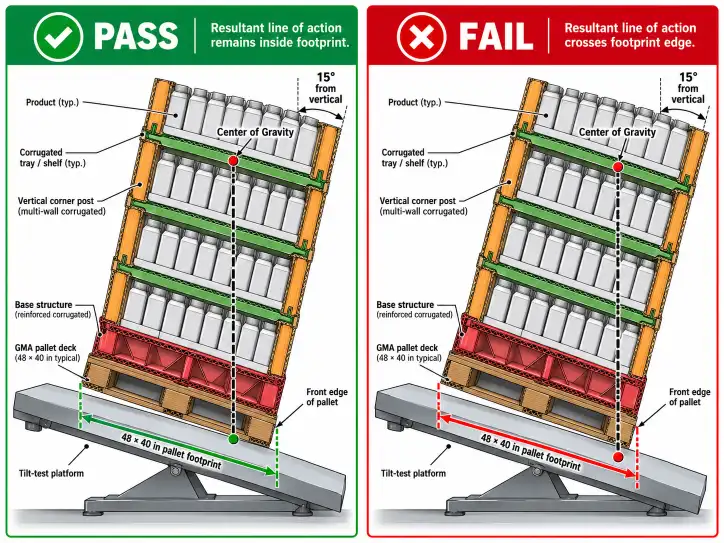
A pallet display needs both display thinking and logistics thinking. It may be shipped assembled, semi-assembled, or flat packed depending on the project. The display must match pallet size, carton stacking, forklift handling, and retailer requirements.
Important Pallet Display Checks
Before production, buyers should confirm the required pallet footprint and retail rules. A club retailer may have strict size, height, and packing requirements. Product weight also affects board selection and reinforcement.
Manufacturers need to review:
- Pallet size and loading plan
- Total product weight
- Display height
- Shelf or tray strength
- Header and side panel stability
- Outer carton or wrap protection
- Store setup process
- Refill method
Organizations such as FEFCO provide widely recognized corrugated packaging references, and FSC-certified materials may be requested when buyers need responsible paper sourcing. ISO-related quality systems can also matter when brands need supplier evaluation, process control, and documented inspection.
For B2B buyers, these references help align display design with supply chain expectations, not only visual style.
Material Choice for Health and Personal Care Displays
Material selection affects cost, strength, print result, and transport safety. For lightweight products, a standard corrugated board may be enough. For heavier bottles, jars, or multipacks, stronger flute, higher grammage paper, or reinforced structure may be required.
The display should be designed around real product data, not guesswork.
A manufacturer will usually ask for:
- Product dimensions
- Product unit weight
- Number of units per shelf or pocket
- Retail placement
- Expected campaign duration
- Packing method
- Print requirements
- Assembly preference
- Shipping destination
These details help prevent common problems such as shelf sagging, weak headers, product sliding, or carton damage during export.
Print and Finish Considerations
Health and personal care products often need a clean visual style. White space, soft color blocks, simple product claims, and clear category labels can work better than crowded graphics.
Common print and finish options include CMYK printing, spot color control, matte lamination, gloss lamination, varnish, and selected surface effects. For health-related products, text readability matters. Small claims, product names, and category messages should be easy to read from shopper distance.
Brands should avoid overloading the display with too many messages. One main claim, one product category, and one clear callout often perform better than a crowded panel.
Sampling Before Bulk Production
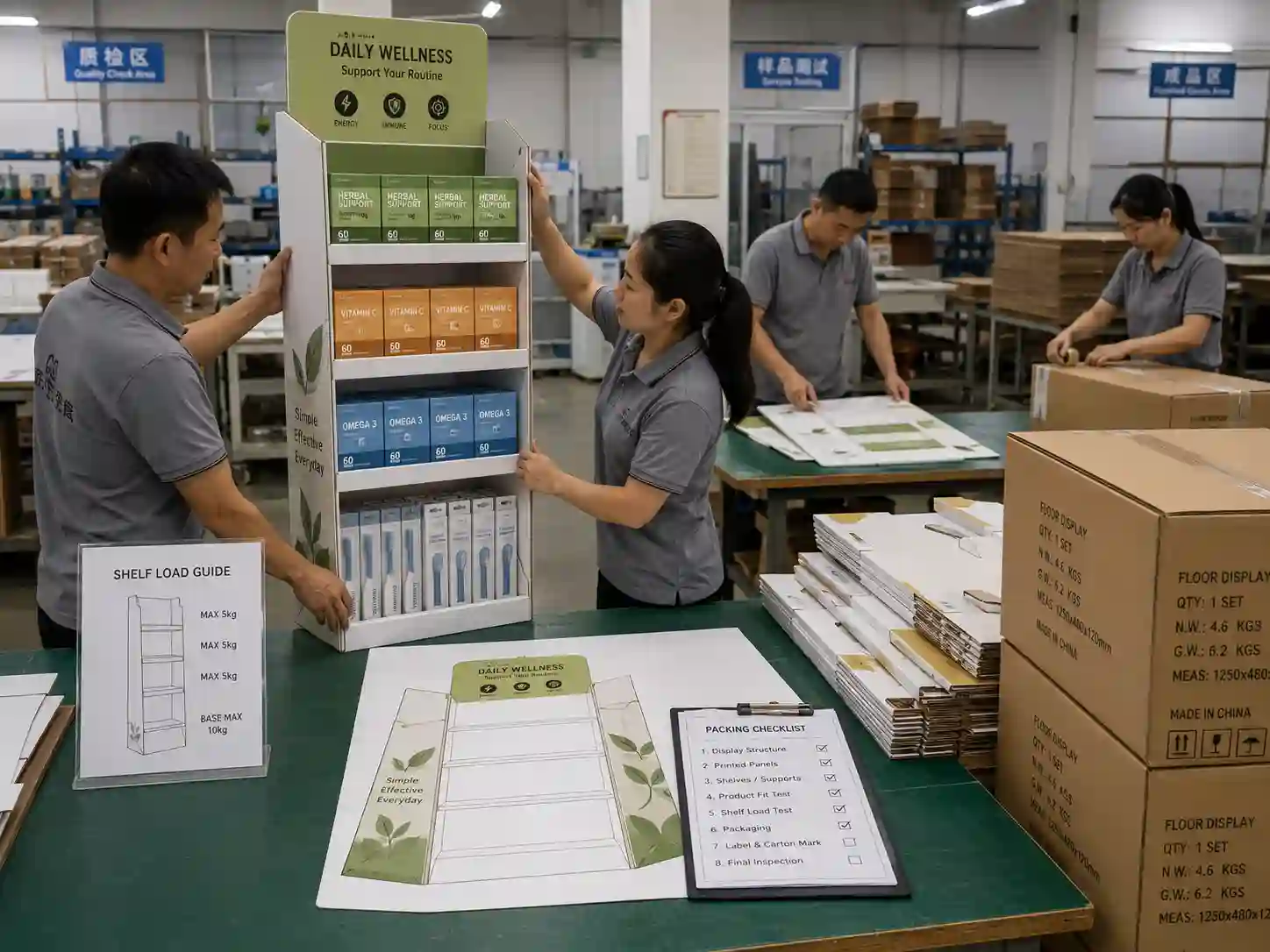
Sampling is one of the most important steps in a custom cardboard display project. A digital design can look good on screen, but the real display must hold product weight, fit the product, assemble correctly, and survive packing.
For health and personal care displays, sampling often includes:
- White sample for structure testing
- Printed sample for color and layout review
- Product fit test
- Load test
- Assembly test
- Carton packing test
- Buyer approval before bulk production
This step helps both the buyer and manufacturer catch issues early. For example, a shelf may need a stronger support panel. A product row may need a divider. A peg hook may need a different spacing. A header may need extra support.
A good sample saves time later.
At Leader Display, the project process usually starts with product information, display goals, and retail placement details. Buyers can explore more about the factory and project support through Leader Display.
Assembly, Refill, and Store Execution
A display is only successful if retail staff can use it easily. Complex assembly can slow down store setup. Poor refill access can make the display look empty or disorganized. Weak dividers can create product mixing.
For health and personal care products, shoppers often compare categories, ingredients, size, and use case. A messy display can reduce trust. The structure should support clear grouping and easy restocking.
Practical Design Details for Better Refill
A good refill-friendly display may include:
- Open shelf access
- Clear SKU zones
- Front lips that hold product without blocking access
- Dividers for small packs
- Shelf strips for product names
- Strong enough shelves for repeated handling
- Simple assembly instructions packed with the display
- Carton labels for store teams
Refill planning matters more when the display will stay in store for several weeks. A launch display may need strong first impression. A longer campaign needs stronger refill logic.
Export Packing and Shipping Protection
Export packing is a major part of B2B cardboard display production. A display can be well designed, but if it arrives damaged, the project fails.
For international orders, the manufacturer should consider carton strength, flat packing method, corner protection, moisture control when needed, and clear carton marks. If the display ships with products, the internal packing needs more testing.
Common export packing checks include:
- Carton size and weight
- Flat-packed display protection
- Printed panel surface protection
- Accessory bag for hooks or small parts
- Assembly instruction sheet
- Carton drop and handling risk
- Pallet loading plan
- Shipping mark requirements
For B2B buyers, export packing should be discussed before bulk production, not after production is finished.
How to Choose the Best Display for Your Product
The best cardboard display for health and personal care products depends on the retail job you need it to do.
Choose a counter display if the product is small, light, and needs compact checkout visibility. Choose a PDQ tray if fast shelf setup and retail-ready packing matter. Choose a peg display if the product is carded or hanging. Choose a floor display if you need higher stock volume and stronger campaign presence. Choose a sidekick if the product is light and needs secondary placement. Choose a dump bin for simple bulk promotions. Choose a pallet display for club retail or high-volume campaigns.
The most practical choice starts with product data.
Before asking for a quote, prepare product size, product weight, unit quantity, preferred display type, retail placement, campaign duration, artwork requirements, and shipping destination. This allows the manufacturer to recommend a structure that works in production and in store.
For buyers planning a new launch or retail campaign, custom cardboard displays can be developed around the real product, not a generic template. With the right structure, sampling, packing, and refill planning, your health and personal care display can move from idea to retail floor with fewer surprises and better execution.