If you are a personal care brand, the biggest design decision for your Costco pallet display is not the graphics — it is the display format. Shampoo bottles, deodorant sticks, and skincare sets each need a different structure, and choosing the wrong one means failed ISTA 3E transit testing or a display that leaks on the sales floor. This article compares the three main formats and the material grades that work best for each product type, so you can make the call with confidence.
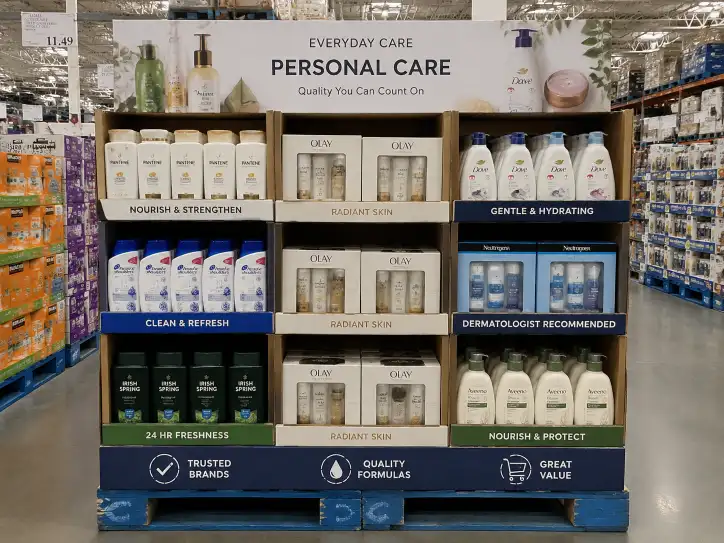
The Big Comparison: PDQ Trays vs. Open Trays vs. Peg Hooks
PDQ trays are pre-loaded, factory-packed trays that sit directly on the display. Open trays are compartments built into the display structure itself. Peg hooks are hanging fixtures for carded products. Each solves a different problem.
| Format | Best For | Why |
|---|---|---|
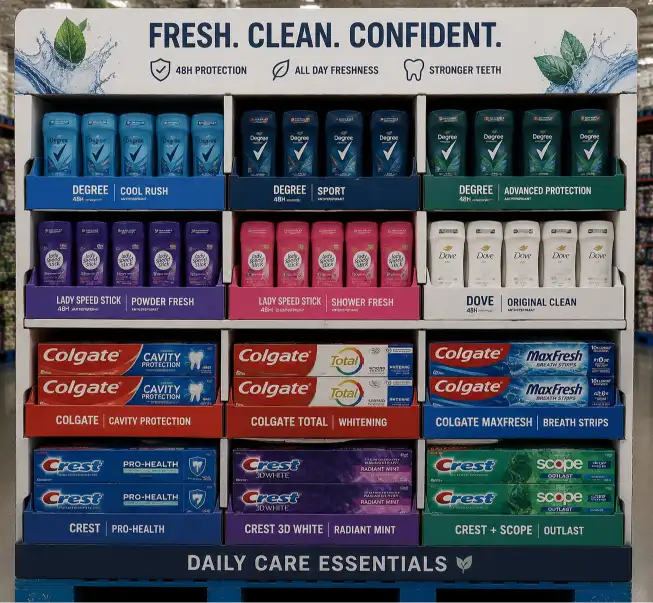
| PDQ trays | Deodorant, toothpaste, small skincare | Pre-packed at factory, easy restock, keeps small items visible |
| Open trays | Shampoo, body wash, larger bottles | Built into display, holds weight, keeps bottles upright |
| Peg hooks | Carded items, small sealed packs | Visibility, easy to hang, saves floor space |
Comparison 1: PDQ Trays vs. Open Trays for Liquid Bottles
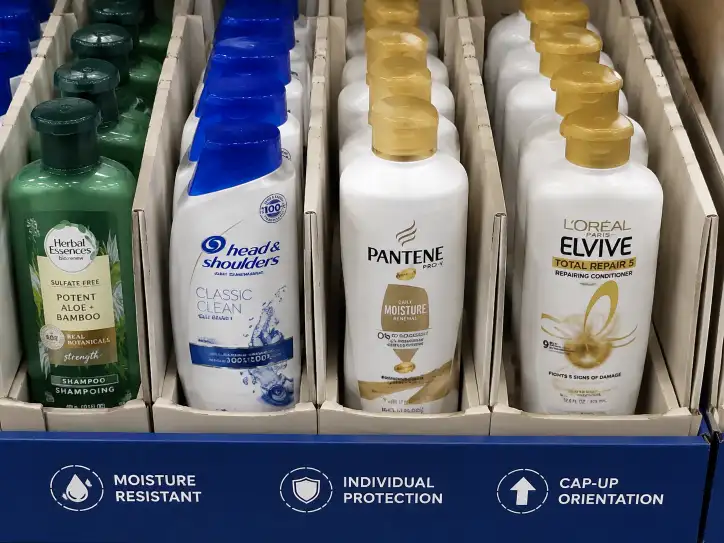
For shampoo, conditioner, and body wash bottles, open trays are the right choice. PDQ trays are not designed to hold the weight of multiple 24-to-40-ounce bottles, and a PDQ holding liquid bottles is a leak risk waiting to happen. Open trays built into the display structure can be reinforced where the weight is. Every bottle must be oriented cap-up, with the compartment depth at least 50 percent of the bottle height.
PDQ trays excel where open trays fail: small items. A deodorant stick in a large open compartment is lost. In a PDQ tray with cross-lock dividers, it is organized and visible. The rule of thumb is simple: heavy liquids go in open reinforced trays; small items go in PDQ trays.
Comparison 2: Peg Hooks vs. PDQ Trays for Small Items
For carded personal care products — deodorant in blister packs, small skincare in sealed cards — peg hooks and PDQ trays both work, and the choice depends on how the product is packaged. Carded products hang naturally on peg hooks with the standard hook spacing covered in our peg display guide. Boxed or bagged products sit better in PDQ trays.
A mixed display that uses both is common: peg hooks on an upper side panel for carded items, PDQ trays on the main body for boxed items. This is the same combination approach used in our Costco electronics displays guide.
Comparison 3: Material Grades for Heavy vs. Light Products
Not all personal care products need the same board. Using heavy-duty board for deodorant is wasted cost; using light board for shampoo is a collapse risk. Here is the comparison:
| Product Type | Material Grade | Max Layers |
|---|---|---|
| Shampoo, body wash (24–40 oz) | BC flute double-wall, 44 ECT | 2–3 |
| Skincare sets, multi-packs | C flute single-wall, 29 ECT | 3–4 |
| Deodorant, toothpaste | B flute single-wall | 5–6 |
The material selection logic follows the same graduated-strength principle documented in our display materials guide.
Comparison 4: Moisture Protection for Liquids vs. Dry Products
Liquid products require moisture-resistant coating on every tray that holds them. Dry products like deodorant and toothpaste do not. This is a cost difference you should plan for. For high-risk liquid shipments, polybagging each bottle individually is worth the added cost — a single leaking bottle can ruin the entire display and create a safety hazard on the sales floor.
For concentrated or chemical skincare products, use the same chemical-compatibility protections we recommend in the Costco household displays guide, where chemical products are the norm.
Comparison 5: Seasonal Gift Sets vs. Year-Round Core
Personal care displays split into two programs: year-round core products and holiday gift sets. Gift sets are boxed, often with multiple products, and need heavier trays than the individual products they contain. Holiday gift set programs should start production by August. Year-round core programs need 3 to 4 months of lead time. The scheduling principles are the same as those in our Costco display approval process.
Comparison 6: Litho-Laminated vs. Flexo Printing
For premium skincare and natural brands, litho-laminated printing with matte lamination communicates quality and ingredient transparency. For value brands, flexo 4-color printing is cost-effective and still looks good. The printing trade-offs are covered in detail in our display printing methods guide.
FAQ
How do I prevent shampoo and body wash from leaking?
Every bottle must be oriented with the cap facing up. The compartment depth should be at least 50 percent of the bottle height. Apply moisture-resistant coating. For high-risk shipments, polybag each bottle.
What compartment design works best for round bottles?
Use hexagonal or square compartments that prevent rotation. For pump bottles, ensure the pump height fits within the compartment depth.
How do PDQ trays work for small personal care items?
Deodorant and toothpaste work best in pre-loaded PDQ trays. Use cross-lock dividers for different scents and variants. B flute or E flute single-wall is sufficient.
How should I organize by scent and variant?
Every section needs clear variant labels. Use color-coded compartments for different scents. Place the most popular variants at eye level. Include a variant guide on the header sign.
What material grade is needed for liquid bottles?
Shampoo and body wash need BC flute double-wall with 44 ECT on bottom layers. Skincare sets use C flute single-wall. Deodorant uses B flute single-wall on top.
Conclusion
The right format for your personal care display depends on what you are selling. Heavy liquids belong in open reinforced trays; small items belong in PDQ trays; carded products work on peg hooks. Match the format to the product and the material to the weight, and you will avoid the two most common failures — leaks and collapse. For more information on personal care product regulations, refer to the FDA Cosmetics and Personal Care guidelines and the Personal Care Products Council.