A beverage launch can lose speed before the first order ships. Buyers often compare display shapes first, even though the harder question is where the product will sit, how much it weighs, and how store staff will refill it after the first promotion rush. Get that order wrong, and the display looks strong in a render and weak on the floor.
That is why the best cardboard display for beverages is rarely chosen by style alone. It is chosen by pack weight, channel, purchase speed, refill pressure, and how much retail space the product can honestly justify. This guide breaks those decisions into practical display ideas that fit real beverage programs, not showroom theory.
From a manufacturer’s side, beverage projects are also less forgiving than many snack or beauty projects. Weight builds up fast. Shelves sag faster. One fast-selling flavor can distort the whole block. Good planning early saves problems later.
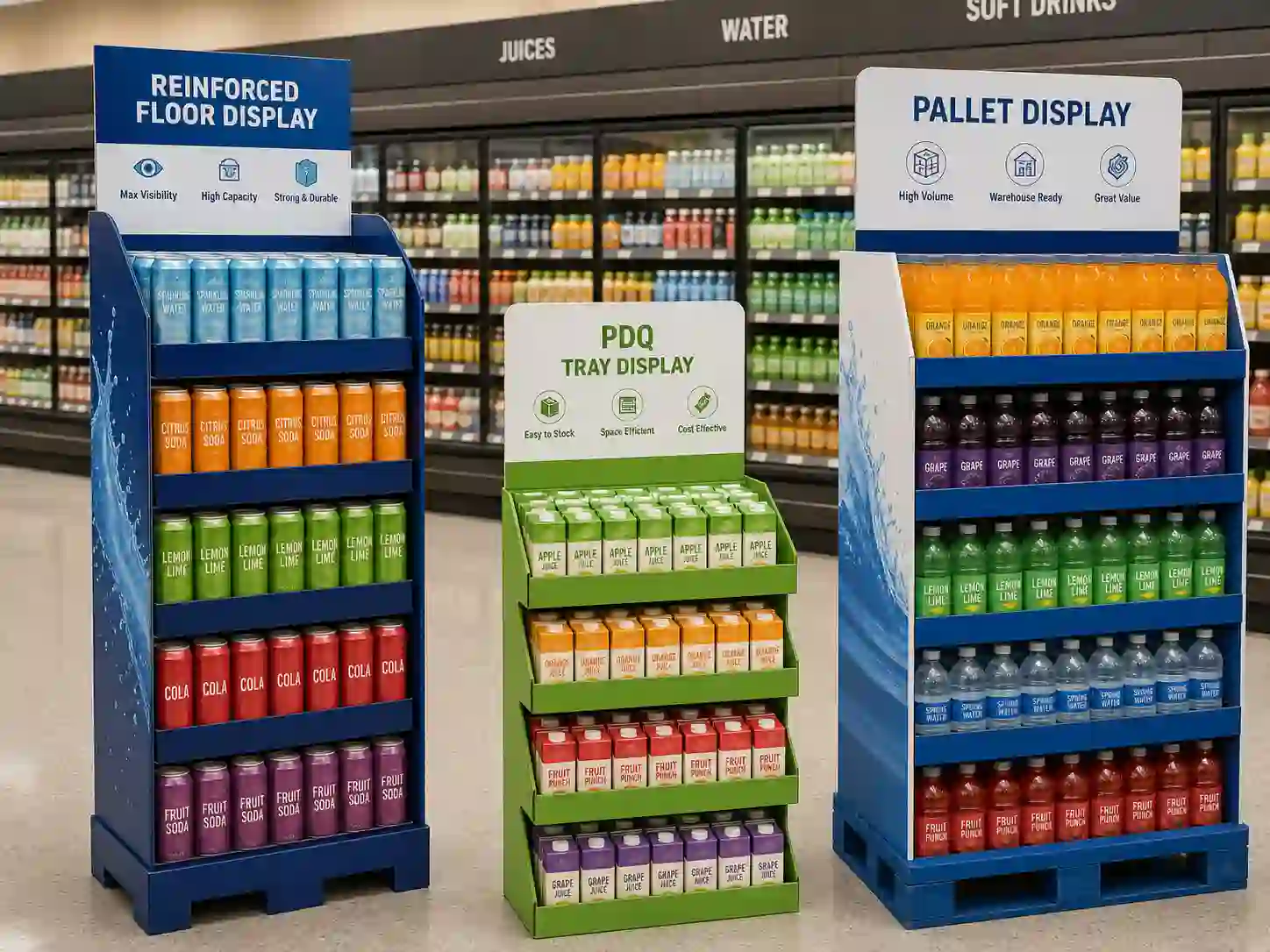
Start With Beverage Behavior Before You Choose a Cardboard Display for Beverages
Not all beverages sell the same way. A sachet drink mix, an energy shot, a bottled tea, and a 24-pack water program do not belong in the same structure, even if they live under the same brand. That is the first filter.
For B2B buyers, beverage lines usually fall into four working groups:
- lightweight single-serve items such as powder sticks, sachets, hydration tabs, and drink mixes
- small rigid packs such as mini cans, cartons, or energy shots
- standard retail bottles or cans sold in branded flavor ranges
- bulk or multi-pack beverage programs for supermarkets and club-style retail
That split matters because the display has to carry more than branding. It has to carry weight, keep visual order after uneven sell-through, and let store staff recover the unit quickly. A good display choice starts with that retail behavior. Not with a favorite structure.
If you want a broader view of structure options first, start with our cardboard display category. It gives you the full range before you narrow the decision to one beverage program.
Idea 1: Use a Counter Display for Powder Sticks, Sachets, and Small Drink Add-Ons
Some beverage products are not heavy. They are fast. Drink sachets, electrolyte tabs, instant coffee sticks, powdered nutrition samples, and mini add-on formats often work best close to the shopper, not in a large freestanding unit.
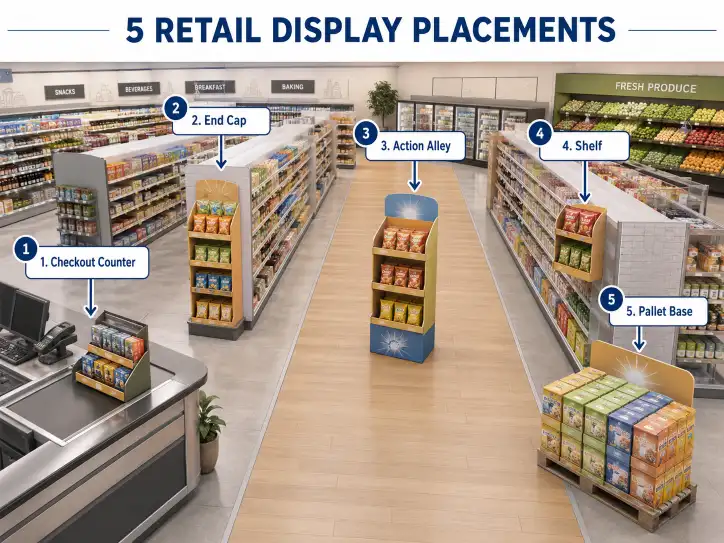
This is where a counter display makes sense. The product is compact, the purchase decision is quick, and the unit does not need to carry deep weight. In these projects, the display is doing one job: make the product easy to notice and easy to pick up.
A counter format usually works best when:
- the pack is lightweight
- the shopper needs only a few seconds to understand the offer
- the retailer wants a small footprint near checkout or near a decision point
- the refill pattern is simple enough for fast top-up
The mistake is treating a counter display like a mini warehouse. Too many SKUs, too many mixed pack heights, and too much copy on the header usually make the unit feel crowded. For beverage add-ons, a smaller, cleaner block often sells better.
Idea 2: Use a PDQ or Shelf-Ready Tray When Speed in Store Matters More Than Drama
Some beverage lines need less theater and more execution speed. A PDQ or shelf-ready tray works well when the retailer values fast placement, fast replenishment, and a clean front row without extra assembly time.
This is often a strong answer for energy shots, mini cartons, stick packs, powdered drink boxes, and small bottled formats that already travel well in organized trays. The shelf-ready approach can help the product move from carton to shelf with fewer handling steps. That is good for the store. It is also good for programs running across multiple locations.
From a supplier perspective, this format is often underused by buyers who focus too much on visual size. A larger unit may look more impressive. A PDQ may produce fewer store headaches. That difference matters in chain retail.
For buyers planning around easier placement and retail handling, our paper display stands for retail page is useful because it connects merchandising value with retailer practicality.
Idea 3: Use a Floor Display for Flavor Ranges, New Launches, and Promotional Runs
A floor display becomes stronger when the beverage line needs more presence than a shelf can give. New flavor launches, seasonal drink ranges, promotional bottle runs, and branded bundles often need a dedicated selling surface, not a quiet shelf slot.
This is where a floor display earns its footprint. It lets the beverage line break out of shelf rhythm and create a stronger visual stop. For products sold through attention, that matters.
But a floor display for beverages only works well when the structure is honest about the load. Bottles and cans turn a pretty design into an engineering job fast. Shelf depth, tray support, base stability, and replenishment behavior matter more here than in lighter categories.
In our experience, beverage floor displays perform best when buyers check three things before approval:
- how the unit looks after one-third of the stock is gone
- whether the best-selling flavor breaks the visual balance too quickly
- whether store staff can restock the lower levels without slowing down
If one of those fails, the display may still launch well and underperform later. That is common. Good sign when you catch it early.
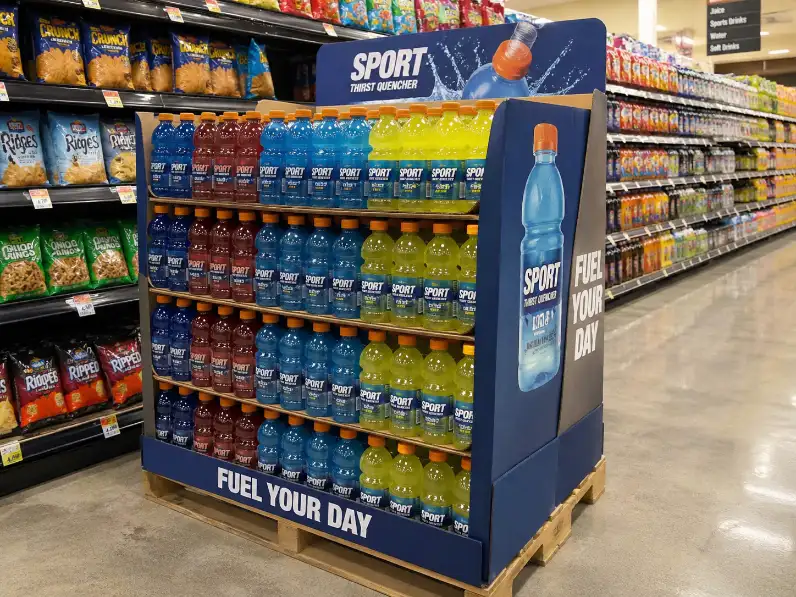
Idea 4: Use a Pallet Display for Bulk Beverage Programs and Club-Style Promotions
Some beverage projects are built around volume, not close-up persuasion. That is where a pallet display works better. Multipacks, case-based promotions, warehouse-club programs, and large seasonal beverage pushes often need scale first.
A pallet display is not for every drink line. It works when the product benefits from looking abundant and easy to load in quantity. Water packs, club-store soda promotions, large juice programs, or wholesale-style beverage bundles are typical examples.
For B2B buyers, the critical question is not whether the pallet display looks strong when full. It is whether it still looks stable and sellable after heavy traffic, uneven case removal, and fast restocking. Beverages move weight and volume together. The structure has to accept both.
This is where a real manufacturing discussion matters. Tray locking, pallet skirt structure, stacked case behavior, carton protection, and flat-pack logistics are all part of the job. If the proposal talks only about graphics, it is not complete.
If your program sits in this heavier range, our custom cardboard display solutions page is the right internal reference because heavier beverage work often needs custom reinforcement rather than a standard template.
Idea 5: Use a Sidekick Only for Lightweight Beverage Formats and Cross-Sell Logic
Sidekicks are not the first answer for beverages, and that is usually right. Most beverage packs are too heavy, too bulky, or too awkward for a side attachment display. Still, there are cases where a sidekick works.
Lightweight drink mixes, hydration tabs, flavor enhancers, and related compact add-on items can perform well on a sidekick when the product belongs beside a larger anchor category. Think hydration tablets near sports nutrition. Drink enhancers near bottled water. Instant beverage sticks near snacks or travel items.
The key is restraint. A sidekick for beverages should be used for add-ons, not for mainline bottle programs. When buyers try to force medium-weight beverages into this format, the structure and the visual effect both weaken.
Idea 6: Use a Mixed-Shelf Floor Unit Only When SKU Logic Is Simple
Many beverage brands want one display to hold every flavor, every pack size, and every promotional line at once. That sounds efficient. It often creates the opposite result.
A mixed-shelf floor display can work, but only when the SKU plan is tighter than the buyer first expects. Similar bottle heights help. Clear flavor grouping helps. A strong price architecture helps. So does a refill pattern that store staff can understand without a chart.
This is one of the best beverage display ideas when the goal is to show a coordinated range, but it is also one of the easiest formats to get wrong. Too many heights. Too many colors. Too many price tiers. Then the display becomes a wall of noise.
In practical terms, beverage floor units stay cleaner when the display solves one retail story at a time. One launch. One promo. One range. That is enough.
Idea 7: Design for Week Two, Not Only for Launch Day
This is the idea buyers skip most often. They approve the display when it is full, untouched, and standing under ideal conditions. The store will never see that version for long.
A good cardboard display for beverages should be reviewed under week-two conditions:
- some stock removed
- fast-selling items depleted first
- partial refill completed quickly
- customer handling already visible
If the unit still looks balanced then, the project is moving in the right direction. If it already looks hollow, crooked, or confused, the display is not ready. That matters more than a beautiful render.
For broader guidance on retail-ready corrugated handling, see FEFCO’s shelf-ready packaging guidance. For general background on corrugated as a retail material, the Fibre Box Association overview is also useful.
| Beverage Program Type | Best Display Direction | Main Strength | Main Risk |
|---|---|---|---|
| Powder sticks and sachets | Counter display | Fast pickup in a small footprint | Crowding from too many SKUs |
| Mini cartons and energy shots | PDQ or shelf-ready tray | Fast store execution | Weak tray design looks empty early |
| Standard bottle or can launch | Floor display | Strong visibility and branded presence | Weight and refill pressure |
| Club-store and bulk promotions | Pallet display | Volume presence | Heavy logistics and structure load |
| Drink add-ons and enhancers | Sidekick display | Cross-sell placement | Not suitable for heavier packs |
| Mixed flavor shelf program | Controlled floor unit | Range visibility | Messy layout after sell-through |
What B2B Buyers Should Compare Before Sampling Starts
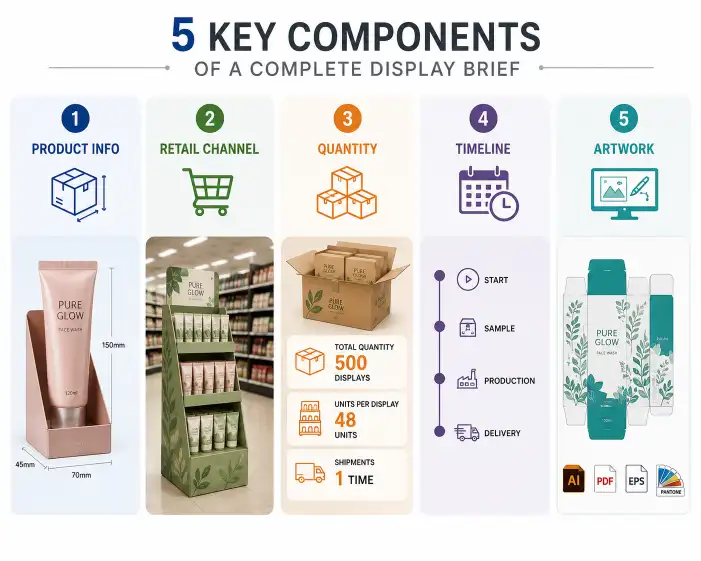
Before you move into artwork, compare these points first:
- single-unit weight and full-case weight
- bottle or carton dimensions
- target retail channel
- expected number of SKUs per display
- refill frequency
- whether the product is chilled, ambient, or shelf-ready only
- shipment format and store setup requirements
That order will give you a better sample brief. It will also make supplier feedback more useful, because the display type, tray logic, and reinforcement level can be discussed with real data instead of guesses.
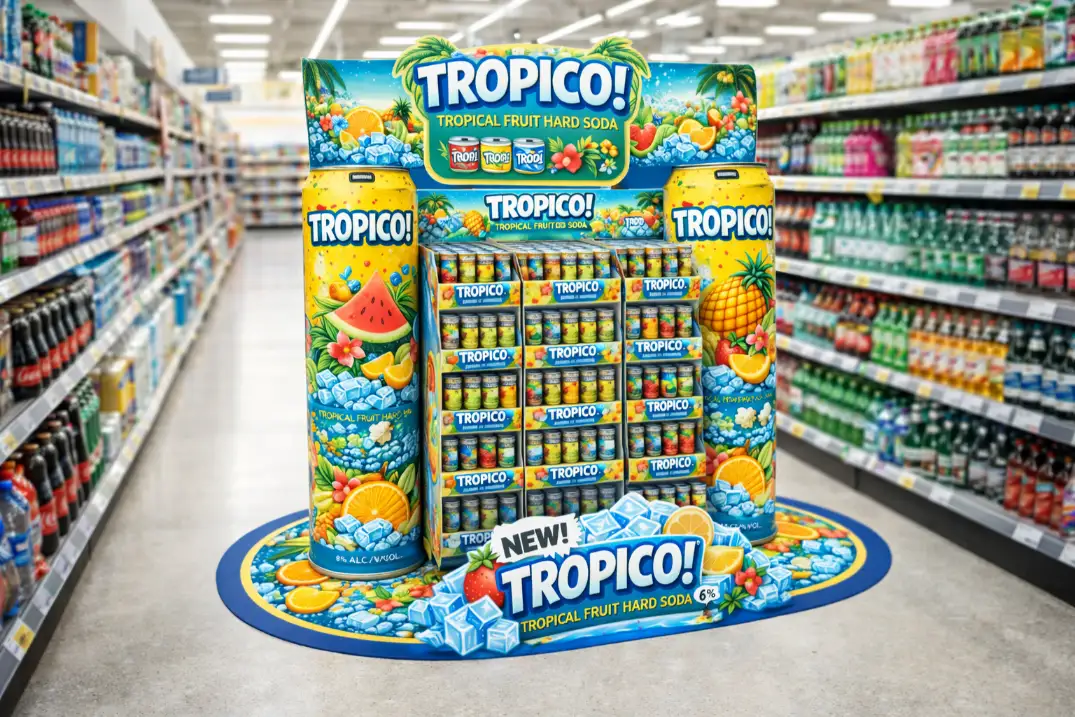
Why the Best Beverage Displays Usually Feel Simpler Than Buyers Expect
The strongest beverage display ideas are often the ones that remove friction. They make the product easier to notice, easier to restock, easier to carry, and easier to understand. Buyers sometimes expect the most effective display to be the most dramatic one. In store, the most effective display is often the one that stays useful after the first rush.
That is why a counter display can beat a bigger floor unit for hydration sticks. That is why a PDQ can outperform a more elaborate tray build for mini cartons. That is why a pallet display can be the right answer for bulk packs and the wrong answer for almost everything else.
Final Buying Direction
The right cardboard display for beverages depends on what the product is asking the retailer to do. Counter displays help compact add-ons. PDQ trays help fast shelf execution. Floor displays help launches and flavor ranges. Pallet displays help bulk movement. Sidekicks fit lightweight cross-sell programs. Mixed-shelf units only work when SKU discipline is tight.
Before you ask for a quotation, prepare the bottle or pack size, unit weight, target quantity, target channel, SKU count, reference structure, and expected delivery window. Then the display conversation becomes sharper, the sample becomes more useful, and the retail result becomes easier to trust.
For help matching your beverage line to the right display direction, send us the product size, full pack weight, channel target, and any reference layout you already have. That is the fastest way to turn a beverage idea into a workable display project.