A new product launch gives buyers one short window to win shelf attention, explain value, and make the first sale. The right cardboard display for new product launches turns that window into a controlled retail presentation, from header message to stock refill.
For brand owners, wholesalers, retail buyers, and trade marketing teams, the question is not only “Which display looks good?” The better question is: which display structure supports the product weight, retail location, launch quantity, assembly method, and export packing plan?
Why a cardboard display for new product launches needs a clear job
A cardboard display for new product launches should do more than hold products. It should introduce the product, guide shoppers, protect stock, fit the store layout, and support fast setup by retail staff.
A launch display often carries more pressure than a normal retail display. The product may be unfamiliar. The packaging may still be changing. The sales team may need the display for supermarkets, pharmacies, convenience stores, trade shows, and distributor showrooms at the same time.
That is why the structure must be planned around the launch channel first. A small cosmetic tester launch may need a counter display with clean compartments. A beverage sample campaign may need a floor display with stronger shelves. A snack launch near checkout may perform better in PDQ trays or compact counter units.
When we develop custom cardboard displays for launch projects, we usually start with five practical questions: Where will the display stand? How heavy is the loaded product? How many SKUs are included? Will the store refill it? How will it be packed for export?
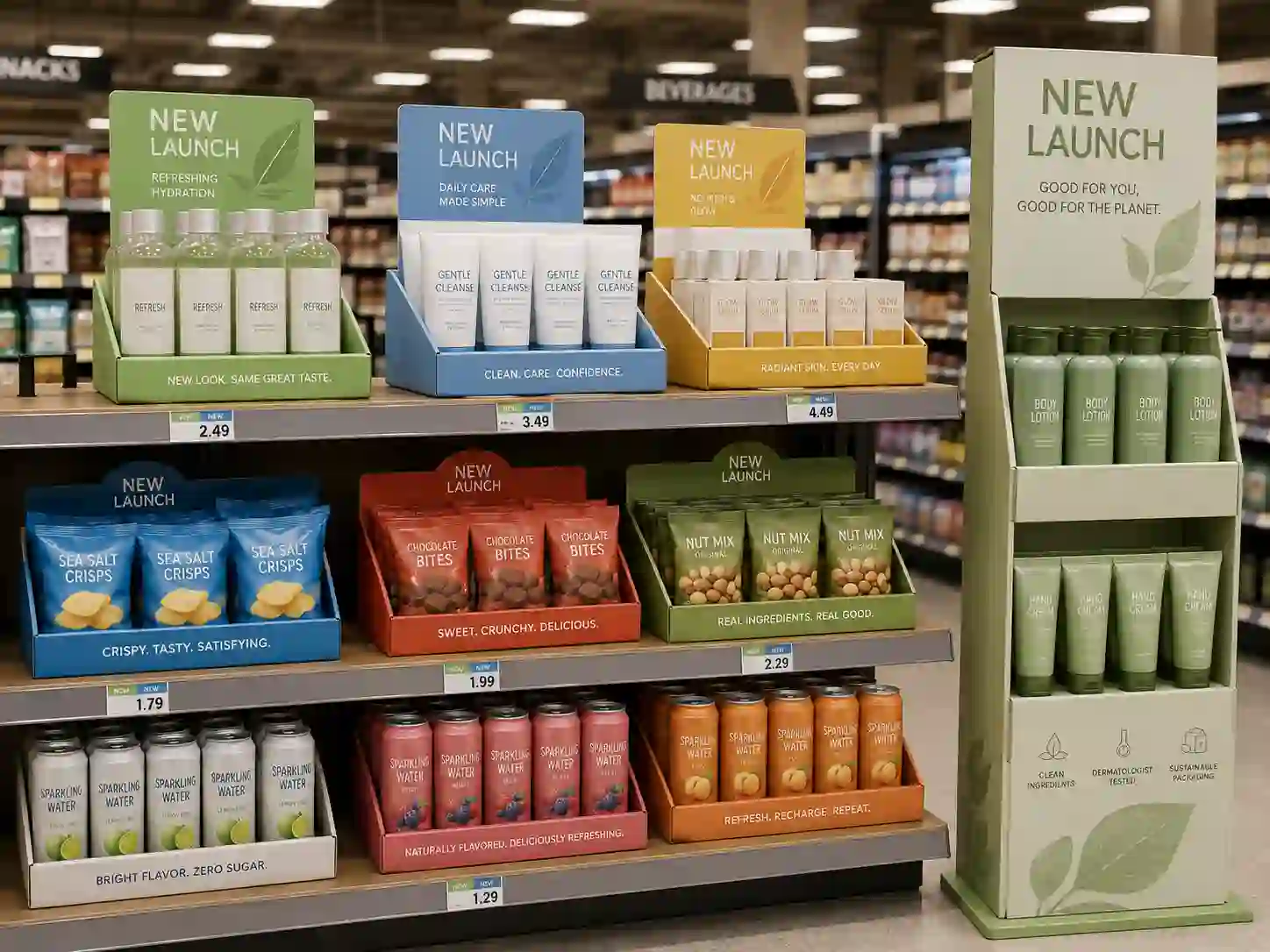
Match the display type to the launch location
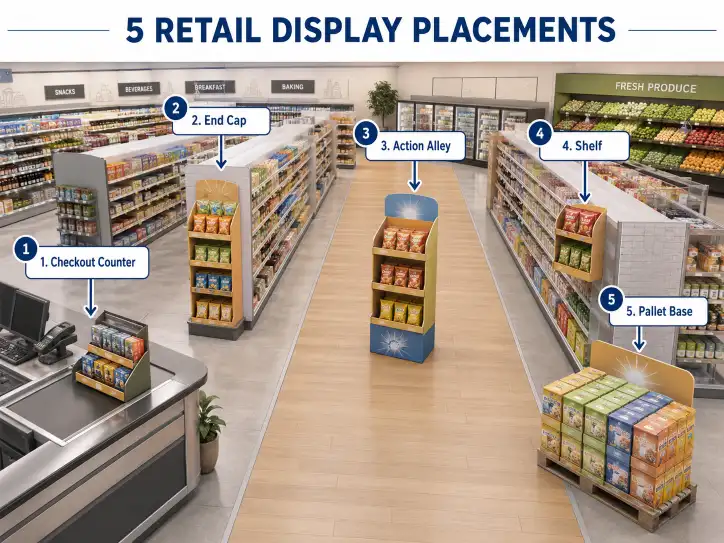
Retail placement decides much of the structure. A product launch near the entrance needs a different display from a launch beside the cashier counter. The same product can use several display types across channels.
Counter displays for small launch products
Counter displays work well for cosmetics, lip balm, small accessories, sample packs, supplements, stationery, and trial-size products. They place the new item close to the cashier, service desk, or beauty counter where impulse decisions happen fast.
A counter display should stay compact, stable, and easy to restock. If the product is light, a simple tiered structure may be enough. If the product is tall or fragile, dividers, side panels, or a back support can reduce movement.
The header card matters. For a new product, shoppers need a clear message in seconds. A short launch claim, simple product benefit, and visible price area are often more useful than a crowded graphic.
PDQ displays for fast retail setup
PDQ displays are useful when speed matters. The products can be packed inside the tray at the factory, then placed on a shelf, counter, or checkout area with limited handling.
This display type is popular for seasonal launches, sample programs, small packaged goods, and multi-store rollouts. For retail staff, a PDQ is easy to open and position. For the brand team, it helps keep presentation consistent across locations.
For heavier products, the tray wall height, bottom board, divider layout, and case packing direction need attention. A weak PDQ tray can deform during transport or lose its shape after refilling.
Floor displays for stronger product storytelling
A floor display gives a new product more visual space. It works well for beverages, snacks, pet products, household items, beauty kits, gift sets, and promotional bundles.
A floor display can include shelves, hooks, trays, side panels, a large header, and printed product education areas. It can also carry more stock, which helps when the launch period is short and stores prefer fewer refills.
The main challenge is strength. Shelf width, board flute, product weight, stacking height, and pallet packing all need to be checked before production. A good cardboard display should look clean in the store and still survive export handling.
Sidekick and peg displays for aisle exposure
Sidekick displays and peg displays are useful for products that need aisle visibility without taking full floor space. They can be attached near shelves, placed beside endcaps, or used in chain stores where floor area is limited.
Peg displays suit hanging products such as accessories, packaged tools, socks, phone items, small toys, and personal care products. Sidekick displays work well for add-on products or launch items linked to a main category.
For these structures, hole placement, hook strength, board reinforcement, and balance are important. A hanging display with poor weight distribution can tilt, bend, or create an untidy shelf impression.
Quick comparison of launch display options
| Display type | Best for | Key structure points | Retail advantage |
|---|---|---|---|
| Counter display | Small products, testers, sample packs | Compact base, clear tiers, header card, dividers | Good for checkout and service counters |
| PDQ display | Fast rollout, pre-packed launch trays | Strong tray base, product dividers, case-ready packing | Easy for store staff to place |
| Floor display | Larger launch campaigns, multi-SKU products | Shelf strength, side panels, header, reinforced base | Strong brand visibility |
| Sidekick display | Aisle promotions, add-on products | Stable side structure, balanced stock load | Saves floor space |
| Peg display | Hanging packs, accessories, small items | Hook layout, reinforced peg area, clean spacing | Shows many SKUs in a small area |
| Pallet display | Bulk launch promotions, club stores | Pallet footprint, stack strength, header, export packing | High stock capacity and strong impact |
Build the structure around product weight and packaging size
A display concept can look attractive on screen but fail when product weight is ignored. Before sampling, the manufacturer needs product dimensions, unit weight, carton quantity, packaging shape, and expected load per shelf or tray.
For light products, E-flute or B-flute corrugated board may be suitable, depending on the design. For heavier products, stronger flute combinations, reinforced shelves, double-wall support, or internal braces may be needed.
Product shape also matters. Round bottles need different support from flat boxes. Pouches need a tray angle or front lip. Hanging packs need peg spacing. Gift sets may require deeper shelves and stronger side walls.
A practical cardboard display for new product launches should be tested with real products or accurate dummy packs. During sampling, we check whether the product sits straight, whether the front view is clean, whether the display can be moved safely, and whether the bottom area can carry the load.
Plan graphics for launch education, not decoration
A new product needs quick explanation. Display graphics should support that job.
The header can introduce the product line. Side panels can show key selling points. Shelf lips can separate flavors, sizes, or product functions. Front panels can carry a QR code, campaign line, or simple usage message.
For B2B launch projects, the artwork should also consider store lighting and viewing distance. Fine text may look clear on a computer but disappear in a busy retail aisle. Large contrast, simple claims, and clean SKU grouping often work better.
If the product is still in packaging development, the display artwork can stay flexible. Some buyers prepare a neutral structure first, then update the printed graphics after final product packaging is approved.
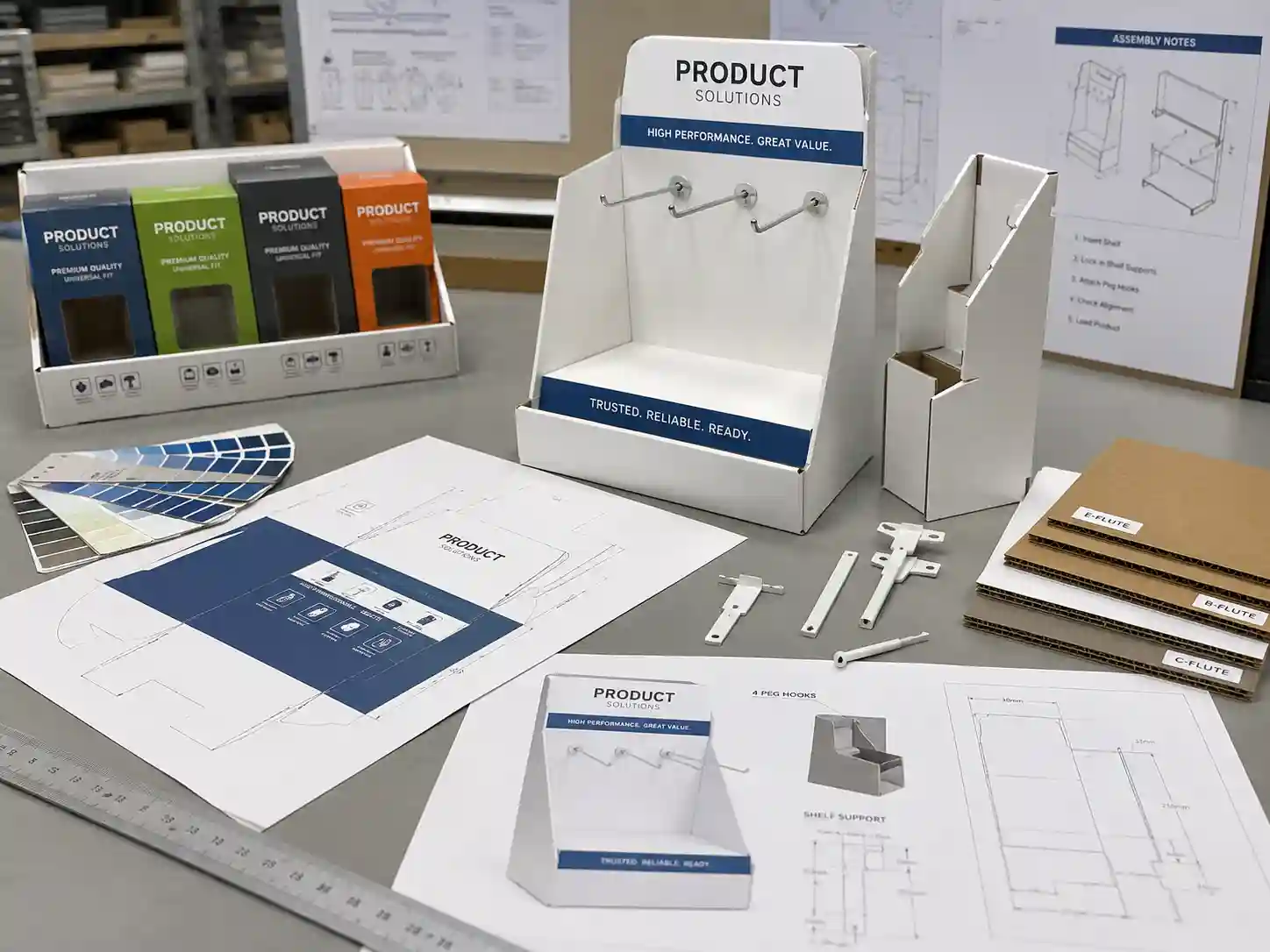
Sampling should check both appearance and handling
A sample display is not only a visual mockup. It is a handling test.
During sample review, the buying team should check assembly time, shelf strength, product fit, edge quality, printing alignment, and carton packing method. If the display will be assembled in stores, the instruction sheet must be simple and clear.
For export projects, flat packing is often preferred because it saves shipping volume. But the display still needs to be easy to open, fold, lock, and load. If retail staff need too many steps, the store presentation may become inconsistent.
A good sample review should answer these questions:
- Can one person assemble it without special tools?
- Does the loaded display remain stable?
- Are shelves level after product loading?
- Is the header easy to attach?
- Can the display be refilled without damaging the structure?
- Does the packed carton protect printed surfaces?
Standards and references can help during production planning. FSC-certified paperboard may support responsible sourcing goals. ISO-based quality systems can guide process control. FEFCO-style packaging references can help teams communicate carton and corrugated structure terms more clearly.
Refill design can extend the launch period
Some launch displays are used for one short campaign. Others need to stay in stores for weeks. If the display will be refilled, the structure needs extra planning.
Shelf openings should allow staff to add products without bending the front lip. Dividers should keep products aligned after partial sales. Hooks should be easy to reload. The bottom area should not weaken after the first stock cycle.
Refill cartons should also match the display plan. For example, if a floor display holds 60 units, the refill carton quantity should make sense for store operations. A display that holds 60 units but ships refills in 17-unit cartons creates extra handling and stock imbalance.
For launch projects with several retail channels, buyers may use one main structure and adapt shelf count, height, or header size for each channel. This keeps the brand look consistent while giving each store format a practical display.
Export packing affects cost and retail success
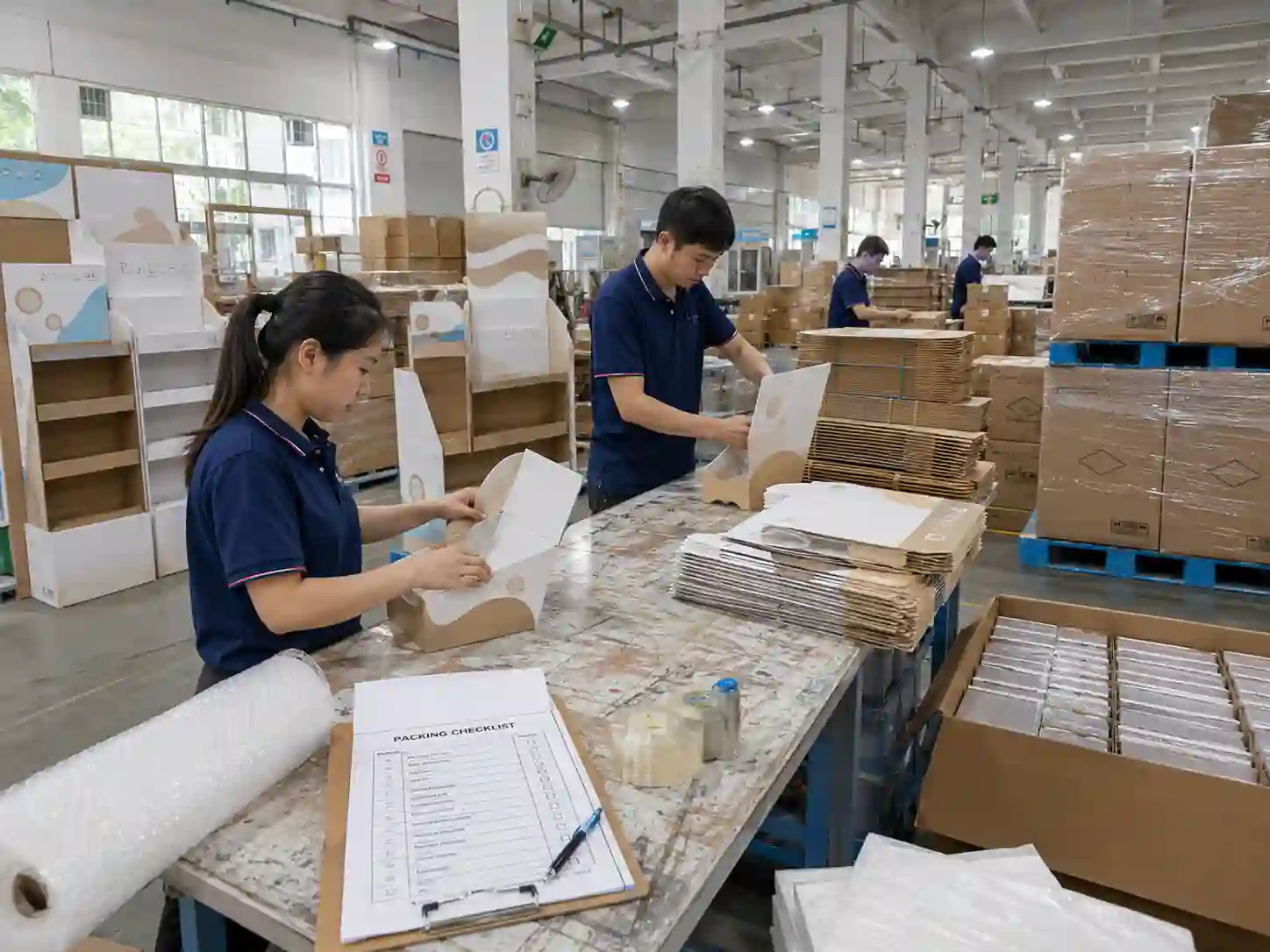
Export packing is often discussed late, but it can decide whether a launch display reaches stores in good condition. Printed cardboard displays need protection against compression, rubbing, moisture, and rough handling.
Flat-packed displays usually require master cartons with clear part grouping. Headers, shelves, side panels, support pieces, and instruction sheets should be packed in a logical order. For pre-packed PDQ displays, the inner product arrangement, outer carton strength, and opening method are part of the retail presentation.
Pallet loading also matters. If cartons are stacked too high or placed without corner protection, display parts may bend before they arrive. For large launch campaigns, a packing test or drop test can reduce risk before mass production.
At Leader Display, launch display projects are usually reviewed from structure to carton packing, not only from artwork to printing. That process helps reduce surprises when the display moves from sample room to warehouse to store.
How to choose the right display for your launch
Start with the retail environment. If the product needs impulse sales, consider counter displays, PDQ trays, or small peg displays. If the product needs education and brand blocking, a floor display or sidekick display may work better. If the launch needs bulk volume in club stores, pallet displays may be the right direction.
Then review product weight. A light skincare box and a glass beverage bottle cannot use the same shelf logic. Shelf span, board grade, support folds, glue points, and base structure should match the loaded display, not the empty display.
Next, confirm how the store will handle the unit. Some displays arrive flat and are assembled by staff. Some PDQ trays arrive loaded. Some floor displays are assembled by merchandisers. This affects structure, packing, instructions, and cost.
Finally, think about the launch timeline. A fast campaign may need a simpler structure with fewer custom parts. A strategic product launch may justify more sampling, stronger materials, and a more detailed retail presentation.
Common mistakes to avoid before production
One common mistake is choosing a display only from a photo. A display image can show shape and style, but it does not show board thickness, load capacity, packing volume, or assembly difficulty.
Another mistake is adding too many SKUs to one display. A launch display should make selection easy. If shoppers need time to understand the layout, the structure may need fewer sections or clearer grouping.
A third mistake is leaving export packing until the end. The display may look good when assembled, but printed surfaces, headers, and shelves can be damaged during transit if carton packing is weak.
The safest path is to involve the display manufacturer early. With product samples, artwork direction, target store type, and launch quantity, the factory can suggest a structure that balances appearance, strength, cost, and shipping efficiency.
Practical launch display checklist for buyers
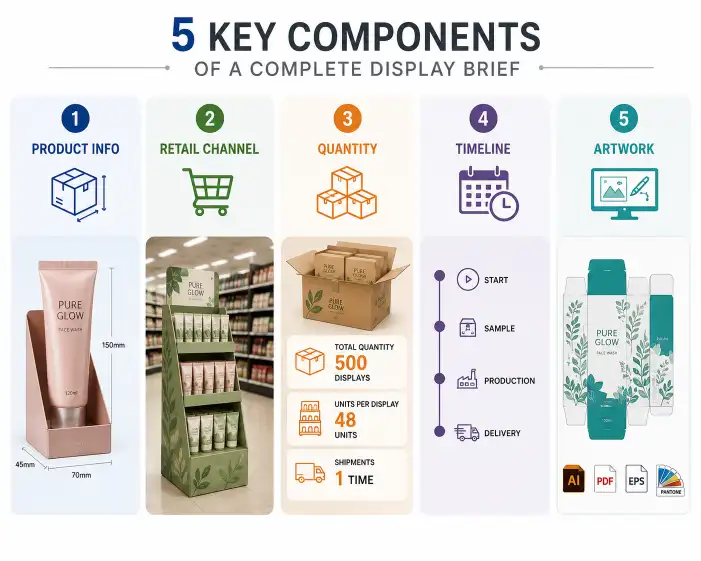
Before requesting a quotation, prepare the core project details. This helps the manufacturer respond with a useful structure instead of a rough guess.
Include product size, product weight, number of SKUs, target quantity, retail location, expected load, artwork files or brand direction, preferred packing method, destination country, and timeline. Photos of similar displays can help explain the style, but technical details should guide the final decision.
For a custom project, you can also share the store requirements. Some retailers have rules for footprint, height, pallet size, materials, barcode position, and safety. Sharing those rules early can prevent redesign later.
A well-planned cardboard display for new product launches helps the brand enter stores with a clear message, stable structure, and smoother setup process. When your product details, retail channel, and launch schedule are ready, the next step is to turn them into a display structure that can be sampled, packed, shipped, and placed in front of buyers with confidence.