Choosing the right cardboard display is not about picking the tallest unit or the lowest price. For a retail buyer, the better option is the one that matches product weight, store position, campaign duration, packing method, and setup requirements. That decision starts with structure.
A counter display may work well for small cosmetics, snacks, sample packs, or checkout promotions. A floor display can carry more SKUs and create stronger visibility in an aisle. A pallet display may be the better choice for club stores, warehouse retailers, or bulk promotional programs.
The same product can perform differently in each structure.
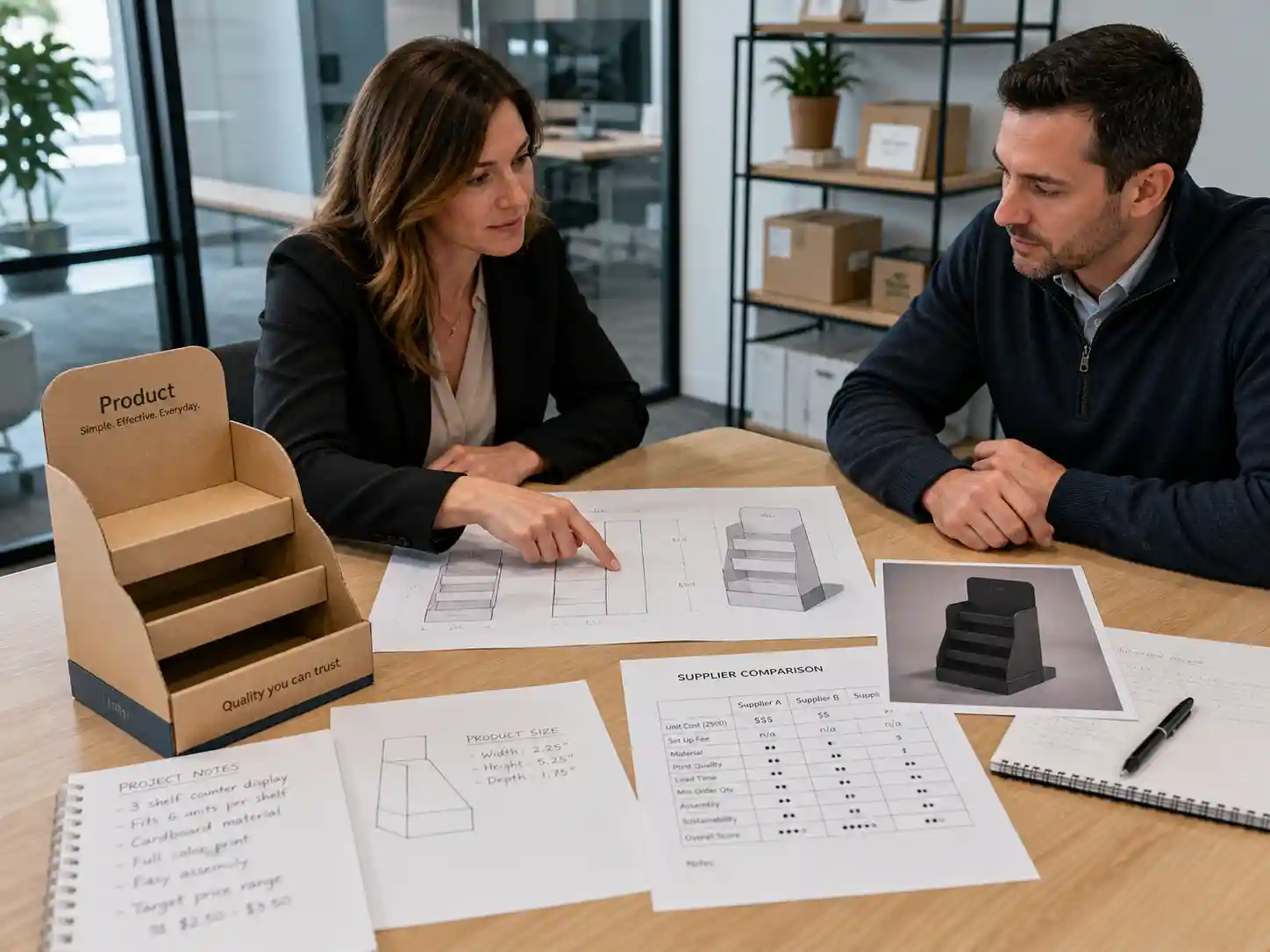
Start With the Product, Not the Display Type
Many buyers begin by asking, “Which cardboard display is better?” A practical manufacturer will usually ask a different question first: what product will the display hold?
Product details decide the structure more than appearance does.
A light product can sit safely in a PDQ display or counter display. Bottles, jars, cans, pouches, or boxed products may need reinforced shelves, thicker board, inner support panels, or a stronger base. Hanging items may need a peg hook display with secure back panel strength and stable weight distribution.
Small choices matter.
A display designed for 20 lightweight sample boxes cannot automatically carry 20 glass jars. A shelf that looks fine in a render may bend after several days in store if the board grade, flute direction, and shelf locking method are not checked before bulk production.
For custom projects, buyers should prepare:
- Product size and unit weight
- Number of pieces per display
- Display position in store
- Expected campaign period
- Retailer setup rules
- Packing and shipping method
- Artwork and brand color requirements
These details help the supplier recommend the right cardboard display structure before sampling begins. They also reduce redesign work later.
For brands that need structure, printing, sampling, and bulk production support, custom cardboard display solutions can help turn early display ideas into production-ready retail units.
Compare Cardboard Display Options by Retail Position
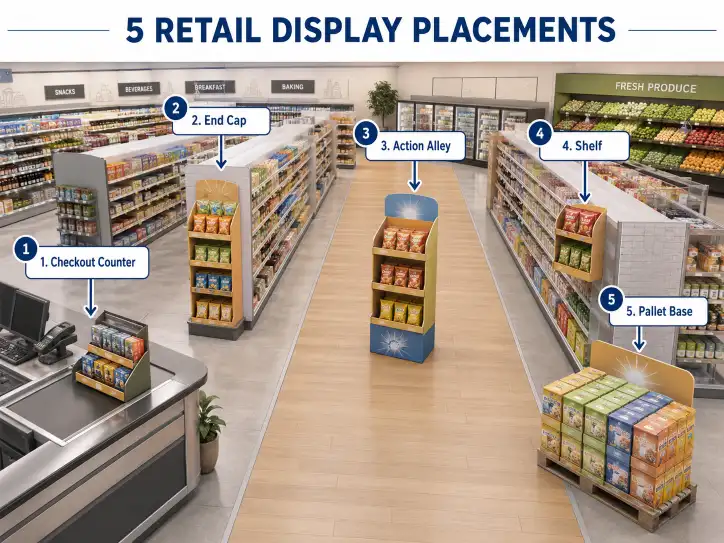
Display position affects visibility, load, footprint, and shopper behavior. A strong structure in the wrong position may still fail commercially.
A counter display is close to the buyer’s hand. It supports impulse purchases, tester items, accessories, and small packaged products. The structure should be compact, easy to refill, and stable on a checkout counter or service desk.
A floor display offers more space. It can hold several shelves, side panels, headers, and product storytelling graphics. The base must resist leaning, especially when shoppers remove products from one side first.
A sidekick display attaches to an aisle fixture or endcap area. It can save floor space, but it needs careful hook, strap, or hanging design. The supplier should confirm how the retailer expects the unit to be installed.
A pallet display is built for volume. It is common for supermarkets, warehouse clubs, and seasonal bulk programs. The unit needs stronger outer protection, clear assembly instructions, and export packing that protects printed panels during transportation.
Cardboard Display Structure Comparison for B2B Buyers
| Display Type | Better For | Key Structure Check | Common Buyer Risk |
|---|---|---|---|
| PDQ display | Small products, shelf-ready promotions, sample packs | Tray strength, divider fit, front lip height | Product movement during shipping |
| Counter display | Checkout areas, beauty items, snacks, accessories | Base stability, header support, product angle | Too much weight on a small footprint |
| Peg hook display | Hanging products, blister packs, tools, accessories | Back panel strength, hook spacing, load balance | Panel tearing around hooks |
| Floor display | Aisle promotions, multi-SKU programs, product launches | Shelf load, side wall strength, base support | Shelves bending after store setup |
| Sidekick display | Aisle-side promotions and space-saving retail programs | Hanging method, retailer fixture fit | Poor compatibility with store fixtures |
| Pallet display | Bulk campaigns, club stores, supermarket programs | Base strength, carton packing, transport protection | Damage during export or warehouse handling |
| Dump bin display | Loose products, seasonal items, promotional stock | Bin wall strength, bottom support, refill access | Bulging sides under product pressure |
This table is a starting point, not a final specification. The better option depends on product weight, quantity, store rules, and how the display will be packed and assembled.
Load-Bearing Checks Should Happen Before Bulk Production
A cardboard display is a printed retail tool, but it is also a working structure. It must hold real products, survive handling, and stay presentable during the campaign.
Load testing should be practical.
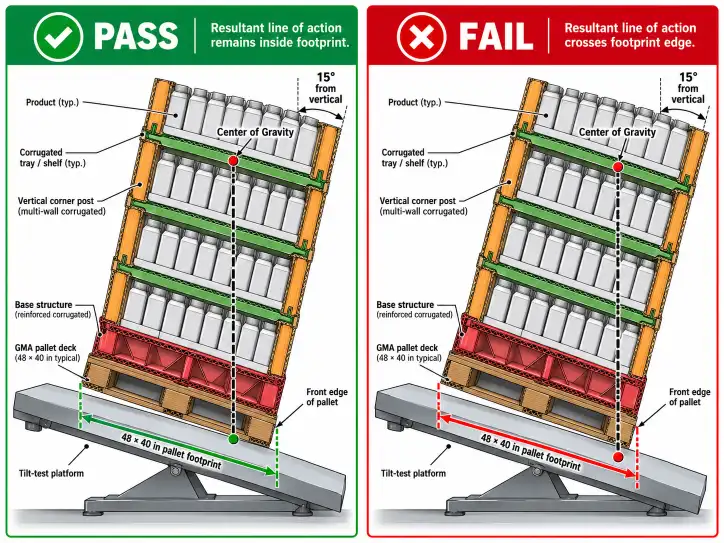
For a floor display, the supplier should check shelf strength with the planned product weight, not with an estimated weight that feels close. The team should also test how the display behaves when the top shelf is full and the lower shelf is partly empty.
That situation happens in store.
For a peg hook display, the test should focus on hook spacing, hole strength, and back panel reinforcement. If the hooks are too close, products may overlap. If the panel is too weak, the display may tear near the hook area.
For a pallet display, the test should include base support, stacking pressure, carton protection, and transport movement. A unit that looks stable in a sample room may face vibration, compression, and handling pressure during export shipping.
Useful checks include:
- Product loading test
- Shelf bending check
- Base stability check
- Hook pull check
- Assembly test
- Flat packing review
- Carton drop or handling simulation
- Printed panel protection check
For buyers comparing suppliers, ask how the factory checks load before mass production. A clear answer is more useful than a broad promise.
Material Selection Changes the Result
Material choice affects cost, strength, print quality, and shipping weight. A stronger board is not always the better choice. The right board is the one that meets load and retail requirements without creating unnecessary cost or packing problems.
Common material decisions include:
- Corrugated board grade
- Flute type and direction
- Greyboard or paperboard thickness
- Surface paper for printing
- Lamination or coating
- Reinforcement panels
- Inner trays or dividers
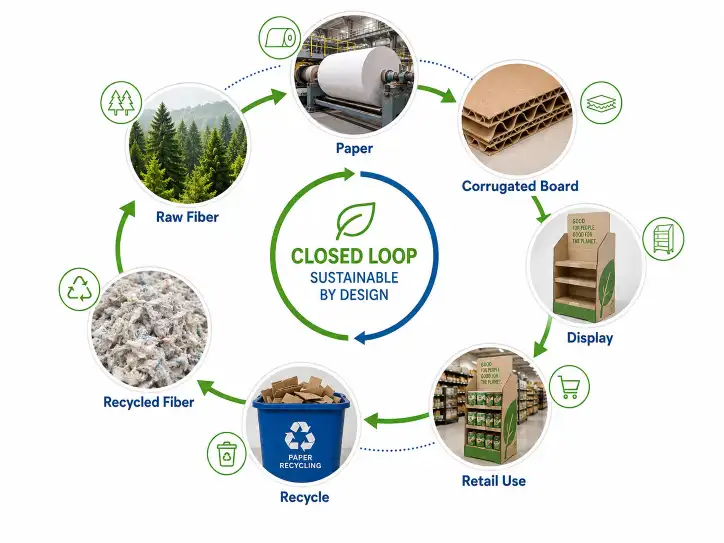
For sustainability or sourcing requirements, buyers may also ask about FSC-related paper sourcing, recycling considerations, or documentation from official certification bodies. When export markets or retail programs require compliance information, these details should be discussed before sampling.
Printing also affects structure.
Heavy ink coverage, dark colors, lamination, hot stamping, or spot UV can change the finishing process and production schedule. If a cardboard display has many printed panels, artwork accuracy and color control should be reviewed during sample approval, not after bulk printing starts.
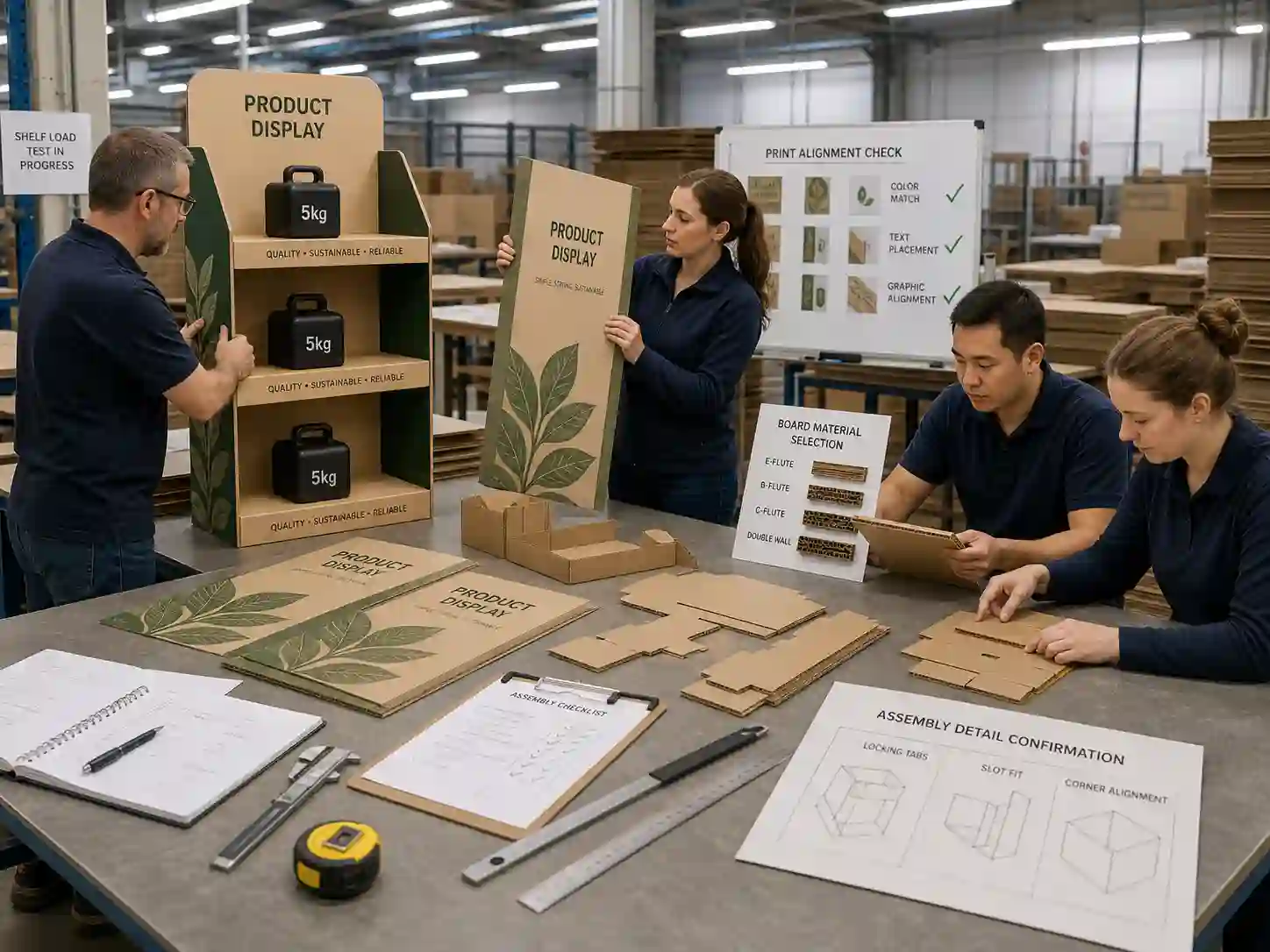
Match Printing Artwork With Display Structure
Artwork should not be designed separately from the display structure. A header, shelf front, side panel, or base panel may look different after folding, locking, or inserting product.
This is where many projects lose time.
A graphic that works on a flat dieline may be partly hidden by a shelf lip. A logo may sit too low once products are loaded. A QR code may be placed on a panel that shoppers cannot scan easily. A product claim may be blocked by a divider.
Before approving artwork, buyers should check:
- Logo position after assembly
- Product visibility on each shelf
- Shelf front message height
- Header size and reading distance
- Barcode or QR code accessibility
- Color consistency across panels
- Retailer-required warning or recycling marks
- Any FSC, recycling, or compliance marks when applicable
A practical cardboard display supplier should review artwork with the structure team, not only with the printing team. Structure and graphics need to work together.
For more retail display education and in-store selling support, see paper display stands for retail.
Sampling Is Where the Better Option Becomes Clear
A sample is not only a visual approval item. It is the point where the buyer can test the display as a real retail tool.
For a cardboard display project, sampling should answer several questions:
- Does the display fit the product correctly?
- Is the loading method easy for store staff?
- Does the structure stand straight after assembly?
- Are shelves, hooks, or trays strong enough?
- Is the printed message clear from the shopper’s position?
- Can the display be flat packed safely?
- Is the carton size suitable for shipping and storage?
- Can the retailer assemble it without confusion?
A white sample may be enough for early structure testing. A printed sample is useful when brand color, shelf message, finish, or full retail presentation must be approved. For larger campaigns, buyers may need both.
Do not skip structure testing because the render looks good.
A render helps communication. A physical sample prevents expensive mistakes.
PDQ Display or Counter Display: Which Is Better?
A PDQ display and a counter display are both compact, but they do not serve the same job.
A PDQ display is often used as a shelf-ready tray or small retail unit. It can hold products in organized rows and may ship with products pre-loaded, depending on the project. This makes it useful for retailers that want fast shelf setup.
A counter display is usually designed for checkout counters, reception desks, beauty counters, or service areas. It needs stronger visual impact at close range. It may include a header, stepped tray, small shelves, or product compartments.
Choose a PDQ display when:
- The product is small and light
- Shelf-ready setup is important
- The retailer needs fast replenishment
- The campaign uses multiple store locations
- Product organization matters more than height
Choose a counter display when:
- The display sits near checkout
- The buyer wants impulse sales
- Product storytelling needs a small header
- The unit must look clean from close range
- Space is limited
Neither option is automatically better. The better structure depends on retail position and loading method.
Floor Display or Pallet Display: Which Is Better?
A floor display gives brands more vertical space and stronger shelf presence. It can work for product launches, seasonal campaigns, multi-SKU displays, and promotional programs.
A pallet display is built for higher volume. It often works better for warehouse clubs, supermarkets, beverage promotions, large seasonal campaigns, or retail programs that require fast movement of bulk stock.
Choose a floor display when:
- The product range needs shelf separation
- The brand needs side panels and header space
- The store has limited floor area
- The campaign needs a clean visual presentation
- The product weight is moderate and controlled
Choose a pallet display when:
- The retailer needs bulk stock on the floor
- The program involves heavy products
- Warehouse handling is part of the supply chain
- The display must arrive with stronger outer packing
- The campaign depends on high-volume sell-through
For heavy products, pallet display design should involve stronger base planning, export carton protection, and warehouse handling checks. A light-duty floor display should not be forced into a pallet program.
Packing and Assembly Can Decide the Better Choice
A display that is easy to produce but hard to assemble may create problems at store level. A display that looks premium but arrives damaged will not support the campaign.
Packing matters.
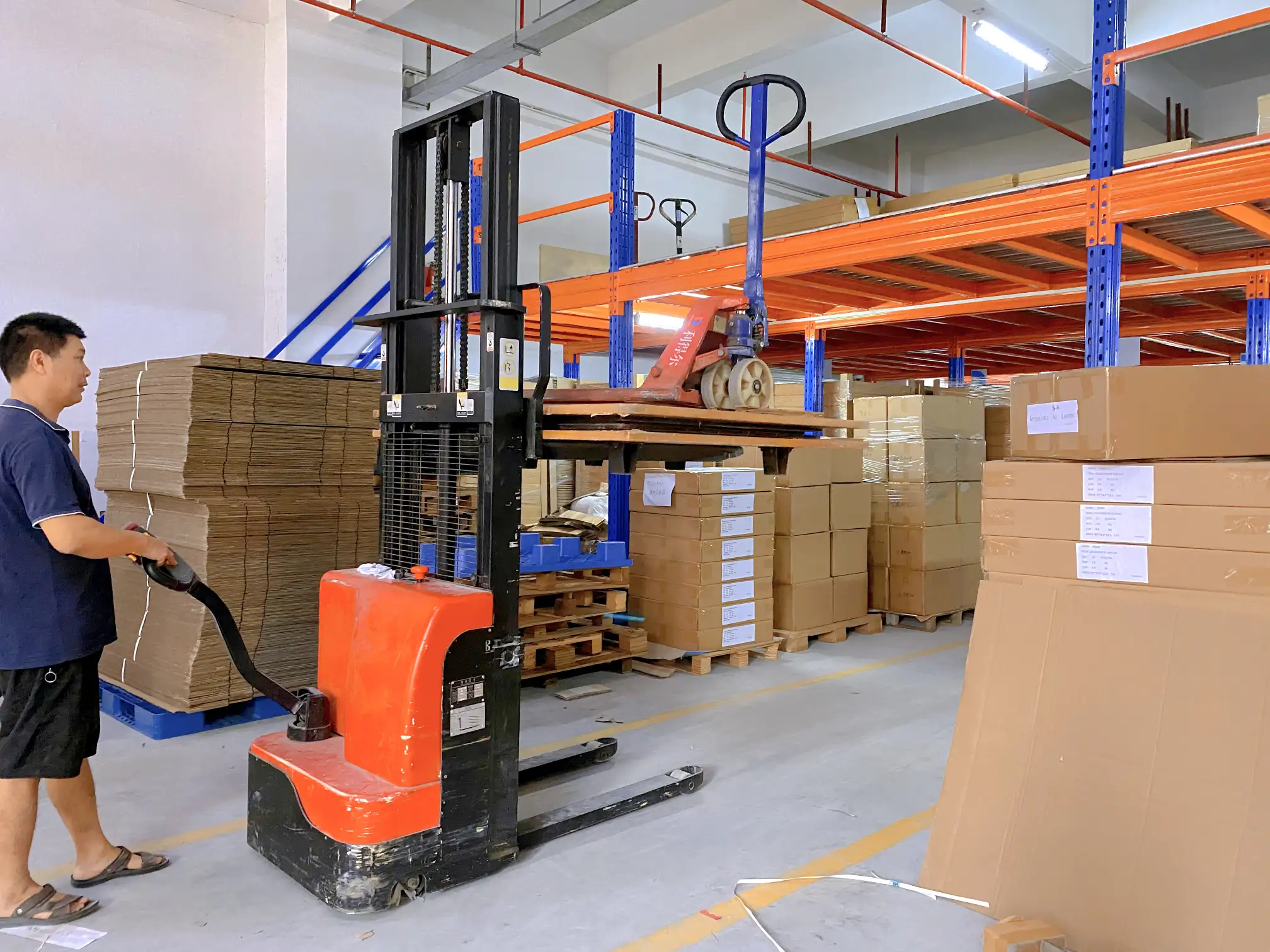
Many cardboard display projects are shipped flat packed to save space. This can reduce shipping cost, but the structure must be easy to assemble. Locking tabs, shelves, support panels, hooks, trays, and headers should be clear.
Assembly instructions should be simple. Store staff may not have time to study a complex diagram.
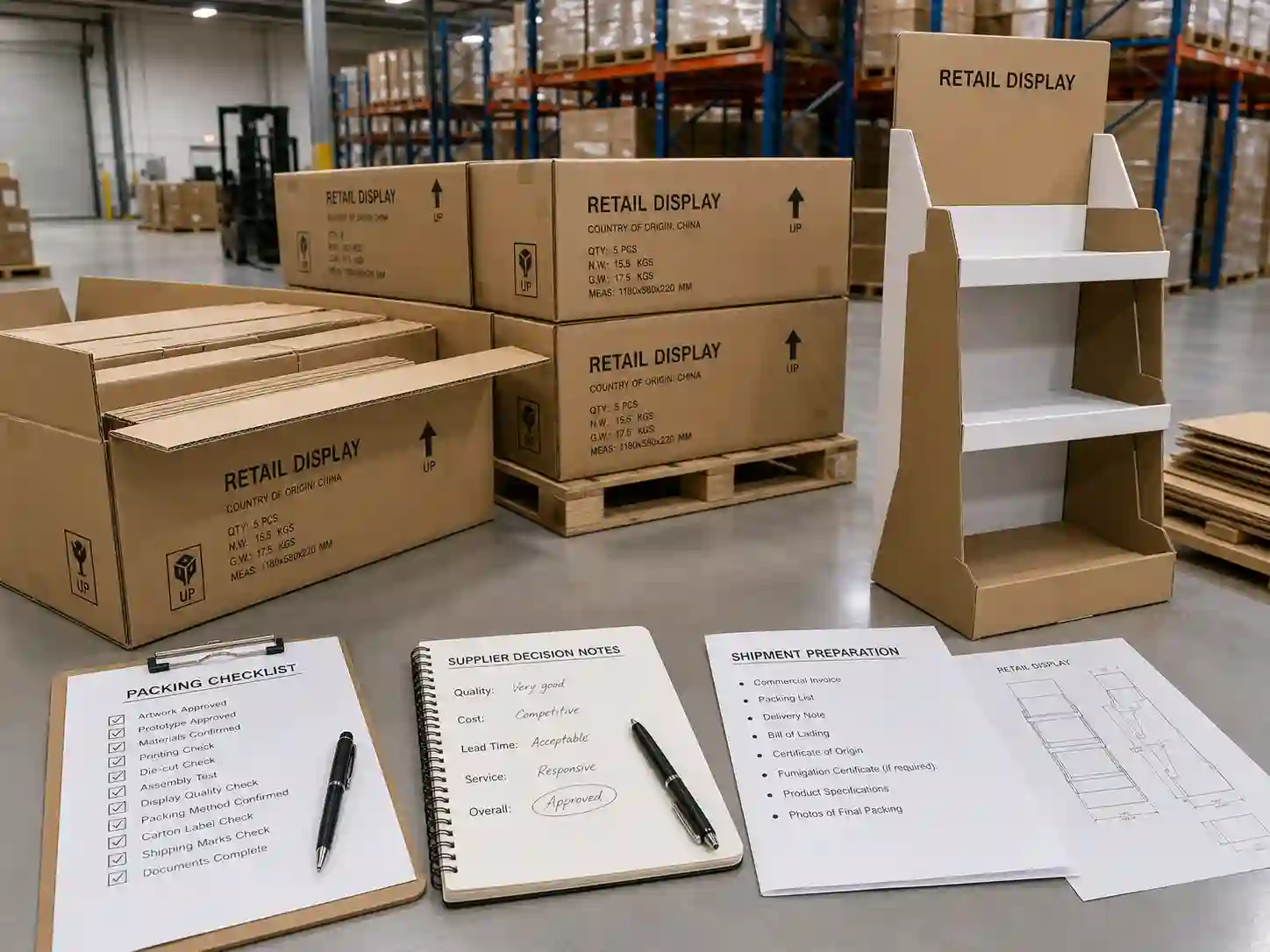
For export packing, buyers should review:
- Master carton size and strength
- Number of displays per carton
- Protection for printed panels
- Flat packing sequence
- Accessory packing for hooks or clips
- Labeling for store or warehouse distribution
- Palletization method
- Moisture and compression considerations
A stronger structure may cost more per unit, but it may reduce damage, complaints, and replacement cost. In B2B retail programs, that tradeoff is often worth discussing.
Supplier Evaluation: What Buyers Should Ask
The better cardboard display solution also depends on the supplier’s ability to manage the project from concept to shipment. A low unit price does not help much if the structure is weak, the print is inconsistent, or packing instructions are unclear.
Ask suppliers practical questions:
- Have you produced similar display structures before?
- Can you recommend board grade based on product weight?
- Will you make a white sample before printing?
- How do you check shelf load and base stability?
- Can you adjust dielines after sample testing?
- How do you protect printed panels during export packing?
- Can you support artwork review before bulk printing?
- What information do you need before quoting?
Clear answers show process control.
For general factory discussion, custom structure review, or project planning, buyers can contact Leader Display project support with product details and retail requirements.
When a Custom Cardboard Display Is the Better Choice
A standard display may work when product size, weight, store position, and campaign goals are simple. Many B2B projects are not that simple.
A custom cardboard display becomes the better choice when the buyer needs controlled product fit, stronger branding, retailer-specific size, special inserts, shelf layout, peg hook spacing, or export packing support.
Custom does not always mean complex. It means the structure is matched to the project.
A practical inquiry should include:
- Product photos or drawings
- Product size and weight
- Quantity per display
- Expected order quantity
- Target retail channel
- Preferred display type
- Artwork or brand guide
- Reference display photos
- Packing method
- Delivery schedule
With these details, the supplier can suggest structure, material, printing method, sample process, and packing plan more accurately. That saves time on both sides.
Final Decision: Better Means Safer, Clearer, and Easier to Execute
The better cardboard display is the one that fits the product, holds the load, works in the planned retail position, protects the printed surface during shipping, and can be assembled without confusion.
A counter display may be better for small checkout products. A floor display may be better for aisle visibility. A pallet display may be better for bulk retail programs. A peg hook display may be better for hanging products. The right answer comes from product data, store position, and production checks.
Before choosing, compare structure, load, display position, artwork, sampling, packing, and retailer setup. Share the real project details early. A manufacturer can then recommend a display that is practical to produce, safer to ship, and clearer for retail execution.
That is where a cardboard display project starts moving in the right direction.