A trustworthy cardboard display manufacturer does not rely on polished promises. For B2B buyers, trust starts when a supplier can turn your product size, product weight, retail channel, and campaign goal into a sample that can be tested, reviewed, packed, and improved.
Claims are easy. Samples expose the truth.
Before you approve a bulk order, the sample stage shows whether the supplier understands structure, printing, assembly, load-bearing, product fit, and store setup. This is where a cardboard display project becomes practical instead of theoretical.

Why Samples Reveal More Than Supplier Claims
Many suppliers can say they produce retail displays, PDQ displays, counter displays, sidekick displays, floor displays, and pallet displays. Fewer can explain why one structure works better than another for your product, your carton size, your retail channel, and your campaign timeline.
A sample shows how the supplier thinks.
For example, a counter display for small cosmetic products may need tight product slots, a low front lip, and a clear header area for branding. A floor display for beverage bottles needs stronger board, proper shelf reinforcement, and a base that can handle product weight during store use. A peg hook display needs hook spacing, hole reinforcement, and product hanging balance. The wrong structure can look acceptable in a photo but fail in retail.
That is why B2B buyers should ask for more than a beautiful rendering. Ask for a real sample or a white mock-up before printing. A plain structural sample can answer questions that a sales presentation cannot:
- Will the product fit the tray or shelf correctly?
- Can the display stand without leaning?
- Is the assembly method clear for store staff?
- Can the display be flat packed for export shipping?
- Does the structure protect printed panels during transport?
- Is there enough brand space without weakening the display?
A practical supplier will welcome these questions because they connect design decisions with production reality. That is the first sign of a trustworthy partner.
For custom structures, sampling, printing support, and production discussion, buyers can review custom cardboard display solutions to understand how a factory-led project can move from concept to retail-ready display.
A Trustworthy Cardboard Display Supplier Talks About Risk Early
A supplier who only says “no problem” may sound easy to work with at the start. In a B2B project, that answer can become expensive later.
A reliable cardboard display manufacturer will identify risk before mass production. That includes product weight, retail placement, corrugated board choice, lamination, shelf depth, carton protection, display height, insert design, and loading direction.
Small decisions matter.
If the display is too tall for its base, it may feel unstable. If the shelf span is too wide, it may bend under product weight. If the header board is large but not supported, it may curve during shipping or store setup. If the printed surface is not protected, scuff marks can appear before the display reaches the retailer.
Experienced factories do not treat these issues as problems after production. They check them during sampling.
Product Weight Changes the Structure
The product weight should be one of the first details shared with the supplier. A display for lightweight snack packs can use a different board grade than a display for glass jars, bottled drinks, pet products, or hardware accessories.
The supplier should ask for:
- Single product weight
- Number of products per shelf or tray
- Total display loading weight
- Product dimensions
- Product material and fragility
- Retail placement method
- Expected store life
A PDQ display for small items may need a simple tray and header. A pallet display may need a stronger base, reinforced corners, and export carton planning. A sidekick display may need hanging strength and side-panel support because it is often attached to shelving or placed in tight retail space.
When a supplier asks these details early, they are not making the process slower. They are reducing the chance of failure.
Retail Placement Affects the Design
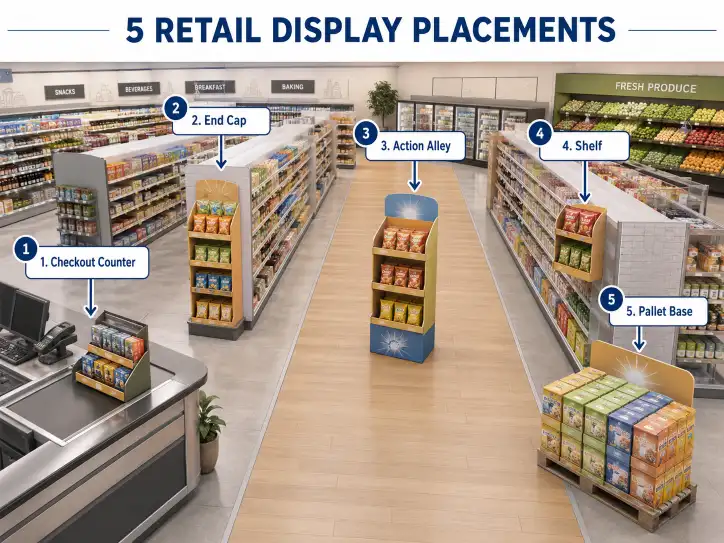
A cardboard display should match the store environment. Counter displays are viewed at hand level. Floor displays need visibility from a distance. Peg hook displays must keep products organized. Dump bin displays need easy access and stable edges. Pallet displays must work with bulk retail handling.
This is why the same product may need different retail display packaging for different channels. A supermarket promotion, pharmacy counter launch, warehouse club campaign, and seasonal chain-store program may require different display footprints, packing methods, and assembly logic.
Good suppliers will not push one structure for every project.
What the Sample Should Prove Before Bulk Production
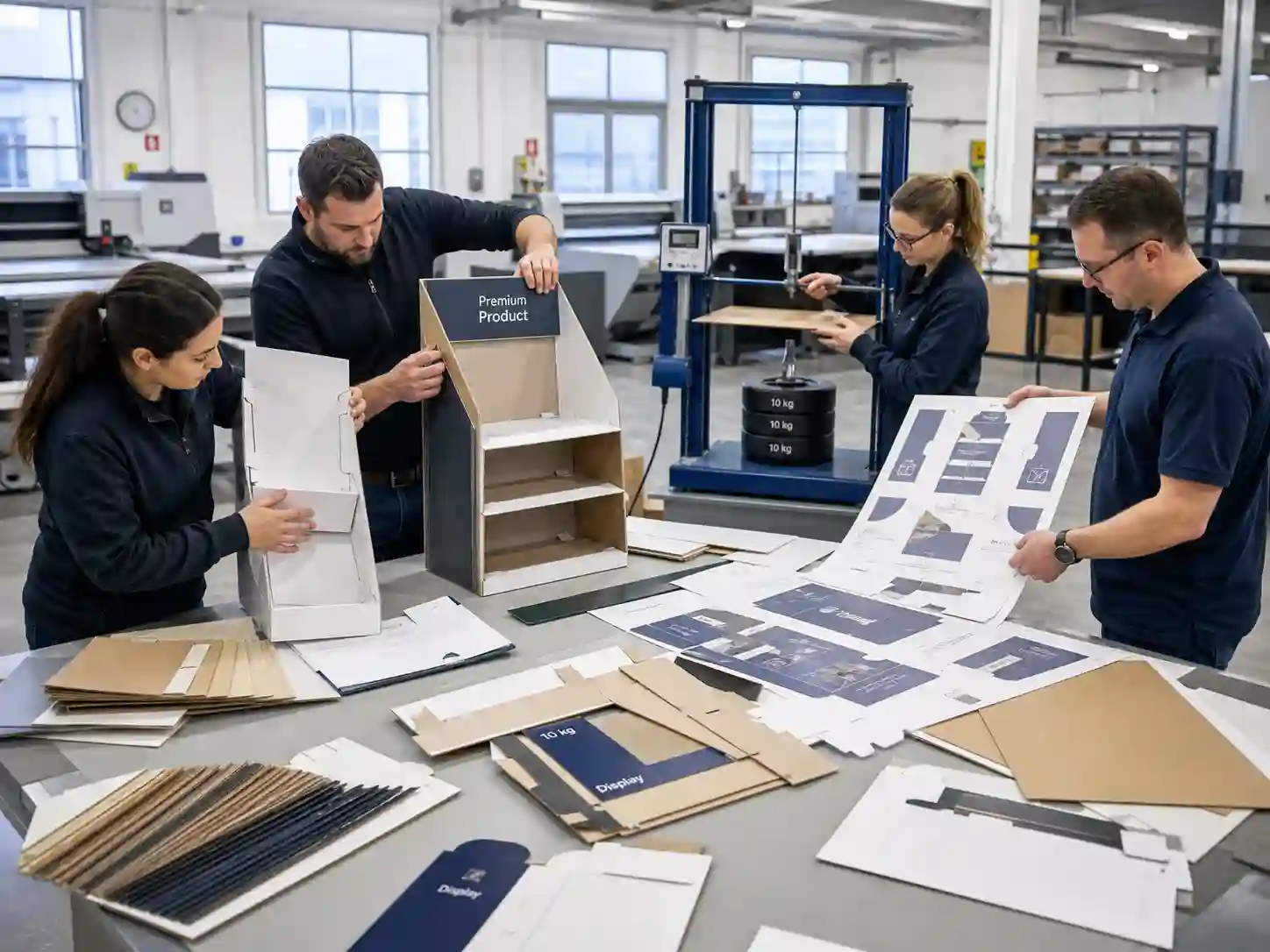
A sample is not only a visual approval item. It is a production test.
For a B2B buyer, the sample should prove that the structure, artwork, materials, assembly, and packing direction are ready for scale. The supplier should explain what is being checked and why each detail matters.
Here is a practical evaluation table buyers can use during supplier comparison:
| Buying Factor | What to Check in the Sample | Why It Matters for B2B Buyers |
|---|---|---|
| Product fit | Shelf depth, tray size, slot spacing, insert position | Prevents loose placement, tilting, or product damage |
| Load-bearing | Shelf strength, base stability, side support | Reduces collapse risk during retail use |
| Assembly method | Folding sequence, locking tabs, setup time | Helps store staff assemble the display without confusion |
| Printing accuracy | Color direction, logo placement, panel alignment | Protects brand presentation in retail campaigns |
| Material choice | Corrugated grade, paperboard thickness, surface finish | Balances cost, strength, appearance, and shipping needs |
| Packing method | Flat pack size, carton protection, inner dividers | Reduces damage during export shipping |
| Retail setup | Viewing angle, product access, header visibility | Supports sales performance inside the store |
| Bulk consistency | Whether the sample can be repeated in production | Protects schedule, quality, and campaign rollout |
The table may look simple, but it helps buyers avoid a common mistake: approving a display based only on appearance.
A display can look clean in one photo and still be hard to assemble. It can have strong graphics but weak shelves. It can fit the product in the sample room but fail after long-distance shipping. It can use attractive printing but lack protection in the export carton.
The sample should reduce uncertainty.
Cardboard Display Material Selection Should Match the Job
Material selection is one area where trustworthy suppliers provide practical guidance rather than vague claims.
A cardboard display may use different corrugated board grades, paperboard surfaces, and finishing methods depending on weight, budget, artwork, retail life, and shipping method. For example, a short-term promotional counter display may not need the same board strength as a floor display carrying heavy bottled products.
The supplier should explain why a material is recommended.
Common material-related checks include:
- Corrugated board thickness and flute direction
- Surface paper choice for printing
- Lamination choice for scuff resistance
- Reinforcement for shelves, base panels, hooks, or corners
- Insert material for product separation
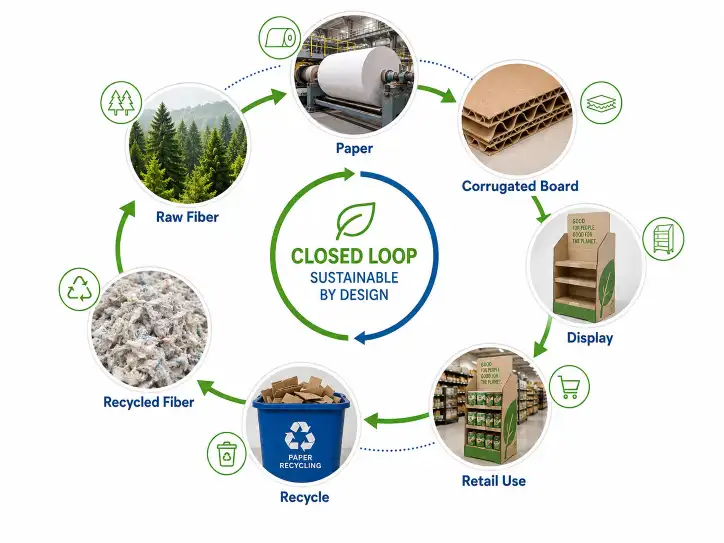
- Recyclability or paper sourcing expectations
- Export carton strength
When sustainability or sourcing matters, buyers may ask about FSC-related paper options or supplier documentation from official certification bodies. For carton structure and packaging formats, industry references such as FEFCO-style guidance can also help buyers discuss structure language more clearly. For process management, some buyers may request ISO-related factory systems or other audit documents depending on their purchasing policy.
The point is not to collect documents for decoration. The point is to match material decisions with product risk and retail requirements.
Printing Approval Is Not Only About Color
Printing is another area where samples reveal supplier discipline.
Many buyers focus on color first, and color is important. But print approval for retail display packaging also includes panel alignment, die-cut accuracy, barcode position, warning marks, folding lines, and how artwork wraps around edges.
A printed cardboard display has many surfaces. Headers, side panels, front lips, shelf strips, base panels, and product trays may all carry graphics. If one panel is misaligned, the display can look less professional in store.
The supplier should check:
- Artwork size against die-line
- Logo position after folding
- Text readability from retail distance
- Color direction under chosen material and finish
- Coating or lamination effect on appearance
- Whether fold lines cross key artwork
- Whether the display looks balanced after assembly
A trustworthy manufacturer will not treat artwork approval as a separate file task. Artwork must match the structure.
That is why buyers should request a die-line before final artwork. It helps designers place branding, product claims, QR codes, and campaign messages in safe areas. A factory that provides clear die-lines and reviews artwork before printing helps reduce production mistakes.
For buyers learning how retail display structure supports in-store selling, paper display stands for retail provides useful context around display function, placement, and merchandising value.
Load-Bearing Checks Separate Practical Suppliers From Risky Ones
A cardboard display stand must hold products in the conditions where it will be used. This sounds simple, but many weak projects fail because nobody tested the display with the real product load.
Load-bearing checks should happen before bulk production.
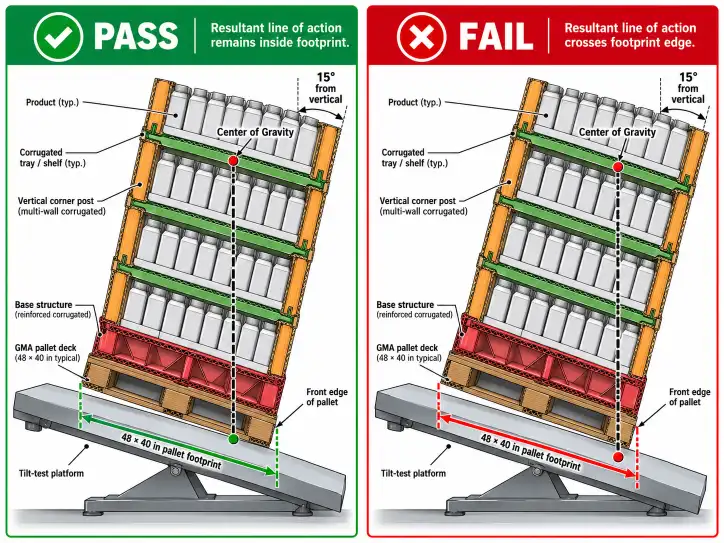
The supplier should assemble the sample, place products on shelves or hooks, and observe whether panels bend, tabs loosen, shelves sag, or the base shifts. For heavier products, extra reinforcement may be needed. This could include thicker board, internal support panels, reinforced shelf edges, stronger locking structure, or a wider base.
A load test should also consider store handling.
Retail staff may move the display. Customers may remove products from one side first. Products may be restocked unevenly. A display that only works under perfect sample-room conditions may not survive in retail.
A reliable supplier thinks about real use.
Assembly Testing Protects Store Execution
Some displays fail not because the material is weak, but because the assembly process is confusing. If store staff cannot set up the display fast, the campaign loses time. If the display requires too many steps, assembly errors increase.
A sample should be tested by someone who has not designed it. That person should follow the assembly direction and report where confusion happens.
Good assembly design includes:
- Clear folding sequence
- Strong locking tabs
- No unnecessary glue steps during store setup
- Easy shelf insertion
- Stable base connection
- Practical product loading direction
- Simple flat-pack recovery from carton
For chain-store campaigns, setup time can affect rollout. A display that takes two minutes to assemble may be better than a structure that looks impressive but requires ten minutes and special handling.
Packing and Shipping Details Show Production Experience
Export packing is often ignored during early discussions. That is a mistake.
A cardboard display may pass sampling and printing approval, then get damaged because the packing plan was weak. Printed panels can rub against each other. Headers can bend. Shelf edges can crush. Small inserts can move inside the carton. Large floor displays can arrive with corner damage.
A trustworthy supplier will discuss packing before bulk production.
Packing decisions may include:
- Flat packing or pre-assembled packing
- Master carton size
- Inner protection for printed panels
- Corner protection
- Insert bundling
- Assembly instruction sheet
- Carton marks
- Palletizing method
- Export carton strength
- Moisture and handling concerns during shipping
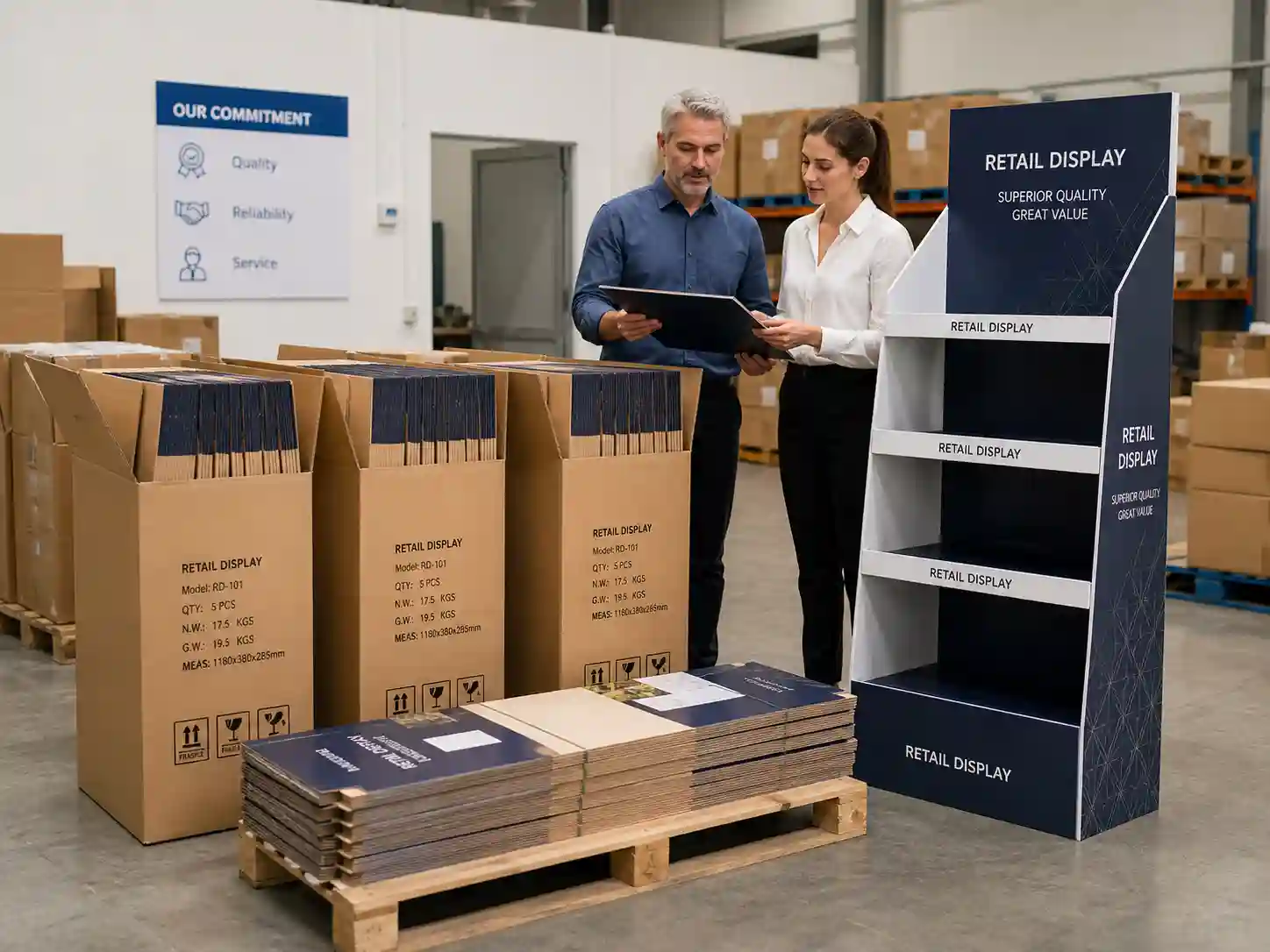
For most B2B display programs, flat packing helps reduce shipping volume. But flat packing must still protect the display. The supplier should explain how the display will be packed, how many sets fit in each carton, and whether the buyer or retailer needs special setup instructions.
This is also where project quantities matter. A small trial order may use one packing method, while a bulk retail program may require stronger carton planning and pallet-level protection.
Cardboard Display Supplier Comparison Should Focus on Evidence
Supplier comparison should not be based only on price. Price matters, but it should be compared together with sample quality, communication accuracy, production checks, packing method, and risk control.
A lower unit price may not be lower project cost if the display fails load testing, arrives damaged, or requires redesign after artwork approval.
Use evidence.
Ask each supplier for the same project details and compare their responses. Share product dimensions, product weight, quantity, display type, target retail channel, artwork status, packing preference, and expected delivery time. Then check whether each supplier gives practical feedback or only returns a quotation.
Useful Questions to Ask Before Choosing a Supplier
Use this checklist before approving a cardboard display manufacturer:
- Can the supplier recommend a structure based on product weight and retail placement?
- Can they provide a white sample before printed sampling?
- Do they check product fit, shelf strength, and base stability?
- Can they provide a die-line for artwork placement?
- Do they explain board material and reinforcement options?
- Can they show how the display will be flat packed?
- Do they provide assembly guidance for store staff?
- Can they support export carton planning?
- Do they inspect printing, cutting, folding, and packing before shipment?
- Can they repeat the approved sample in bulk production?
These questions help separate production capability from sales language.
A practical supplier may not always give the lowest price first. But they should help you understand where cost comes from: material grade, display size, printing method, finishing, sampling, labor, packing, and order quantity.
That kind of explanation helps purchasing managers make better decisions.
When a Cardboard Display Sample Is Ready for Approval
A sample is ready for approval when it answers the main project risks.
It should fit the product. It should stand correctly. It should support the product load. It should show how the graphics will appear. It should be easy to assemble. It should have a packing direction. It should give the buyer confidence that bulk production can follow the same standard.
Do not approve the sample only because it looks close enough.
Check the details:
- Are the shelves level after loading?
- Are the locking tabs strong enough?
- Does the display lean when products are removed from one side?
- Are printed panels protected from rubbing?
- Is the header stable?
- Does the product remain visible and accessible?
- Can the display fit the target store space?
- Is the carton size acceptable for shipping?
- Are assembly steps clear?
- Has the supplier recorded final specifications?
A reliable factory should document the approved sample standard before production. This can include dimensions, material, printing, finishing, packing method, and special QC notes.
For buyers who need factory input before confirming structure, printing, or packing direction, Leader Display project support can help turn inquiry details into a clearer display production plan.
Send Better Inquiry Details to Get Better Supplier Answers
Trustworthy suppliers also depend on clear project information from the buyer. The more concrete your inquiry, the more useful the supplier’s response will be.
Instead of asking only for a cardboard display price, share the details that affect structure and production:
- Product size and product weight
- Number of products per display
- Preferred display type
- Target retail channel
- Expected order quantity
- Printing artwork status
- Reference display photos or sketches
- Required packing method
- Delivery schedule
- Any retailer requirements
This does not mean every detail must be final. Early information helps the factory recommend the right direction.
A buyer who sends product weight, retail placement, and quantity will receive a better answer than a buyer who sends only a display photo. A supplier who responds with structure questions, material suggestions, sampling steps, and packing considerations is showing how they handle real projects.
That is how trust starts.
A trustworthy cardboard display manufacturer proves capability through samples, checks, and production logic. Start there, and the next discussion becomes clearer: structure, cost, timing, packing, and the display plan that can reach the store with fewer surprises.