
A pallet display can move a lot of product fast, but only when the product is right for the format. Some items look powerful and sell well on a pallet display because the structure gives them volume, visibility, and retail impact. Other items only become harder to shop, harder to refill, or harder to manage once they leave the shelf.
From a supplier perspective, this is one of the most common planning mistakes we see. Buyers choose a pallet display because it looks strong in a rendering, not because the product actually benefits from that scale. The better approach is to start with the product first. Then choose the display. This guide breaks that decision into seven practical rules.
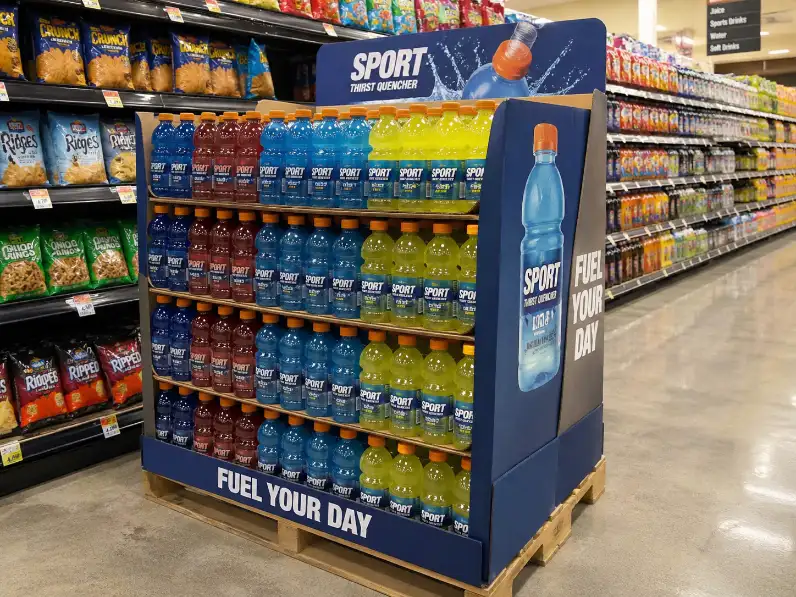
Rule 1: A Pallet Display Works Best When the Product Needs Volume Presence
A pallet display is built for presence. That means the product should gain something from being shown in large quantity and from standing outside the normal shelf rhythm. If the product looks no more useful on a pallet than it does on a regular shelf, the display may not earn its retail footprint.
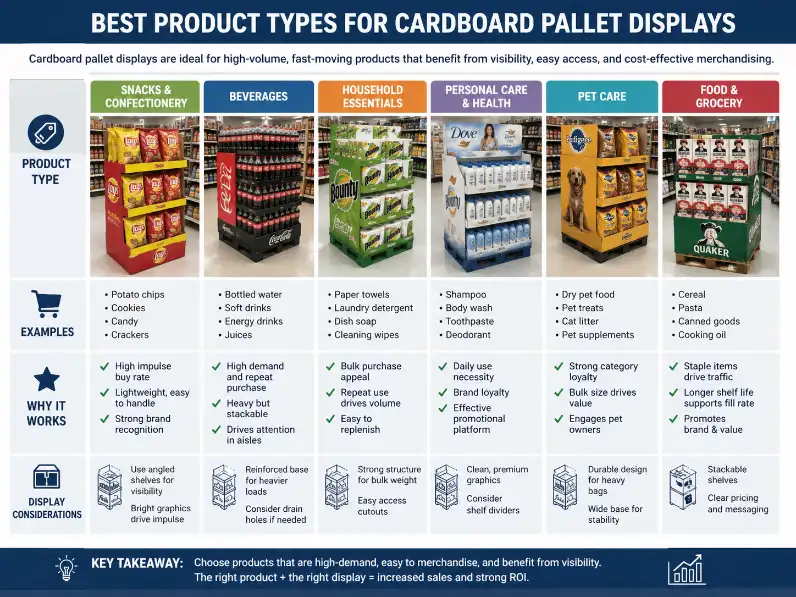
This is why a pallet display usually works best for products that benefit from scale. Beverage runs. Snack multipacks. Pet food add-ons. Household refill packs. Promotional bundles. Seasonal volume offers. These products look stronger when shoppers can see them as a block, not as a few scattered facings.
If you want the broader structure context first, our cardboard display category and pallet display page are the best internal starting points before you lock the product choice.
Rule 2: Products With Fast, Familiar Purchase Logic Usually Perform Better
A pallet display is not a research tool. It is a retail acceleration tool. That means the product should be easy to understand and easy to buy without long comparison. The format works best when the shopper already knows what the product is and only needs a strong reason to take it now.
That is why repeat-purchase goods usually perform better than products that need long explanation. A shopper can grab a snack pack, beverage carton, or pet treat bundle quickly. The same shopper may hesitate much longer with a product that needs feature-by-feature evaluation.
That difference matters. A pallet display wins on speed.
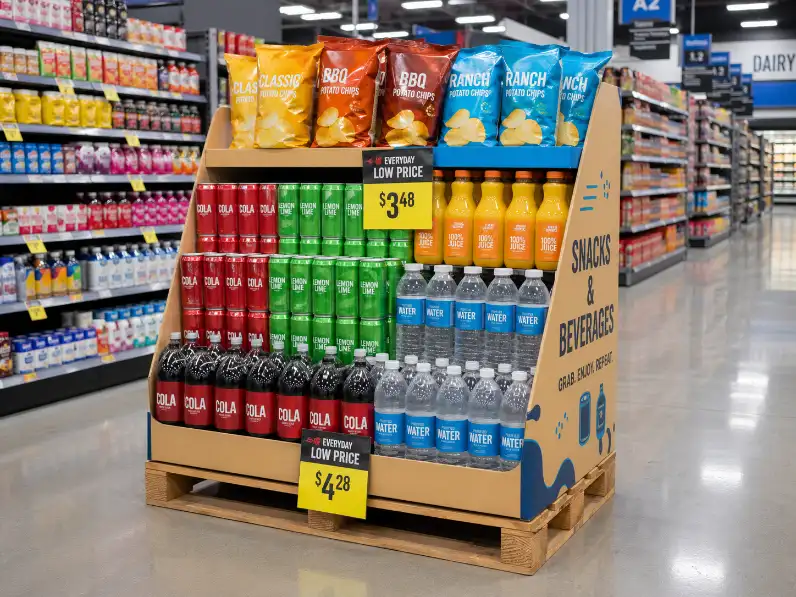
Rule 3: Medium-to-High Volume Products Usually Fit the Format Better
A pallet display looks strongest when it can stay full enough to keep its visual power. Products with moderate or high sell-through potential are usually a better fit because they can justify the volume presence and the retail space.
This is one reason pallet displays often appear in warehouse clubs, supermarkets, and promotional zones. They are useful when the goal is to move quantity, not just create a small branded moment.
Products that sell in slower trickles can still work, but the display often loses visual energy too quickly. Once a large unit starts looking half-empty too early, the retail effect weakens fast.
Rule 4: The Best Pallet Display Products Hold Their Shape After Partial Sell-Through
A pallet display should not be judged only when it is full. Buyers should think ahead. What does the unit look like after one-third of the stock is gone? What about after the best-selling SKU starts disappearing first?
This is where product shape matters more than many teams expect. Some products still leave a tidy, shoppable structure after uneven sales. Others create holes too quickly and make the display look broken. That is not only a display problem. It is a product-display match problem.
The best pallet display products usually keep the unit looking balanced longer. That gives the display a longer selling life inside the store.
If you are working through assortment density, our SKU planning guide is the right internal page to review next.
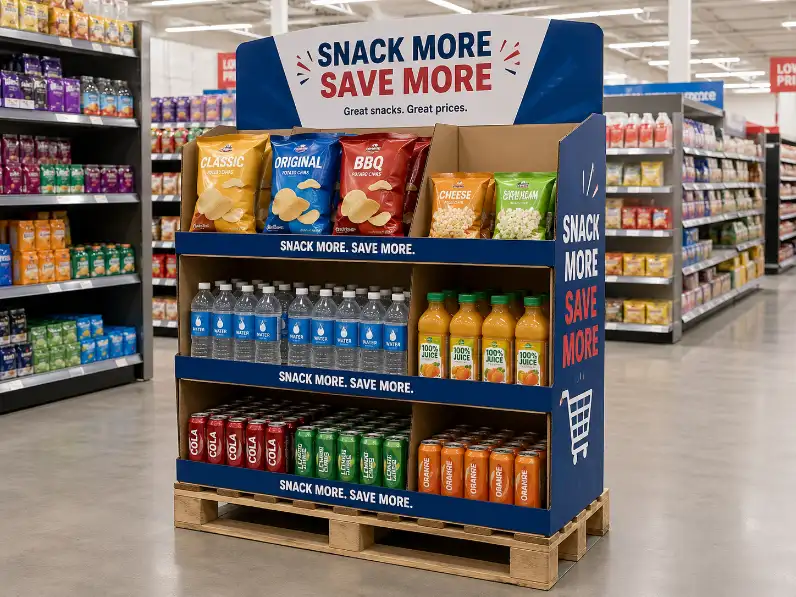
Rule 5: Products That Retailers Can Refill Fast Usually Win Over Time
A pallet display can start strong and still underperform later if store staff dislike refilling it. That is the operational side many buyers miss. Products that can be restocked quickly, faced neatly, and returned to order without guesswork usually keep selling better because the display stays cleaner longer.
That is one reason pallet display products often do better when the pack logic is simple. Uniform cases. Clear rows. Easy-facing packs. Obvious SKU grouping. Those traits reduce store friction and protect the display after the first traffic spike.
In our experience, the strongest pallet programs are not always the most creative ones. They are often the ones that make refill feel obvious.
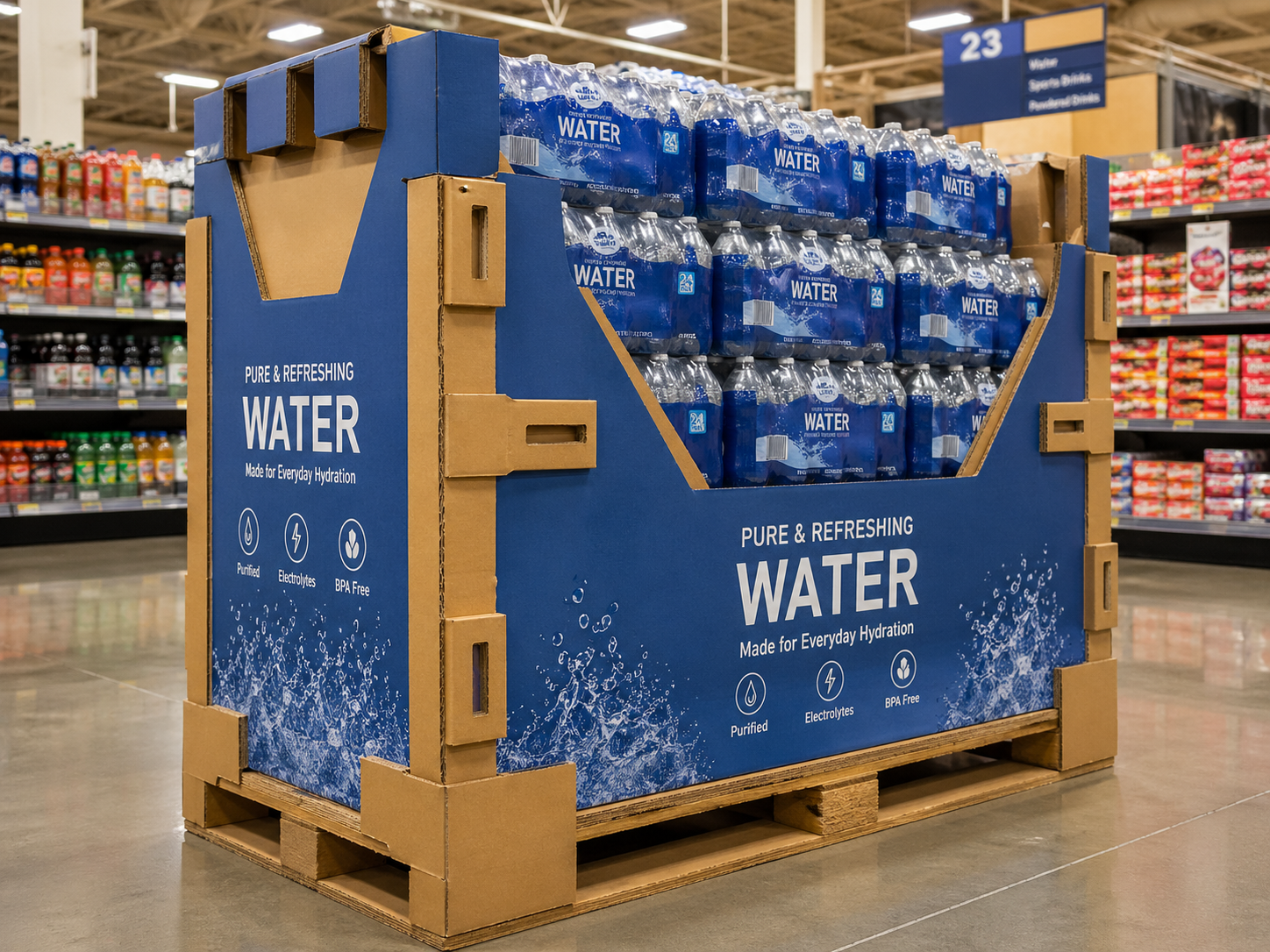
Rule 6: Heavy Products Can Work on a Pallet Display, but Only With the Right Structure
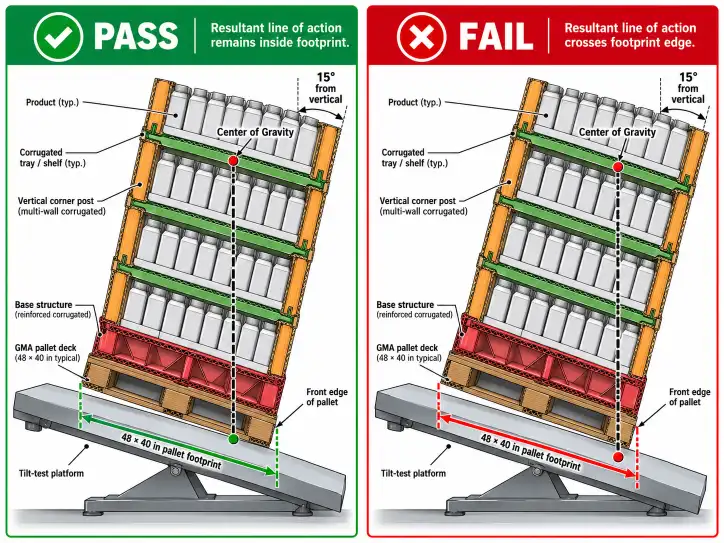
Many buyers assume a pallet display automatically means “heavy products are fine.” That is too simple. Heavy products can work well on a pallet display, but only when the structure, board grade, and load logic are matched to the real product weight and real retail handling.
This is especially important for beverages, pet products, and some household categories. A strong-looking pallet display can still become risky if the load balance, tray support, or transit logic were not planned around the actual job.
This is where a real cardboard display manufacturer should sound different from a simple printer or trading contact. The supplier should be able to explain why the structure is safe for the load, not only say that it looks strong.
If you need more support on material choice, our corrugated grades guide helps connect board logic to display performance.
Rule 7: Products With a Clear Promotional Story Usually Sell Better on a Pallet Display
A pallet display is strong when it tells shoppers that something important is happening now. That could be a seasonal run, a price-led promotion, a bundle offer, a limited-time flavor, or a warehouse-style volume buy. The format gives the product a stage, so the product should have a reason to use it.
This is why a pallet display often works better for promotional or seasonal products than for quiet, low-urgency goods. The display is asking for attention. The product should have a reason to deserve that attention.
That does not mean every pallet program has to look dramatic. It means the retail story should be clear fast. Volume. Value. Season. Bundle. Refill. New pack. Any of those can work when the shopper understands the message quickly.
| Product Type | Does It Usually Work Well on a Pallet Display? | Main Reason | Main Risk |
|---|---|---|---|
| Beverage cartons and multi-packs | Yes | Strong volume presence and familiar purchase logic | Weight and refill planning must be correct |
| Snack bundles and promotional packs | Yes | High visibility and strong sell-through potential | Can look messy if assortment is too wide |
| Pet treats and compact pet bundles | Yes | Repeat-purchase logic fits the format well | Uneven sell-through can break the visual block |
| Household refill packs | Often yes | Good for volume and fast recognition | Some packs get bulky too quickly |
| Technical comparison products | Usually no | Pallet format is too broad for long evaluation | Attention may not convert into sales |
What Buyers Should Ask Before Choosing Pallet Display Products
- Does the product gain something from large-volume presentation?
- Is the purchase decision fast enough for a pallet format?
- Will the display still look balanced after partial sell-through?
- Can store staff refill the unit quickly?
- Does the product weight match the structure?
- Is there a clear promotional or seasonal reason to use the display?
Those six checks will usually tell you more than a strong mockup. The best pallet display products are the ones that make the display easier to read, easier to refill, and easier to sell.
Useful External References
Corrugated retail formats work best when they balance visibility, transport, and in-store handling. For broader context, see the Fibre Box Association overview of corrugated. For retail-ready handling logic, the FEFCO shelf-ready packaging page is also useful.
Conclusion
The products that work best on a pallet display are usually the ones that need volume presence, support fast buying decisions, survive partial sell-through, and stay easy for retailers to refill. In practice, that often means beverages, snacks, pet products, household refill packs, and promotional bundles. Choose products that make the pallet display easier to shop and easier to maintain, and the format will do more than hold stock. It will keep selling after launch.
For help deciding whether a pallet display is right for your next product line, please contact us.
FAQ
What products usually work best on a pallet display?
Products that benefit from volume presentation, fast recognition, and easy replenishment usually work best on a pallet display.
Are pallet displays good for beverages?
Yes. Beverage cartons and multi-packs often work well when the structure is designed for the real weight and refill pattern.
Can heavy products go on a pallet display?
Yes, but only when the board grade, tray support, and load logic are matched to the real product weight.
Why do some products fail on a pallet display?
They often fail because they do not gain enough from the format, sell too slowly, or break the visual balance too quickly after sell-through.
Should technical products go on a pallet display?
Usually not. Products that need detailed comparison often perform better in more controlled display formats.
What is the biggest mistake when choosing pallet display products?
The biggest mistake is choosing products for visual impact alone instead of checking sell-through, refill speed, and retail handling.

One Response