Small products are the hardest to merchandise. They get lost on shelves, buried in bins, and overlooked by shoppers who walk right past them.
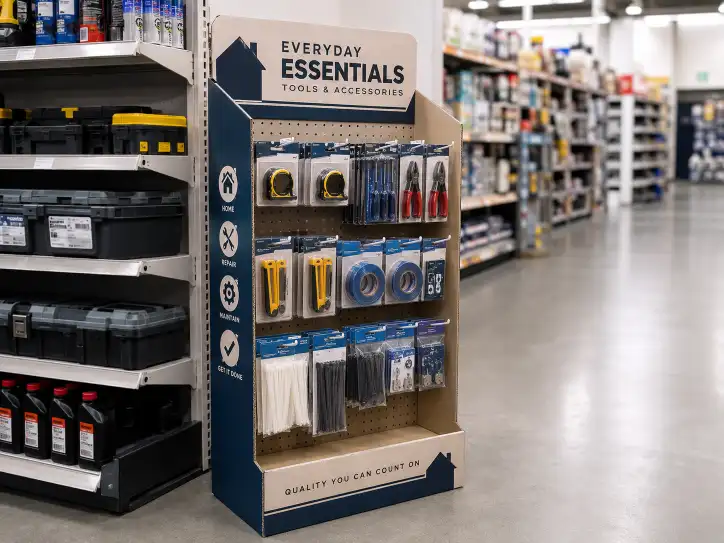
A peg display is a retail display that uses hooks or pegs to hold hanging products. Also called a pegboard display or hook display, it is designed to keep small, lightweight items visible and organized — making it one of the most effective formats for electronics accessories, jewelry, toys, and impulse-buy categories.
I have designed and manufactured peg displays for over 16 years, and I have seen them outperform shelf displays in categories where shoppers need to compare variants quickly. A well-designed peg display turns a cluttered wall of small products into an organized, shoppable display. In this guide, I will cover everything you need to know about peg displays — from types and hook configurations to materials, sizing, and cost planning.
What Is a Peg Display and How Does It Work?
A peg display is a retail display unit that uses hooks or pegs to hang products individually. Unlike shelf displays where products sit in rows, peg displays let each product hang separately so shoppers can see, compare, and remove items without disturbing the rest of the display.
The core structure is simple: a corrugated cardboard panel with holes or slots where hooks are inserted. Products with hanging packs, blister cards, or header cards are placed on the hooks. The display can stand on the floor, mount on a wall, or attach to existing store shelving as a sidekick.
Peg displays work best for:
- Small, lightweight products (under 500 g per unit)
- Products in hanging packs or blister cards
- Categories where shoppers compare multiple variants
- Retail spaces with limited shelf or counter area
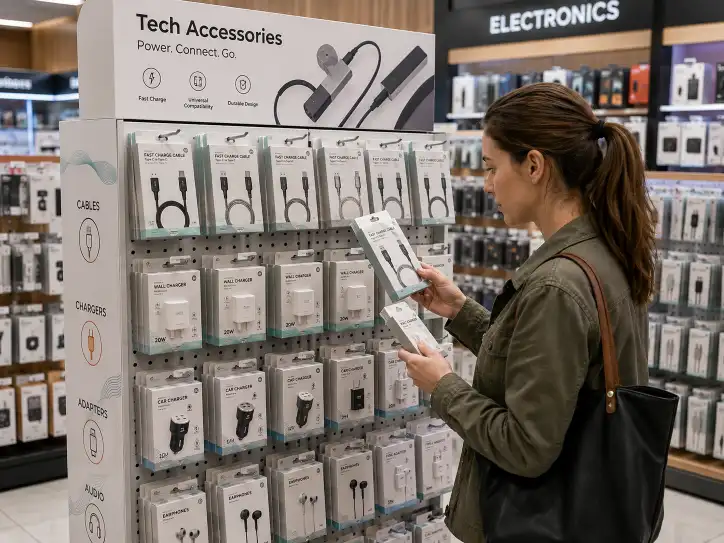
Peg Display Types: Single Side, Double Side, Power Wing, and More
Peg displays come in several configurations. The right choice depends on where the display will be placed and how much product you need to show.
| Type | Best For | Typical Height | Product Capacity |
|---|---|---|---|
| 1 Side Pegboard Display | Wall-mounted, endcap placement | 60–120 cm | 12–36 units |
| 2 Side Pegboard Display | Center aisle, gondola end | 100–150 cm | 24–72 units |
| 4 Side Pegboard Display | High-traffic center floor | 120–160 cm | 48–144 units |
| Power Wing Display | Side of shelving, checkout lanes | 50–100 cm | 12–48 units |
| Pegboard Display with Shelf | Mixed products, heavier items | 100–150 cm | 24–60 units |
| Countertop Peg Display | Checkout counter, small footprint | 25–45 cm | 12–36 units |
1 Side Pegboard Display
A single-sided peg display has hooks on one side only. It is designed to sit against a wall, on an endcap, or mounted on a store fixture. This is the most common type and the most cost-effective. I recommend single-sided displays for brands testing a peg display for the first time — the lower cost and simpler structure reduce risk while still proving the format.
2 Side and 4 Side Pegboard Displays
Double-sided displays have hooks on two sides, allowing shoppers to access products from opposite directions. Four-sided displays offer 360° access. These are floor-standing units placed in center aisles or high-traffic areas where shoppers can approach from any direction.
The trade-off is stability. Taller multi-sided displays need a wider base or heavier board grade to prevent tipping. I always recommend testing the stability of multi-sided peg displays with product loaded before committing to mass production.
Power Wing Display
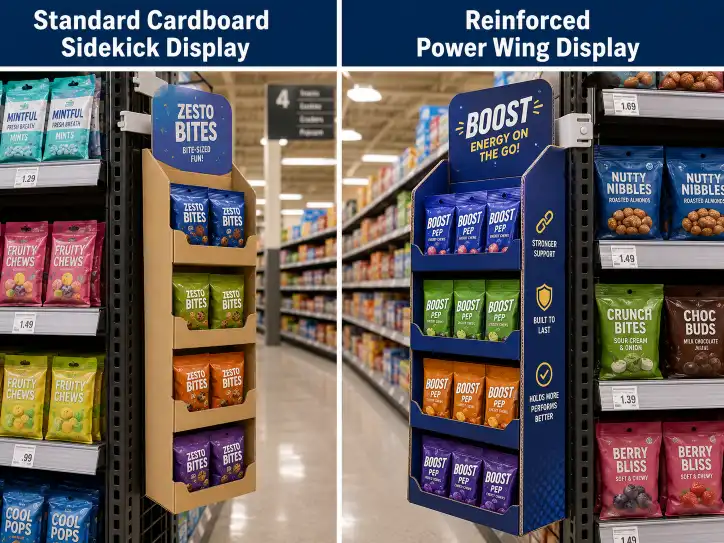
A power wing display is a smaller peg display that attaches to the side of existing store shelving or gondolas. It is also called a sidekick display or wing display. Power wings are popular for impulse-buy products placed in checkout lanes or endcap adjacencies.
Power wings use less floor space than freestanding displays and are quick to install. They are an excellent choice for seasonal promotions or new product introductions where you want extra visibility without a full display commitment.
Pegboard Display with Shelf
Some peg displays combine hooks with a shelf. The shelf holds products that do not hang well, while the hooks carry the hanging items. This hybrid format works well for product lines that include both packaged and loose items.
Hook Types and Configurations for Peg Displays
The hook is the most important component of a peg display. Choosing the right hook type affects product presentation, ease of restocking, and display stability.
| Hook Type | Best For | Typical Length | Weight Capacity |
|---|---|---|---|
| Single straight hook | Blister packs, single-product cards | 10–25 cm | Up to 2 kg per hook |
| Double straight hook | Two products side by side | 15–30 cm | Up to 3 kg per hook |
| Loop hook | Products with hanging loops | 10–20 cm | Up to 1.5 kg per hook |
| Ball-tip hook | Safety, prevents products from slipping off | 10–25 cm | Up to 2 kg per hook |
| Scannable hook | Products needing barcode scanning | 15–30 cm | Up to 2 kg per hook |
| Power wing hook | Side-mount displays, compact | 8–15 cm | Up to 1 kg per hook |
Hook Spacing Guidelines
Proper hook spacing is critical for a peg display that looks organized and shops well.
- Vertical spacing: 8–12 cm between hook rows (enough for most blister packs to clear the row below)
- Horizontal spacing: 10–15 cm between hooks (prevents product overlap)
- Bottom hook height: Minimum 30 cm from the floor (prevents products from dragging on the ground)
- Top hook height: Maximum 160 cm (keeps products within comfortable reach)
I have seen peg displays fail because the hooks were too close together, causing products to overlap and creating a messy appearance. When planning your hook layout, always test with actual product samples before approving the design.
What Materials Are Used for Peg Displays?
Peg displays need to be strong enough to support the weight of hanging products and the repeated stress of shoppers removing items from hooks.
| Material | Strength | Print Quality | Best For | Cost |
|---|---|---|---|---|
| E-flute corrugated | Moderate | Very good | Light products, small displays | Low |
| B-flute corrugated | Good | Good | Standard peg displays | Low–Moderate |
| C-flute corrugated | Strong | Moderate | Heavy products, large displays | Moderate |
| Double wall (BC) | Very strong | Limited | Heavy-duty, high-capacity displays | Higher |
| Litho laminate | Strong | Excellent | Premium branded displays | Higher |
For most peg displays, B-flute corrugated board is the right choice. It offers good strength for the weight of hanging products and a print surface that works well for branding. If your display will hold heavier items or needs to withstand rough handling in a high-traffic store, C-flute or double wall is worth the upgrade.
The hook panel needs special attention. The corrugated board where hooks are inserted must be thick enough to hold the hooks securely without tearing. For B-flute displays with heavy products, I recommend reinforcing the hook panel with an extra layer of board or using plastic hook inserts that distribute the weight more evenly.
How to Choose the Right Size for a Peg Display
Peg display sizing depends on the number of SKUs, product size, and available retail space.
Standard Peg Display Dimensions
| Display Size | Width × Depth × Height | Hook Rows | Typical SKU Capacity |
|---|---|---|---|
| Small (countertop) | 25 × 20 × 40 cm | 2–3 rows | 4–8 SKUs |
| Medium (floor) | 40 × 30 × 100 cm | 4–5 rows | 8–16 SKUs |
| Large (floor) | 50 × 40 × 140 cm | 6–7 rows | 16–24 SKUs |
| Extra Large (floor) | 60 × 50 × 160 cm | 7–8 rows | 24–36 SKUs |
| Power Wing | 30 × 20 × 60 cm | 3–4 rows | 4–10 SKUs |
Size Rules for Peg Displays
- Keep the height under 160 cm — Products above 160 cm are difficult for most shoppers to reach comfortably.
- Width should match the retail space — A display that is too wide for its placement will be moved or rejected by the store.
- Depth must ensure stability — A tall display with a narrow base will tip over when shoppers pull products off hooks. A good rule is a base depth of at least one-third of the display height.
- Leave room for restocking — Store staff need to access the back of the hooks to restock. Ensure the display allows easy access from behind or the side.
What Printing Options Work Best for Peg Displays?
Peg displays are seen at close range — shoppers stand directly in front of them to compare products. Print quality matters.
| Printing Method | Color Quality | MOQ | Cost | Best For |
|---|---|---|---|---|
| Offset litho | Excellent, CMYK + Pantone | 1,000+ | Moderate | Premium peg displays, retail branding |
| Digital print | Very good, CMYK | 100+ | Moderate | Small runs, test campaigns |
| Flexographic | Good, 1–4 spot colors | 500+ | Low | Simple designs, budget projects |
| Litho laminate | Excellent | 1,000+ | Higher | Highest quality, national retail chains |
For peg displays, I recommend offset litho or litho laminate. The close viewing distance means shoppers see every detail of the print. A flexo-printed peg display with limited colors can look cheap next to a litho-printed competitor display in the same aisle.
That said, if you are testing a new product with a small order, digital printing is a practical starting point. The per-unit cost is higher, but you avoid the tooling commitment of offset printing.
How Much Does a Custom Peg Display Cost?
Peg display costs vary by size, complexity, hook count, and print method.
| Display Type | 500 Units | 1,000 Units | 2,500 Units | 5,000 Units |
|---|---|---|---|---|
| 1 Side peg display, flexo | $4–$7 | $3–$5 | $2.20–$3.80 | $1.80–$3.00 |
| 1 Side peg display, litho | $7–$12 | $5.50–$9 | $4–$7 | $3.20–$5.50 |
| 2 Side peg display, flexo | $7–$12 | $5.50–$9 | $4–$7 | $3.20–$5.50 |
| 2 Side peg display, litho | $12–$20 | $9–$15 | $7–$12 | $5.50–$9 |
| Power wing display | $3–$6 | $2.20–$4.50 | $1.80–$3.50 | $1.40–$2.80 |
| 4 Side peg display, litho | $18–$30 | $14–$24 | $11–$19 | $8.50–$15 |
Additional Costs
| Cost Item | Typical Range |
|---|---|
| Hooks (per hook) | $0.10–$0.30 |
| Die/tooling (one-time) | $100–$300 |
| Litho laminate vs flexo | +30–50% per unit |
| Reinforced hook panel | +$0.50–$1.50 per unit |
| Custom base for stability | +$1–$3 per unit |
| Stretch wrapping | $0.50–$1.50 per pallet |
For a project-specific quote, contact a peg display manufacturer with your product dimensions, hook count, and target quantity.
What Is the MOQ for Peg Displays?
Peg displays have moderate MOQs that depend on the display complexity and printing method.
| Display Type | Typical MOQ | Notes |
|---|---|---|
| 1 Side peg display, flexo | 500 units | Most affordable option |
| 1 Side peg display, litho | 1,000 units | Better print quality |
| 2 Sided peg display, flexo | 500 units | Standard floor-standing format |
| Power wing display, flexo | 500 units | Compact side-mount format |
| Power wing display, digital | 200–300 units | Small runs for testing |
| 4 Side peg display | 1,000 units | Complex structure, higher MOQ |
If your first order is below the standard MOQ, ask about:
- Digital printing for a smaller pilot run
- A setup surcharge to reduce the quantity
- Combining multiple display designs in one production run
Peg Display vs Other Display Types: Which Should You Choose?
| Factor | Peg Display | Counter Display | Floor Display | Pallet Display |
|---|---|---|---|---|
| Placement | Aisle, wall, sidekick | Checkout counter | Floor, endcap | Club store floor |
| Product type | Hanging, lightweight | Small, boxed | Medium to large | Bulk, high-volume |
| Capacity | 12–144 units | 6–80 units | 20–400+ units | 100–600+ units |
| Best for | Comparison shopping | Impulse buys | Brand visibility | Volume sales |
| Assembly | 2–5 minutes | Under 1 minute | 2–10 minutes | Minimal (pre-filled) |
If your products are already packaged for hanging (blister packs, header cards, peg-friendly packaging), a peg display is almost always the right choice. If your products are boxed or need to sit on a shelf, a counter display or floor display may be more appropriate.
FAQ
What is the difference between a peg display and a pegboard display?
There is no practical difference. "Peg display" and "pegboard display" refer to the same type of display — a unit that uses hooks or pegs to hold hanging products. "Pegboard display" emphasizes the board structure, while "peg display" emphasizes the hook mechanism.
What products work best on peg displays?
Products in hanging packs, blister cards, or header cards work best. Common categories include electronics accessories (cables, earbuds, chargers), jewelry, toys, stationery, small hardware, pet accessories, and personal care items.
How much weight can a peg display hold?
A standard B-flute corrugated peg display can hold 1–2 kg per hook and 15–30 kg total for the display. A C-flute or double-wall display can hold 2–3 kg per hook and 30–60 kg total. Always distribute weight evenly across the hooks.
Can peg displays be used for jewelry?
Yes. Jewelry is one of the most common products sold on peg displays. Small items like earrings, bracelets, and necklaces hang well on hooks and benefit from the clear visibility that peg displays provide.
What is a power wing display?
A power wing display is a compact peg display that attaches to the side of store shelving. It is also called a sidekick display or wing display. It is used for impulse-buy products and promotional items placed in high-traffic areas.
How many hooks can a peg display have?
A single-sided peg display typically has 6–24 hooks depending on the panel size and hook spacing. A double-sided display has 12–48 hooks. A four-sided display can have 24–96 hooks.
Are peg displays reusable?
Most corrugated cardboard peg displays are designed for single-use campaigns lasting 4–12 weeks. The hooks can be removed and reused, but the cardboard structure is recyclable after use.
What is the lead time for custom peg displays?
Standard lead time is 15–25 business days from artwork approval. Digital print runs can ship in 10–15 business days. Large orders with litho laminate may take 20–30 business days. Hook procurement adds 3–5 days to the lead time.
How do I choose the right hook type?
Consider your product's packaging. Blister packs work best on single straight hooks. Products with hanging loops need loop hooks. For safety, use ball-tip hooks that prevent products from being accidentally knocked off. Your custom peg display manufacturer can recommend the right hook type for your specific products.
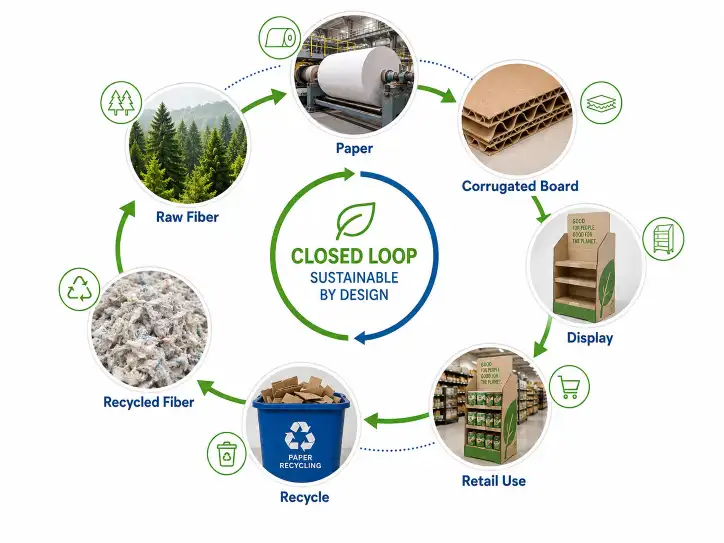
Are cardboard peg displays eco-friendly?
Yes. Corrugated cardboard peg displays are made from renewable materials and are fully recyclable. The cardboard contains 30–70% recycled content on average. Metal hooks can be removed and recycled separately or reused for future displays.