Stationery and office supplies look simple on the shelf, but they are not always easy to display well. Pens, notebooks, sticky notes, folders, tape, clips, correction tools, desk accessories, and refill packs all have different sizes, weights, and buying behaviors. A well-planned cardboard display for stationery and office supplies helps retailers keep small SKUs organized, improves product visibility, and supports faster promotional setup.
For brands and wholesalers, the display is not only a container. It is a selling tool. It needs to hold product safely, guide shoppers quickly, survive transport, and make store staff willing to place it in a good location.
Why Stationery and Office Supplies Need Purpose-Built Displays
Many stationery products are lightweight, but they are often small, narrow, mixed, or easy to misplace. A standard shelf can make them disappear among larger products. A custom paper display stand gives these items a clear selling zone.
Retail buyers care about three things first: space, speed, and neatness. The display must fit the store environment, be easy to assemble, and stay tidy after shoppers touch the products.
For B2B buyers, a display project should also match the sales channel. A back-to-school promotion in a supermarket needs a different structure from a premium notebook launch in a bookstore. A counter PDQ for pens has different requirements from a floor display for files, binders, and printer paper accessories.
Good display planning starts with the product mix, not the artwork.
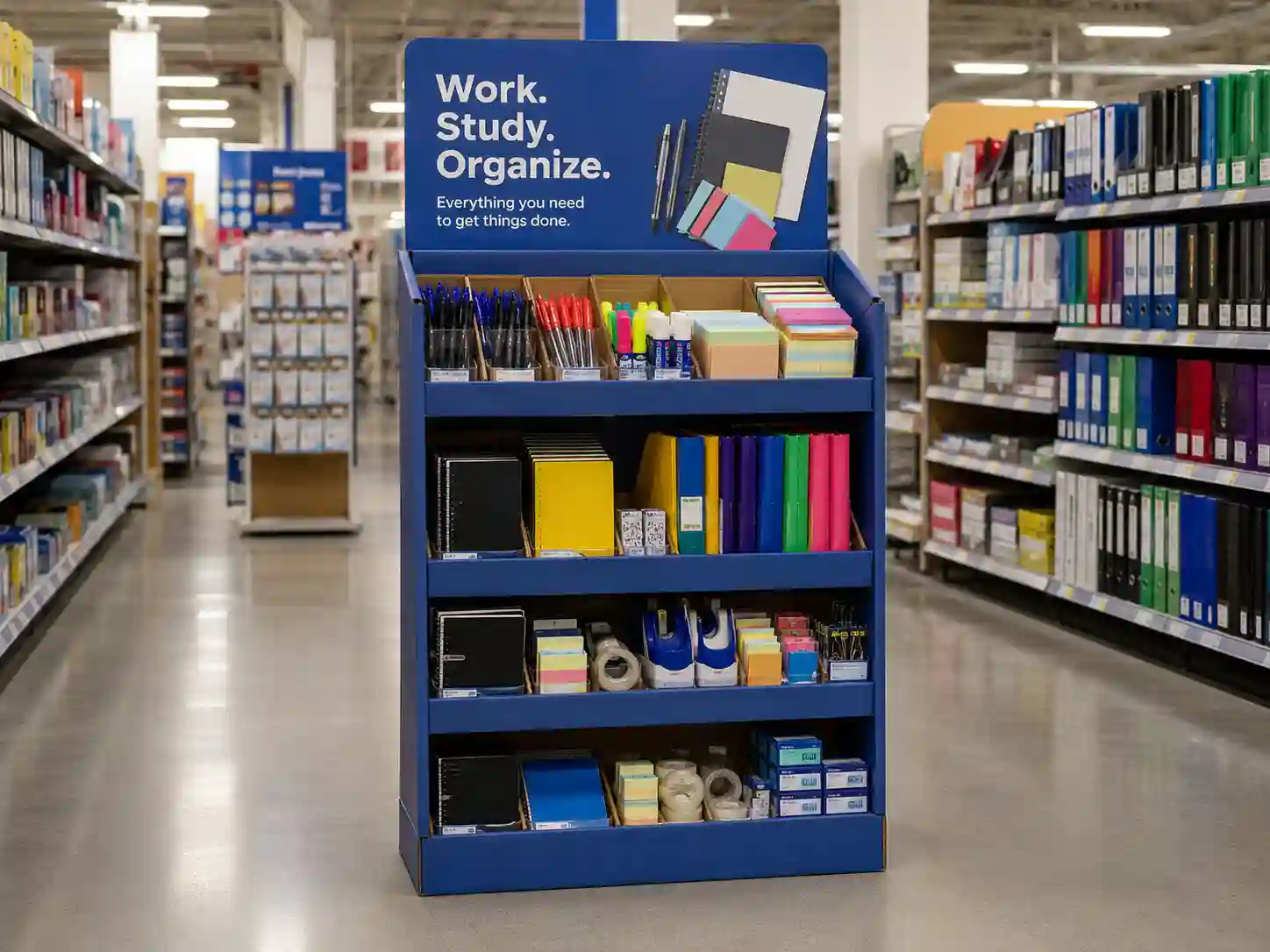
Best Retail Display Formats for Stationery Products
Stationery and office supplies can work in many display types. The right choice depends on product size, unit weight, SKU count, store placement, and refill method.
Counter Displays for Small Fast-Moving Products
Counter displays are useful for pens, markers, correction tape, sticky notes, erasers, sharpeners, paper clips, glue sticks, and small desk tools. These items are easy to pick up near checkout counters, school supply aisles, bookstore counters, or office supply service desks.
A counter display should not be too deep. If the front products hide the back rows, shoppers miss part of the range. For small items, stepped trays, divider slots, and angled compartments help improve visibility.
From a manufacturer’s point of view, the structure needs enough front lip height to stop products from falling out. For pens and markers, inner dividers can separate colors, tip sizes, or pack types. For boxed correction tape or glue sticks, PDQ trays can be designed for quick shelf placement.
PDQ Displays for Retail Shelf Promotions
PDQ displays are popular for stationery because they arrive pre-packed or semi-packed and can be placed on shelves with minimal handling. Retail staff can open the shipper, remove the cover, and place the tray directly into the selling area.
This format works well for seasonal promotions, launch packs, multipacks, and mixed stationery sets. A PDQ can also be designed with a small header card to communicate price point, product benefit, or campaign theme.
For buyers who need fast store rollout, PDQ displays reduce setup time. They also protect the product during transport when the tray is integrated with the export carton or master shipper.
Peg Displays for Hanging Stationery Packs
Many stationery products are sold in blister cards or hanging packs. Scissors, rulers, tape, glue, marker sets, highlighters, binder clips, and craft tools often need peg hooks.
A cardboard peg display must balance strength and product visibility. The back panel needs suitable board thickness and reinforcement around peg hook positions. If the product is heavier, plastic peg hooks with reinforced holes or internal support panels may be needed.
Peg layout matters. Too many hooks can make the display look full but hard to shop. Too few hooks waste space. A practical layout considers product width, hanging hole position, pack depth, and refill quantity.
Floor Displays for Larger Product Ranges
Floor displays are useful when the product range includes notebooks, planners, folders, binders, file organizers, printer paper accessories, desk organizers, or multi-SKU school supply bundles.
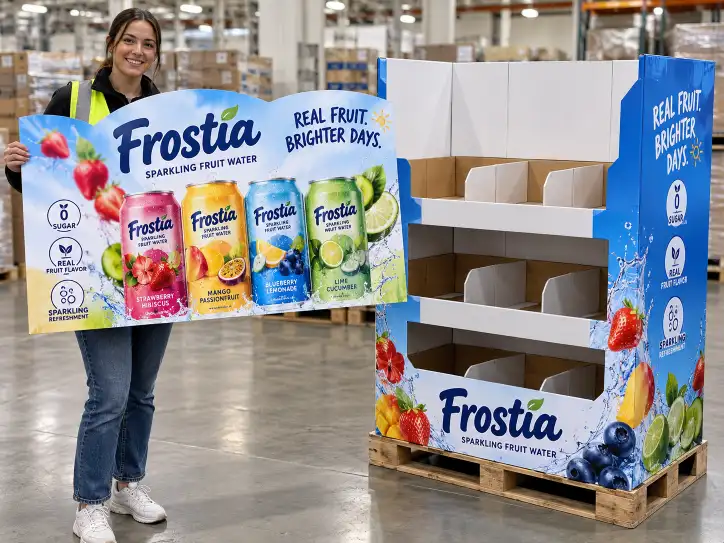
A floor display can combine shelves, trays, hooks, side panels, and header boards. It gives brands more visual area for campaign messages and allows more stock to be displayed in one unit.
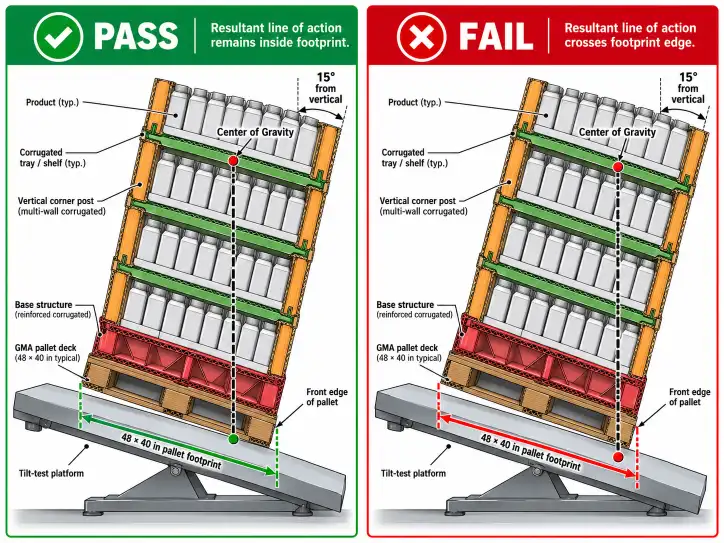
For heavier products such as notebooks or binders, shelf load must be checked during sampling. The display may need stronger corrugated board, internal supports, or reinforced side walls. A small design change at the sample stage can prevent shelf sagging during retail use.
Sidekick Displays for Aisle-End Visibility
Sidekick displays are often attached to retail shelves or placed near aisle ends. They are suitable for impulse stationery items, small office supplies, and promotional refill products.
This format helps brands occupy secondary placement without taking full floor space. It can work well for pens, sticky notes, tape, labels, and school accessories.
A sidekick display needs stable hanging or fixing points. Store requirements may vary, so buyers should confirm whether the retailer prefers hooks, clips, straps, or shelf-mounted systems.
Matching Display Structure to Product Type
A strong display idea is not only about shape. It is about matching structure to product behavior.
| Product Type | Recommended Display Format | Key Structure Detail | Practical Benefit |
|---|---|---|---|
| Pens, markers, highlighters | Counter display, PDQ tray | Dividers, stepped rows, front lips | Keeps colors and pack types organized |
| Sticky notes and memo pads | Counter tray, shelf PDQ | Shallow compartments, angled facing | Improves visibility for small packs |
| Notebooks and planners | Floor display, shelf tray | Strong shelves, side support panels | Handles weight and prevents bending |
| Scissors, rulers, glue, tape | Peg display, sidekick display | Reinforced peg board, hook spacing | Displays hanging packs clearly |
| Folders and binders | Floor display, pallet display | Wider shelves, vertical dividers | Supports larger product dimensions |
| School supply bundles | Dump bin, floor display | Strong base, open access | Encourages bulk promotional buying |
This kind of planning helps avoid a common problem: using one display structure for every product. Stationery ranges often need mixed solutions. A display can combine tray shelves for notebooks, peg hooks for small tools, and side pockets for promotional flyers.
Placement Ideas for Different Retail Channels
A display that works in one store may not work in another. Stationery and office supplies move through supermarkets, bookstores, office supply stores, convenience stores, warehouse clubs, educational retailers, and promotional event channels.
Supermarkets and Hypermarkets
In supermarkets, shoppers move quickly. The display needs clear product grouping and a strong header. Back-to-school campaigns, exam season supplies, and office restock promotions work well in these spaces.
Floor displays and pallet displays can carry high stock volume. PDQ trays also work for smaller seasonal promotions.
For supermarket placement, the display should be stable, easy to clean around, and quick to refill. Retailers often prefer flat-packed units that assemble without tools and ship with clear instructions.
Bookstores and Stationery Shops
Bookstores and specialty stationery shops often need a more refined look. Product details matter. A display for premium notebooks, planners, pens, or gift stationery should use clean graphics, controlled product spacing, and a balanced layout.
For these channels, print quality and finishing may become more important. Matte lamination, spot UV, or hot stamping can be used when the brand position supports it. Still, the structure should remain practical.
Pretty is not enough. The display still has to hold stock.
Office Supply Stores
Office supply retailers often carry larger SKU ranges and heavier products. Displays for folders, binders, document holders, printer accessories, labels, and desk organizers need more structural strength.
A custom cardboard display can be designed with stronger shelves, reinforced back panels, and clear SKU zones. For businesses comparing options, Leader Display’s custom cardboard displays page gives a broader view of formats used for retail programs.
Convenience Stores and Small Retail Counters
Small retail stores usually need compact displays. Counter displays, mini PDQ trays, and slim sidekick displays work better than large floor units.
The key is to reduce footprint while keeping product access easy. For example, a compact pen display may use vertical slots, stepped compartments, and a narrow header. A correction tape display may use stacked rows and clear front labels.
Small footprint. Clear offer.
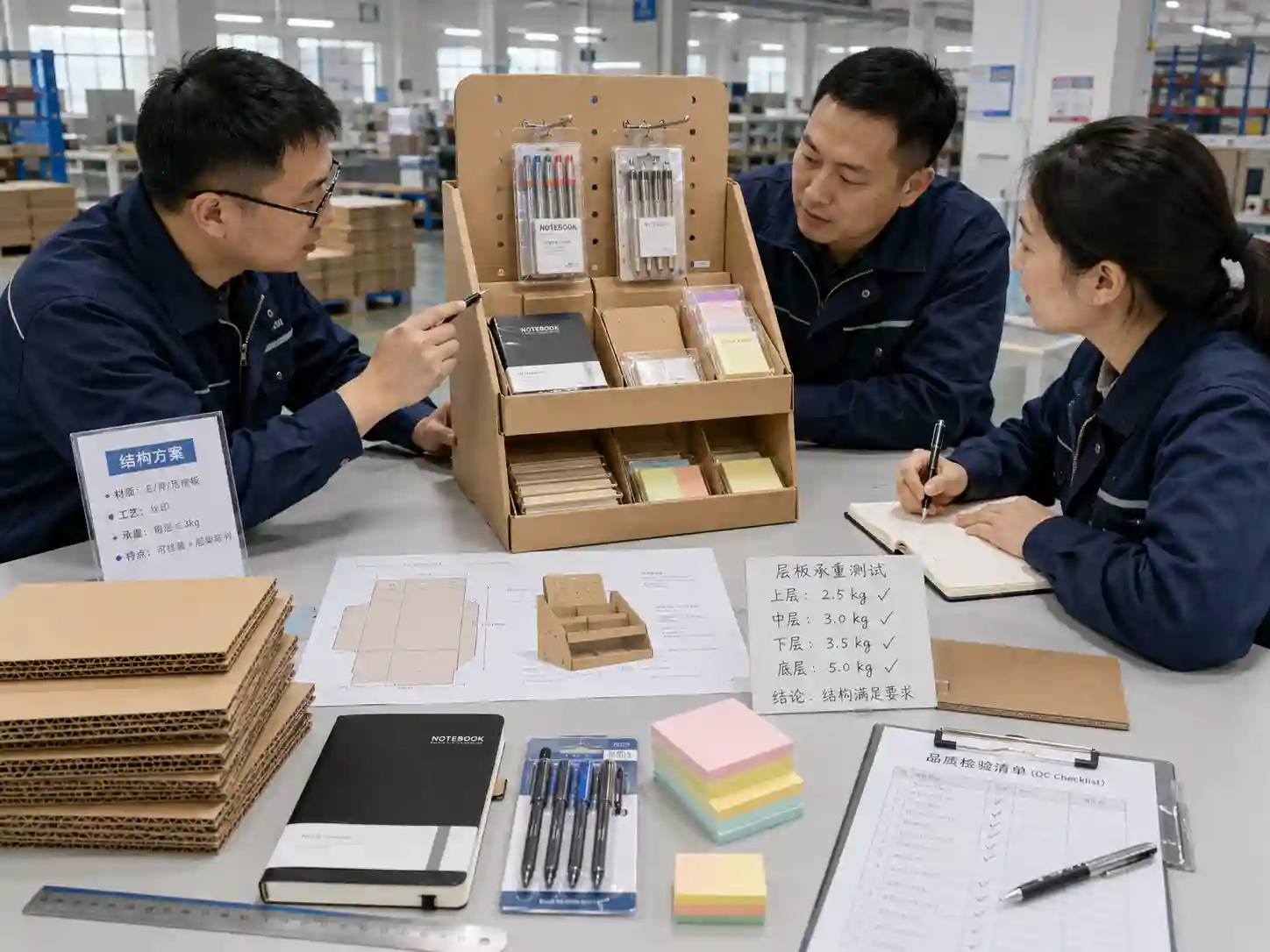
Material Choice for Stationery and Office Supply Displays
Most stationery displays use corrugated cardboard, paperboard, or a combination of both. The right material depends on the product load, display size, expected store life, and shipping method.
Corrugated Board for Strength
Corrugated board is often used for floor displays, pallet displays, sidekick displays, and larger PDQ trays. It offers good strength while keeping the display lightweight and flat-pack friendly.
For notebooks, binders, file folders, and mixed school supply kits, corrugated board can support heavier loading when the structure is designed properly. Internal supports, double-wall panels, and shelf reinforcement may be used where needed.
Paperboard for Smaller Displays and Inserts
Paperboard is often used for small counter displays, inner dividers, product trays, and printed inserts. It can provide a smoother printed surface for premium stationery brands.
Paperboard may also be combined with corrugated parts. For example, a corrugated outer structure can hold the load, while paperboard dividers organize pens or markers inside the display.
Sustainability and Certification Considerations
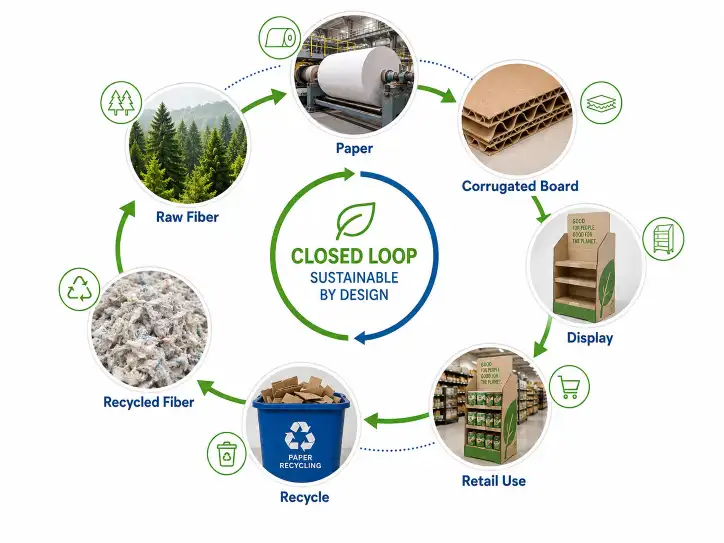
Many retail buyers now ask about responsible material sourcing and recyclability. When relevant, buyers can ask suppliers about FSC-certified paper options, recyclable materials, and production control standards. FSC is widely recognized for responsible forest management, while ISO standards can support quality and process management discussions.
FEFCO references are also useful when discussing corrugated packaging structures and box styles. For export displays, these standards and associations help align communication between brands, factories, and logistics teams.
Sampling: Where Good Display Projects Become Safer
A display drawing can look good on screen, but the sample tells the truth. For stationery and office supplies, sampling helps confirm product fit, loading, assembly, and retail appearance.
At the sample stage, a manufacturer should check:
- Whether each product fits the tray, shelf, hook, or divider
- Whether the display stays stable when fully loaded
- Whether shelves bend under notebook or binder weight
- Whether peg hooks sit straight after loading
- Whether front lips are high enough to hold products
- Whether graphics align with structure folds and cut lines
- Whether the display can be assembled by store staff without confusion
For a cardboard display for stationery and office supplies, product samples are especially helpful. A pen pack may look narrow, but the hanging hole position can affect peg layout. A notebook may look lightweight, but a full shelf can become heavy. A sticky note pack may need a shallow tray so shoppers can see the front design.
Sampling reduces guessing. It also helps purchasing teams approve the project with more confidence.
Design Ideas That Improve Product Visibility
Stationery products often compete in crowded aisles. A good display should help shoppers understand the range in seconds.
Use Clear SKU Zones
Group products by type, color, function, or price point. For example, a display can separate writing tools, correction tools, sticky notes, and desk accessories into clear sections.
Color coding can help, but it should not become messy. Too many graphic blocks can make the display harder to read.
Add Product-Facing Angles
Flat shelves are simple, but angled trays often improve visibility for small packs. Pens, sticky notes, and small boxed products can benefit from slight forward-facing angles.
For heavier products, angled shelves must be tested carefully. Structure first.
Use Headers and Side Panels Wisely
Headers attract attention from a distance. Side panels support brand communication and product benefits. For stationery displays, headers can highlight themes such as “Back to School,” “Office Essentials,” “Desk Organization,” or “New Writing Tools.”
Avoid overloading the display with too much text. Retail shoppers scan quickly.
Keep Refill Access Simple
Retail staff are more likely to maintain a display if it is easy to refill. Open trays, clear compartments, and accessible shelf levels help keep products stocked.
A display that is hard to refill becomes messy fast. That hurts sales and brand image.
Assembly, Flat Packing, and Export Packing
B2B display buyers often focus on the visible design first, but logistics can decide whether the project works commercially.
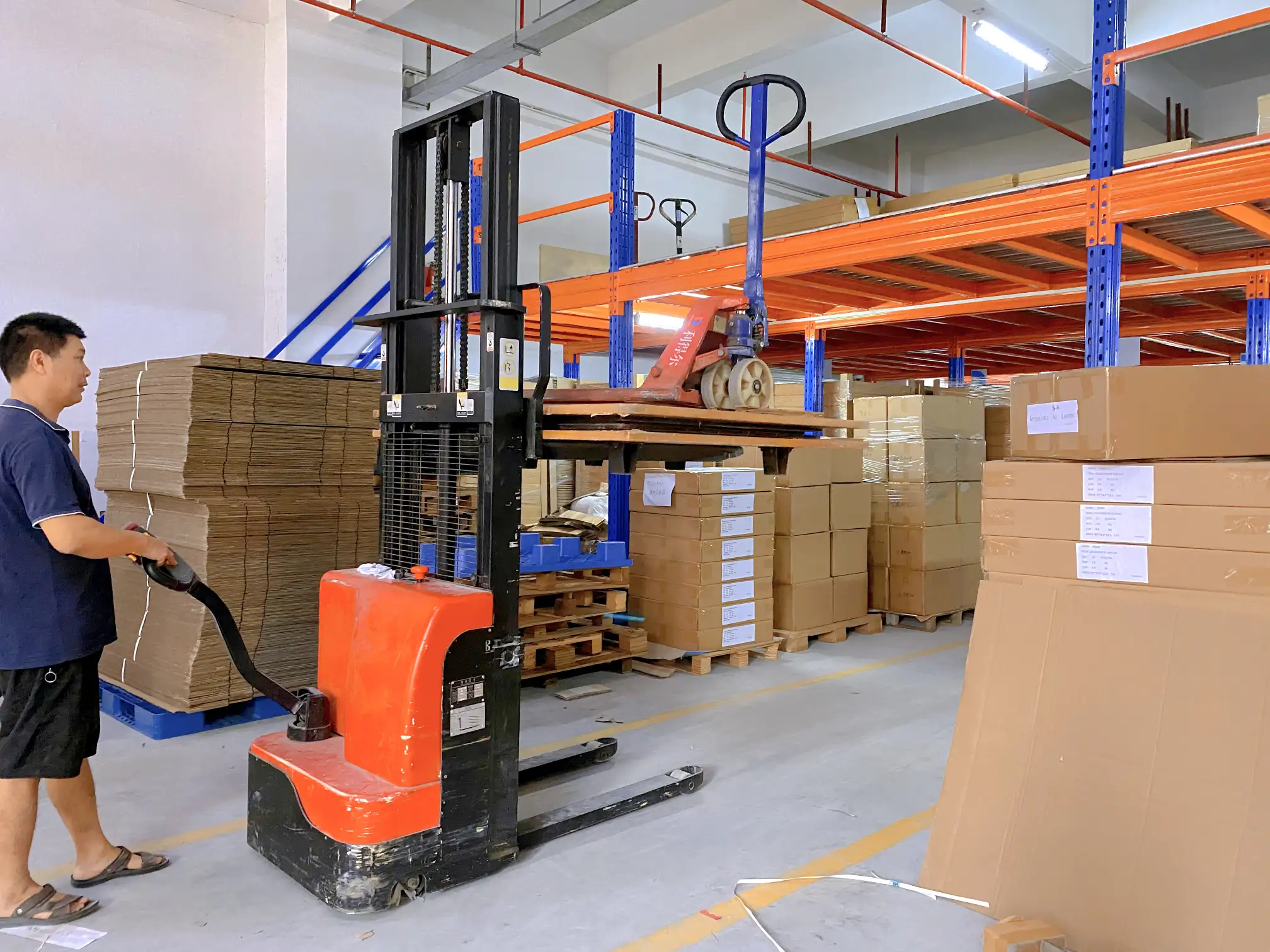
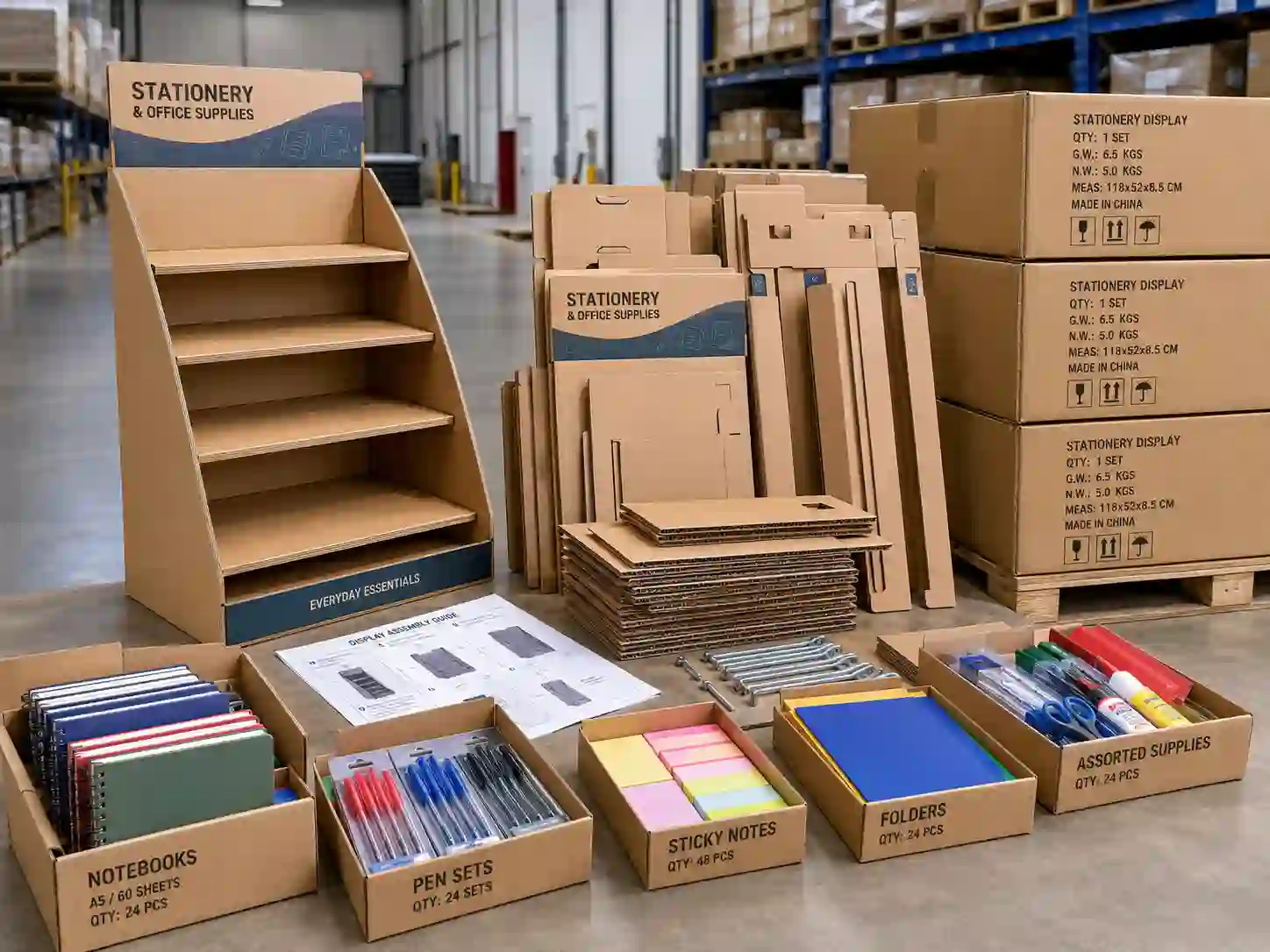
Most cardboard displays are designed for flat packing to save shipping volume. The factory should consider how panels fold, how shelves lock, and how many steps are needed during assembly. Clear instruction sheets can reduce store setup errors.
For export packing, the display may ship as flat-packed components, pre-packed PDQ trays, or display parts with separate product cartons. The best method depends on the retail rollout plan.
Practical Export Packing Details
For international orders, cartons should protect printed surfaces and structural parts. Edge protection, polybags, inner pads, and proper carton strength may be needed. If the display includes hooks, clips, or small accessories, they should be packed in labeled bags.
A good packing plan answers practical questions:
- How many display sets fit in one master carton?
- Are printed panels protected from rubbing?
- Are shelves and headers easy to identify?
- Are accessories packed safely?
- Is the assembly instruction sheet included?
- Can store teams match parts quickly?
Leader Display works with B2B buyers who need custom retail display packaging for different product categories. More display format references are available on the cardboard display page.
Common Mistakes to Avoid in Stationery Display Projects
Small product displays can fail for simple reasons. Most of these problems are preventable during design and sampling.
Making Compartments Too Deep
If small products sit too low, shoppers cannot see them clearly. For pens, sticky notes, erasers, and clips, shallow trays or stepped levels usually work better.
Ignoring Mixed Product Weights
A display may include both light pens and heavy notebooks. If all shelves use the same structure, the heavier section may sag. Load planning should match each zone.
Using Too Many SKUs
Stationery brands often want to show the full range. That can make the display crowded. A focused display with fewer SKUs may sell better than a cluttered one.
Forgetting Retail Staff
If the display takes too long to assemble or refill, stores may not use it well. Simple locking systems, numbered parts, and clear instructions help.
Designing Artwork Before Structure
Artwork should support the display, not hide structural issues. The dieline, product placement, and load plan should come before final graphics.
How a Manufacturer Should Support the Buyer
A practical display supplier should help B2B buyers move from idea to production with fewer risks. That support includes structure planning, material advice, sample making, print coordination, load testing, packing design, and export support.
At Leader Display, the manufacturer role is not only to produce a display after receiving artwork. It is to help the buyer turn product information into a workable retail unit.
Useful project details include:
- Product dimensions and unit weight
- Number of SKUs
- Target retail channel
- Expected display placement
- Quantity per display
- Promotion period
- Flat-pack or pre-packed requirement
- Artwork files and brand guidelines
- Export destination and packing needs
With these details, the factory can recommend whether a counter display, PDQ tray, peg display, floor display, sidekick display, or pallet display makes more sense.
For buyers planning a new retail campaign, the Leader Display homepage also introduces the company’s broader custom display manufacturing background.
When to Choose a Custom Cardboard Display
A custom display makes sense when standard shelving cannot present the product clearly, when a promotion needs a dedicated selling space, or when retailers request a ready-to-place unit.
For stationery and office supplies, customization is often valuable because product shapes vary so much. A pen display may need dividers. A notebook display needs shelf strength. A binder display needs width. A hanging tool display needs reinforced peg positions. A school supply bundle may need open access and high stock capacity.
The display should match the product, the store, and the sales plan.
A well-designed cardboard display for stationery and office supplies can help buyers launch faster, present SKUs more clearly, and reduce retail setup problems. The next step is to prepare product dimensions, target display quantity, retail channel details, and packing expectations so the structure can be planned around real commercial use.