Toy and children’s product displays need to do more than hold colorful items. They must attract attention, stay stable in busy aisles, support mixed SKUs, and make restocking simple for store staff. For B2B buyers, the right display structure can affect visibility, refill speed, damage rate, and sell-through during a promotion.
Kids’ products often involve small boxes, blister cards, plush toys, craft kits, puzzles, educational items, party gifts, and seasonal sets. Each product type needs a different display logic. A light plush toy does not need the same structure as boxed building sets. A hanging toy pack needs peg strength. A small impulse item needs clear front-facing visibility.
That is why a cardboard display for toys and kids products should be planned around the product first, not around a standard display template.
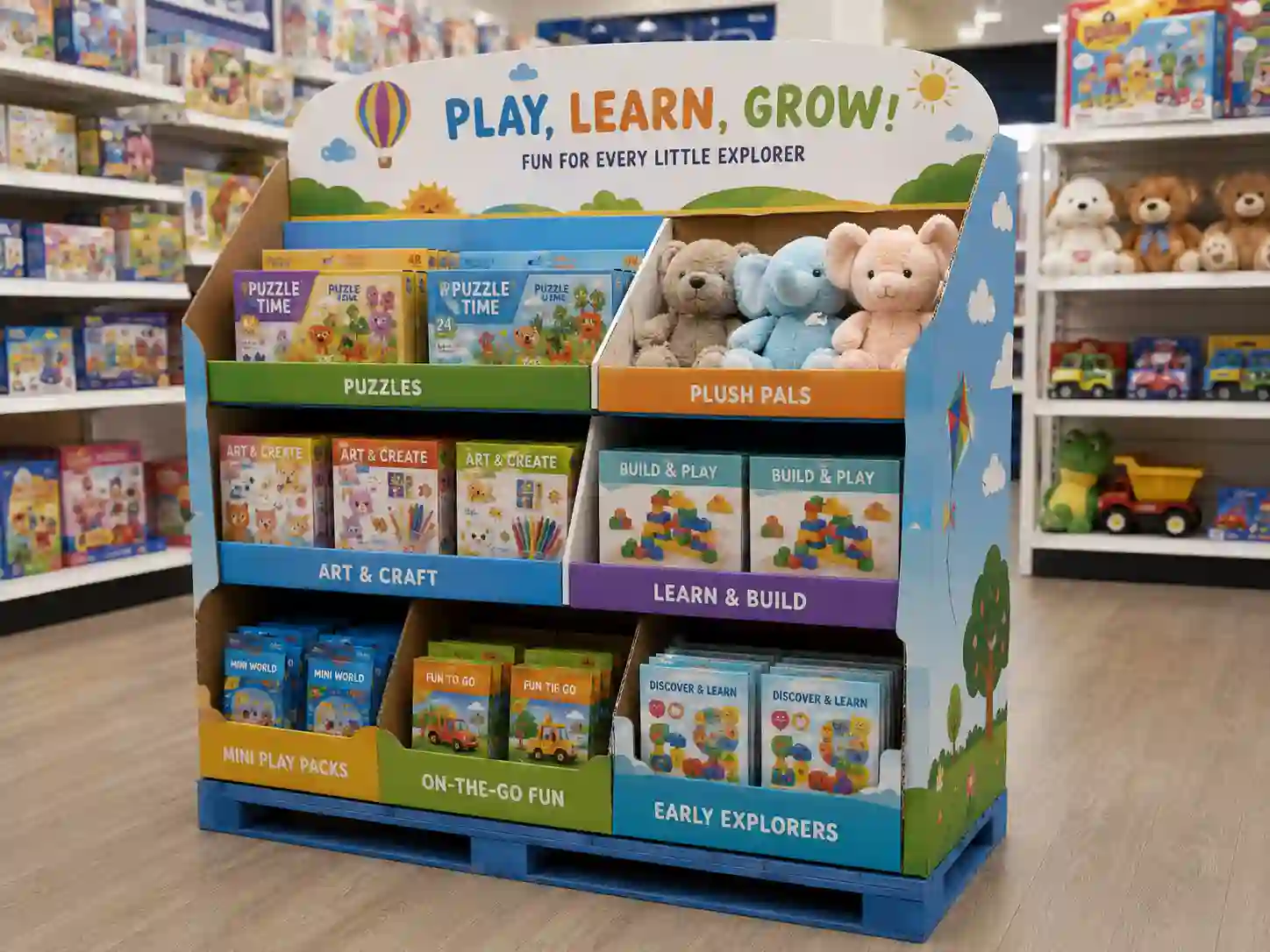
Why Toy Displays Need a Different Retail Approach
Toy aisles are colorful, crowded, and competitive. Many products have bright packaging, playful graphics, and different shapes. If the display structure is weak or messy, the product loses attention fast.
From a manufacturer’s perspective, toy displays usually need to solve five practical problems:
- Product visibility from a child and parent viewing height
- Stable structure in high-traffic retail areas
- Mixed SKU arrangement without looking chaotic
- Easy refill for store staff
- Safe edges, clean assembly, and export-ready packing
A display can look attractive in a design file but fail in store if the shelves bend, hooks tilt forward, or the base is too narrow. During display development, the structure should be tested with real product samples or accurate weight substitutes.
For custom projects, Leader Display usually recommends starting with product size, retail placement, quantity per display, shipping method, and assembly requirements. This keeps the project grounded in actual store use instead of decoration alone.
For broader display customization, buyers can also review custom cardboard displays to understand how structure, printing, and packing can be planned together.
Common Toy and Kids’ Product Display Types
Different toy categories need different in-store formats. The goal is not to choose the most complex display. The goal is to choose the format that sells the product clearly and can survive the promotion period.
PDQ Displays for Small Toys and Impulse Items
PDQ displays work well for small toy items, mini figures, card packs, stickers, slime packs, craft accessories, party favors, and pocket-money products. These are often placed on counters, checkout areas, endcaps, or retail shelves.
A good PDQ display should have:
- Low front lip for easy product picking
- Divider options for multiple SKUs
- Strong side walls to prevent spreading
- Clear front panel for product branding
- Simple flat-pack or pre-filled shipping options
PDQ displays are useful when the buyer wants fast setup. Retail staff can open the carton, place the display on a shelf, and start selling. For chain stores, this can reduce labor time across many locations.
Peg Displays for Hanging Toy Packs
Peg displays are suitable for blister-packed toys, craft tools, small educational kits, hair accessories, party products, keychains, and collectible items. The key issue is hook load.
If too much weight is placed on a weak peg panel, the holes can tear or deform. For heavier hanging packs, the peg area may need reinforced corrugated board, double-wall material, plastic hooks with backing support, or a stronger internal panel.
Hook spacing also matters. If the products overlap too much, shoppers cannot see the packaging. If the spacing is too wide, the display holds fewer items and shipping cost increases.
Floor Displays for Boxed Toys
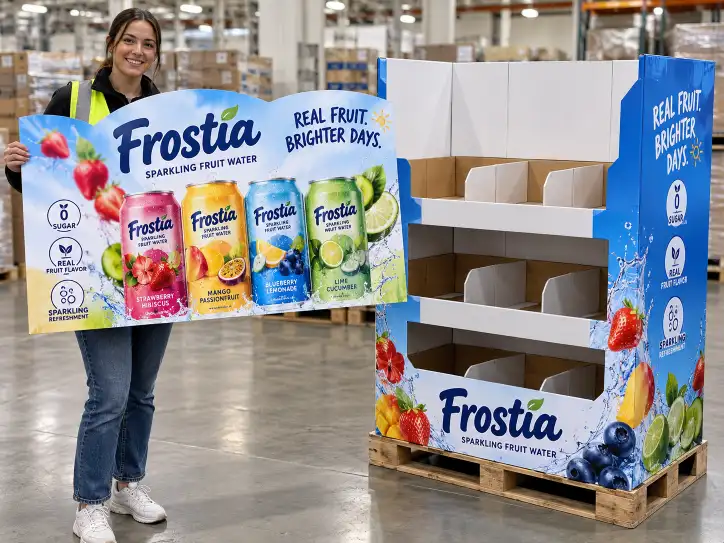
Floor displays work well for boxed toys, puzzles, building sets, dolls, science kits, craft boxes, and seasonal gift sets. These displays usually need stronger shelves and a stable base.
For boxed toys, shelf depth should match product depth. If the shelf is too shallow, items may fall forward. If it is too deep, products can sit too far back and lose visibility.
A strong floor display may use:
- Double-wall corrugated board
- Reinforced shelf supports
- Back panel support
- Base tray or kick plate
- Header card for campaign messaging
- Side panels for brand graphics
For retail buyers, the main question is simple: can the display hold the planned quantity during the full promotion period?
Dump Bin Displays for Plush Toys and Soft Products
Dump bins are common for plush toys, balls, soft items, lightweight seasonal toys, and clearance promotions. They are easy to fill and create a casual browsing feel.
However, dump bins can become messy. For premium toy brands, a dump bin may not fit the product positioning. For lower-price or high-volume items, it can work well because customers can pick products quickly.
A good dump bin should have a wide opening, strong bottom structure, and proper height. If the bin is too deep, small products disappear at the bottom. If it is too low, the display may not create enough presence in the aisle.
Matching Display Structure to Product Type
The best structure depends on the product’s packaging, weight, price point, and store placement.
| Product Type | Recommended Display | Key Structure Detail | Best Retail Placement |
|---|---|---|---|
| Mini toys, stickers, blind bags | PDQ display | Dividers and low front lip | Counter, shelf, checkout |
| Blister-packed toys | Peg display | Reinforced peg board | Endcap, side aisle, retail shelf |
| Boxed puzzles and kits | Floor display | Strong shelves and wide base | Toy aisle, promotional area |
| Plush toys and soft items | Dump bin | Strong bottom and open access | Seasonal zone, middle aisle |
| Premium gift toy sets | Shelf display or floor display | Clean compartments and brand header | Feature area, gift section |
| Mixed children’s products | Combination display | Hooks, trays, and shelves | Launch zone, endcap |
This table is a starting point. In production, the final structure should be checked against real product dimensions and carton packing requirements.
A well-designed cardboard display for toys and kids products should guide the shopper’s eye. Top areas can hold brand messaging. Middle shelves can show bestsellers. Lower sections can hold heavier products. Small impulse items should stay at easy grabbing height.
Safety, Stability, and Material Choice
Children’s product displays need extra care because they may be touched, leaned on, or bumped in store. The display is not a toy, but it will often be placed near young shoppers.
Important safety details include rounded or clean-cut edges, stable base design, strong shelf locking, and no loose parts that can fall off during normal retail use. If the display includes hooks, the hook length and end shape should be chosen carefully.
Material choice depends on display size and product weight. Common options include:
- Single-wall corrugated board for lightweight PDQ and counter displays
- Double-wall corrugated board for floor displays and heavier boxed toys
- Laminated printed paper for stronger surface finish
- Greyboard or specialty board for premium display components
- Reinforced internal supports for heavy shelf loads
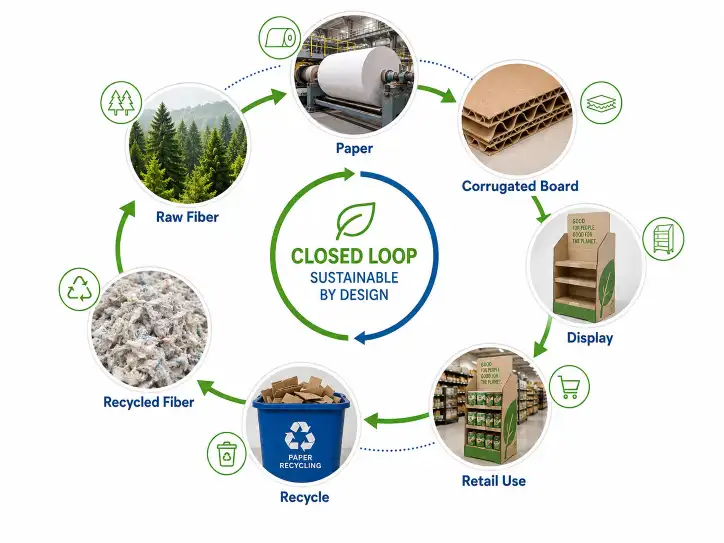
For sustainability requirements, many buyers may ask about FSC-certified paper materials. FSC is widely recognized for responsible forest management. For quality management, some buyers may also ask whether the factory follows ISO-related processes. FEFCO standards are often referenced in corrugated packaging structure discussions, especially for carton and board formats.
A practical manufacturer should not only mention materials. The factory should explain why a certain board grade, flute type, or reinforcement method is suitable for the product.
Shelf Load and Product Weight Testing
Toy displays often carry many units across several shelves. Even if each product is light, the total shelf load can become significant.
For example, a shelf holding 20 boxed toy kits at 250 grams each needs to support 5 kilograms before adding movement, handling, and safety margin. A display that looks fine during photography may still sag after several days in a warm or humid retail environment.
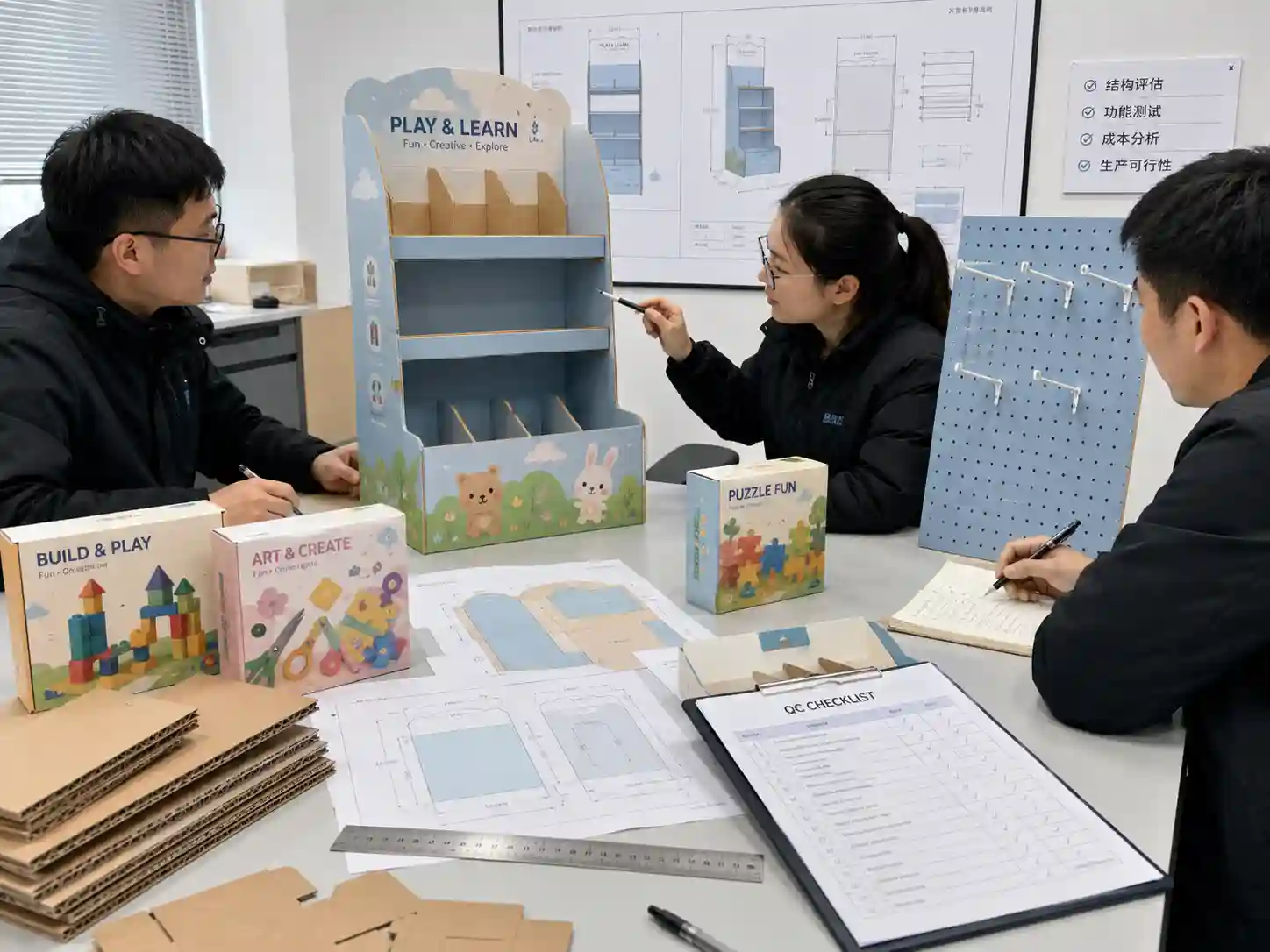
That is why sample testing matters. Before mass production, a display sample should be assembled and loaded with real products or weight substitutes. The test should check:
- Shelf bending
- Side panel pressure
- Back panel support
- Peg hole tearing
- Base stability
- Header card balance
- Product access and refill flow
For larger orders, buyers should approve both print sample and structure sample. The print sample confirms color, branding, and finish. The structure sample confirms fit, strength, and assembly.
At Leader Display, structure development is often discussed together with packing method because display strength and export packing are connected. A display that is strong in store still needs to arrive flat, clean, and undamaged.
How Retail Placement Changes the Display Design
Placement affects almost every design decision. A counter PDQ display does not need the same height, base, or shelf strength as a floor display placed in the toy aisle.
Counter and Checkout Placement
Counter displays are useful for small impulse toys and gift add-ons. The structure should be compact and easy to replenish. Branding must be clear because shoppers view the display from close range.
For these displays, the main challenge is limited space. The display should hold enough products without blocking staff work areas or payment terminals.
Retail Shelf Placement
Shelf displays need to fit standard shelf dimensions. Height and depth are key. If the display is too tall, it may not fit. If it is too deep, it may push forward or waste shelf space.
Retail shelf displays often need simple tray structures, product dividers, and strong front branding. A clean front panel can make the product block look organized, especially when several SKUs are shown together.
Floor and Promotional Area Placement
Floor displays are used for product launches, seasonal campaigns, and higher-volume promotions. These displays create stronger brand presence and can hold more stock.
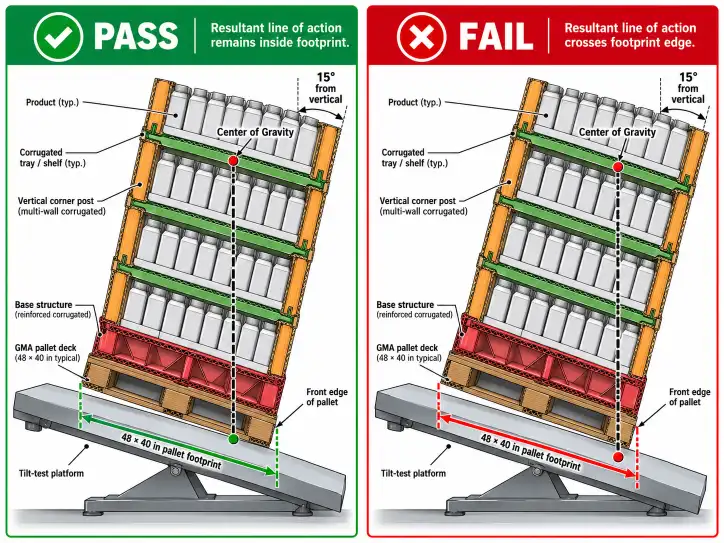
For floor placement, base stability is critical. The display should stand well when partially filled. Some displays look stable when full but become light and easy to tip when products are sold down. This should be considered during sample testing.
More examples of display formats can be reviewed under cardboard display solutions.
Printing, Graphics, and Child-Friendly Visual Appeal
Toy displays need bright and clear graphics, but the display should not compete with the product packaging. If every surface uses strong colors, the display can look noisy.
A practical layout often uses:
- Header card for campaign theme
- Side panels for brand story or key selling points
- Front lip for product name or promotion message
- Clear product zones by age, theme, or SKU
- Simple icons for product features
For children’s products, buyers may want playful graphics. That is fine, but brand safety matters. Generic artwork should be created carefully, and real character references should only be used when the brand owns the rights. Avoiding trademark issues is important for international retail.
Print finish can also change the perceived value. Gloss lamination gives a bright retail look. Matte lamination can feel more premium. Spot UV, foil, or embossing may be used for gift-focused toy sets, but they increase cost and lead time.
Assembly, Flat Packing, and Store Labor
Many B2B buyers focus on unit cost, but store labor cost also matters. A cheaper display that takes too long to assemble may create problems for retailers.
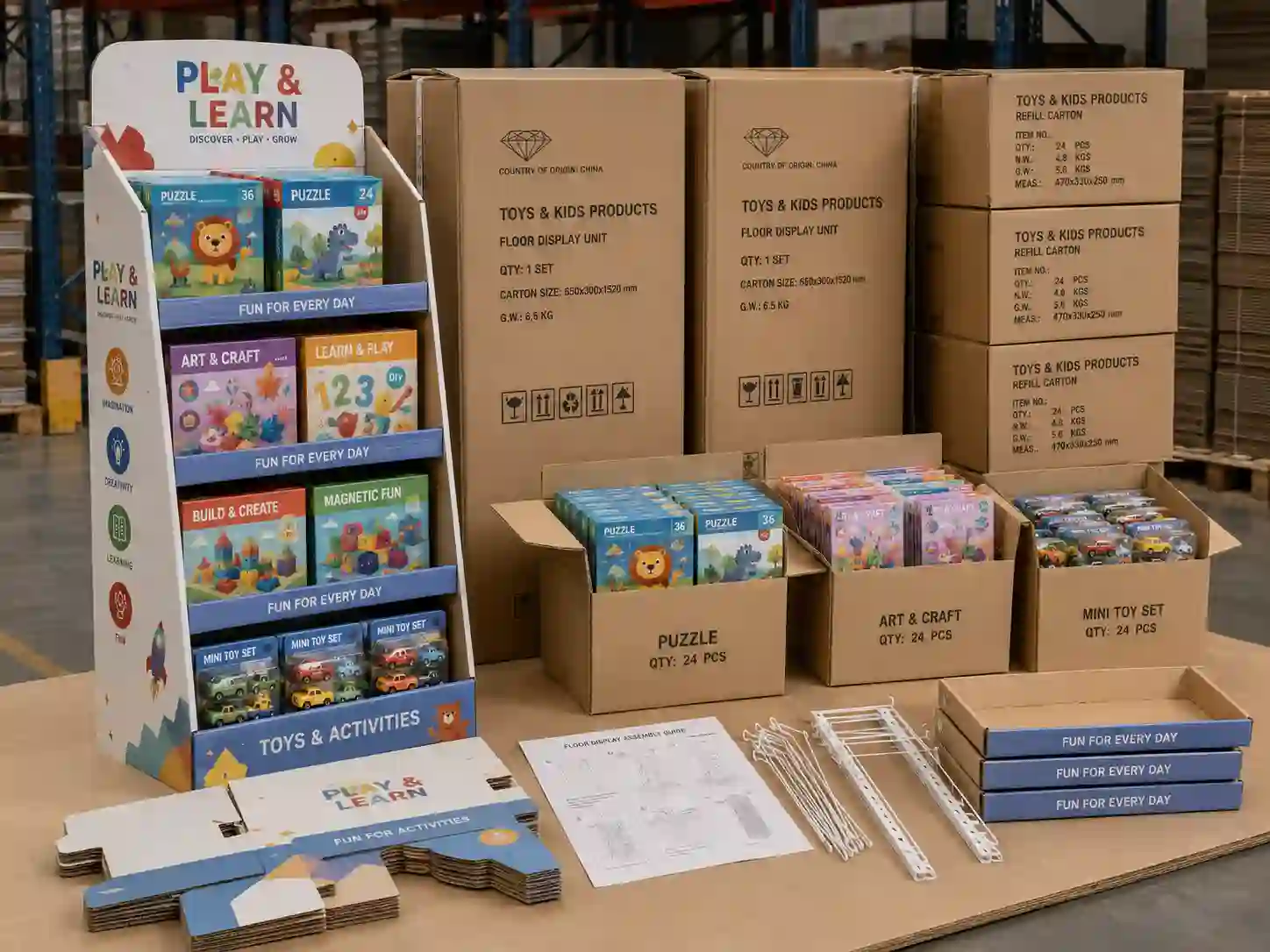
For toy promotions, assembly should be simple. Clear folding lines, locking tabs, numbered parts, and an instruction sheet can help store teams set up the display without damage.
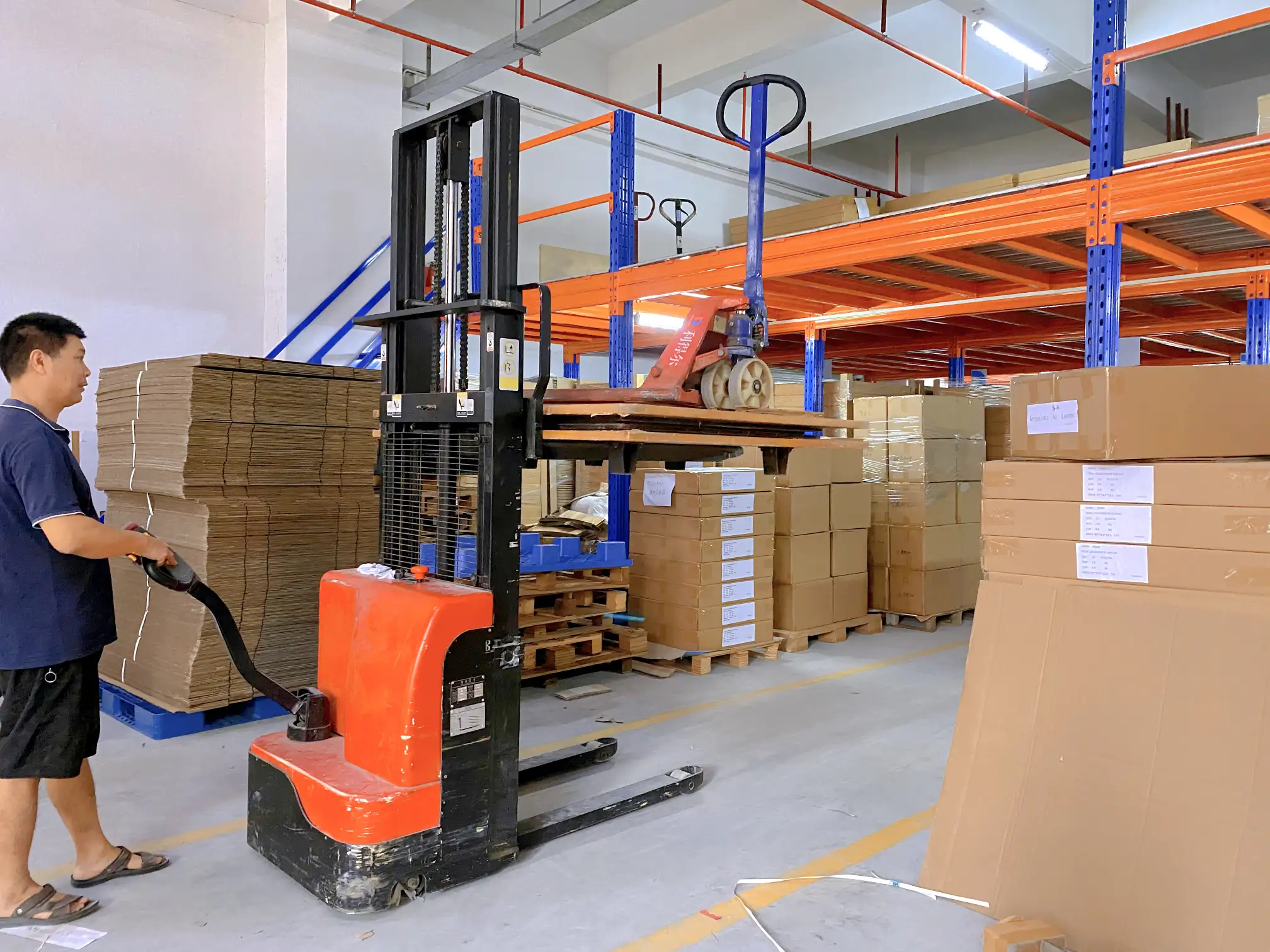
Flat packing is common for export because it saves shipping volume. However, flat-packed displays need proper protection. Printed panels should not rub against rough carton surfaces. Headers, shelves, hooks, and accessories should be packed in a logical order.
A good export packing plan may include:
- One display per master carton
- Separate accessory bag for hooks or clips
- Printed instruction sheet
- Protective paper between printed panels
- Reinforced outer carton
- Clear carton marks for retail distribution
For chain store programs, some buyers may request pre-packed displays. This can reduce store setup work, but it increases packing complexity and shipping volume. The decision depends on retailer requirements, product value, and distribution method.
Refill Planning for Long Promotions
Toy displays often stay in store for several weeks. If the first fill sells well, refill planning becomes important.
A refill-friendly display should allow staff to add products without disassembling shelves or moving the full unit. Open shelf access, clear SKU zones, and strong dividers help keep the display tidy after multiple refills.
For peg displays, refill cartons should match hook layout. If staff need to guess where products go, the display may become messy. A simple planogram or printed refill guide can help.
For PDQ displays, refill packs can be grouped by SKU. For floor displays, heavier items should remain on lower shelves, while lighter items can stay higher.
This is one area where practical structure design supports sales. A display that stays clean and shoppable after refill has a better chance of performing through the full campaign period.
What Buyers Should Prepare Before Requesting a Quote
To get an accurate quotation, buyers should provide more than a product name. A manufacturer needs project details to recommend the right structure and material.
Useful information includes:
- Product dimensions and weight
- Number of SKUs
- Quantity per display
- Target retail placement
- Expected promotion period
- Printing artwork or brand direction
- Required certifications or material standards
- Shipping destination
- Flat-pack or pre-filled packing preference
- Display order quantity
- Retailer requirements, if available
With these details, the factory can suggest display size, board material, shelf structure, printing method, packing style, and approximate cost direction.
For custom retail programs, buyers can start from custom cardboard display manufacturing and share product photos, packaging dimensions, and target store placement. That gives the design team enough information to build a practical display direction.
Manufacturer Recommendations for Toy Display Projects
From a production point of view, the best toy displays are not always the most decorative ones. They are the ones that balance visibility, strength, cost, packing efficiency, and retail handling.
For small impulse toys, start with PDQ or counter displays. For blister-packed products, use peg displays with reinforced panels. For boxed toy sets, use floor displays with shelf load testing. For plush and lightweight seasonal toys, consider dump bins with strong base support.
The display should match the buyer’s sales plan. A short seasonal campaign may need fast setup and strong visual impact. A long retail program may need better refill planning and stronger shelf support. A premium toy gift set may need cleaner printing, better finish, and a more structured presentation.
A cardboard display for toys and kids products works best when the manufacturer understands both the product and the store environment. Share the product size, weight, SKU plan, and retail placement early, and the display can be engineered for the way it will be shipped, assembled, filled, refilled, and shopped.
The next step is to turn those product details into a display structure that your retail team can approve, your store staff can set up, and your customers can notice in the aisle.