A cosmetics or skincare display has to do more than hold products. It must protect small bottles, organize shades or SKUs, support testers, fit retail space, and present the brand in a clean way. For B2B buyers, choosing the right structure early can reduce sampling delays, assembly problems, and retail setup costs.
Cosmetics and skincare products often look lightweight, but the display requirements can be complex. A serum bottle, face cream jar, lipstick, sunscreen tube, sheet mask pouch, and gift set box all need different display support. The best choice depends on product size, unit weight, retail position, refill plan, and whether the display is used for a launch, promotion, seasonal campaign, or long-term shelf program.
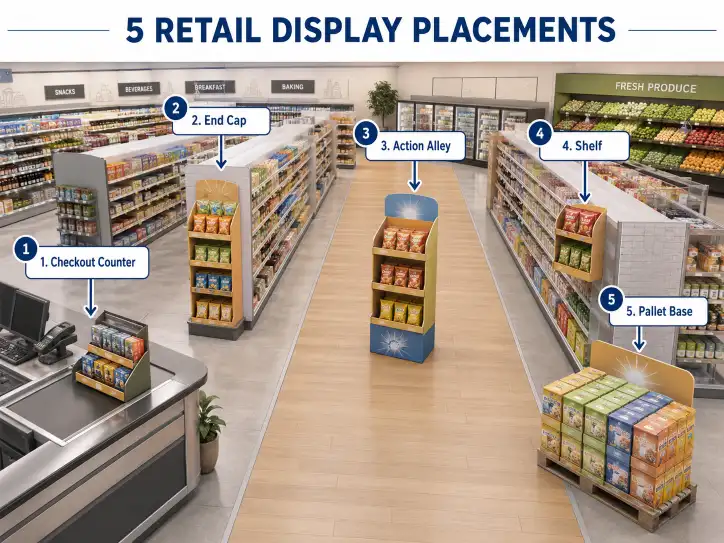
As a cardboard display manufacturer, we usually start with one practical question: where will the display be used? Counter space, shelf space, floor space, pallet space, and checkout areas all lead to different structural decisions.
Why Cosmetics and Skincare Need Careful Display Planning
Cosmetics and skincare buyers often care about premium appearance, but appearance alone is not enough. The display also needs stable structure, accurate compartments, safe packing, and easy in-store handling.
Small cosmetic items can fall forward if the tray angle is wrong. Heavy glass jars can bend shelves if the board grade is too light. Tubes may look messy without dividers. Testers need separation from sealed retail products. Multi-SKU ranges need clear shelf organization, or the store team may place products in the wrong position.
A good cardboard display for cosmetics and skincare should solve these issues before mass production:
- Hold products securely during display use
- Keep different SKUs organized
- Make product labels easy to see
- Support quick shelf or counter setup
- Match the brand’s color, finish, and campaign style
- Allow flat packing or semi-assembled packing when needed
- Reduce damage risk during export shipping
This is why structure, material, printing, finishing, and packing should be discussed together. They are not separate decisions.
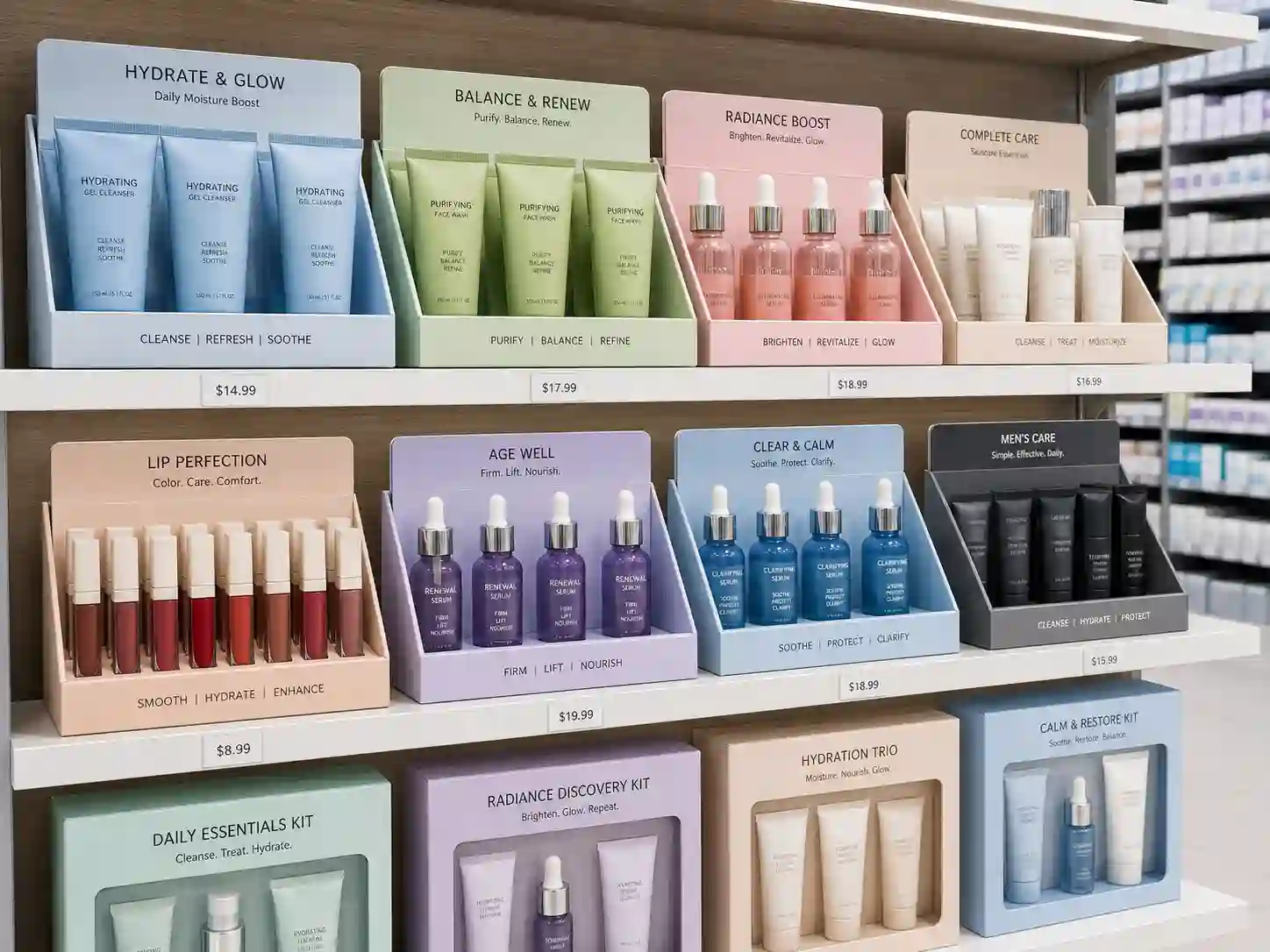
Main Cardboard Display Types for Cosmetics and Skincare
Different retail positions need different display formats. The right option depends on how much space the retailer gives, how many products need to be shown, and how the display will be refilled.
Counter Display for Small Cosmetics
Counter displays work well for lip balm, lipstick, mascara, mini perfume, skincare samples, travel-size tubes, and small promotional sets. They are commonly placed near checkout counters, beauty consultation desks, pharmacy counters, and boutique display tables.
The main advantage is visibility at close range. Customers can see the product and pick it up easily.
For counter displays, we usually pay attention to:
- Tray depth, so small products do not fall out
- Product-facing angle, so labels are visible
- Divider height, so SKUs stay separated
- Header size, so the brand message is clear without blocking the product
- Base strength, especially for glass containers or full product loading
A counter display is often the best choice when the product is small, lightweight, and sold through impulse buying. It also works well for sampling programs and new product launches.
For more structure options, buyers can review custom cardboard displays to compare formats for retail campaigns.
PDQ Display for Retail-Ready Placement
A PDQ display is useful when the product needs to be shipped and placed quickly in stores. PDQ trays are common for small cosmetics, skincare sachets, trial kits, lip products, eye products, and promotional bundles.
The key benefit is speed. Store staff can open the shipping carton and place the tray directly on a shelf or counter.
For cosmetics and skincare, a PDQ display needs careful product fit. If the tray is too loose, bottles may shift during transport. If the compartments are too tight, staff may struggle to refill the display. A well-designed PDQ display balances product protection with easy access.
PDQ displays are often suitable for:
- Chain store promotions
- Seasonal product launches
- Mini skincare sets
- Trial-size beauty products
- Retail-ready shelf programs
- Club store or pharmacy shelf campaigns
For B2B buyers, PDQ displays can help reduce in-store setup work. That matters when a campaign is rolled out across many retail locations.
Floor Display for Larger Product Ranges
Floor displays are a strong option when the brand needs more retail presence. They are commonly used for skincare collections, sunscreen ranges, facial care lines, men’s grooming products, bath and body products, and promotional gift packs.
A floor display gives the brand more space for storytelling. It can include shelves, product trays, side panels, headers, brochure pockets, tester areas, and refill stock areas.
Structure is important here. Cosmetics and skincare products can include glass bottles, jars, liquid-filled tubes, and boxed sets. The display must support the total loaded weight, not only the weight of one product.
For floor displays, we normally check:
- Shelf load capacity
- Board thickness and flute type
- Shelf span and reinforcement needs
- Product depth and front lip height
- Center of gravity after full loading
- Assembly method for store staff
- Flat packing strength for export shipment
A floor display is often the best fit when the brand wants impact, more SKUs, and better visual control in a retail aisle.
Sidekick Display for Aisle and Endcap Support
Sidekick displays are attached to shelves, endcaps, or aisle fixtures. They are useful for small skincare products, masks, travel-size tubes, sun care products, lip care, and small beauty accessories.
They save floor space while creating extra selling space. This makes them helpful for retail chains that have limited shelf allocation.
However, sidekick displays need careful hanging structure. The back panel, hooks, hanging holes, and product weight must match the retail fixture. If the product is too heavy, the display may tilt or bend.
Sidekick displays work best for compact and lightweight items. They are less suitable for heavy glass jars or large boxed gift sets unless the structure is reinforced and tested.
Peg Display for Hanging Cosmetics and Accessories
Peg displays are useful when the product comes with hang holes or blister cards. Examples include beauty tools, facial masks, cosmetic accessories, small skincare kits, lip products, and travel packs.
The peg position must match the product packaging. Too much spacing wastes display area. Too little spacing makes the display crowded and difficult to shop.
For peg displays, we focus on:
- Peg hook length
- Product hanging weight
- Hole spacing
- Back panel thickness
- Anti-tilt structure
- Header visibility
- Easy refill access
Peg displays can be made as counter peg displays, floor peg displays, or sidekick peg displays. The choice depends on retail space and product quantity.
Quick Comparison: Which Display Works Best?
The table below gives a practical starting point for B2B buyers. Final structure should still be confirmed based on product size, weight, and retail requirements.
| Display Type | Best For | Retail Position | Key Structure Point | Typical B2B Use |
|---|---|---|---|---|
| Counter display | Lipstick, serum, samples, mini skincare | Checkout counter, beauty desk, shelf top | Stable base, dividers, product-facing angle | New launch, small SKU promotion |
| PDQ display | Trial kits, small boxed cosmetics, sachets | Retail shelf or counter | Retail-ready tray, tight product fit | Chain store rollout, fast placement |
| Floor display | Full skincare lines, gift sets, sunscreen ranges | Aisle, promotional area, store entrance | Shelf load, reinforcement, assembly | Brand campaign, multi-SKU display |
| Sidekick display | Masks, lip care, travel-size products | Aisle fixture, endcap side | Hanging strength, product weight control | Extra selling space, secondary placement |
| Peg display | Beauty tools, accessories, hanging packs | Counter, shelf side, floor unit | Peg layout, back panel strength | Organized hanging product display |
| Dump bin display | Pouches, masks, promotional packs | Promotion zone, aisle | Product access, bin height, stability | Bulk promotion, quick shopping |
| Pallet display | Large volume campaign packs | Club store, warehouse retail | Pallet footprint, export packing, load safety | High-volume seasonal program |
How Product Type Affects Display Choice
A single beauty brand may need several display formats. A lipstick display and a moisturizer display do not work the same way.
Glass Bottles and Heavy Jars
Glass serum bottles, cream jars, and essential oil bottles need stronger support. Even if each unit is small, the total display load can become heavy once the display is fully stocked.
For these products, a display should include stronger shelves, proper front lips, and tighter product positioning. If the products are placed on a slanted tray, the angle must be tested. A steep angle can improve visibility, but it can also create pressure at the front edge.
For export orders, glass products also need packing attention. The display may be shipped separately from products, or pre-packed with products depending on the buyer’s plan. Each method needs different carton strength and inner protection.
Tubes and Pouches
Skincare tubes, sunscreen tubes, facial cleansers, and mask pouches need organization. Without dividers, they can lean, slide, or look messy after shoppers touch them.
For tubes, counter trays, PDQ trays, and floor display shelves can work well. For pouches, peg displays or divider trays may be better. The display should make the front product easy to remove while keeping the remaining products upright.
Small detail. Big difference.
Boxed Skincare Sets
Boxed products are easier to stack, but they still need accurate sizing. If the shelf depth is too short, the box may overhang. If the shelf is too deep, products may sit too far back and lose visibility.
Boxed skincare sets often work well in floor displays, pallet displays, and shelf-ready PDQ trays. The structure should match the retail channel. A boutique display may need a cleaner premium finish, while a club store pallet display may need stronger board, larger graphics, and shipment efficiency.
Testers and Retail Samples
Cosmetics and skincare often require testers. A tester area needs to be separated from sealed stock. It may need a special tray, opening, or label area.
For tester displays, we usually recommend:
- A fixed tester position
- Strong tray surface
- Easy cleaning consideration
- Clear separation between tester and retail stock
- Simple refill access for store staff
Cardboard can support tester programs, but the structure should be planned carefully. Liquids, oils, and creams may stain paper surfaces if leakage occurs, so surface finishing and product placement matter.
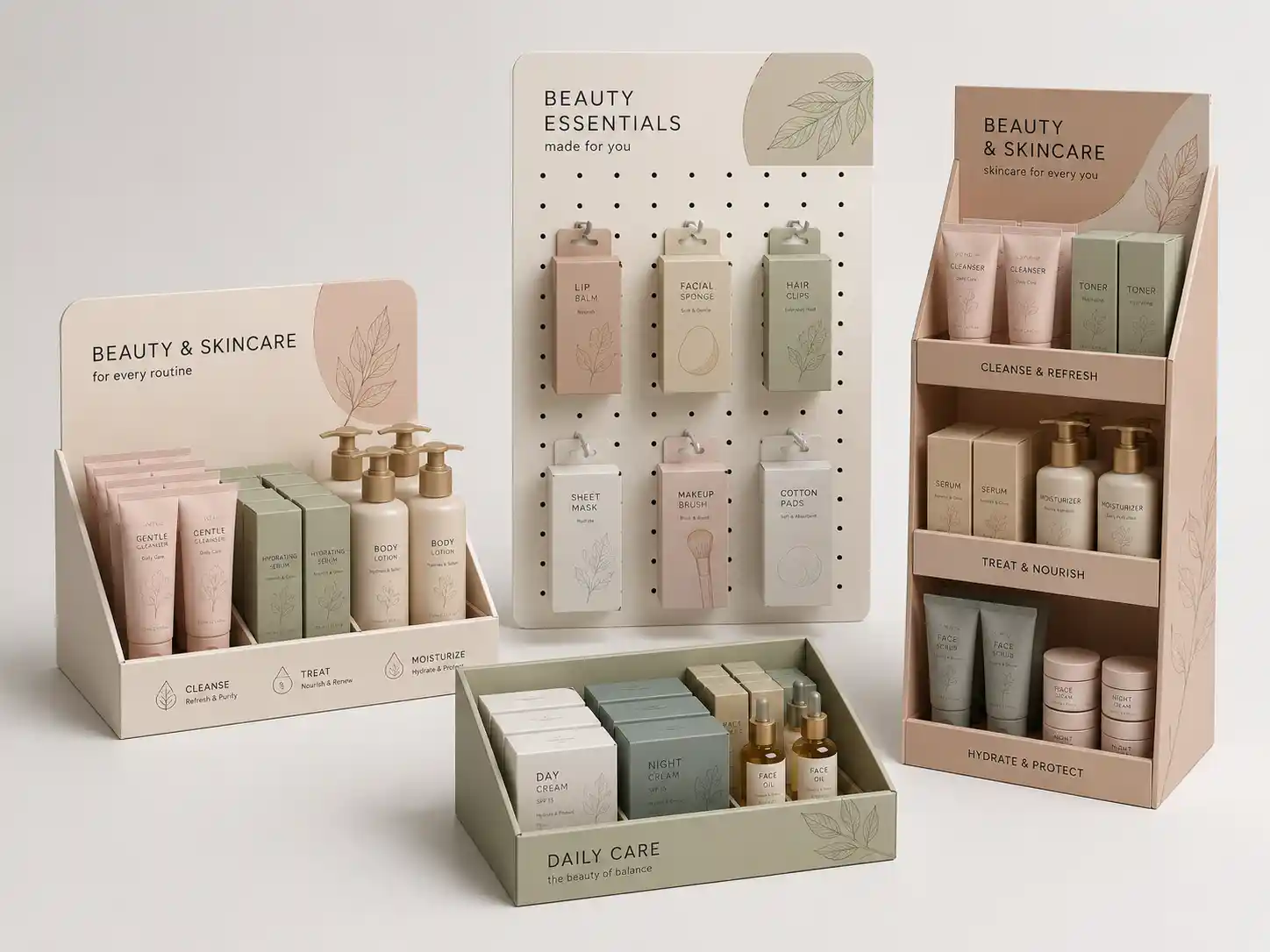
Material Choice: Strength, Finish, and Sustainability
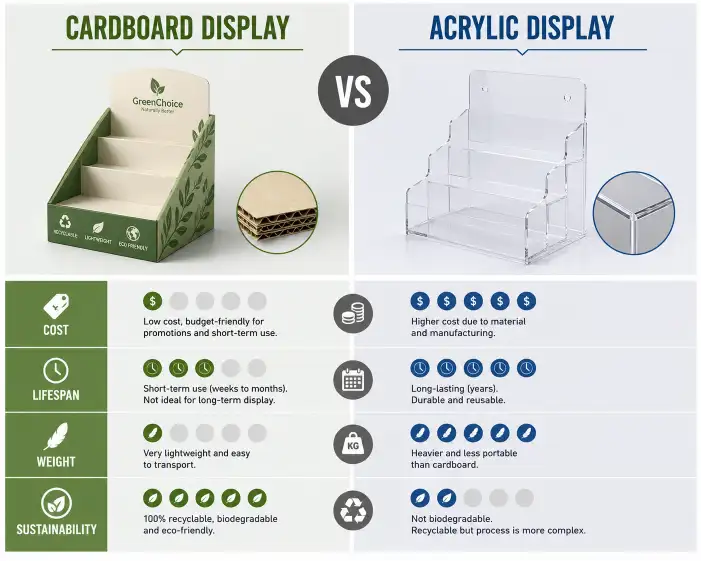
Material choice affects strength, cost, appearance, and export packing. For cosmetics and skincare, buyers often want a premium look, but the display still has to survive production, packing, shipping, and store use.
Common Board Options
Corrugated board is widely used for floor displays, sidekick displays, pallet displays, and stronger counter displays. Paperboard or greyboard may be used for smaller premium counter units, sleeves, trays, or decorative parts.
For heavier products, corrugated board with suitable flute and reinforcement is usually better. For premium close-up display areas, laminated printed paper, specialty paper, matte film, gloss film, embossing, debossing, hot stamping, and spot UV can improve the look.
The material should match the retail environment. A pharmacy display may need clean graphics and clear organization. A beauty boutique display may need premium finishing. A mass retail display may need stronger structure and efficient packing.
Sustainability and Certification
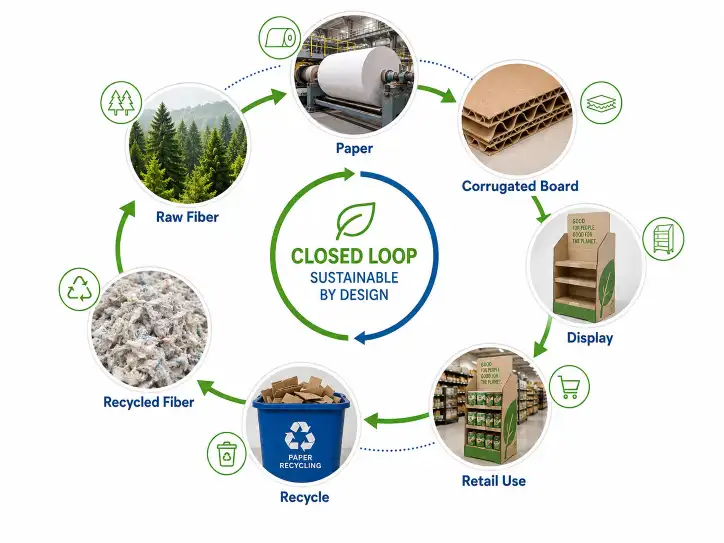
Many cosmetics and skincare brands also care about responsible sourcing. FSC-certified paper can support sustainability requirements when the buyer requests it. ISO quality management standards may also be relevant when evaluating a supplier’s production process. FEFCO references can be useful for understanding corrugated packaging styles and carton structures.
For B2B projects, certification should be discussed early. Some buyers need FSC claims printed on the display or carton. That requires confirmed material sourcing, production control, and correct artwork handling before bulk production.
Printing and Finishing for Beauty Retail Displays
Cosmetics and skincare displays often compete in visually crowded retail areas. Printing must be clean, accurate, and aligned with the brand’s packaging.
Color Matching
Color matching is important for beauty brands. A soft beige, clean white, pale pink, medical blue, or premium black can look different across paper types and surface finishes. The buyer should confirm color expectations during sampling, not after mass production starts.
For larger projects, we recommend checking printed samples under normal lighting conditions. Retail lighting can change how colors appear, especially on glossy or laminated surfaces.
Finishing Options
Common finishing options include:
- Matte lamination for a soft premium look
- Gloss lamination for brighter colors
- Spot UV for logo or product highlights
- Hot stamping for premium campaign details
- Embossing or debossing for texture
- Anti-scratch film for darker display surfaces
Finishing adds visual value, but it also affects cost and lead time. A practical manufacturer should help buyers choose the finish that supports the campaign instead of adding decoration without purpose.
Sampling: The Step That Prevents Bulk Production Problems
Sampling is one of the most important steps in a custom cardboard display project. A sample allows the buyer to check product fit, structure, printing, assembly, and packing before mass production.
For a cardboard display for cosmetics and skincare, sampling should confirm:
- Product size and loaded quantity
- Shelf or tray strength
- Divider accuracy
- Product label visibility
- Tester area position
- Assembly method
- Overall display height and footprint
- Graphic position and color direction
- Flat packing or assembled packing method
A blank structural sample is useful for checking strength and product fit. A printed sample is useful for checking visual presentation and campaign impact. For urgent projects, buyers may approve structure first and confirm final printing after artwork review.
Leader Display supports custom project discussion through cardboard display solutions for buyers who need structure guidance before production.
Assembly, Refill, and Store Staff Handling
A display that looks good in a factory sample room may fail in retail if assembly is too complicated. Store staff often have limited time. The structure should be clear, stable, and easy to set up.
Assembly Method
For floor displays, shelves may use locking tabs, slots, support bars, or reinforced inserts. For counter displays, the tray and header may fold into position. For sidekick displays, hanging parts must be clear and strong.
The assembly instruction sheet should be simple. Where possible, the display should have numbered steps, clear fold lines, and logical locking points.
Refill Planning
Refill matters for cosmetics and skincare because small products sell unevenly. Some SKUs may sell faster than others. If the display has poor refill access, the store team may place products incorrectly.
A good refill-friendly display should include:
- Clear SKU zones
- Easy front access
- Sufficient shelf depth
- Divider support
- Product stops to reduce sliding
- Graphics that still look clean after partial sell-through
For multi-SKU skincare lines, shelf labels or printed product zones can help reduce confusion.
Flat Packing and Export Packing
For international B2B orders, packing is not a small detail. It affects shipping cost, damage risk, warehouse handling, and store setup.
Many cardboard displays are shipped flat packed to reduce volume. This can lower shipping cost, especially for large floor displays and pallet programs. However, flat packing requires good structural design so the display can be assembled correctly after arrival.
For some counter displays or PDQ trays, semi-assembled packing may be better. This can save retail setup time, but carton size may increase.
When planning export packing, we check:
- Master carton size
- Display folding direction
- Protection for printed surfaces
- Edge and corner protection
- Quantity per carton
- Carton weight for manual handling
- Labeling requirements
- Pallet loading method
- Moisture protection when needed
A display project is not complete until the packing method is confirmed. A beautiful display that arrives bent, scratched, or hard to assemble creates problems for the buyer and the retailer.
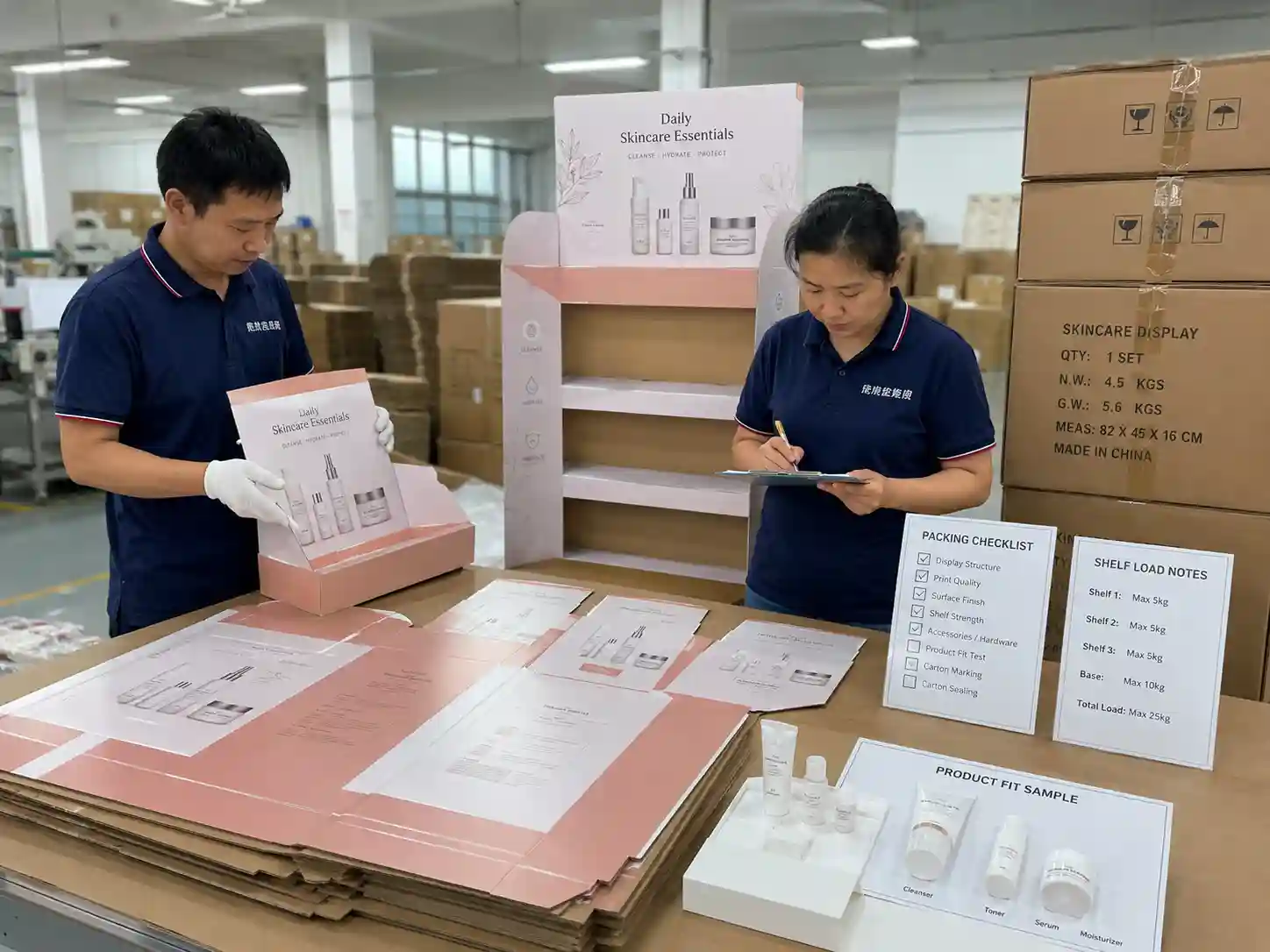
Which Display Should You Choose for Your Campaign?
The best display depends on product type, retail channel, and campaign goal.
For New Product Launches
For small launch products, a counter display or PDQ display is often the most efficient. It gives the product a clear position and supports fast placement. If the launch includes multiple SKUs or gift sets, a floor display may be better.
For Premium Skincare Lines
Premium skincare often benefits from floor displays, counter displays, or showroom-style display units with clean graphics and controlled product spacing. The display should not look overloaded. White space, product organization, and material finish can help create a stronger premium impression.
For Mass Retail Promotions
For chain stores, pharmacies, supermarkets, and club stores, PDQ displays, floor displays, sidekick displays, and pallet displays are practical. Structure, assembly time, and packing efficiency become more important because the project may cover many stores.
For Sample and Trial Programs
Counter displays, PDQ trays, and small dump bin displays can work well for samples, sachets, and mini products. The display should make products easy to pick up and easy to refill.
Common Mistakes Buyers Should Avoid
Many display problems begin before production. They often come from missing product details, unclear retail requirements, or choosing a display format based only on appearance.
Choosing a Display Before Confirming Product Weight
Product weight affects board grade, shelf support, base stability, and packing. A display for empty sample boxes is not the same as a display for full glass bottles.
Ignoring Retail Space Limits
Retailers may have strict size limits. A display that is too wide, too tall, or too deep may not be accepted. Confirm the footprint early.
Using One Structure for Too Many SKU Shapes
If tubes, jars, bottles, and boxes are mixed in one display, each product zone may need different support. One flat shelf may not solve every product shape.
Overlooking Assembly Time
A display with many small parts may look nice in a rendering, but it can be hard to set up in store. Simple assembly often performs better in real retail conditions.
Forgetting Export Packing
Export packing should be considered during structural design. If packing is planned too late, the display may need redesign, increasing time and cost.
What Information Should Buyers Send to the Manufacturer?
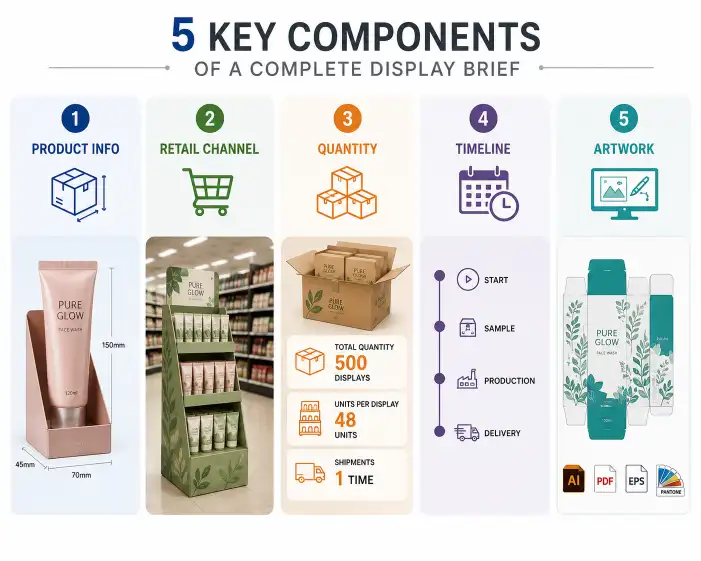
A manufacturer can give better suggestions when the project information is clear. Buyers do not need a complete technical drawing at the start, but the following details are useful:
- Product photos
- Product size and weight
- Number of SKUs
- Quantity per display
- Retail placement area
- Target display size
- Campaign duration
- Printing and finish requirements
- Packing method preference
- Order quantity
- Destination country
- Retailer requirements, if available
With these details, the manufacturer can recommend a suitable display type, board material, reinforcement method, and packing plan.
For buyers preparing a new project, Leader Display can help review product details and suggest a practical display direction before sampling.
How Leader Display Approaches Custom Cosmetics and Skincare Displays
Leader Display has worked as a B2B manufacturer since 2004, focusing on custom cardboard displays and retail display packaging. For cosmetics and skincare projects, our work usually starts with product measurement, display purpose, and retail placement.
We look at the product first. Then we consider structure.
That includes whether the display needs tray dividers, reinforced shelves, hanging hooks, a tester area, side graphics, a large header, flat packing, or export carton protection. After the structure is confirmed, printing and finishing can be matched to the brand’s visual direction.
A practical project flow may include:
- Reviewing product size, weight, and retail goal
- Recommending counter, PDQ, floor, sidekick, peg, dump bin, or pallet display structure
- Creating a structural drawing or mockup
- Making a blank sample for fit and strength testing
- Adjusting shelves, dividers, hooks, or support parts
- Confirming artwork, color, and finishing
- Producing a printed sample when needed
- Moving into bulk production after approval
- Packing displays flat or semi-assembled for export
- Supporting shipment preparation and carton labeling requirements
This approach helps buyers reduce risk before bulk production. It also keeps the project grounded in product fit, display strength, and real store handling.
Final Buying Advice for Cosmetics and Skincare Display Projects
A cardboard display for cosmetics and skincare should be selected based on retail position, product weight, SKU layout, refill method, and campaign goal. Counter displays and PDQ trays are strong choices for small products and fast launches. Floor displays work better for full product ranges and stronger brand presence. Sidekick and peg displays help create extra selling space, while pallet displays support high-volume retail programs.
The best result comes from early communication between the buyer and the manufacturer. Send product dimensions, product weight, target quantity per display, retail placement, and packing requirements before requesting the final quotation. With the right structure and sample process, your display can move from concept to store-ready production with fewer changes and stronger retail performance.
For the next cosmetics or skincare launch, prepare your product details, display quantity, and retail placement plan, then use them to build a display structure that can sell, ship, assemble, and refill with confidence.