Not every pet product belongs in the same display. A bag of treats, a chew toy, a leash, and a bag of dry food may all sit in the same aisle, but they do not sell the same way. That is why choosing the right cardboard display for pet products should start with product behavior, not with a favorite display style.
From a manufacturer’s perspective, this is one of the easiest places for buyers to make an expensive mistake. A display can look right in a mockup and still be wrong for the actual product line once weight, refill speed, shopper behavior, and shelf placement come into play. This guide breaks the decision down by product type so B2B buyers can choose a display that works in real retail conditions.
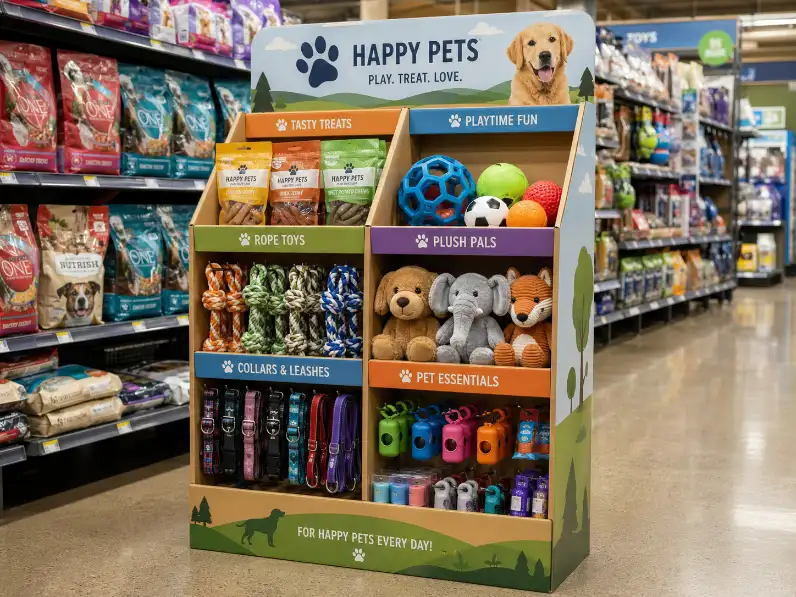
Start Here: What Kind of Pet Product Are You Selling?
The first decision is not floor display or peg display. It is product type. Pet products usually fall into four retail behaviors.
- small impulse items such as treats, chew sticks, small toys, or catnip packs
- hanging accessories such as leashes, collars, harness add-ons, or grooming tools
- boxed or structured products such as litter accessories, organized grooming kits, or bundled care products
- heavier volume goods such as pet food bags, refill packs, or larger multi-pack promotions
That split matters because each group needs a different selling rhythm. A product that wins through quick pickup often needs a different display from a product that wins through comparison or volume presence. This is where a lot of display decisions go wrong. Buyers compare structures too early and product behavior too late.
If you want the full product-family context first, our cardboard display category is the best starting point before you lock the display type.
If You Sell Pet Treats, Start With Speed and Visibility
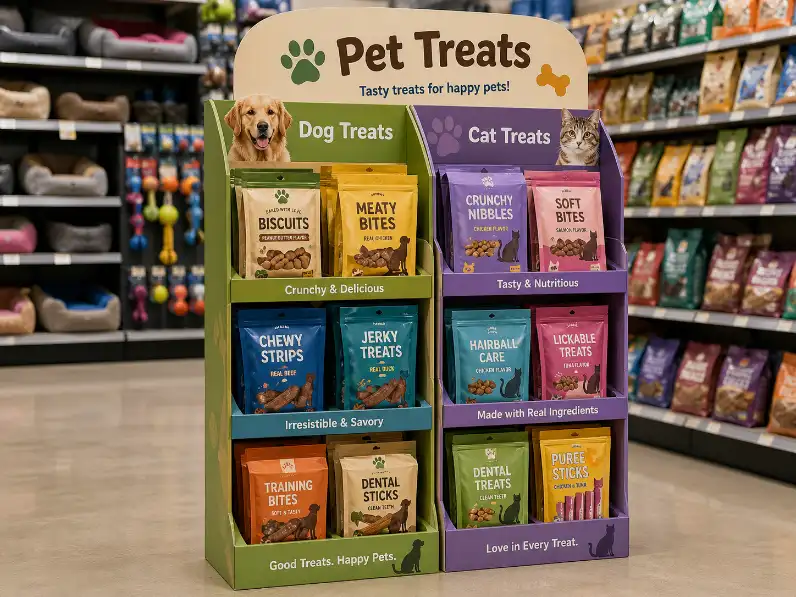
Treats are often the easiest pet category to merchandise well because the buying logic is fast. Many shoppers already know the brand, the flavor family, or the use case. They do not need long explanation. They need quick visibility, clean grouping, and easy pickup.
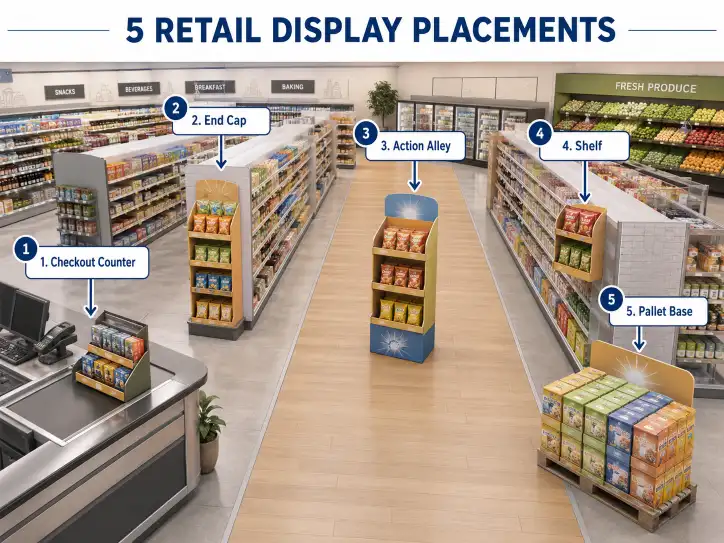
This is why treats often work well on a floor display, a dump bin display, or a counter display, depending on pack size and store placement. Small treat packs with a grab-and-go feel often work well in a dump bin or counter unit. Larger treat assortments or promotional bundles usually perform better on a floor display because they need more visible space and stronger front-facing order.
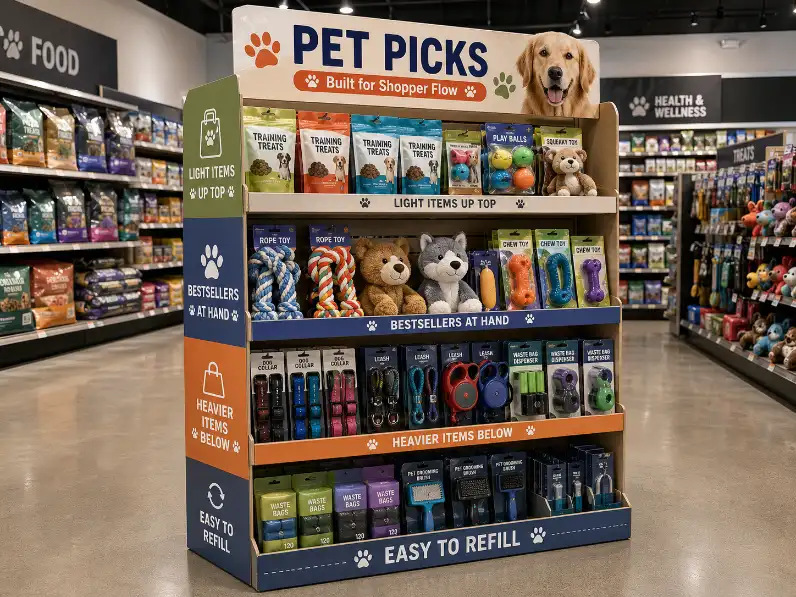
A cardboard display for pet products in the treat category works best when the shopper can understand the offer in seconds. Flavor grouping should be clear. Pack size rhythm should be tidy. Refill should feel fast. If the display turns a simple treat purchase into a sorting exercise, the design is too complicated.
If You Sell Pet Toys, the Best Display Depends on Pack Style
Pet toys look like one category from a distance. In store, they behave in two different ways. Hanging toys and peggable toys sell differently from boxed toys or larger plush items.
Small hanging toys often work best on a peg display because shoppers compare size, color, texture, and shape visually. The hook layout keeps each toy visible and makes browsing easier. A toy that hangs cleanly is usually easier to compare and easier for store staff to refill.
Bulkier or less structured toys can work well on a dump bin display when the retail goal is fast browsing rather than careful comparison. That format is useful when the products invite discovery and the price point is accessible enough to support impulse behavior.
From a supplier perspective, this is where the wrong display can hurt the category fast. A hanging toy packed into a crowded shelf unit loses visibility. A loose toy range forced into a peg layout can become visually messy. The best cardboard display for pet products in the toy segment depends on how the shopper chooses, not only on how the buyer wants the aisle to look.
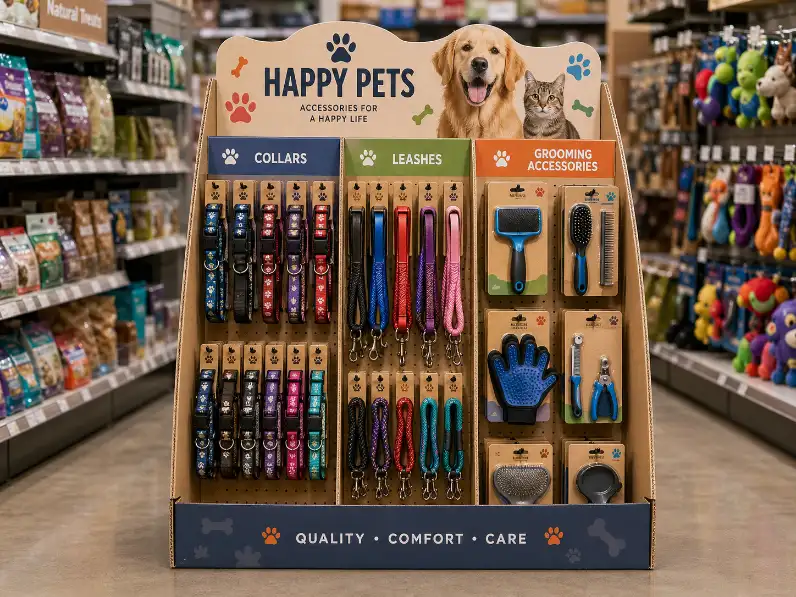
If You Sell Leashes, Collars, and Grooming Accessories, Comparison Matters Most
This category usually needs cleaner product-by-product comparison. Buyers are often looking at size, material, function, color, or hardware. That means the display needs to support scanning more than bulk impact.
For most of these products, a peg display or a structured sidekick display works best. A peg format keeps the packs visible one by one. A sidekick display can work well when the products are lightweight, compact, and suited to cross-selling near a related category. In both cases, spacing matters. Hooks that sit too close together create overlap and visual noise. Hooks that are too far apart waste space and weaken the visual block.
This is also where grouping logic matters more than many buyers expect. Size together. Material together. Function together. A display that looks clean on launch day but becomes confusing after one refill cycle is not a strong long-term solution.
If you are weighing hanging logic more closely, our guide to products that work best on a peg display is the next internal page to review.
If You Sell Pet Food or Heavier Pet Care Products, Structure Comes First
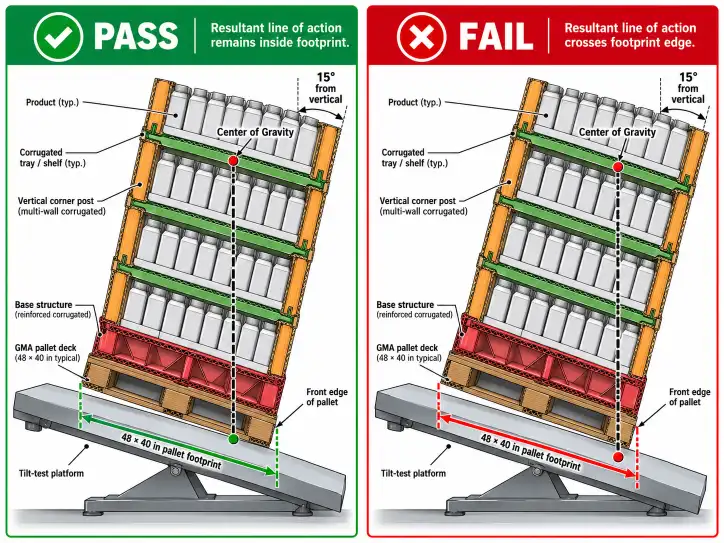
This is the category where display choice becomes more technical. Pet food bags, bulk treats, refill packs, and heavier care items can look strong on a display and still fail once real weight is applied. Buyers should not choose the structure based on visual presence alone.
Heavier pet products often work best on a pallet display or a reinforced floor display. The right choice depends on volume, pack size, and how the product will be rolled out. If the retail goal is bulk movement, a pallet display can be a strong answer. If the product still needs a more controlled branded presentation, a reinforced floor display is often better.
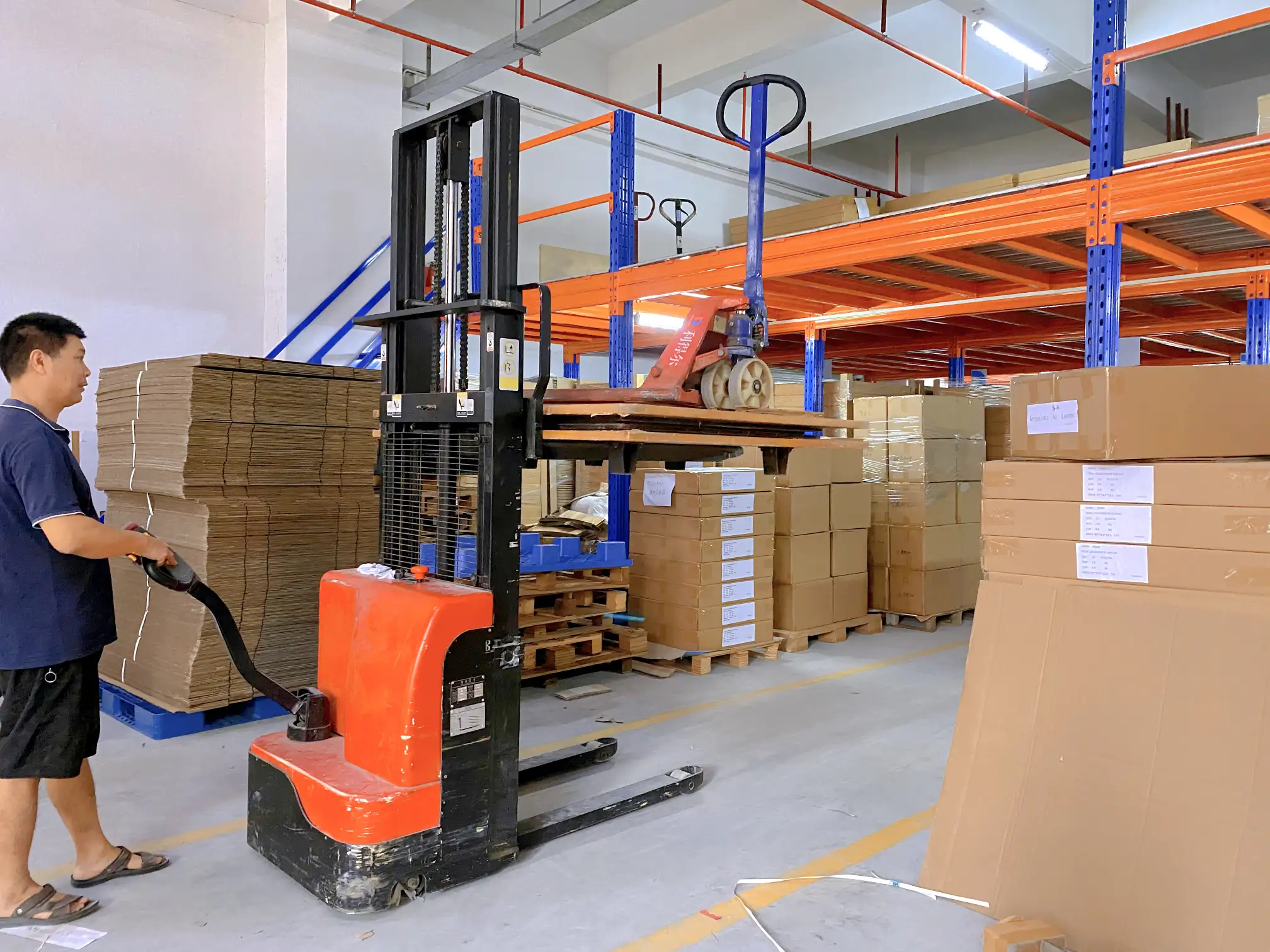
This is where a real cardboard display manufacturer should sound different from a simple printer. The supplier should be able to explain board choice, tray logic, load balance, and refill behavior in plain language. If the answer is only “we can make it,” the display is not being judged hard enough.
If your product sits in this heavier range, review our corrugated grades guide before approval. It will help you compare structure decisions more accurately.
For Mixed Pet Product Programs, One Display Is Not Always the Smartest Choice
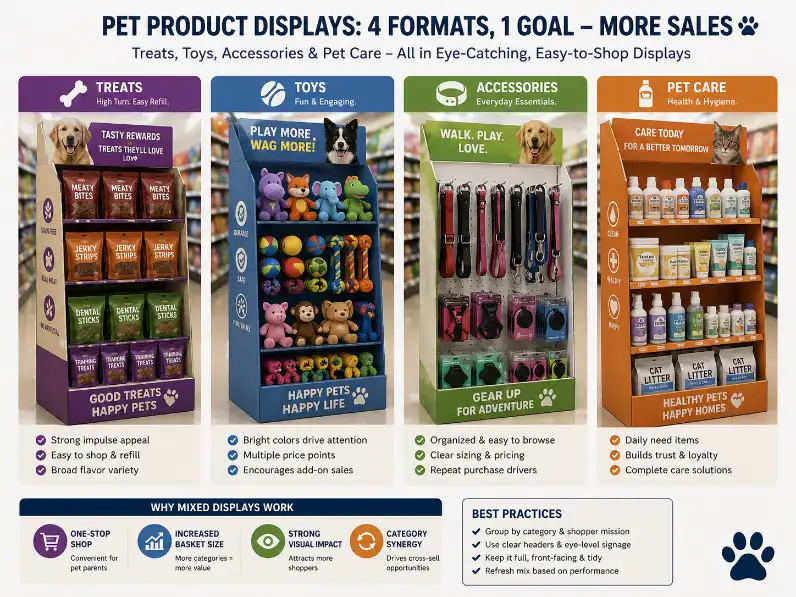
Many brands want one display to hold treats, toys, accessories, and care products together. That can work, but only when the grouping logic is strong and the products behave in a similar way. In many real projects, one mixed unit creates more friction than benefit.
A better approach is often to separate the job by display role. Use one display for fast pickup. Use another for comparison. Use another for volume. This sounds less tidy at the planning stage, but it usually creates a stronger retail result because each display is working with the product, not against it.
In our experience, mixed pet programs perform better when buyers stop asking “how do we fit everything into one unit?” and start asking “which display lets each product family sell in the simplest way?” That shift usually improves both visibility and refill quality.
A Quick Comparison Table for Pet Product Buyers
| Pet Product Type | Best Display Option | Main Reason | Main Risk |
|---|---|---|---|
| Small treat packs | Counter, dump bin, or floor display | Fast pickup and strong promotional visibility | Can get messy if the SKU mix is too wide |
| Hanging toys | Peg display | Easy visual comparison | Hook spacing can create clutter |
| Leashes and collars | Peg or sidekick display | Better size and function comparison | Weak grouping makes refill harder |
| Grooming accessories | Peg, sidekick, or compact floor display | Works well when the range stays organized | Mixed pack sizes reduce visual order |
| Pet food bags and refill packs | Pallet or reinforced floor display | Supports weight and volume presence | Weak board or tray logic causes failure |
What B2B Buyers Should Compare First
If you are comparing display ideas for a pet category, do not start with artwork. Start with product behavior. Ask these questions first:
- Does the shopper need fast pickup or careful comparison?
- Is the product hanging, stacked, boxed, or bulk-loaded?
- Will the display need fast refill in a busy aisle?
- Does the product need volume presence or clearer SKU separation?
- Will the display still look strong after partial sell-through?
That order matters. A display can be visually impressive and still be the wrong answer if it slows store execution or weakens shopper understanding. The better cardboard display for pet products is usually the one that makes the retail job easier, not only the one that makes the launch photo look stronger.
For more on retail-ready handling logic, the FEFCO shelf-ready packaging guidance is useful. For broader corrugated display background, the Fibre Box Association overview of corrugated is also worth reviewing.
Conclusion
Which cardboard display works best for pet products? The answer depends on what the shopper is trying to do. Treats often win through speed. Toys and accessories often win through comparison. Heavier pet care products win through structure and volume support. The best cardboard display for pet products is the one that matches that behavior cleanly, keeps refill manageable, and stays visually strong after the first wave of sales. Start with the product. Then choose the display that makes the aisle easier to shop.
For help comparing pet product display ideas, sample logic, or retail rollout options, please contact us.
FAQ
What is the best cardboard display for pet treats?
Pet treats often work well in counter displays, dump bins, or floor displays, depending on pack size and the speed of the purchase decision.
Are peg displays good for pet products?
Yes. Peg displays are often a strong choice for collars, leashes, grooming accessories, and hanging toys because they support easy comparison.
Should pet food go on a cardboard display?
It can, but heavier pet food products usually need a reinforced floor display or pallet display designed for the real load.
Can one display hold all pet product types?
Sometimes, but mixed programs often perform better when product families are split by display role rather than forced into one unit.
Why does refill matter so much for pet product displays?
Because pet categories often have uneven sell-through, and a display that is hard to refill loses visual order quickly.
What should B2B buyers compare first?
They should compare product behavior first, then match the display to pickup speed, comparison needs, weight, and refill logic.