A sidekick display can lift sales fast, but only when it sits in the right place. Put the same product in the wrong spot, and the display becomes background instead of a selling tool. Placement decides more than many buyers expect.
This guide breaks down four practical sidekick display placement rules. The goal is simple: help you choose a sidekick display location that supports visibility, cross-selling, and easier retail execution without wasting store space.
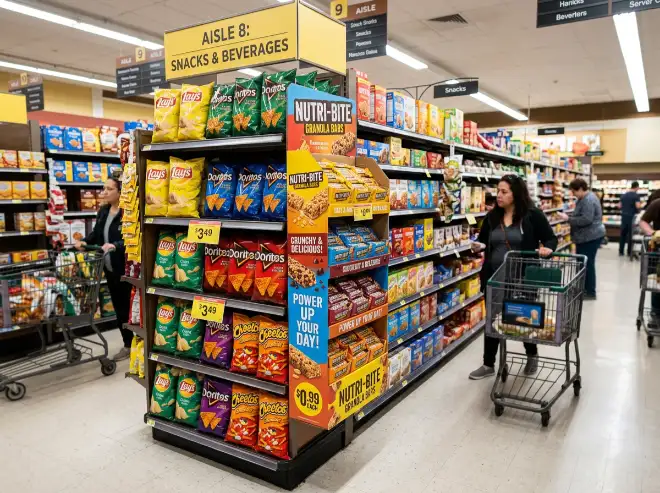
Rule 1: Place the Sidekick Display Next to a Product That Already Has Traffic
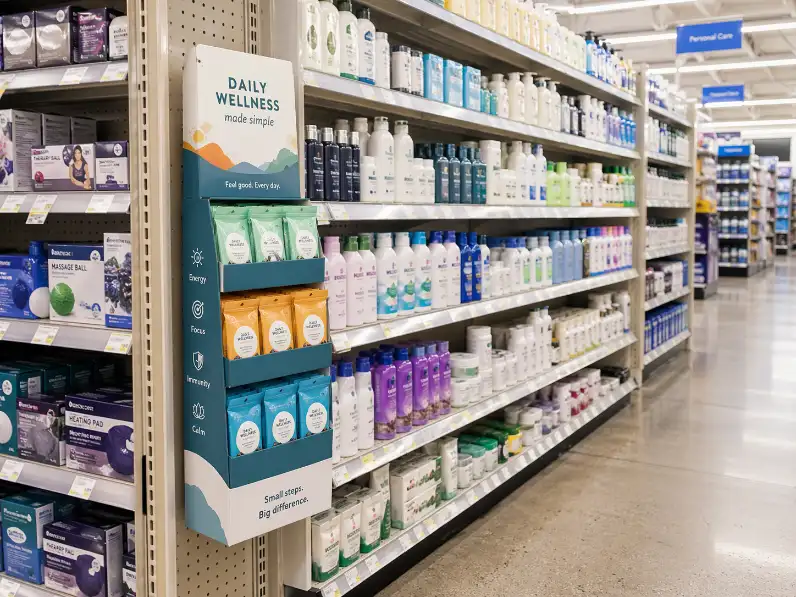
A sidekick display works best when it borrows traffic from a strong main category. That is the biggest placement advantage of the format. A sidekick unit does not need to create traffic from nothing. It needs to intercept traffic that already exists.
That makes placement easier to judge. If the main shelf or endcap already pulls shoppers, the sidekick display has a better chance of winning attention. If the main category is quiet, the sidekick may still be visible, but it will usually feel weaker.
This is why cross-selling matters so much. Batteries beside toys. Pet treats beside pet food. Travel-size personal care beside checkout essentials. Sauce packs beside snacks. The closer the product relationship, the stronger the placement logic becomes.
That is the first rule. Put the display where the shopper already has a reason to stop.
If you want the broader product-fit view first, read our guide to products that work best on a sidekick display. Placement works best when the product itself already fits the format.
Rule 2: Choose a Sidekick Display Location That Shoppers Can Read in Seconds
A retail sidekick display sits in a narrow zone. It does not get the same reading time as a floor display in open space. That changes the rule. The shopper should understand the display in seconds, not through a long look.
This is why aisle-edge placement often works better than hidden shelf-side placement. If the shopper can catch the product family, the price signal, and the add-on logic in one glance, the display is doing its job. If the unit is tucked too far inside the shelf line, it loses interruption power.
Keep it visible. Keep it readable. Keep it fast.
Good placement also depends on the physical relationship between the sidekick unit and the walking path. If the shopper can see the display before reaching the main shelf bay, the product has a better chance to register early. If the sidekick only becomes visible after the shopper has already moved past, the display is working too late.
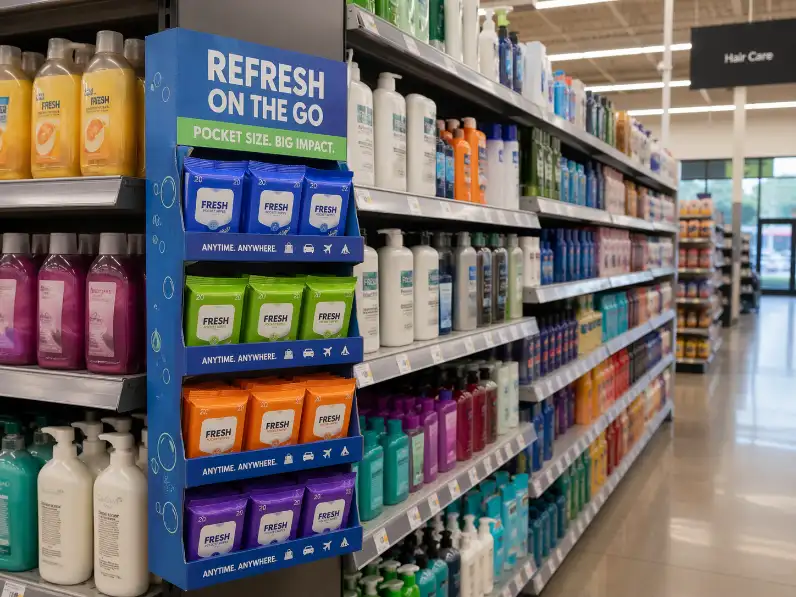
Rule 3: Use Sidekick Display Placement for Add-On Decisions, Not Long Decisions
A sidekick display is strong when the product supports a quick extra purchase. That is why the display usually performs better with products that feel easy to add to the basket. A shopper passing a main category may not stop to study a technical comparison. That same shopper may still grab a low-friction add-on.
This is the difference between a good sidekick display placement and a weak one. Good placement supports the type of decision the format can win. Weak placement asks the format to do too much.
That means sidekick displays usually perform better with:
- small products
- lightweight products
- repeat-purchase products
- cross-sell products
- easy-to-understand products
They usually perform worse with:
- heavy items
- wide boxed packs
- products needing side-by-side comparison
- products needing long explanation
That is not a structure problem. It is a placement problem.
If you need a stronger comparison between formats, see our cardboard display category and your other sidekick-related article set. A sidekick display location should be matched to shopper speed, not only to product size.
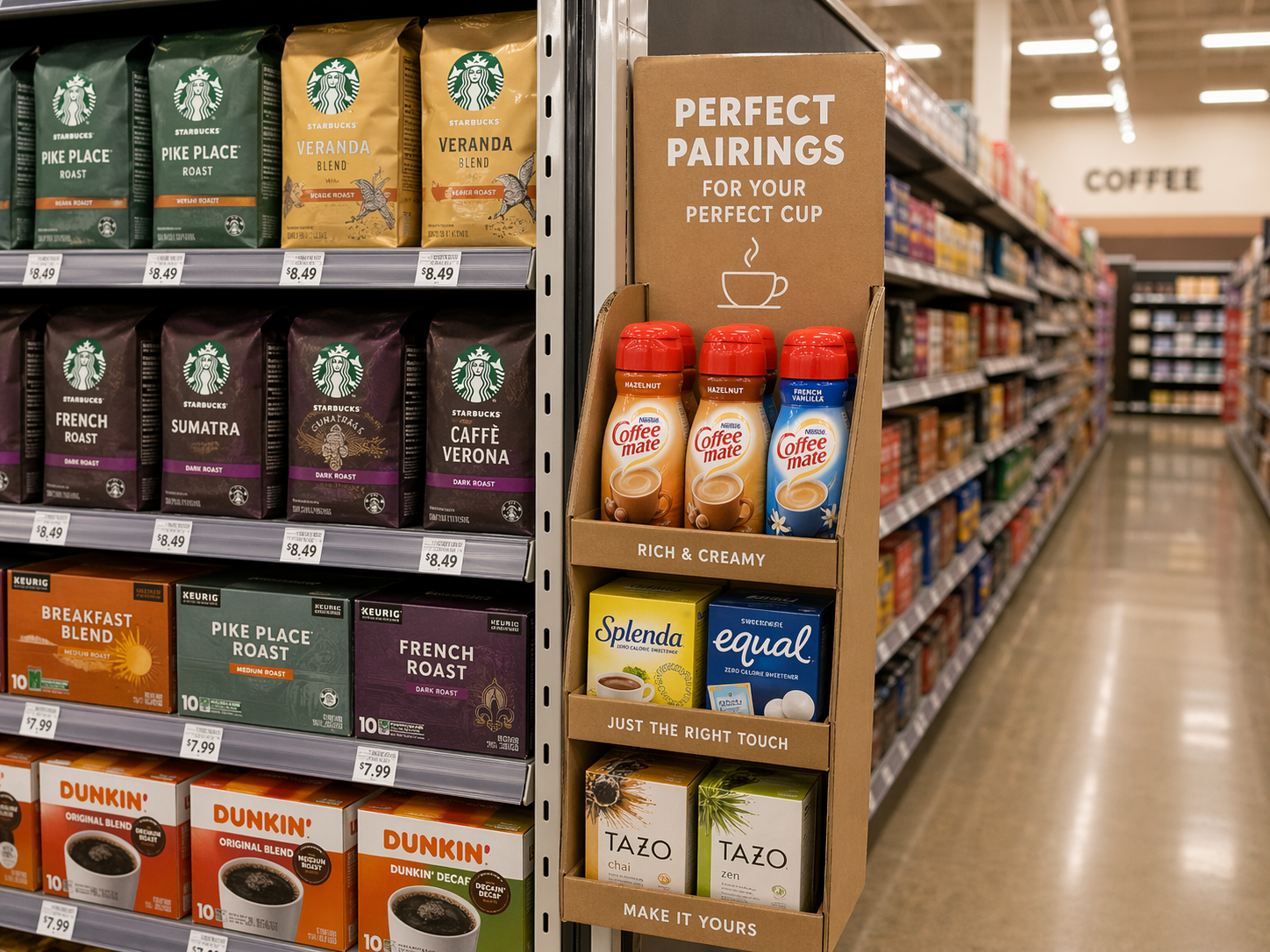
Rule 4: Pick a Spot That Store Staff Can Refill Without Friction
Some placements look smart in theory but fail in practice because store staff cannot refill the unit quickly. That matters. A sidekick display that is hard to reach, hard to restore, or easy to disrupt will not stay neat for long. Once the layout breaks, the selling power drops.
This is where easy replenishment becomes part of placement quality. Retail guidance for corrugated shelf-ready solutions often emphasizes easy identification, easy shelf placement, easy shopper access, and easy replenishment. A sidekick display is not the same as shelf-ready packaging, but the same store logic still applies. The unit has to fit real handling conditions.:contentReference[oaicite:1]{index=1}
Ask simple questions:
- Can staff reach the display without blocking the aisle?
- Can they refill it quickly?
- Does the display stay stable during refill?
- Will partial sell-through make the unit look broken too soon?
If the answer is weak, the sidekick display location is weak too.
That is why placement should be judged together with refill logic. If you are checking execution quality, our assembly instructions page and our display sample approval guide can help you review store handling more clearly.
Sidekick Display Placement Table
| Placement Situation | When It Works Well | Main Advantage | Main Risk |
|---|---|---|---|
| Next to a related main category | Strong cross-sell link | Borrows existing shopper traffic | Weak if the category match is poor |
| At aisle edge or endcap side | Fast visual interruption | Better shopper sightline | Can be ignored if graphics are weak |
| Beside a repeat-purchase category | Easy add-on decision | Higher impulse potential | Less effective for technical products |
| In a hard-to-reach refill zone | Rarely ideal | May save space on paper | Store execution usually gets worse |
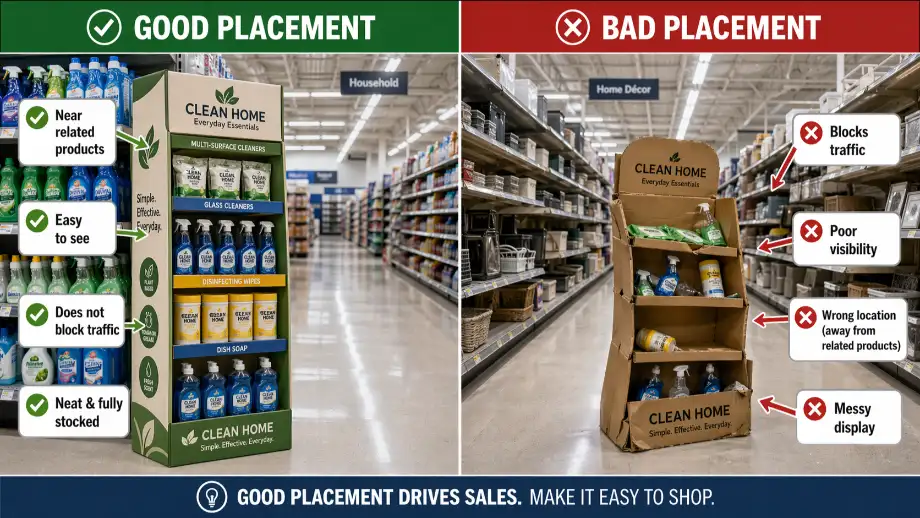
What Buyers Usually Miss When Choosing a Sidekick Display Location
Many buyers judge placement from a planogram view. That is useful. It is not enough. The stronger test is standing where the shopper stands and moving where the store staff move.
Does the shopper see the display before the main shelf decision is over? Does the unit feel like a natural add-on, or like a random extra? Can staff restore the display without friction? Does the unit stay readable once some stock is gone?
Those questions matter because the cardboard sidekick display is a live retail tool, not a fixed presentation board. A good spot keeps working after setup. A weak spot looks good only in planning.
How to Compare Two Sidekick Display Placement Ideas
If you are comparing two placement ideas, start with these checks:
- Which one has stronger existing traffic?
- Which one has a clearer product relationship?
- Which one gives the shopper a faster reading angle?
- Which one gives store staff easier refill access?
The better sidekick display placement is usually the one that makes the buying decision feel obvious and the refill task feel simple. If one location wins only on visibility but loses badly on handling, it may not be the better long-term choice.
The Fibre Box Association also highlights why corrugated works well in retail: it supports strong graphics, transports well, and helps brands create visible selling surfaces. That matters because even good placement needs the display to stay readable and practical in store.:contentReference[oaicite:2]{index=2}
Conclusion
A strong sidekick display placement follows four simple rules: place it next to traffic, make it readable in seconds, use it for add-on decisions, and choose a location that store staff can refill without effort. A sidekick display works best when product, placement, and retail handling all support the same fast decision. Place it well, and the display keeps selling after launch. Miss the location, and the same unit turns into background.
For help planning the right sidekick display location for your next project, please contact us.
FAQ
Where should a sidekick display go in store?
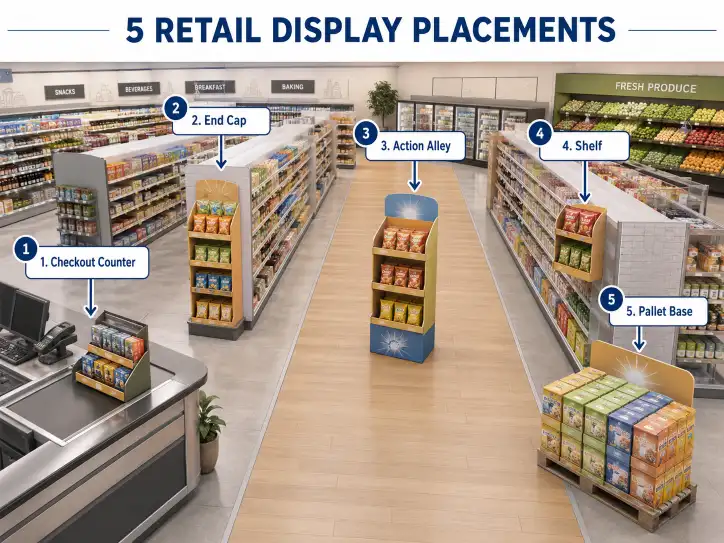
A sidekick display usually works best beside a related main category, at an aisle edge, or in another high-traffic location where shoppers can see it quickly.
Why is cross-selling important for sidekick display placement?
Because sidekick units often perform best when they sit beside products that already make the add-on purchase feel natural.
Can a sidekick display work for technical products?
Sometimes, but it is usually less effective if the product needs long comparison or detailed explanation.
Why does refill access matter for sidekick display placement?
Because a unit that is hard for store staff to refill will lose order faster and perform worse over time.
Is aisle-edge placement always better?
Not always, but it often gives the display a faster shopper sightline and stronger interruption power.
What is the biggest sidekick display placement mistake?
The biggest mistake is putting the display in a spot with weak category logic or poor refill access, even if the location looks visible on paper.