Designing a cardboard display for small products may look simple, but in reality it requires more precision than many larger retail displays. Small products are easy to overlook in-store, which means the display must work harder to attract attention, organize items clearly, and guide shoppers to make quick decisions.
For brands, retailers, and importers, the biggest challenge is not structure strength, but visibility and organization. A display that looks crowded or confusing can reduce sales, even if the product itself is strong. In this guide, we explain how to design a cardboard display for small products that actually performs in real retail environments.
Why Small Products Need a Different Display Strategy
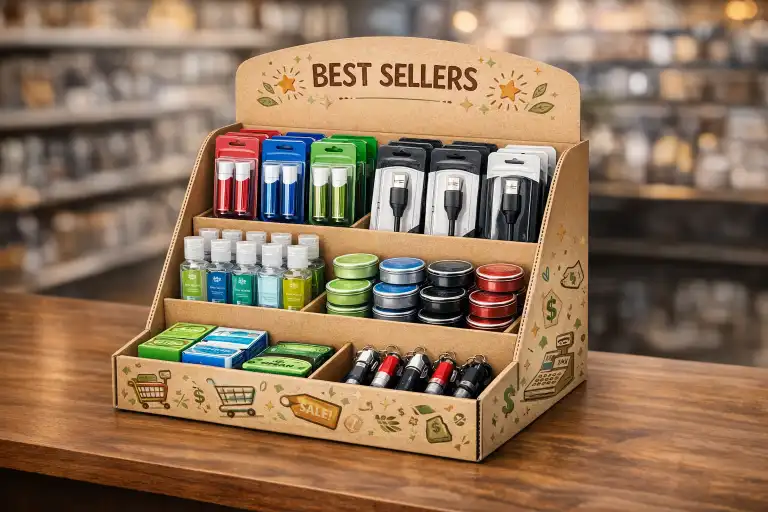
Small products such as cosmetics, accessories, snacks, cables, or trial-size items are often placed in highly competitive retail areas. Unlike large items, they do not naturally stand out. This means the display must create visibility through structure, color, and layout.
The main risks for small product displays are:
- products becoming visually lost
- too many SKUs creating confusion
- poor shelf organization reducing browsing speed
- lack of strong focal points
Choose the Right Display Type First
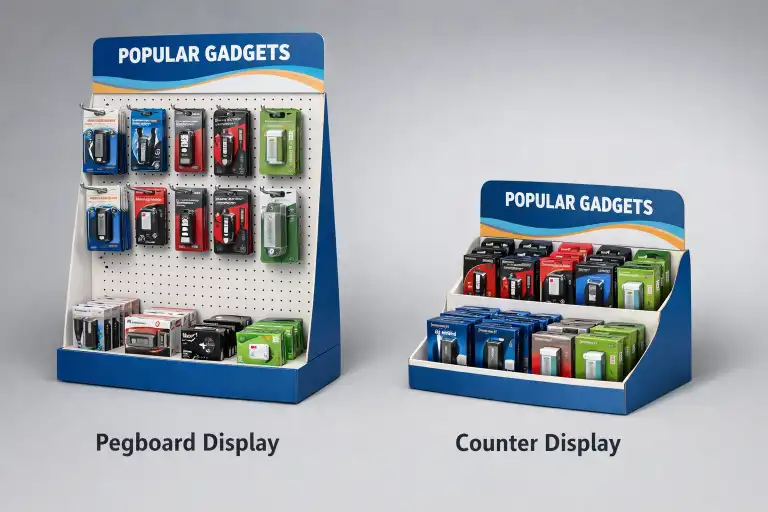
Counter Display (Best for Most Small Products)
Counter displays are usually the most effective solution because they place products directly within reach of the shopper. This is ideal for impulse buying.
- best for: cosmetics, accessories, snacks
- advantage: close-range visibility
- limitation: limited capacity
Peg Display (For Hanging Products)
Peg displays work well for lightweight packaged items that can hang, such as cables, tools, or accessories.
Small Floor Display
When you need more capacity but still want compact structure, a small floor display is a good compromise.
You can also compare these formats in our retail display solutions.
Layout Is More Important Than Structure
For small products, layout directly affects sales. A well-organized display can outperform a larger but messy one.
Best practices include:
- limit the number of SKUs per display
- group products by type or color
- keep best sellers at eye level
- use clear product separation
- avoid overcrowding shelves
Make Products Look Bigger Than They Are
Because the products are small, the display must visually amplify them. This can be done through:
- bold background colors
- strong header design
- clear branding area
- simple messaging
The goal is to create a strong visual block that can be noticed from a distance.
Printing and Finishing Strategy
Small product displays often benefit from clean and sharp printing rather than complex finishing. In many cases, simple offset printing with matte or gloss lamination is enough.
For more detail, you can review our printing and finishing guide.
| Need | Recommended Option | Reason |
|---|---|---|
| budget control | standard offset | keeps cost low |
| premium feel | matte lamination | clean look |
| high visibility | gloss lamination | strong colors |
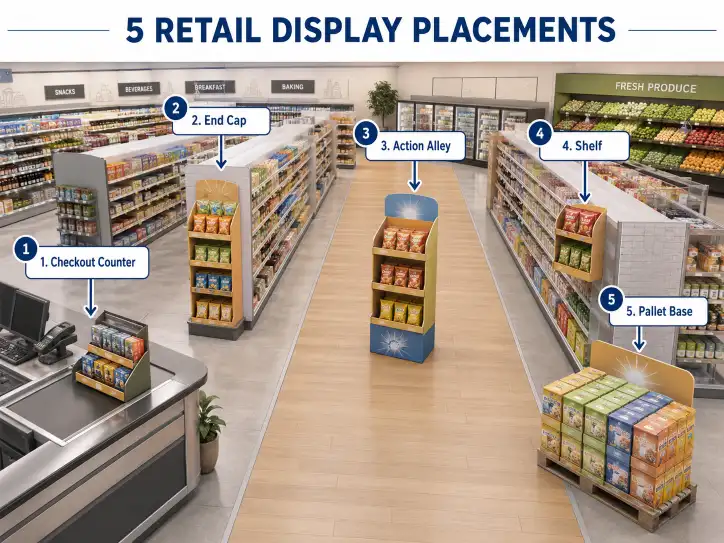
Think About Retail Placement
The same display can perform differently depending on where it is placed. A counter display near checkout is ideal for impulse products. A small floor display works better in aisle promotions. Placement should always be decided before finalizing the structure.
Balance Cost, MOQ, and Size
Small product displays are often ordered in larger quantities, so cost efficiency becomes important. Buyers should balance structure complexity with order quantity.
You can also check:
Buyer Checklist
- confirm product size and packaging
- limit number of SKUs
- choose correct display type
- design clear layout
- ensure strong visual impact
- request sample testing
External References
Fibre Box Association
FEFCO Standards
Conclusion
A cardboard display for small products is not about size, but about clarity and visibility. The best designs make products easy to see, easy to understand, and easy to pick up. By focusing on layout, placement, and visual impact, buyers can create displays that truly improve retail performance.
If you are planning a project, you can contact us for tailored recommendations.
FAQ
What is the best display for small products?
Counter displays are usually the best option.
How many products should be on one display?
It depends, but fewer SKUs usually perform better.
Do small displays need strong structure?
Usually not, but stability is still important.
What affects sales most?
Layout and visibility are the key factors.
Is finishing necessary?
Basic finishing is enough in most cases.
Can small displays be used for heavy items?
No, they are designed for lightweight products.