Are you planning a new product launch but worried about getting your displays on time? The success of your campaign can hinge on having your displays ready, and I know that waiting can be stressful.
Typically, you can expect your custom cardboard displays to be produced in about 10-12 business days after you approve the final design [2]. This covers printing, cutting, and finishing. However, several factors can change this timeline, so it’s good to know what they are.
I've been in the cardboard display industry for 16 years, and one of the most common questions I get is about lead times. It's a critical piece of the puzzle for any marketing manager or a product designer like Peter, who needs to get everything just right for a launch. The timeline isn't just a single number; it's a process. Let's walk through that process together so you know exactly what to expect.
What Are the Key Stages That Affect the Timeline?
Are you confused about why lead times for custom displays can vary so much? It's frustrating when you're trying to plan a promotion and can't get a straight answer on delivery, leaving you feeling stuck.
The total time is a sum of its parts. The journey from an idea to a finished display that's ready to ship has a few key stages. Generally, the process is broken down into design and prototyping (1-3 days), printing (2-4 days), finishing and assembly (2-4 days), and shipping (1-5 days) [1]. Each step has its own timeline that can affect the final delivery date.
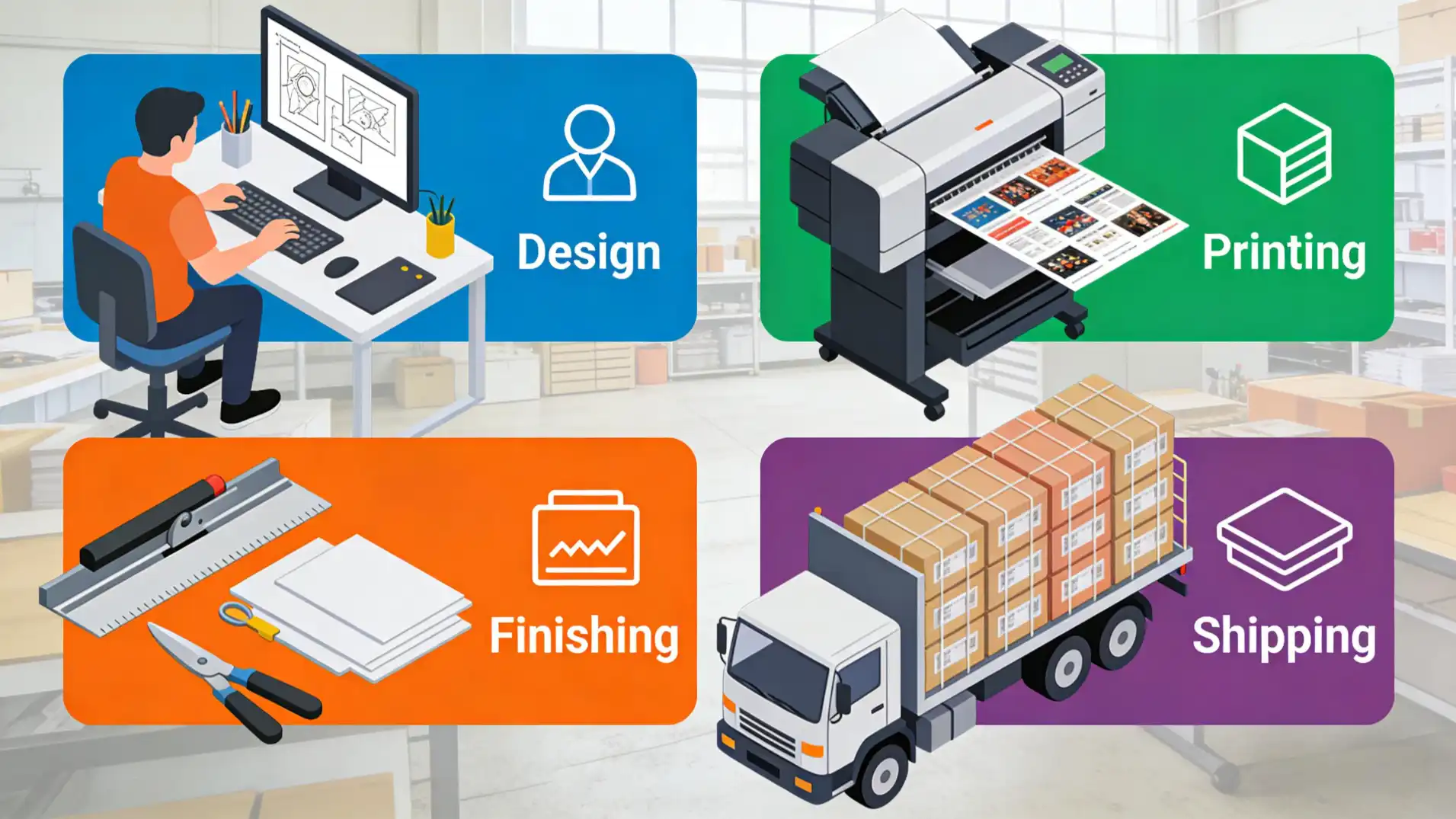
Let's dive deeper into what happens at each of these stages. Understanding this will help you plan better and work with your display partner to meet your deadlines. I remember a project with a new snack brand that absolutely had to launch before a major holiday. We mapped out each stage carefully, and that transparency was key to hitting their date.
1. Design and Prototyping
This is the first and most creative step. It starts with your idea. A good brief is everything here. When a client like Peter comes to me with clear dimensions, product weights, and artwork files, we can move fast. We can typically create the dieline, which is the flat template for the display, within a day or two [1]. Then, your designer places the graphics on it. Once we get that back, we can create a prototype. A simple white sample to check the structure can be made in about 3 to 5 days [1]. If you need a fully printed sample, it might take a little longer. Clear communication here saves a lot of back-and-forth and, more importantly, time.
2. Printing and Finishing
Once you approve the prototype, we move to mass production. For quantities under 2,000, we often use digital printing, which is faster because it doesn't require printing plates [1]. For larger orders, offset printing is more cost-effective but adds a day or two for setup. After printing, the displays go through finishing. This includes lamination (glossy or matte), die-cutting the shapes, and gluing. More complex finishes like spot UV or foil stamping will add extra time to this stage.
3. Kitting and Shipping
The final step before your displays leave our facility is packing. Some displays are shipped flat to save on costs, which is quicker to pack. Others might be partially assembled, or "kitted," with products already inside. This kitting process adds time. Then, there's shipping. Depending on where you are, ground shipping can take anywhere from 1 to 5 days. If you're in a real hurry, air freight is an option, but it comes at a higher cost.
| Stage | Typical Time | What Can Speed It Up? |
|---|---|---|
| Dieline & Proofing | 1–2 days | Provide clear specs and product photos upfront. |
| Prototyping | 3–5 days | Approve a white sample if color isn't critical. |
| Mass Production | 5–10 days | Choose digital printing for smaller runs (<2k units). |
| Shipping | 1-5 days | Opt for expedited shipping if the deadline is tight. |
How Does Display Complexity Impact Lead Time?
Are you worried that your ambitious display design will cause major delays? It’s a common fear that a creative idea might not be practical from a production standpoint, especially when you're on a tight schedule.
The complexity of your display is a major factor in the production timeline. A simple counter display can be made much faster than a large, multi-part floor display. More complex designs require custom cutting dies, more setup time on the machines, and often more manual assembly, all of which add days to the lead time.
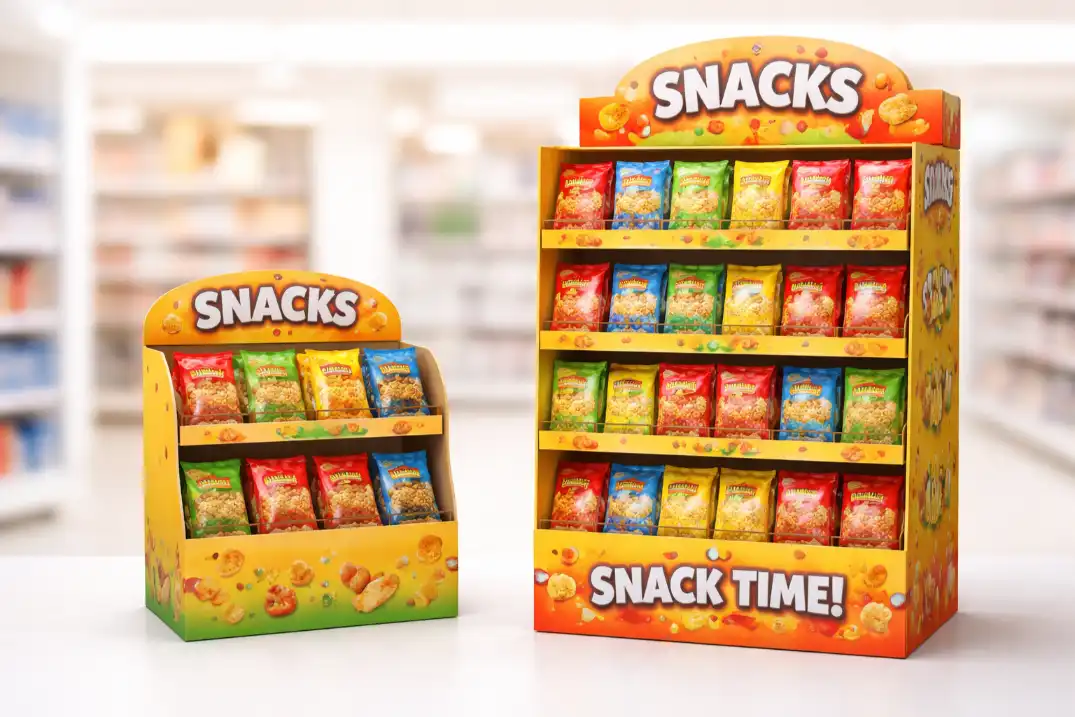
I’ve seen this firsthand many times. Let's break down how different types of displays can affect your timeline. I once worked on a project for a beverage company that wanted a huge pallet display that looked like a castle. It was an amazing idea, but the structural engineering and custom die-cutting required an extra week of work. We had to be upfront about that timeline from the very beginning. It's important to balance a creative vision with the practical realities of production.
Simple vs. Complex Structures
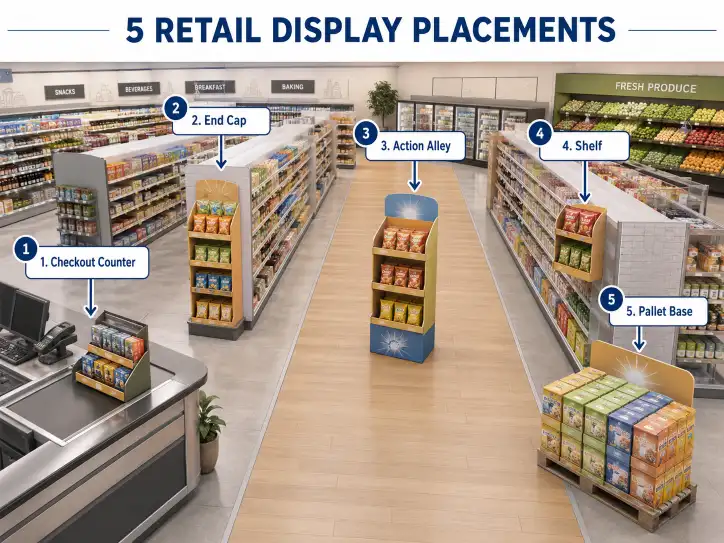
A standard counter display, often called a PDQ, has a relatively simple structure. It's usually a single piece of cardboard that's folded into shape. We can produce these quickly because the designs are straightforward and the die-cutting is simple. On the other hand, a large floor display, or FSDU, can be much more complex. It might have multiple shelves, a unique shape, or even integrated elements like lights or sound.
The Role of Custom Tooling
For every new display shape, we have to create a custom cutting die. This is a large wooden board with steel rules that cut and crease the cardboard. The more intricate the design, the longer it takes to create this die. If your display uses a standard shape that we've made before, we might already have a die, which can save you a few days. This is something I always discuss with my clients, like Peter, when they are in the planning phase.
Manual Assembly and Kitting
Some displays require a lot of hand-folding and gluing. Think of displays with many small compartments or those that need to be shipped pre-assembled. This manual labor simply takes more time. If a display needs to be kitted with products before shipping, that adds another layer to the process. We have to coordinate receiving your products and then carefully loading them into each display. It’s a detailed process that can add several days depending on the scope.
| Display Type | Complexity | Key Time Factors |
|---|---|---|
| Counter Display (PDQ) | Low | Simple die-cut, minimal assembly. |
| Floor Display (FSDU) | Medium-High | Multiple parts, shelving, potentially complex die-cut. |
| Pallet Display | High | Large size, structural engineering, weight-bearing needs. |
| Endcap Display | Medium-High | Needs to fit specific retail specs, can be large. |
Can You Get Custom Cardboard Displays Faster?
Are you facing a tight deadline for your next marketing campaign? It's a stressful situation when you need your displays as soon as possible, and you're not sure if it's even possible to get them in time.
Yes, you can often get displays faster, but it requires careful planning and quick decisions. A rush order is possible, but it usually means expediting every step of the process. The most important thing you can do is have your design and artwork finalized and ready to go. Any delay in approval at the beginning will have a domino effect on the entire timeline.
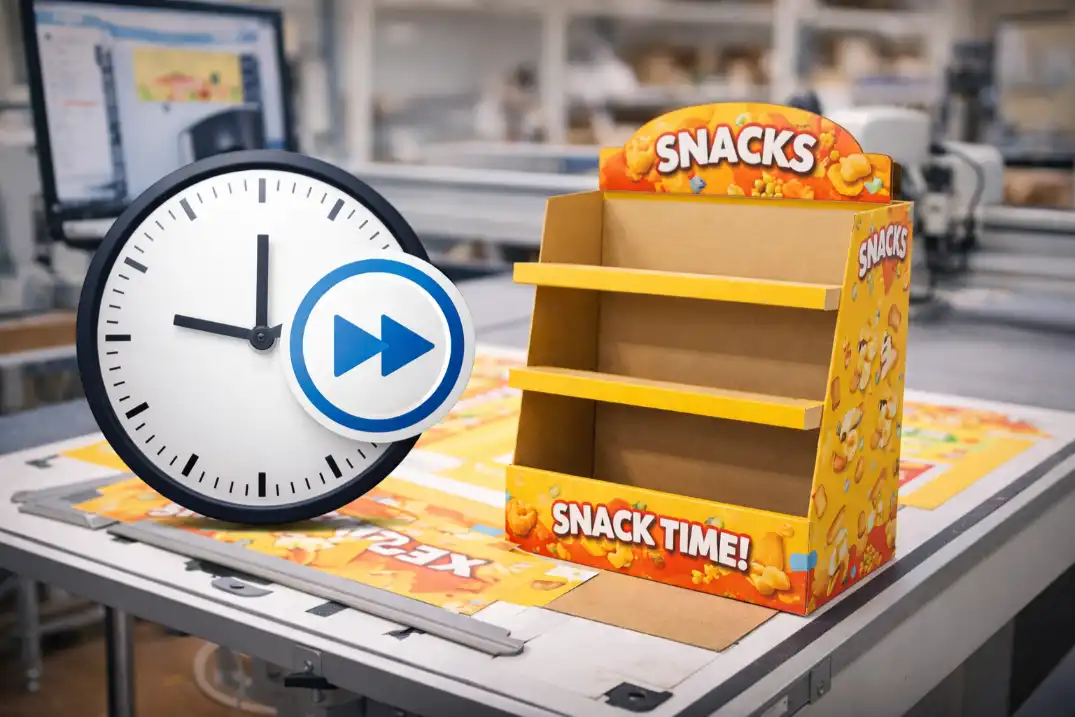
I always tell my clients that speed starts with clarity. If you can give me all the information I need right at the start, I can get you on the fast track. A few years ago, a client needed a last-minute display for a trade show they had forgotten about. They came to me in a panic. Because they had their artwork ready and were able to approve the digital proof within an hour, we were able to get their simple counter displays produced in just a few days. It was a rush, but we made it happen.
Have Your Artwork Ready
The single biggest factor for a quick turnaround is being prepared. Before you even contact a display manufacturer, try to have your graphic design files ready. Make sure they are high-resolution and in the correct format (usually a print-ready PDF) [1]. When we can send your artwork straight to the pre-press department without any file issues, it saves at least a day. Also, make sure all stakeholders on your team are ready to review and approve the proofs quickly.
Choose Simpler Designs and Processes
If you're in a hurry, it might not be the best time to experiment with a very complex display structure or exotic finishes. A standard design will almost always be faster to produce. As I mentioned, we may already have the cutting die for it. Opting for digital printing is also a great way to save time on smaller orders since it skips the lengthy setup of traditional offset printing [1].
Communication is Key
I can't overstate this: a strong partnership with your display provider is built on communication. Let them know your deadline upfront. As a manufacturer, if I know you're in a rush, I can sometimes rearrange my production schedule or have my team work overtime to help you meet your date. Keeping the lines of communication open and responding quickly to questions from my team will help keep the project moving smoothly. My goal is to be a partner in your success, and that means working together to find solutions.
Conclusion
While the standard lead time for a custom cardboard display is about 8-12 business days, this can change. By planning ahead, communicating clearly, and understanding the production stages, you can ensure your displays arrive on time and ready for your big launch.