
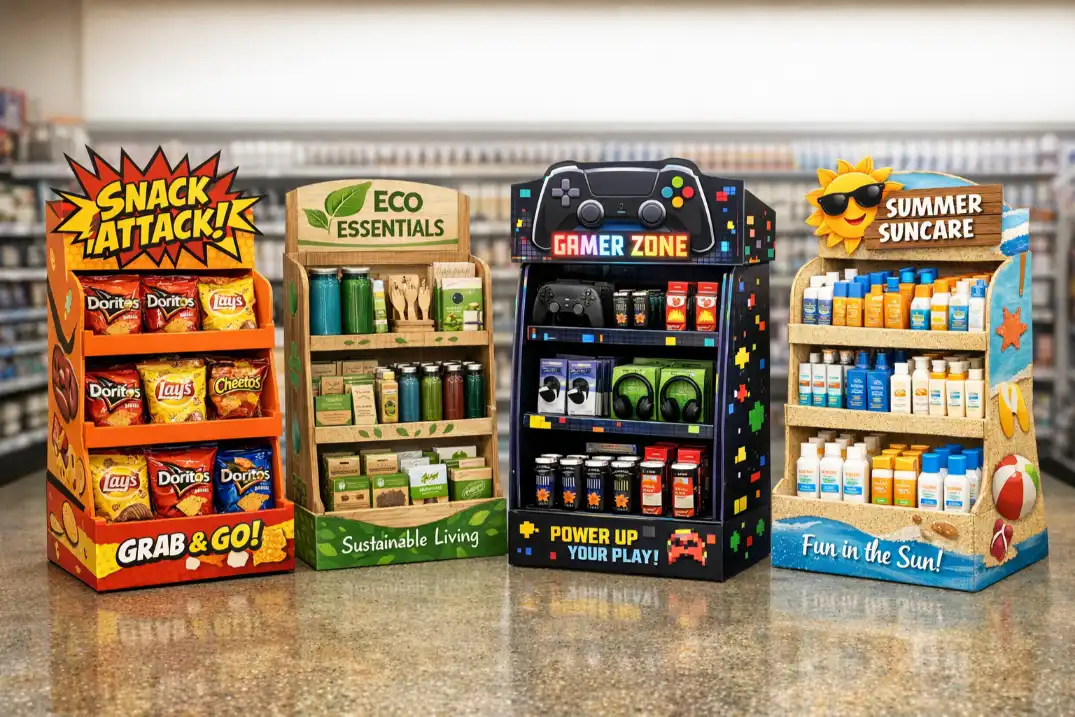
POP displays are one of the most effective tools for improving product visibility and encouraging impulse purchases in retail environments. For brands, retailers, and wholesalers, a well-designed POP display can help attract attention, organize products more effectively, and create a stronger in-store presence. Whether you are promoting snacks, beverages, cosmetics, electronics, or seasonal products, the right cardboard POP display can support both branding and sales performance. In this guide, we explain what POP displays are, why they matter in retail, what customization options are available, and how to choose the right solution for your products and marketing goals.
If you are looking for a practical cardboard display solution that supports branding, merchandising, and retail promotion, you can also explore our custom cardboard display solutions.
What Is a POP Display?
POP stands for Point of Purchase. A POP display is a retail display placed near the place where customers make buying decisions, such as aisles, end caps, checkout counters, or promotional areas inside a store. Its purpose is to highlight products, increase visibility, and encourage shoppers to make quick purchasing decisions.
Compared with standard shelf placement, POP displays create stronger visual impact. They help brands present products in a more organized and attractive way while giving retailers a flexible tool for promotions, new launches, and limited-time campaigns. Cardboard POP displays are especially popular because they are lightweight, customizable, cost-effective, and suitable for a wide range of retail products.
[Insert Image 1 here: single POP display structure image | ALT: What is a POP display]
Why POP Displays Help Increase Retail Sales
A strong POP display can directly improve the shopping experience and make products easier to notice. In many stores, customers are surrounded by competing products and promotional messages. A custom POP display helps your brand stand out and creates a clearer path from product visibility to actual purchase.
POP displays are effective because they:
- draw attention to featured products
- improve shelf presence without permanent fixtures
- support impulse buying behavior
- communicate promotional messages quickly
- help organize multiple SKUs in one branded unit
For seasonal promotions, new product launches, and short-term campaigns, cardboard POP displays are especially useful because they can be produced quickly and customized to match campaign graphics, colors, and retail requirements.
Common Types of POP Displays
There are several types of POP displays used in retail, and each one serves a different purpose depending on the size, weight, and packaging of the product.
Floor Displays
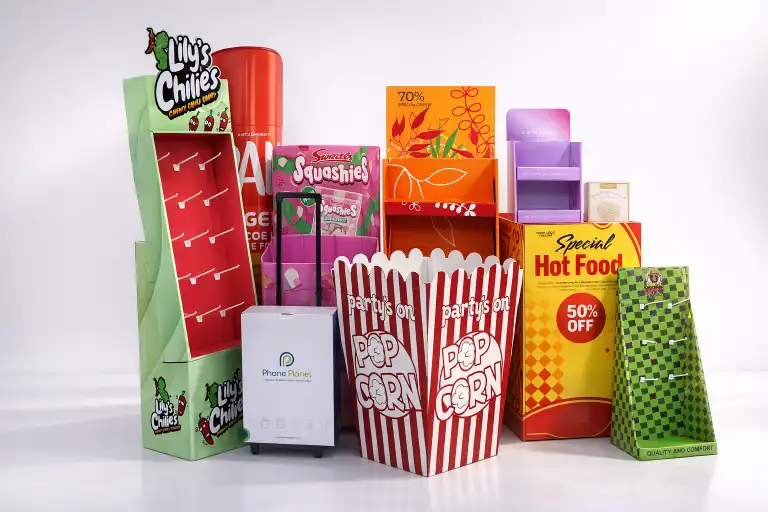
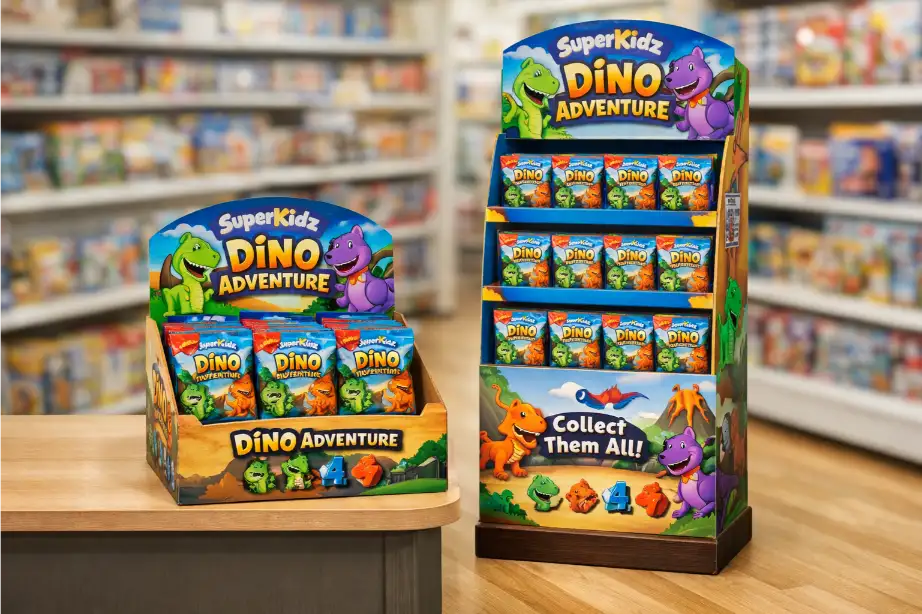
Floor displays are freestanding units placed in aisles or promotional zones. They are ideal for beverages, snacks, toys, household products, and beauty items. They offer high visibility and enough space for larger quantities of products.
Counter Displays
Counter displays are smaller units designed for checkout counters or service desks. They work well for small, lightweight products such as lip balm, candy, accessories, travel-size items, or promotional samples.
Peg Hook Displays
Peg displays are suitable for hanging products such as cables, sachets, tools, accessories, and blister-packed goods. They help keep products visible and neatly arranged.
Dump Bins
Dump bins are open-top promotional displays often used for bulk products, discounted items, and fast-moving retail goods. They are practical for supermarkets and promotional campaigns.
Pallet Displays
Pallet displays are larger retail units used for warehouse stores, supermarkets, and high-volume product promotions. They are suitable for bigger campaigns where strong visual presence and product capacity are required.
For brands looking for more flexible in-store merchandising formats, our retail display solutions can be customized for different product categories and retail environments.
What Products Are Suitable for POP Displays?
POP displays can be used across many industries. Their flexibility makes them a practical choice for both branded promotions and general retail merchandising.
Common product categories include:
- snacks and confectionery
- bottled drinks and canned beverages
- cosmetics and skincare
- pet products
- electronics accessories
- toys and seasonal gifts
- health and personal care items
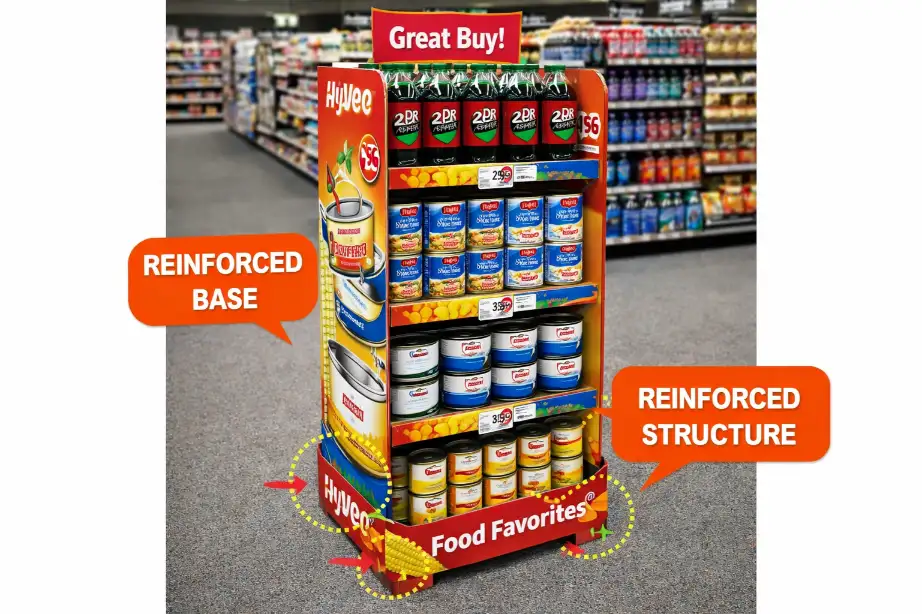
The right display structure depends on product dimensions, weight, packaging style, and retail environment. A lightweight cosmetic product may work well in a countertop unit, while a beverage promotion may require a reinforced floor display with stronger load-bearing structure.
Customization Options for Cardboard POP Displays
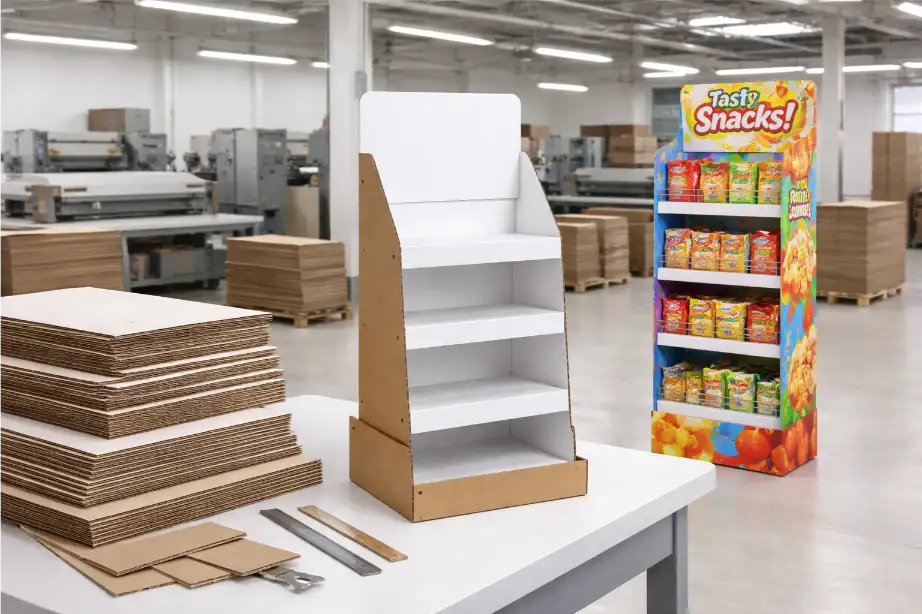
One of the biggest advantages of cardboard POP displays is the ability to fully customize them according to product and branding requirements. A custom display is not only about appearance. It also affects product fit, loading stability, assembly efficiency, and transportation cost.
Typical customization options include:
- custom size and dimensions
- custom shelves, hooks, or compartments
- full-color printed graphics
- brand logo and campaign messaging
- glossy or matte lamination
- UV coating or special finishing
- reinforced structure for heavier products
- detachable or flat-pack design for shipping
Custom structural design is especially important when different products need to be displayed together or when retail space is limited. A well-designed POP display should balance visual impact, product capacity, and practical usability.
If your project also includes boxes or outer packs, you can combine display structures with our packaging solutions for a more complete retail presentation.
How to Choose the Right POP Display for Your Business
Selecting the right POP display starts with understanding the product and the retail goal. A display that looks attractive but does not support the product weight or store environment will not perform well in practice.
When choosing a POP display, consider the following points:
Product Weight and Size
The display must be strong enough to hold the products safely. Heavier products usually need reinforced corrugated cardboard and stronger shelf support.
Retail Placement
Think about where the display will be used. Counter displays, floor displays, and pallet displays all serve different retail positions and customer behaviors.
Quantity of Products
The display should hold enough stock for the campaign period without looking overcrowded or unstable.
Branding Requirements
Your graphics should be clear, professional, and aligned with your product image. A high-quality printed display can improve both visibility and brand recognition.
Shipping and Assembly
Flat-pack designs are often more cost-effective for shipping. Easy assembly is also important for retailers and store staff.
Campaign Purpose
Is the display for a new product launch, seasonal promotion, checkout impulse purchase, or long-term merchandising? The purpose will influence the structure, graphics, and size.
Why Custom Cardboard POP Displays Are a Smart Choice
Custom cardboard POP displays offer a strong balance between cost, flexibility, and visual marketing value. Compared with permanent fixtures, they are more affordable and easier to update for changing campaigns. Compared with simple shelf placement, they create better product focus and stronger branding opportunities.
For many brands, custom POP displays are a practical way to:
- launch new products faster
- support retailer promotions
- increase shelf visibility
- improve in-store presentation
- reduce display costs compared with permanent materials
They also work well for brands that need different display solutions for different markets, product lines, or promotional periods.
Working With the Right POP Display Manufacturer
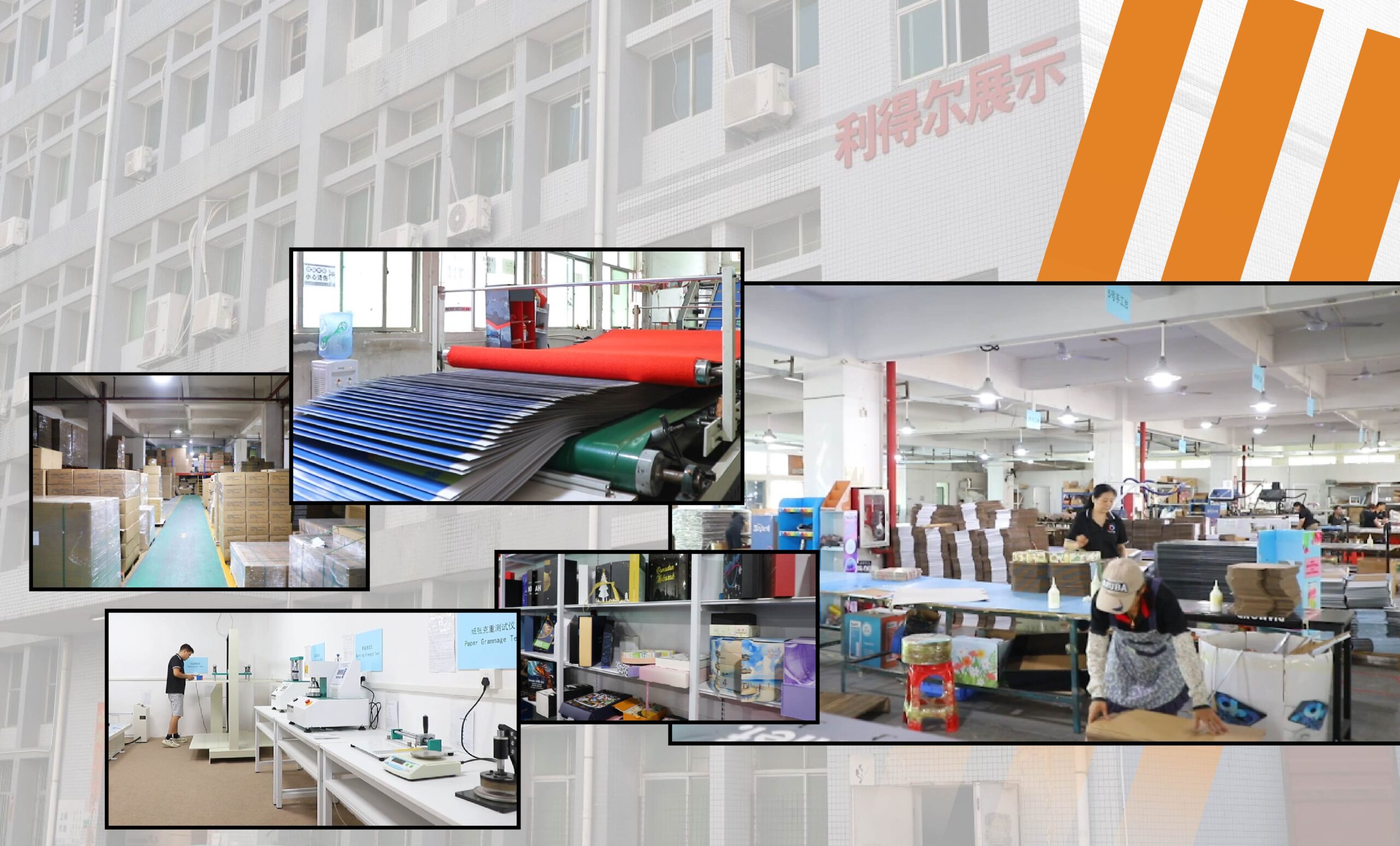
A good manufacturer does more than print graphics. The right supplier should be able to support structural design, sampling, material recommendations, production quality, and shipping efficiency.
When evaluating a POP display manufacturer, it is useful to ask about:
- experience in cardboard display production
- design and engineering support
- sample turnaround time
- MOQ flexibility
- production lead time
- export packaging and shipping support
- previous project experience in your industry
A manufacturer with strong design and sampling capability can help reduce errors early in the process and improve the final display result.
Conclusion
POP displays remain one of the most effective retail marketing tools for brands that want to improve visibility and drive more in-store sales. From floor displays to counter units and peg displays, the right solution can help your products stand out in busy retail environments while supporting promotions, branding, and customer engagement. A custom cardboard POP display can be a flexible and cost-effective option for businesses that want better in-store presentation and stronger retail performance.
If you are planning a new retail display project, feel free to contact us for a custom POP display solution.
FAQ
What does POP stand for in retail?
POP stands for Point of Purchase. It refers to displays placed where shoppers make purchasing decisions inside a store.
What products can be displayed on a POP display?
POP displays are commonly used for snacks, beverages, cosmetics, toys, pet products, electronics accessories, and many other retail items.
Are cardboard POP displays customizable?
Yes. Cardboard POP displays can be customized in size, structure, printing, branding, and finishing according to product and campaign needs.
How long does it take to make a custom POP display?
Sample production usually takes around 3 to 7 working days, while mass production time depends on the project quantity and structure.
What is the MOQ for custom cardboard POP displays?
MOQ depends on the display structure, dimensions, printing requirements, and production plan.

4 Responses