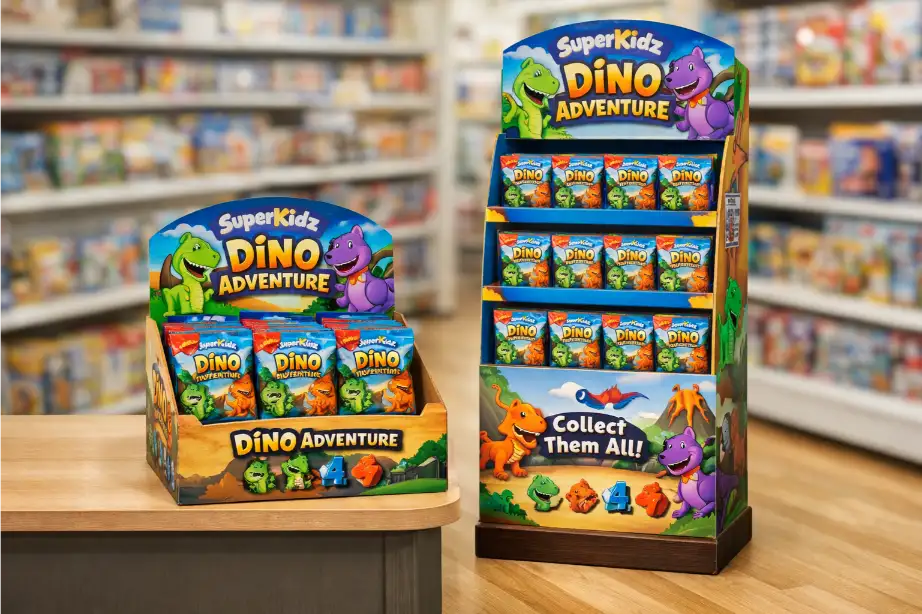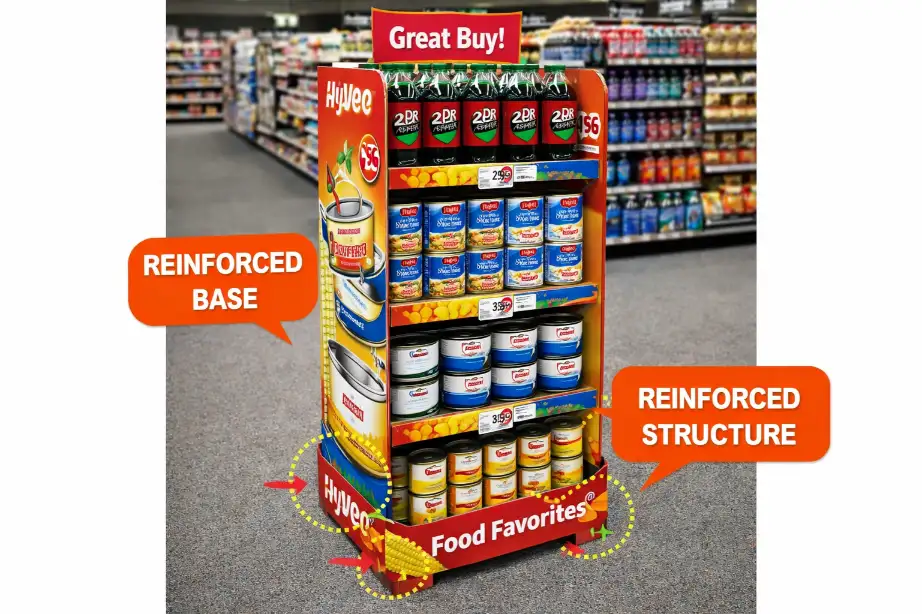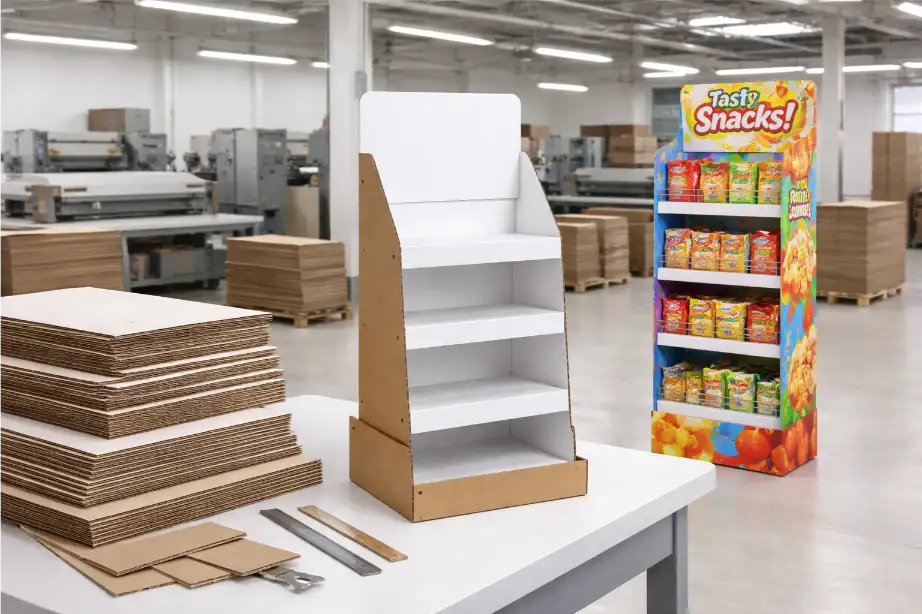
When planning a retail promotion, one of the most common questions is whether a counter display or a floor display is the better choice. Both formats can be effective, but they serve different purposes. A counter display is usually smaller, easier to place near checkout areas, and well suited for lightweight products or impulse purchases. A floor display offers more product capacity, stronger visual presence, and greater flexibility for aisle promotions or larger product assortments.
For buyers, choosing the right display format is not only about appearance. It also affects budget, shipping, product presentation, and the final retail result. In this article, we compare counter displays and floor displays from a practical buyer perspective, including where they work best, what products they fit, how they affect cost, and what questions to ask before ordering. If you want to explore more structure options, you can also review our custom cardboard display solutions.
Quick Comparison: What Is the Main Difference?
The simplest difference is placement and scale. A counter display is designed to sit on a counter, checkout area, service desk, or tabletop. It is usually smaller and intended for close-range shopper interaction. A floor display is freestanding and placed directly on the retail floor, often in aisles, promotional zones, or end-cap areas. It usually holds more products and creates stronger visual impact from a distance.
That means the choice is not really about which one is better overall. The better question is which one fits your product, store environment, and promotion goal more effectively.
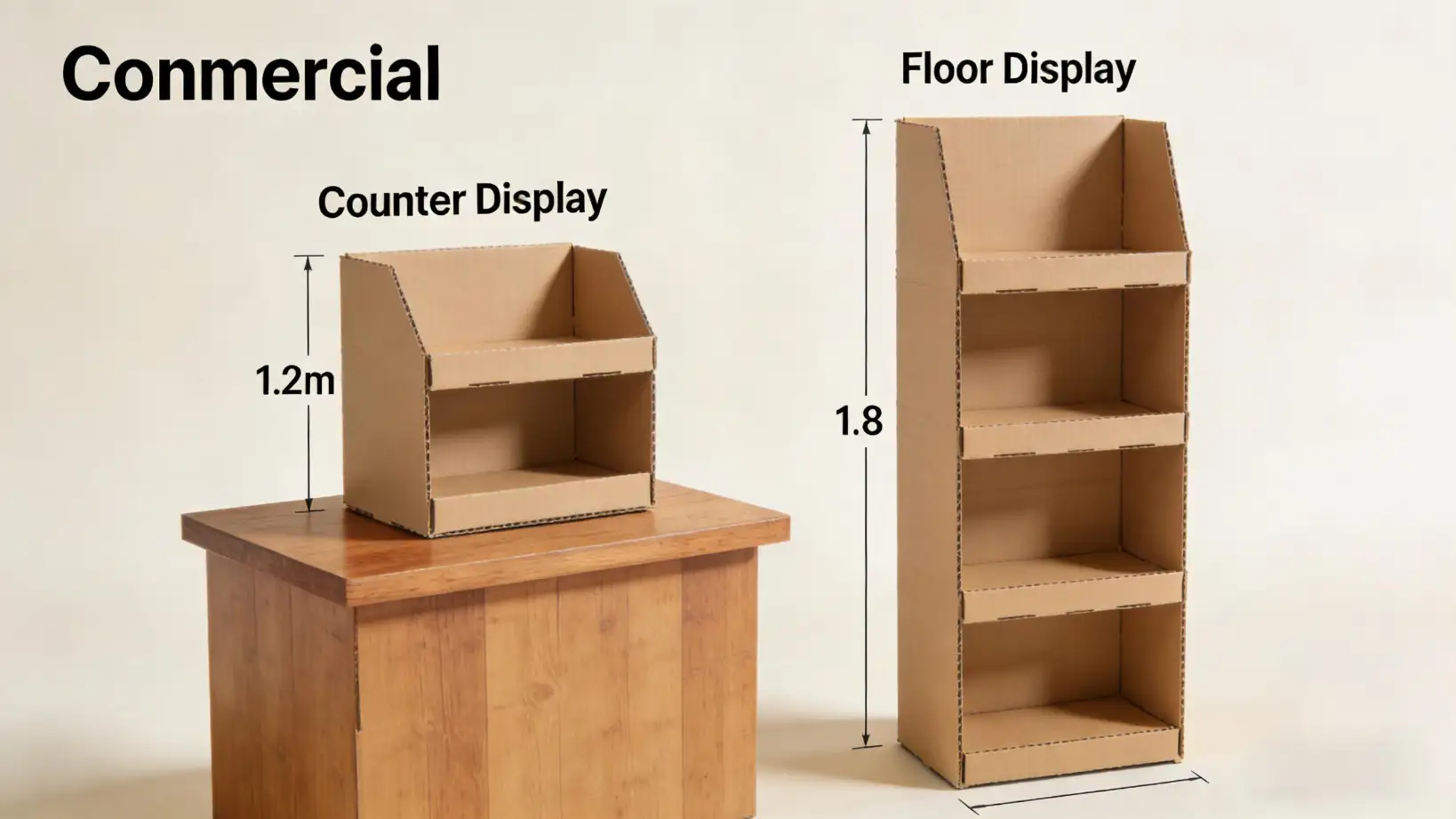
Buyer Table: Counter Display vs Floor Display
| Factor | Counter Display | Floor Display |
|---|---|---|
| Placement | Checkout counter, tabletop, service desk | Retail floor, aisle, end-cap, promotional zone |
| Size | Smaller and compact | Larger and more visible |
| Product Capacity | Lower quantity capacity | Higher quantity capacity |
| Best For | Impulse items, lightweight products | Promotions, bulk retail display, larger assortments |
| Visual Impact | Strong at close range | Strong from a distance |
| Typical Cost | Usually lower | Usually higher |
| Shipping Efficiency | Often simpler and smaller cartons | Needs more space and structure planning |
When a Counter Display Is the Better Choice
A counter display is usually the better option when you want to place products directly within arm’s reach of the customer. This makes it ideal for impulse purchases, small promotional items, travel-size products, beauty samples, confectionery, accessories, and other lightweight packaged goods. Because it is placed close to the shopper, the display does not need to be very large to be effective.
Counter displays are also useful when store space is limited. In smaller retail environments, a compact display placed on a checkout desk or payment area may perform better than a larger floor display that takes up more space. This format is especially useful when the product is small, low in weight, and intended for quick purchase decisions.
When a Floor Display Is the Better Choice
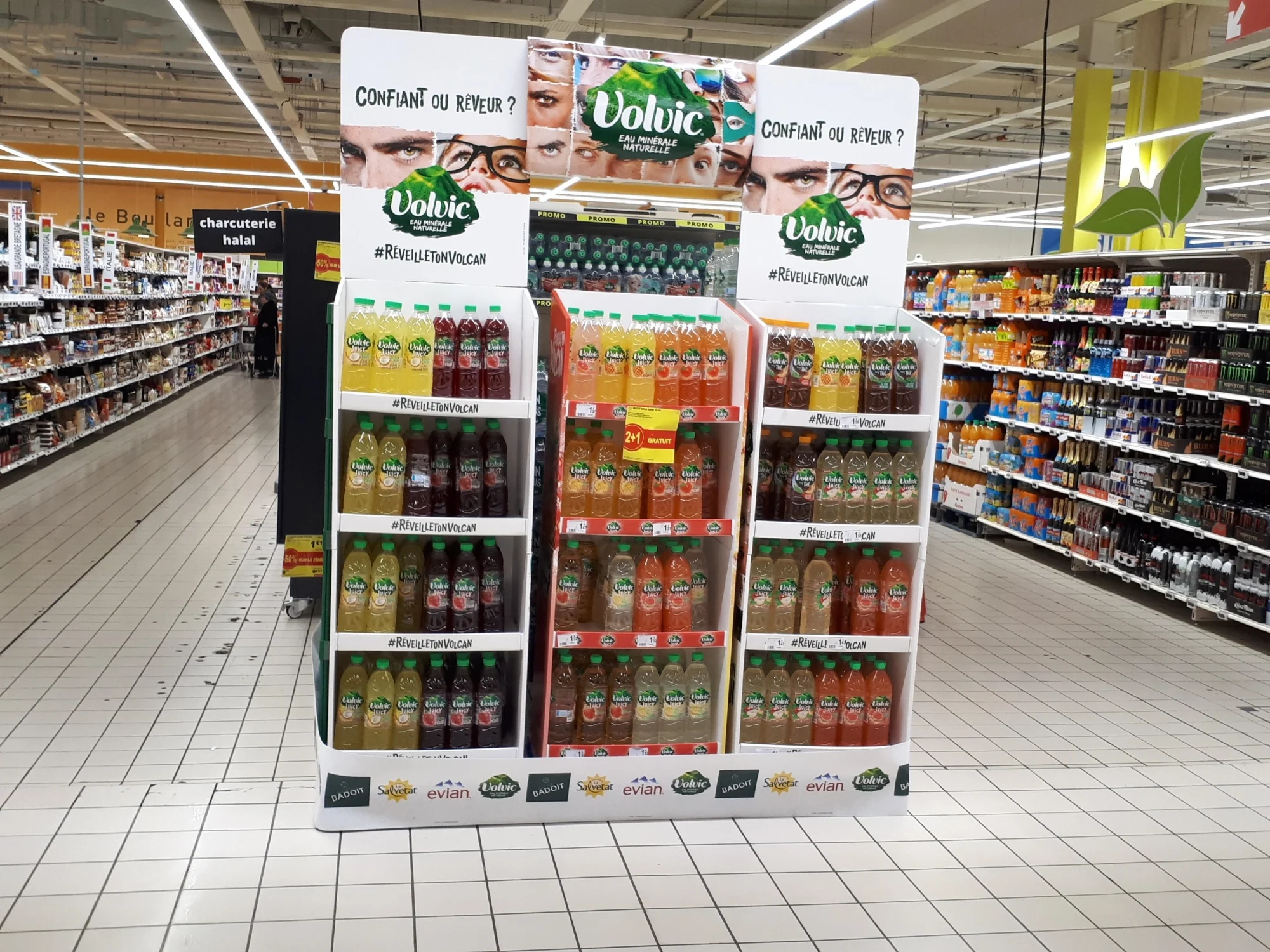
A floor display is usually better when you need stronger presence, more product capacity, or more room for branding. It works well for larger promotions, multi-SKU campaigns, seasonal launches, beverages, snacks, pet products, personal care goods, and other retail products that benefit from stronger visual exposure.
Because a floor display is visible from farther away, it can attract attention earlier in the customer journey. It also gives more space for branding, shelf organization, and promotional messaging. For brands that want to create more impact in busy aisles or promotional zones, a floor display is often the stronger format.
If you are looking for broader in-store merchandising formats, our retail display solutions page shows more retail structure possibilities.
How Product Type Affects the Decision
The product itself should be one of the first decision points. Small, lightweight, high-turnover products often work well in counter displays. These include lip balm, sachets, small cosmetics, candy, accessories, trial-size personal care items, and small packaged impulse goods. Heavy or bulky products usually require the stronger structure and larger footprint of a floor display.
Product quantity also matters. If the retailer wants to display only a small number of items near checkout, a counter display may be enough. If the campaign needs larger stock volume or more shelf facings, a floor display is often more practical. This is why buyers should always provide both product weight and target display quantity during the planning stage.
How Visibility and Shopper Behavior Change the Choice
A counter display works best when the goal is to catch the customer at close range, often near the final purchase point. A floor display works better when the goal is to attract attention from a distance and guide shoppers toward the product earlier in their store journey.
This difference matters because retail behavior changes depending on store layout. In some stores, counter space is extremely valuable and only selected products can be placed there. In other stores, the brand may benefit more from a larger floor display placed in a promotion zone where shoppers can see it while moving through the aisle.
Which One Usually Costs More?
In many projects, a floor display usually costs more than a counter display. This is because it often uses more material, has larger dimensions, needs stronger support, and may require more careful packing for export. However, buyers should not compare cost without considering capacity and retail effect. A floor display may cost more, but it can also hold more products and create stronger in-store presence.
A counter display may have a lower production cost, but if the promotion needs more stock capacity or stronger visibility, choosing the smaller option may reduce the effectiveness of the campaign. Buyers should compare cost together with function, not as a separate number.
If you are also evaluating overall budget, our related guide on custom cardboard display cost explains how structure, size, and quantity affect pricing.
Which One Is Easier to Ship and Store?
Counter displays are often easier to ship and store because they are smaller and usually require less packing volume. Floor displays often need larger master cartons, more structure planning, and stronger flat-pack protection to avoid damage during export shipment. This does not mean floor displays are difficult to manage, but they usually need more attention in shipping and warehouse planning.
Buyers importing larger quantities should think not only about the display itself, but also about storage space, carton handling, assembly time, and final retail distribution. In some projects, the easier logistics of a counter display can be an advantage. In other projects, the retail impact of a floor display makes the additional logistics effort worthwhile.

Questions Buyers Should Ask Before Choosing
Before deciding between a counter display and a floor display, buyers should ask these practical questions:
- How much product needs to be displayed at one time?
- How heavy is each product?
- Will the display be placed near checkout or in an aisle?
- How much retail space is available?
- Is the main goal visibility, impulse purchase, or stock capacity?
- Does the project need stronger branding space?
- What are the packing and shipping requirements?
The best format is the one that fits the real retail need, not just the one that looks better in a reference image.
Can Buyers Use Both Formats in One Campaign?
Yes. In some retail programs, brands use both formats together. A floor display can create broad visibility in the aisle, while a counter display can support last-minute impulse buying near checkout. This combined approach can work especially well for seasonal campaigns, product launches, and multi-location promotions.
If your project includes both display and packaging elements, our packaging solutions can also help create a more consistent retail presentation across all formats.
Useful Industry References for Buyers
If you are new to corrugated display sourcing, it is useful to understand corrugated material basics and structure terms. The Fibre Box Association overview of corrugated is a good starting point. For standardized corrugated structure terminology, the FEFCO code reference is also helpful.
Conclusion
So, which one fits your product better: a counter display or a floor display? The answer depends on your product size, product weight, promotion goal, retail placement, budget, and shipping plan. Counter displays are often better for small products and close-range impulse sales. Floor displays are often better for larger promotions, stronger visibility, and higher product capacity.
If you are planning a retail display project and want help choosing the right structure, feel free to contact us with your product details and target retail environment.
FAQ
What is the main difference between a counter display and a floor display?
A counter display is smaller and placed on a checkout counter or tabletop, while a floor display is freestanding and placed directly on the retail floor.
Which display is better for impulse purchases?
Counter displays are often better for impulse purchases because they are placed close to the shopper near the final buying point.
Which display usually holds more products?
Floor displays usually hold more products because they have a larger structure and more shelf space.
Is a floor display always more expensive?
Not always, but in many cases a floor display costs more because it uses more material and often requires stronger structural support.
Can a brand use both formats in one campaign?
Yes. Many brands use floor displays for visibility in aisles and counter displays for impulse sales near checkout.