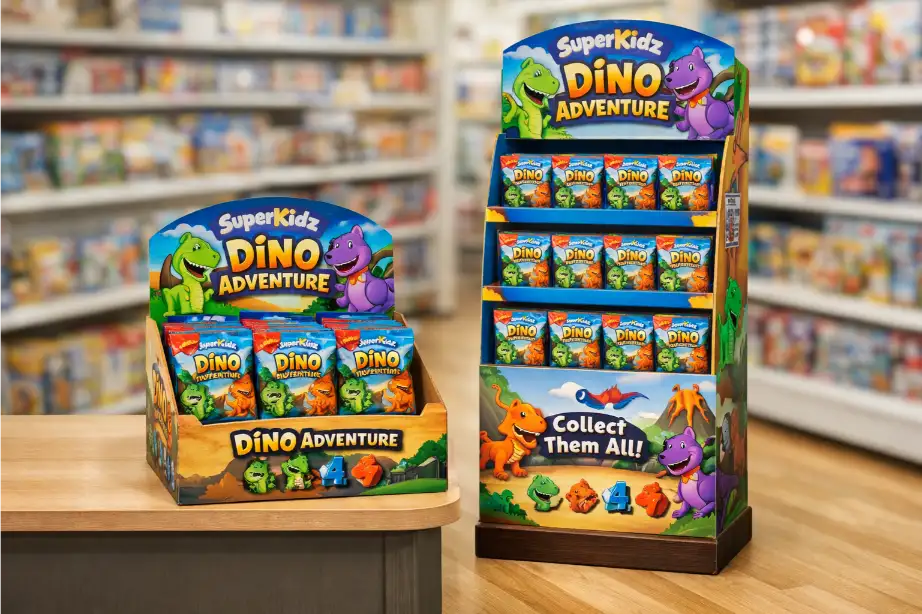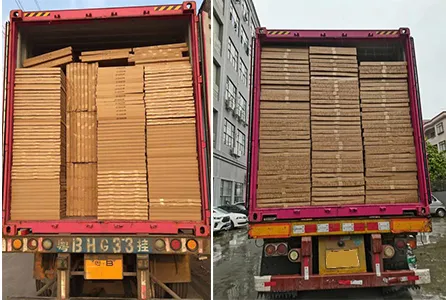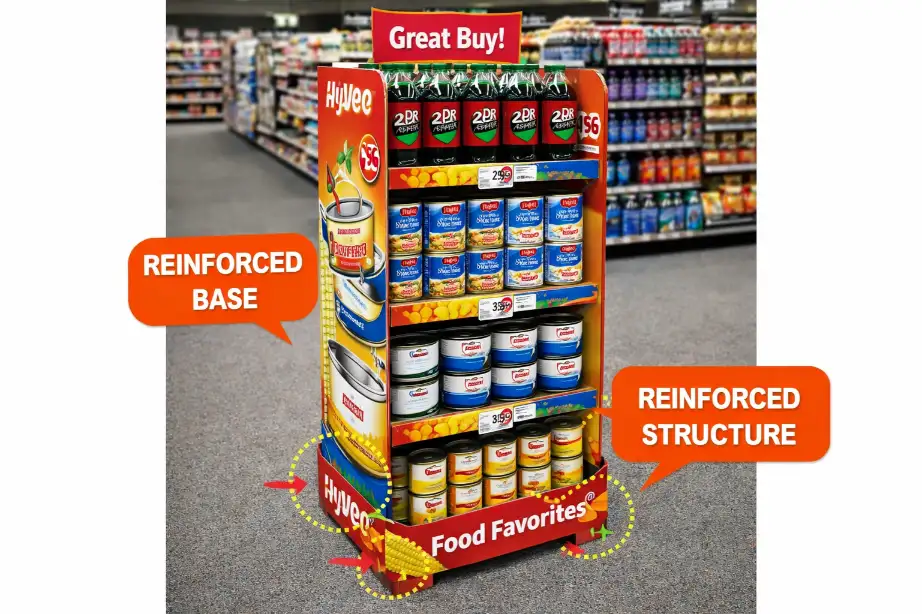
One of the most common questions buyers ask before placing an order is how long the whole process will take. For a custom cardboard display project, the timeline usually includes several stages: project communication, structure design, sampling, sample revision, mass production, packing, and shipment. The total lead time depends on the complexity of the display, the speed of artwork confirmation, the number of sample revisions, and the final production quantity.
For brands, retailers, and importers, timing matters just as much as price. A display that arrives too late can miss a promotion, seasonal launch, or in-store campaign window. That is why buyers should understand not only the average sample time and production time, but also what usually causes delays and how to avoid them. If you are still deciding on the right display type, you can also review our custom cardboard display solutions for reference.
What Is the Typical Timeline for a Custom Cardboard Display Project?
A custom cardboard display project usually moves through five main stages: inquiry, design, sampling, production, and shipping. Some simple projects can move quickly if the buyer already has clear artwork, confirmed product dimensions, and a practical structure. More complex retail programs may require multiple sample rounds, structural reinforcement, or extra print confirmation, which naturally extends the timeline.
In general, the project does not start when the factory begins printing. It starts much earlier, when the buyer first shares product details, quantity expectations, retail requirements, and visual references. Buyers who prepare complete information early usually help the project move faster.
| Project Stage | Typical Time Range | What Affects It |
|---|---|---|
| Initial communication | 1–3 days | Clarity of product details and quotation requirements |
| Structure design | 1–5 days | Display complexity and product loading needs |
| White sample | 2–5 days | Structure difficulty and revision needs |
| Color sample | 3–7 days | Artwork readiness and print confirmation |
| Mass production | 12–20 days | Quantity, printing, finishing, and factory schedule |
| Packing and shipment | Depends on destination | Flat-pack method, carton layout, and logistics plan |
How Long Does Sampling Usually Take?
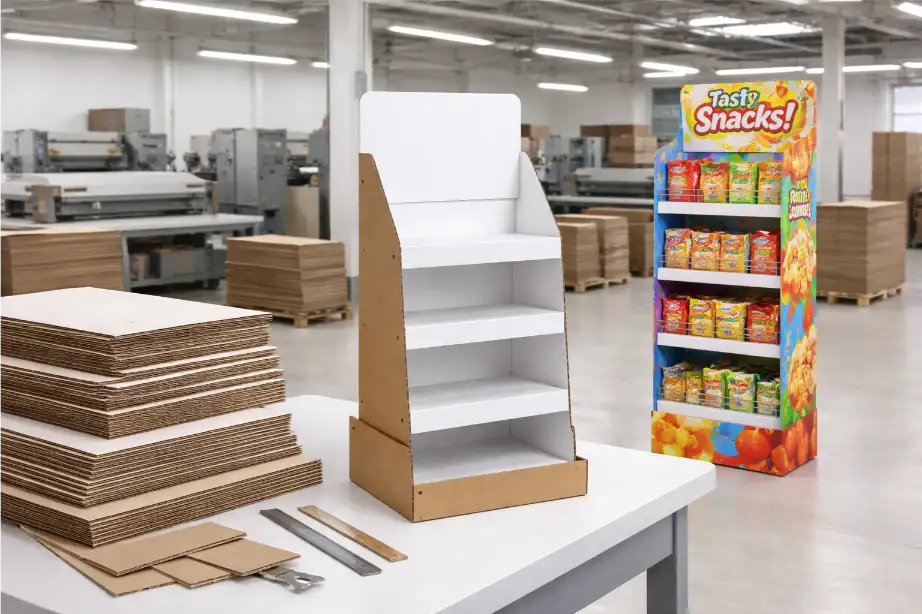
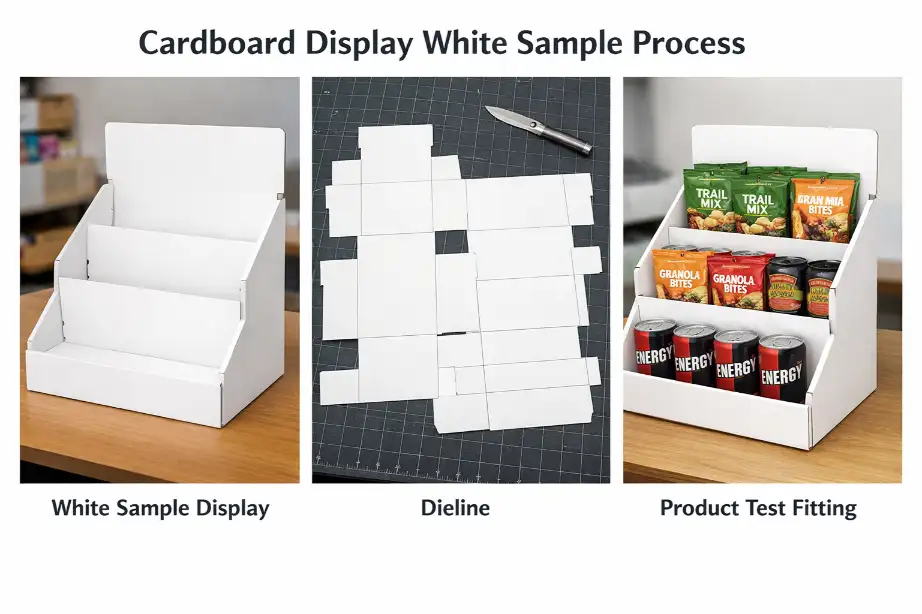
Sampling usually takes less time than mass production, but it is still one of the most important stages in the project. A white sample is often used to confirm structure, size, shelf position, and product fit. A color sample is used to confirm printing, graphics, and visual presentation. If the display is simple and the buyer provides complete product details, sampling can move relatively quickly. If the structure is complex or the product is heavy, more adjustments may be needed.
In many projects, a white sample can be completed in around 2 to 5 working days, while a printed color sample may take around 3 to 7 working days. If revisions are needed after the first sample, the timeline will become longer. That is why it is important to confirm as many details as possible before asking for a sample.
What Can Delay the Sample Stage?
Sample delays usually happen because the project information is incomplete or because the structure needs to be changed after the first review. Many buyers initially send only a reference image without product weight, product size, quantity per display, or final artwork. That forces the supplier to make assumptions, which often leads to extra revisions later.
Common reasons for delay include:
- missing product dimensions or inaccurate product weight
- unfinished artwork or logo files
- late approval of structure or graphics
- frequent changes after the first sample
- special reinforcement needed for heavy products
- unclear shipping or packing requirements
If your project also needs consistent packaging together with the display, it is helpful to review our packaging capabilities early so the artwork and production planning stay aligned.
How Long Does Mass Production Usually Take?
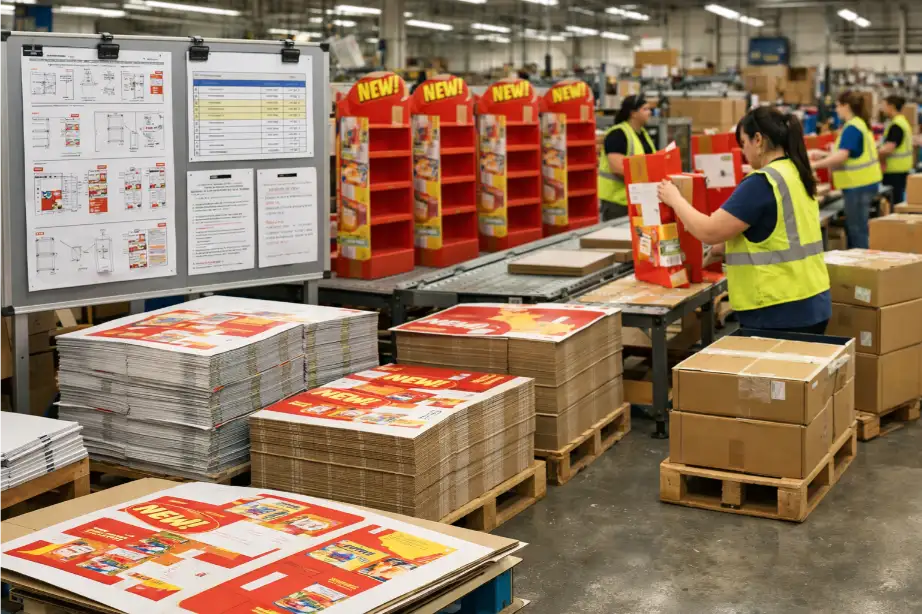
Once the sample is approved, the project can move into mass production. For many custom cardboard display orders, production usually takes around 12 to 20 working days. However, this is only a general range. Actual lead time depends on order quantity, display complexity, printing coverage, finishing requirements, and the factory production schedule at that time.
A simple display with standard printing and a moderate quantity may move faster than a large retail program with several display styles, premium finishing, and export packing requirements. Buyers should also remember that production time is different from shipping time. Even after production is complete, the displays still need to be packed and shipped to the final destination.
What Factors Affect Production Lead Time the Most?
1. Order Quantity
Larger quantities usually need more production time, especially if the display includes multiple parts, headers, shelves, or inserts. High-volume orders may still be efficient, but they need proper scheduling.
2. Printing Complexity
Displays with full-color printing, large ink coverage, or premium finishing such as gloss or matte lamination may take longer than simpler printed displays.
3. Structure Complexity
A simple countertop unit is easier to produce than a reinforced floor display with more shelves, strong load-bearing structure, and custom-shaped components.
4. Approval Speed
Even if the factory is ready, production cannot move quickly if artwork, samples, or final specifications are not approved on time.
5. Packing Requirements
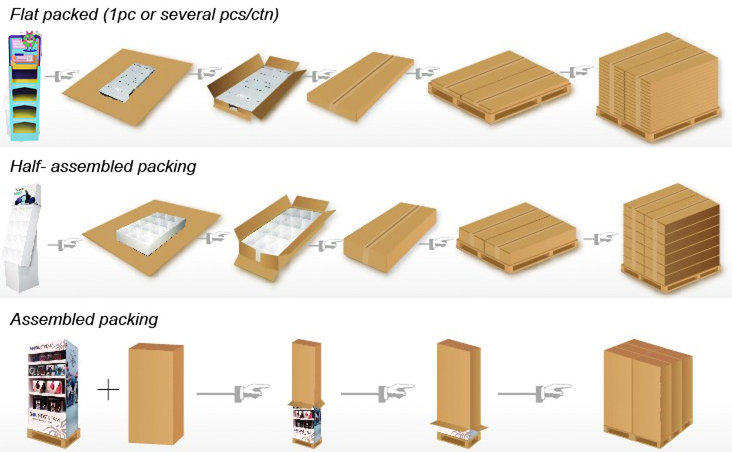
Flat-pack export preparation, master carton arrangement, and shipping labeling all affect the final schedule before dispatch.
If you are comparing different display formats for speed and retail practicality, our retail display solutions page can help you evaluate the right structure earlier in the process.
How Buyers Can Shorten the Overall Lead Time
The best way to reduce the timeline is to reduce avoidable back-and-forth communication. Many delays come not from the factory itself, but from late approvals, missing information, or repeated design changes. Buyers who organize their project clearly from the beginning usually save several days or even weeks over the full process.
Here are practical ways to speed things up:
- send product size and weight at the beginning
- confirm how many products each display should hold
- provide artwork files in editable format
- approve structure before requesting printed samples
- limit unnecessary sample revision rounds
- confirm shipping method early
- ask the supplier for sample time and production time separately
It is also helpful to ask for a full project schedule instead of asking only for “lead time.” That way, buyers can see which part of the project is most sensitive to delay.
Sample Time vs Production Time: Why Buyers Should Separate Them
Some buyers ask for one total lead time, but it is more practical to separate sample time from production time. Sample work is about testing and approval. Production work is about execution at scale. These are different stages with different risks. If the sample is approved smoothly, the production stage becomes much easier to manage. If the sample stage is rushed or poorly confirmed, the production stage can become more expensive and less stable.
This is why experienced buyers often ask for three timelines instead of one: sample lead time, production lead time, and shipping lead time. That gives a more realistic view of the full project schedule.
What Information Should Buyers Send First to Save Time?
If you want the project to move quickly, the first inquiry should already include the information needed for evaluation. This helps the supplier recommend structure, estimate timing, and prepare a more accurate quotation.
At the start of the project, buyers should ideally send:
- product size and weight
- number of products per display
- preferred display type
- target quantity
- retail environment or store type
- artwork files or reference images
- required delivery time
- shipping destination
For buyers also reviewing price and quantity planning, our related guide on custom cardboard display cost can help explain how lead time, MOQ, and pricing work together.
Useful Industry References for Buyers
If you are new to corrugated display production, it is useful to understand the basics of corrugated material and structure terminology. The Fibre Box Association overview of corrugated offers a helpful basic introduction. For more formal structure terminology, the FEFCO code reference is also useful when discussing structure details with suppliers.
Conclusion
So, how long does it take to sample and produce a custom cardboard display? In many projects, white and color sampling may take several working days, while mass production often takes around 12 to 20 working days depending on structure, quantity, printing, and approval speed. The most important point is that timing is not only controlled by the factory. Buyer preparation, artwork readiness, and fast approval also play a major role in whether the project moves smoothly.
If you are planning a display project and want a clearer timeline for your specific product, feel free to contact us with your product details, quantity, and target delivery plan.
FAQ
How long does a white sample usually take?
A white sample for a custom cardboard display usually takes around 2 to 5 working days, depending on structure complexity and revision needs.
How long does a printed color sample usually take?
A color sample often takes around 3 to 7 working days, depending on artwork readiness and print confirmation.
How long does mass production usually take?
Mass production for custom cardboard displays often takes around 12 to 20 working days, depending on quantity, structure, printing, and factory schedule.
What usually causes delays in display projects?
Common causes include incomplete product information, late artwork approval, frequent revisions, complex structure changes, and unclear shipping requirements.
How can buyers speed up the process?
Buyers can speed up the process by preparing complete product details early, confirming artwork quickly, reducing unnecessary revisions, and agreeing on shipping requirements in advance.