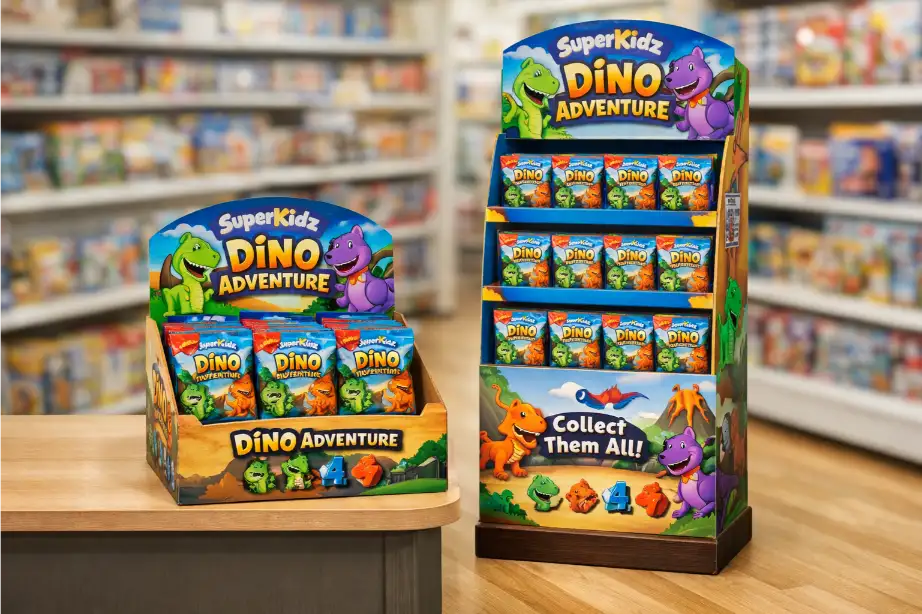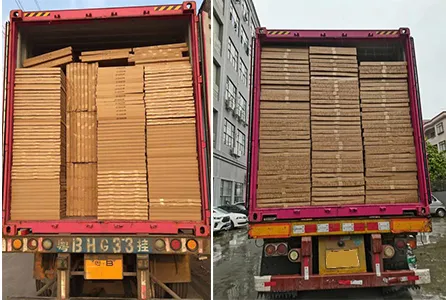
For overseas buyers, a cardboard display is not finished when printing is done. It still needs to survive packing, container loading, international transit, unloading, and warehouse handling before it reaches the retail destination. That is why export packing is one of the most important parts of a custom display project. Even a well-designed retail display can arrive damaged if the packing method is not planned correctly.
In most export projects, cardboard displays are packed flat to reduce freight cost, improve container efficiency, and protect the structure during transit. However, flat-pack shipping is not the only thing buyers should check. Carton strength, inner protection, carton markings, pallet use, loading method, and destination requirements all affect whether the displays arrive in good condition. If you are still comparing display structures, you can also review our custom cardboard display solutions for reference.
Why Export Packing Matters More Than Many Buyers Expect
Retail displays are usually large enough to be affected by compression, moisture, friction, and handling pressure during shipping. Unlike small packaging accessories, displays often include shelves, headers, side panels, and printed surfaces that can be damaged if cartons are overloaded or packed without protection. Export packing is not just about fitting products into a carton. It is about protecting the display structure, maintaining print quality, and making unloading easier for the final customer.
For long-distance shipments, poor export packing can lead to bent parts, crushed corners, scratched graphics, missing components, and higher assembly problems at destination. That is why buyers should treat export packing as part of the product design process, not as an afterthought.
What Is the Most Common Export Packing Method for Cardboard Displays?
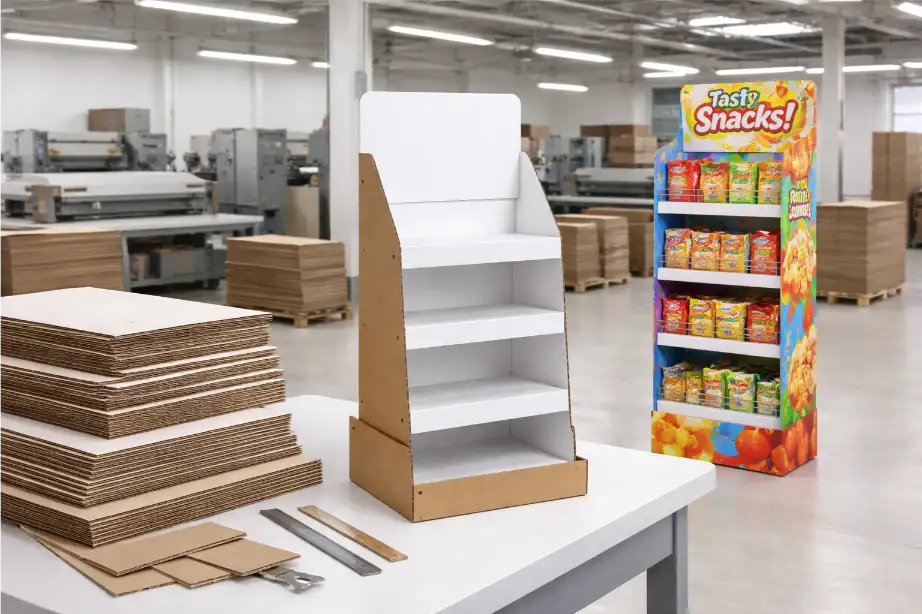
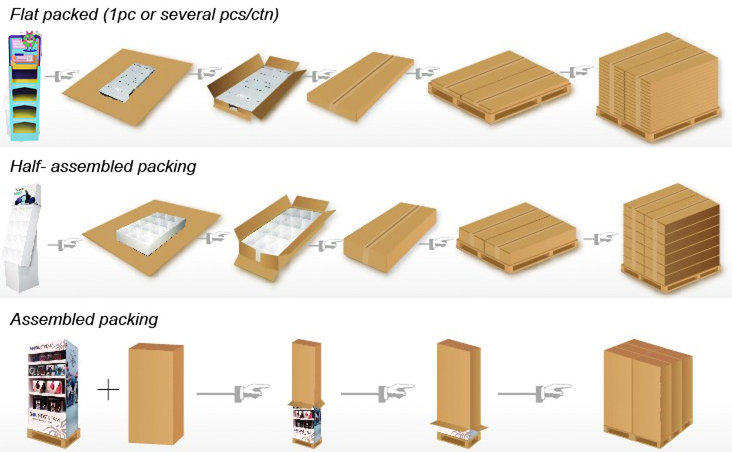
The most common export method is flat-pack packing. In this method, the display is packed in folded form instead of being shipped fully assembled. Flat-pack export packing usually saves shipping space, improves carton efficiency, and reduces the risk of structural damage caused by bulky assembled shapes. It also makes storage easier for importers, distributors, and retail warehouses.
Flat-pack displays are typically grouped into master cartons, with the necessary components packed in an organized way so they can be assembled at destination. Depending on the project, the shipment may also include assembly instructions, inner dividers, protective sheets, or separately packed accessories such as header cards and hooks.
If your retail project also includes outer cartons or branded boxes, our packaging capability can help keep the full shipment more consistent and organized.
Step by Step: How Cardboard Displays Are Usually Packed for Export
Step 1: Fold the Display Into Flat Components
After production, the display parts are folded carefully so they take up less space and avoid unnecessary stress on shelves or side panels. Well-designed structures are easier to fold and pack efficiently.
Step 2: Sort and Match Components
All required parts are grouped together, such as shelves, side panels, headers, base parts, and accessories. This helps avoid missing components during assembly at destination.
Step 3: Add Protective Materials
Protective sheets, inner boards, paper separators, or corner protection may be used to reduce friction and surface damage during shipment. This is especially useful when the display has full-color graphics or premium finishing.
Step 4: Pack Into Master Cartons
The folded display sets are packed into strong export cartons. Carton size and weight should be planned carefully so the cartons remain practical for lifting, stacking, and loading.
Step 5: Add Carton Markings
Export cartons usually include item information, quantity, carton number, dimensions, gross weight, net weight, and destination marks. Clear labeling helps warehouse teams and importers manage the shipment more easily.
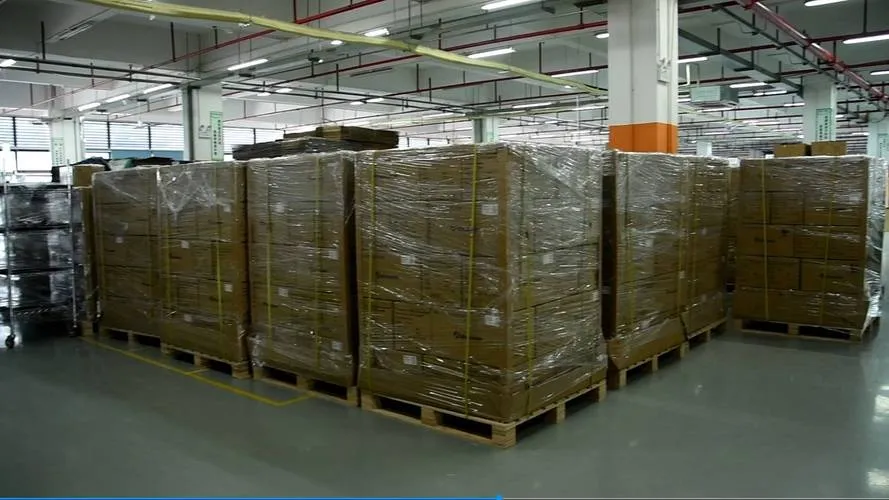
Step 6: Palletize if Required
Depending on destination and buyer preference, cartons may be palletized for easier handling and more stable loading. Some projects ship as loose cartons, while others require pallet-based handling.
Step 7: Load Into Container or Truck
Cartons are loaded based on shipping plan, stacking strength, and destination requirements. Proper loading helps reduce movement and compression risk during transit.
Buyer Table: What Should Be Confirmed Before Shipment?
| Checkpoint | Why It Matters | What Buyers Should Ask |
|---|---|---|
| Flat-pack or assembled | Affects freight cost and damage risk | Will the display ship flat or fully assembled? |
| Master carton strength | Protects contents during stacking and transit | What carton specification is used for export? |
| Inner protection | Reduces scratches and crushed edges | Will separators or protective sheets be added? |
| Carton quantity per set | Affects warehouse handling and counting | How many display sets are packed in each carton? |
| Carton labeling | Helps destination teams identify goods quickly | What shipping marks and carton data will be printed? |
| Pallet use | Affects loading, unloading, and storage | Will cartons be palletized or shipped loose? |
| Assembly instructions | Improves final store setup | Will instructions be included in the shipment? |
Flat-Pack vs Assembled Shipment: Which One Is Better?
In most export projects, flat-pack shipment is the better option because it saves space and usually lowers freight cost. It also reduces the risk of displays being crushed due to bulky shape during transport. For buyers importing larger quantities, flat-pack shipping is usually more practical for warehouse storage and later distribution.
Assembled shipment may still be used in some limited cases, such as display samples, showroom use, or urgent projects where the buyer wants to reduce assembly time at destination. However, assembled shipment generally takes up more space and may increase shipping cost.
If you are still deciding which display style best matches your retail program, our retail display solutions page may help you compare more options.
What Information Is Usually Printed on Export Cartons?
Clear carton markings are very important for export shipments. They help warehouses, customs teams, freight handlers, and buyers identify the goods quickly. In many projects, export cartons include information such as item name, item number, order number, quantity per carton, carton dimensions, gross weight, net weight, carton sequence, and destination mark.
Some buyers also request barcodes, PO numbers, handling symbols, or special warehouse labels depending on their internal logistics system. If the project is going to large retailers or distribution centers, carton marking requirements should be confirmed before production is completed.
Do Buyers Need Pallets for Cardboard Display Shipments?
Not always, but many buyers do request palletized shipment for easier handling. Pallets can improve loading stability, reduce repeated handling, and help warehouse teams move the goods more efficiently. However, pallet use also changes loading quantity and can affect freight efficiency. In some cases, shipping loose cartons may allow better container utilization.
Buyers should also confirm whether the destination market has pallet material requirements. For example, some shipments may require compliance with wood packaging rules such as ISPM 15 when wooden pallets are used. For general information on corrugated packaging basics, buyers can also refer to the Fibre Box Association. For wood packaging guidance, the International Plant Protection Convention is also a useful reference.
Common Export Packing Problems Buyers Should Avoid
Some export problems happen because packing is treated as a small detail rather than a serious part of the project. Common mistakes include using cartons that are too weak, overpacking too many sets in one carton, skipping protective sheets, using unclear carton markings, and failing to check whether the packed cartons are practical for unloading and warehouse handling.
Other common mistakes include:
- shipping displays without confirming flat-pack size
- ignoring destination warehouse requirements
- not matching carton weight to manual handling limits
- forgetting to include assembly instructions
- not confirming whether pallets are needed
- using export cartons without enough compression strength
Most of these problems can be avoided if the buyer and supplier discuss export packing early instead of leaving it until the final production stage.

What Buyers Should Send Before Asking About Export Packing
If you want better export packing recommendations, the supplier needs more than the display artwork. Good export planning depends on logistics details as well as display structure.
Before asking about export packing, buyers should ideally provide:
- display type and display dimensions
- order quantity
- whether flat-pack or assembled shipment is preferred
- destination country and shipping method
- whether pallets are required
- carton marking requirements
- warehouse or retailer handling requirements
- whether assembly instructions are needed inside the cartons
If you are also checking quantity and budget together with shipping planning, our related guides on custom cardboard display cost and custom cardboard display MOQ can help you evaluate the project more completely.
Conclusion
So, how are cardboard displays packed for export shipping? In most projects, they are packed flat in strong export cartons, protected with inner materials where needed, clearly marked for shipping, and palletized only when the destination or buyer requires it. Good export packing is not only about saving freight. It is also about protecting the display structure, reducing damage risk, and making final warehouse handling easier.
If you are planning an export display project and want a more practical packing recommendation, feel free to contact us with your display size, quantity, and destination details.
FAQ
Are cardboard displays usually shipped flat?
Yes. In most export projects, cardboard displays are shipped flat because flat-pack loading is more space-efficient and usually safer for transit.
Do export cartons need special markings?
In many cases, yes. Export cartons often include item details, quantity, carton number, dimensions, weight, and destination marks.
Is palletizing always necessary?
No. Some shipments use pallets for easier handling, while others ship loose cartons to improve container loading efficiency.
Why is inner protection important for display shipments?
Inner protection helps reduce scratches, crushed edges, and graphic damage during international transit and warehouse handling.
What should buyers confirm before shipping?
Buyers should confirm packing method, carton strength, carton marking, pallet use, assembly instructions, and destination handling requirements.