A PDQ display works best when store staff can place it, refill it, and keep it tidy without extra tools or long instructions. For B2B buyers, refill design is not a small detail; it affects store execution, product visibility, repeat orders, and campaign results.
At Leader Display, we look at refill performance before bulk production starts. A display that looks attractive in a sample room still needs to survive carton packing, store handling, shelf movement, and daily product replenishment.
Why Refill Design Matters in Retail Execution
Retailers care about speed. A store team may need to handle dozens of promotional displays in one shift, so the display must be easy to understand at first glance.
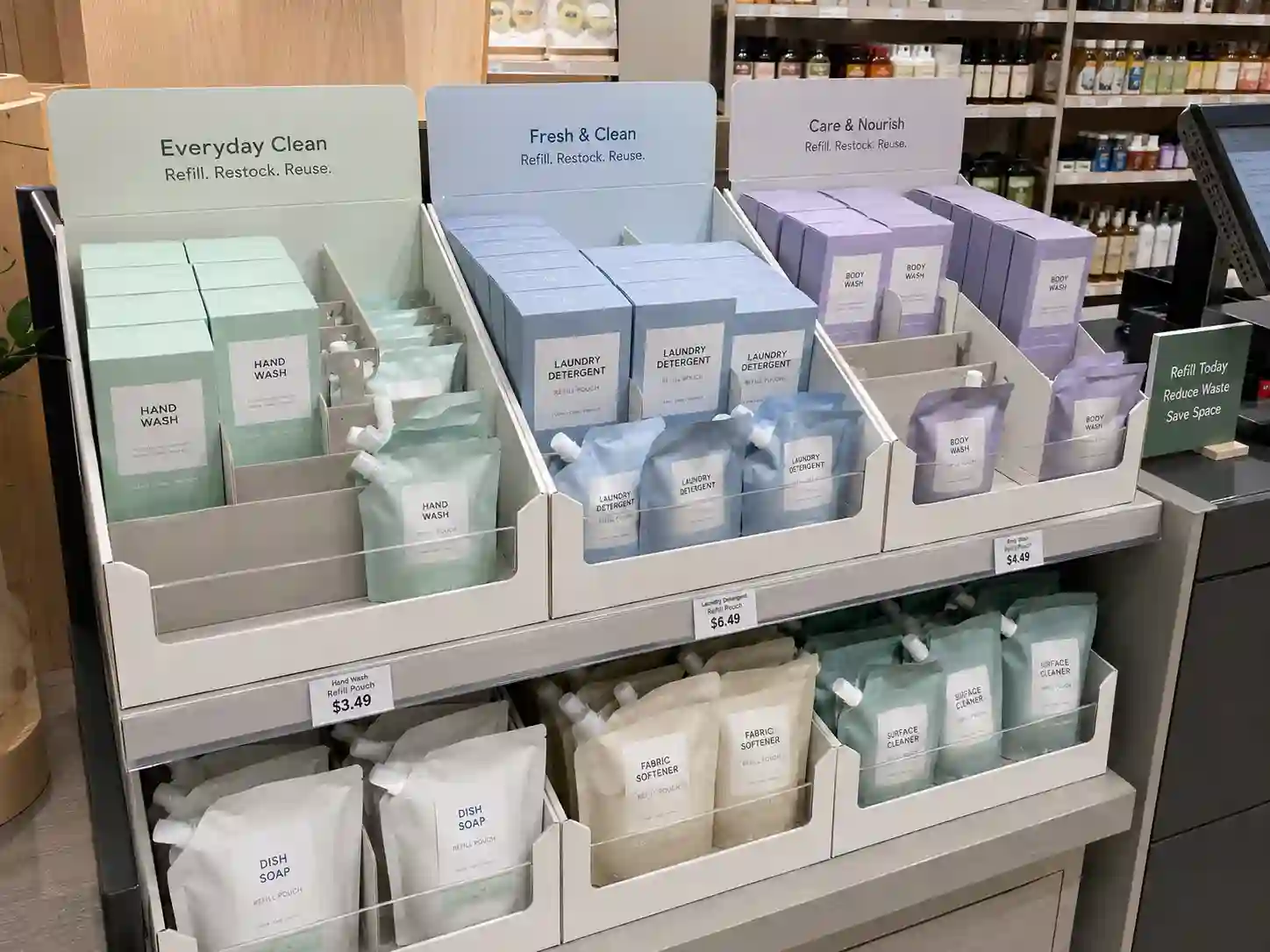
For a brand owner, a refill-friendly display helps keep products facing forward. When shelves look empty, mixed, or messy, sales opportunities disappear. A clean display tells shoppers that the product is active, stocked, and worth noticing.
For wholesalers and trade marketing teams, refill design also lowers complaints. Store staff should not need to rebuild the tray, tape loose panels, or guess how many units fit per row. The structure should guide the refill process.
A practical PDQ display supports three jobs at once: it presents products, protects products, and helps store staff refill products with less effort.
Start With the Product, Not the Display Shape
A good refill plan begins with product information. Before choosing a tray, divider, header, or front lip, the factory needs to know what the display will hold.
Key product details include unit size, weight, carton style, surface finish, selling orientation, and refill quantity. A lip balm carton, a candy pouch, a skincare box, and a small electronics accessory need different support.
Product Weight Changes the Structure
Light products can use thinner paperboard trays or compact corrugated structures. Heavier products need stronger side walls, reinforced base panels, deeper front lips, and sometimes double-wall corrugated board.
If the product is heavy but the tray is shallow, the display may bow forward after repeated refills. If the product is tall and narrow, the display may need dividers or stepped inserts to prevent tipping.
For bulk campaigns, we often test product weight in the sample stage. This helps confirm whether the display can hold a full load, a half load, and a low-stock condition without losing shape.
Product Size Controls Refill Speed
Store staff refill faster when each product has a clear position. The display should make the layout clear: how many units per row, how many rows per tray, and where the first product should sit.
For boxed items, tight cavities can look neat but may slow refill. For pouches, too much open space can cause products to fall forward. For mixed SKUs, separate lanes help avoid confusion.
A practical balance matters. The display should hold products securely while still giving enough hand space for refilling.
Retail Placement Affects Refill Access
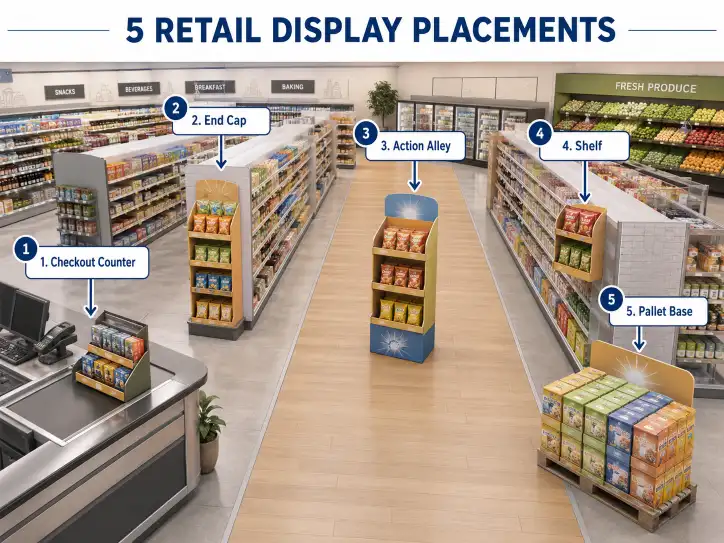
A PDQ display can sit on a checkout counter, shelf, endcap, club store pallet, or promotional table. Each location changes how staff reach the product.
Counter displays need a compact footprint and quick top access. Shelf-ready PDQ trays need easy front access without removing the whole tray. Floor or pallet programs may need refill cartons stored near the display.
When we design custom cardboard displays for retail campaigns, we ask where the display will be placed before confirming structure. Placement decides the refill direction, header height, tray depth, and carton packing method.
Counter Placement
Counter space is limited. A refill-friendly counter PDQ display should be stable, compact, and easy to top up from the back or top.
The front lip should not block too much product face. The header should support branding without making the display top-heavy. For small products, dividers or steps can help each unit stay visible after partial refill.
Shelf Placement
Shelf placement needs careful height control. If the header is too tall, the display may not fit under shelf beams. If the tray is too deep, staff may need to pull it out every time they refill.
For shelf-ready use, perforated carton systems can reduce setup work. FEFCO-style corrugated standards are often referenced during carton and display structure planning because they help teams discuss packaging formats clearly across suppliers and buyers.
Floor or Pallet Placement
Larger displays need stronger load planning. A floor PDQ setup or pallet display may hold multiple trays, refill cartons, and printed skirts.
For these programs, refill design must consider both front access and backroom handling. Store staff should know which carton refills which tray layer. Clear carton marks and matching tray labels help prevent SKU mistakes.
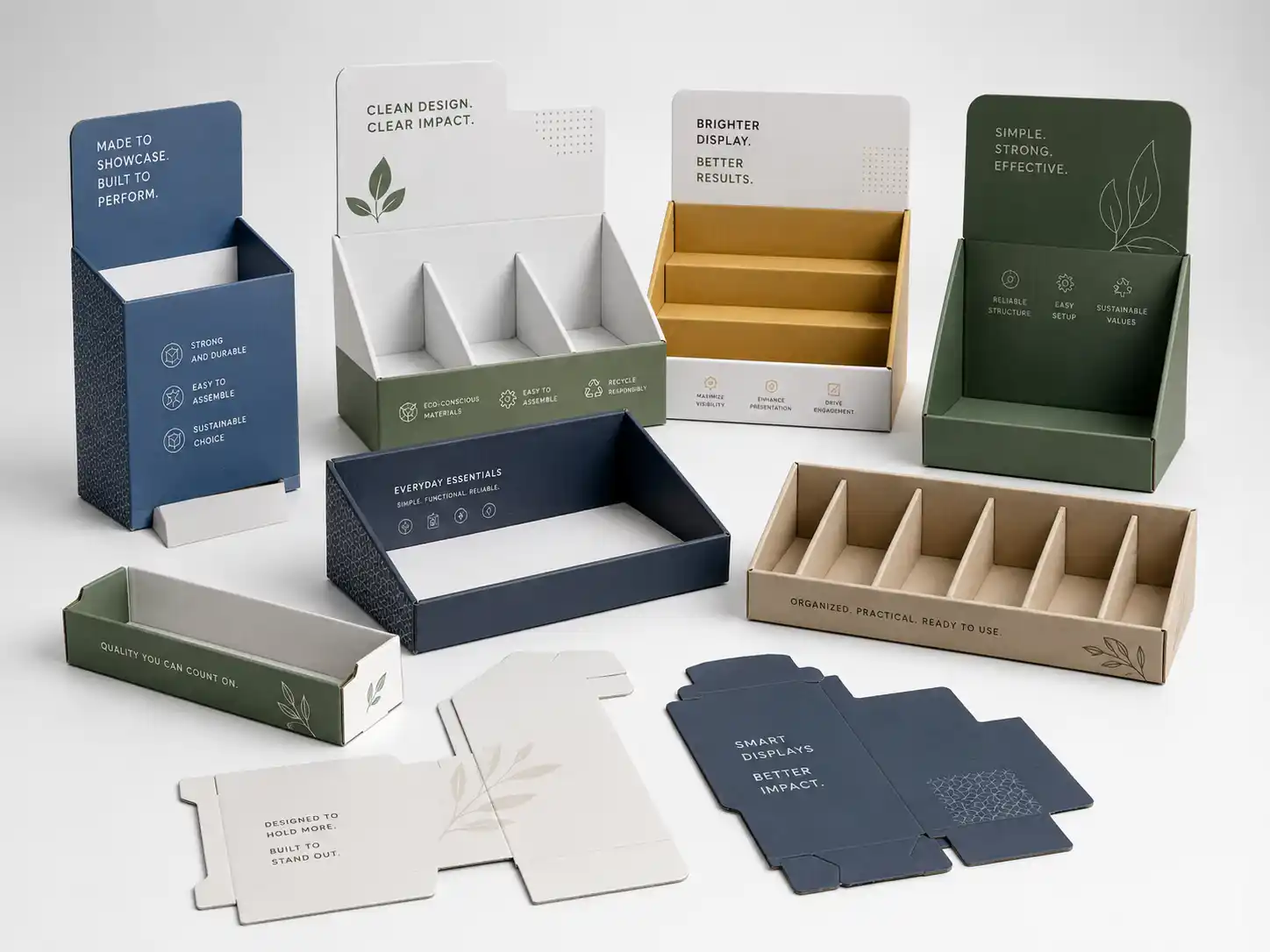
Key Structural Features That Improve Refill
Refill-friendly design is not about one feature. It comes from the full structure working together.
| Design Area | Practical Refill Benefit | Manufacturer Checkpoint |
|---|---|---|
| Front lip height | Keeps products in place without hiding packaging | Test full, half-full, and low-stock display |
| Side walls | Prevents products from sliding sideways | Match wall height to product center of gravity |
| Dividers | Keeps SKUs separated and rows tidy | Confirm hand space for refill |
| Stepped insert | Improves product visibility from front rows to back rows | Check product angle and carton fit |
| Header card | Guides shoppers without blocking refill access | Test shelf height and stability |
| Base structure | Supports product weight during store use | Run loaded sample check before bulk |
| Refill cartons | Speeds backroom-to-display replenishment | Match carton quantity to display capacity |
Front Lips Should Hold, Not Hide
The front lip is one of the most important refill details. It must keep products from falling forward, but it should not cover the product name, flavor, size, or main selling point.
For small cartons, a lower lip often works better. For pouches or rounded products, a higher lip may be needed. The right answer depends on product shape and retail movement.
Dividers Should Match SKU Logic
Dividers are useful when a display holds several flavors, colors, or product types. They help store staff refill the correct lane and help shoppers compare options.
Loose dividers can create trouble. They may lift during refill or shift during shipping. That is why we often recommend locked-in paperboard dividers, folded corrugated separators, or glued structures when the program needs stronger control.
Stepped Inserts Improve Visibility
A stepped insert helps back-row products rise above the front row. This is useful for small boxes, cosmetics, supplements, and impulse items.
The step angle should be tested with real product samples. If the angle is too steep, products may tip. If it is too flat, the back row becomes hard to see.
Refill Carton Planning Is Part of Display Design
Many buyers focus on the display structure and leave refill cartons until later. That creates problems.
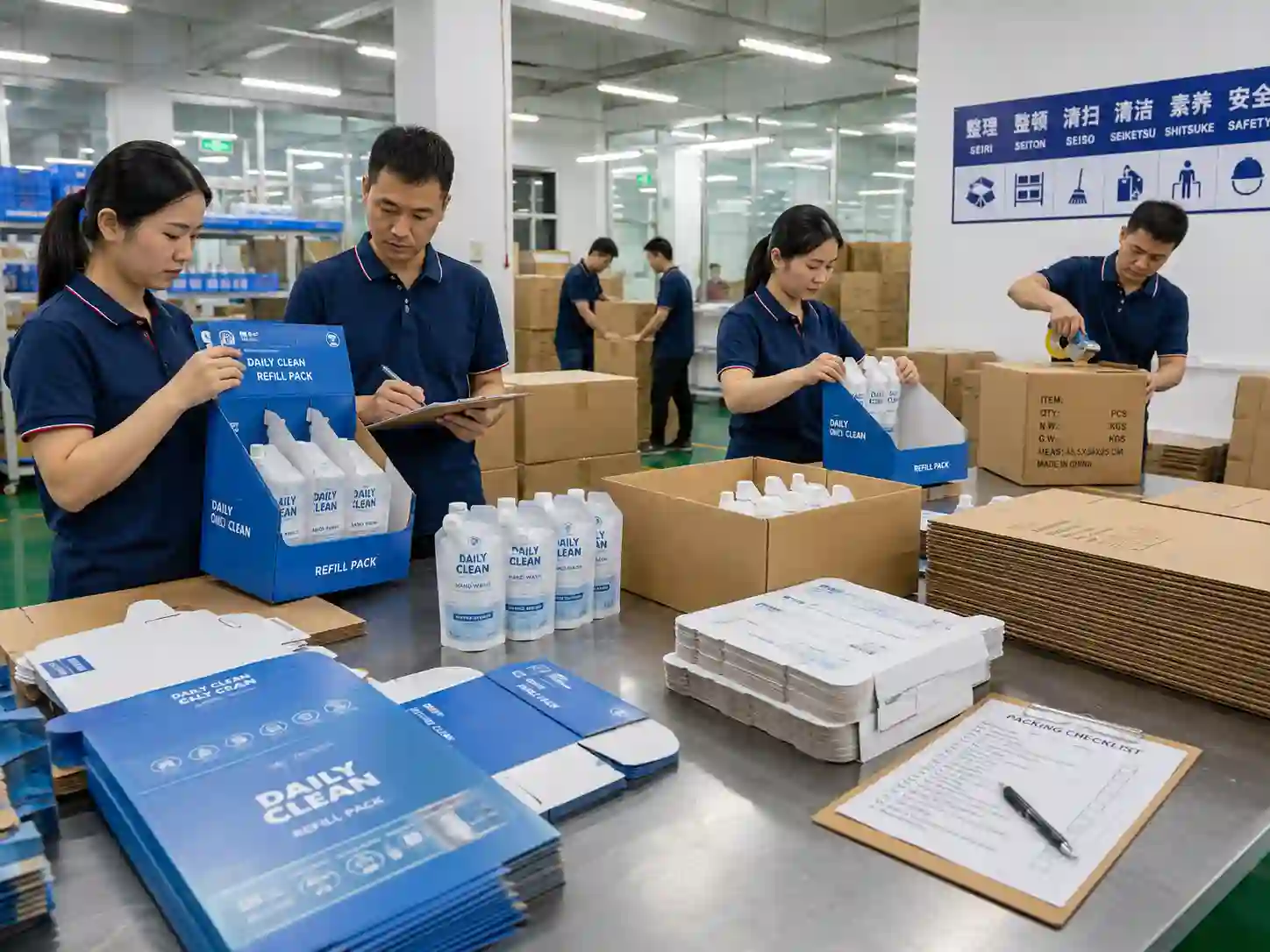
A store team may receive a display with separate refill cartons. If carton quantities do not match the display capacity, staff need to count products by hand. If carton labels are unclear, the wrong SKU may be placed in the wrong lane.
A better method is to plan the PDQ display and refill cartons together. The master carton, inner carton, and display capacity should connect logically.
For example, one refill carton can be designed to fill one tray. Or one master carton can hold two complete refill sets. This makes warehouse handling and store replenishment easier.
Clear Carton Marks Help Retail Teams
Export cartons should show product code, quantity, display name, carton number, and handling marks. For mixed SKU programs, color coding or simple printed icons can help.
This is also where FSC, ISO, and retailer packing requirements may enter the project. Some buyers request FSC-certified paper material, ISO-aligned quality management documents, or specific packing marks for warehouse acceptance.
Flat Packing Must Protect Refill Parts
Flat packing saves freight space, but it must protect key parts. Headers, dividers, support panels, and trays should not bend during export shipping.
For displays with multiple components, packing sequence matters. Store staff should open the carton and find parts in a logical order: main tray first, header or insert next, then instruction sheet or refill guide.
As a cardboard display manufacturer, we check packing layout during sampling instead of leaving it until mass production. This helps reduce shipping damage and setup confusion.
Assembly Should Be Simple Before Refill Starts
A display that is hard to assemble is also hard to refill. If staff struggle during setup, they may skip dividers, fold panels incorrectly, or place the display in the wrong direction.
Good assembly design uses clear fold lines, locking tabs, pre-glued sections, and simple part counts. For retail execution, fewer loose parts usually means fewer mistakes.
Pre-Assembled vs Flat-Packed Displays
Pre-assembled displays save store labor but cost more in freight space. Flat-packed displays save shipping cost but require clearer instructions.
For lightweight counter displays, flat packing is often practical. For complex floor displays or urgent promotions, semi-assembled packing may be worth considering.
The best choice depends on order quantity, destination country, product value, retailer requirements, and store labor expectations.
Instruction Sheets Should Use Visual Steps
Store staff may not read long text. A short instruction sheet with diagrams works better.
The instruction sheet should show how to open the tray, lock the header, place dividers, load products, and identify refill cartons. For international export orders, simple English labels and clear drawings reduce misunderstanding.
Sampling Helps Find Refill Problems Early
A sample should do more than show print color and display shape. It should prove that the refill process works.
At the sample stage, we recommend checking:
- Product loading quantity per row and per display
- Hand space for refilling each lane
- Stability when the display is full, half-full, and low-stock
- Product visibility after refill
- Header strength and shelf height
- Carton packing sequence
- Export carton protection
These checks are practical. They help buyers avoid problems before the full order ships.
A display may look correct on screen, but product behavior changes when real weight, real packaging, and real retail handling are involved. That is why physical sampling remains important for custom projects.
Material Choice Affects Refill Durability
Refill means repeated contact. Store staff touch the display, push products into place, remove empty cartons, and sometimes move the display to a new position.
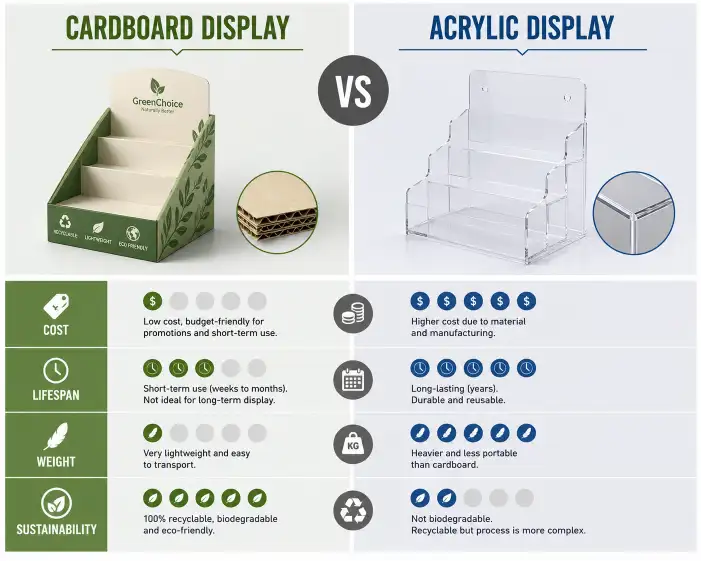
Material selection should match this use. Thin paperboard may work for short campaigns and light items. Corrugated board works better for heavier products, longer campaigns, or displays that need more edge strength.
For premium retail campaigns, surface finishing also matters. Matte lamination, gloss lamination, spot UV, or varnish can protect printed areas from handling. However, finishing should not make surfaces too slippery for stacked products.
The material should serve the campaign. A short seasonal candy program may not need the same board grade as a multi-week skincare launch or warehouse club display.
Print and Messaging Can Support Refill
Print is not only for shoppers. It can guide store teams too.
Small refill cues can be added inside the tray, on dividers, or on carton labels. Examples include SKU names, lane numbers, “load from back,” “front facing,” or simple arrows.
These cues should be subtle enough not to hurt the shopper-facing design. A clean balance is possible when the manufacturer plans print layout and structure together.
For a brand campaign, printed refill guidance can also protect visual consistency across many stores. Each display has a better chance of looking the way the buyer approved it.
Export Packing Must Match Real Retail Handling
A refill-friendly display should arrive in good condition. Export packing must protect print surfaces, folded edges, inserts, and assembly points.
For overseas orders, humidity, compression, and long handling routes need attention. Master cartons should be strong enough for stacking. Inner protection may include paper wrapping, corner support, plastic-free options, or custom separators depending on buyer requirements.
If the project uses FSC material or other responsible sourcing claims, packing documents should match the buyer’s compliance process. Packaging associations and retailer guidelines often influence how cartons are marked, tested, and accepted.
Leader Display has worked with export packaging for many retail display projects since 2004. Through Leader Display, buyers can discuss structure, sample testing, packing method, and bulk production details in one project flow.
Common Refill Problems and How to Avoid Them
Some refill problems appear again and again in retail display projects.
One problem is a tray that holds the product too tightly. It looks neat at first, but staff cannot refill quickly. Another problem is a tray that is too loose, causing products to lean, fall, or mix after shoppers touch them.
Poor carton planning is another common issue. If refill cartons do not match tray capacity, the store team spends extra time counting products. If mixed SKUs are not separated well, the display becomes disorganized.
Weak headers can also hurt execution. If a header bends during shipping or blocks shelf access, staff may remove it. Once that happens, brand impact drops.
These problems can be solved through careful structure planning, real product testing, and practical sample review.
Questions Buyers Should Ask Before Production
Before approving a PDQ display, buyers should ask practical questions:
- How many products fit in each row and each tray?
- Can staff refill the display without removing it from the shelf?
- Does the display stay stable when it is half empty?
- Are refill cartons matched to display capacity?
- Are dividers fixed, removable, or folded into the tray?
- Can the structure survive export shipping?
- Are carton marks clear for warehouse and store teams?
- Does the sample use the same material planned for bulk production?
These questions help the buyer move from a design idea to a workable retail tool.
A Refillable PDQ Display Should Make Store Work Easier
Retailers prefer displays that reduce labor, not displays that create extra tasks. A strong PDQ display should arrive safely, assemble quickly, load neatly, and support repeat refill during the promotion.
For B2B buyers, the best display is not always the most complex one. It is the one that fits the product, store location, refill plan, carton system, and campaign timeline.
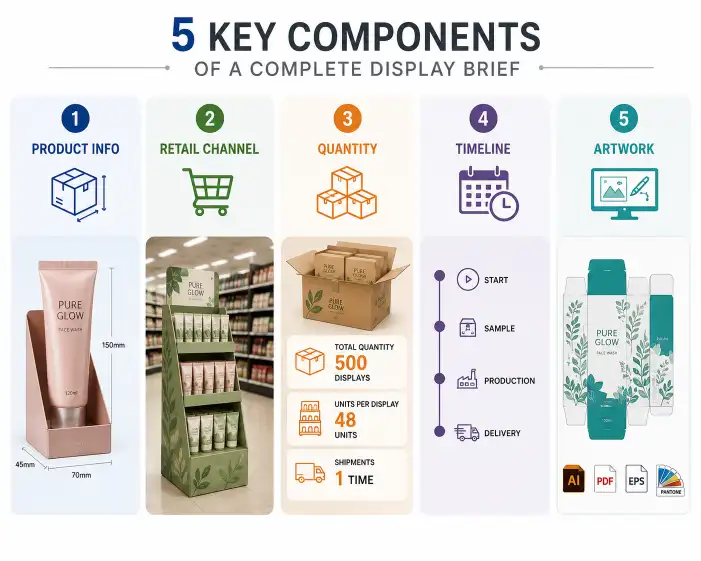
When your next display project reaches the planning stage, share the product size, weight, SKU count, target store placement, and refill method early. With those details, the factory can build a sample that helps retailers keep products stocked, visible, and ready to sell.